REVIEW · MEXICO CITY
Mexico City: 1960s &1970s Mexican Architecture Walking Tour
Book on GetYourGuide →Operated by Walk Mexico · Bookable on GetYourGuide
Modern Mexico shows up in design.
This 3-hour walking tour in Chapultepec Park strings together the big architectural ideas of 1960s to 1970s Mexico, using three major museums and a 1968 Olympic-era hotel finale to explain why these buildings look the way they do. You start at the National Museum of Anthropology, then keep moving through mid-century modernism that still feels strangely futuristic.
I especially like two things: the way the tour ties buildings to meaning, from pre-Hispanic cosmogony in the museum’s design to the artist-driven collaboration behind the sculptures and visual language. I also like the guide style—names like Natalia show up in excellent past experiences, with an art-historian lens that connects architecture to social and political context, not just facts and dates.
One consideration: if you want a strict architectural-technical tour with minimal politics or cultural history, this experience leans more toward history and context than pure building anatomy. And at $192 per person, you’ll want to be sure the museum tickets plus guided storytelling are worth it for your style of travel.
In This Review
- Key things you’ll notice on this tour
- Starting at Chapultepec Park Porrua: where your walk really begins
- The National Museum of Anthropology: cosmogony built into 1960s form
- Tamayo Museum of Contemporary Art: 1980s modernism, right in the middle of the story
- The 1960s Space Age-inspired stop: why futurism mattered
- The Modern Art Museum stop: where style meets politics
- Hotel Camino Real finale: Olympic VIPs to modern art in a gallery-like setting
- Pace, comfort, and what to bring (without overplanning)
- Accessibility reality check
- Price and value: does $192 make sense for you?
- Who should book this architecture walking tour?
- Should you book this 1960s–1970s Mexico City architecture walk?
- FAQ
- Where do I meet the guide?
- How long is the tour?
- What museums are included?
- Is the tour wheelchair accessible?
- What should I bring?
- Does it run rain or shine?
Key things you’ll notice on this tour
- Expert art-history framing: the guide comes with a graduate academic degree (art historian, historian, or architect), so you’re not just getting descriptions—you’re getting interpretation.
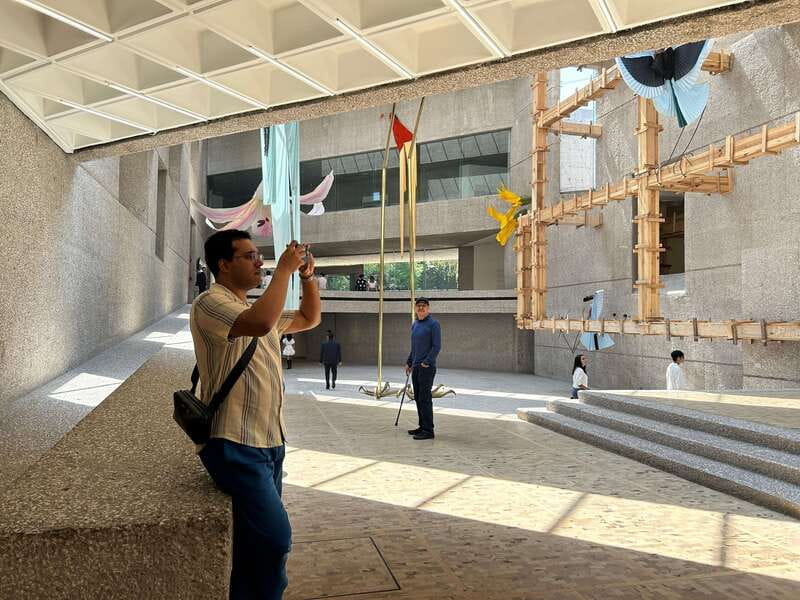
- Three museums, one coherent story: you visit the National Museum of Anthropology, the Tamayo Museum of Contemporary Art, and a modern art museum, all included with tickets.
- A Space Age-inspired design moment: there’s a short walk to a 1960s structure influenced by Space Age aesthetics, and you’ll learn why those forms matched the optimism of the era.
- An art hotel ending: the tour finishes at Hotel Camino Real, built to host VIP guests for the 1968 Olympic Games, where modern Mexican art turns the hotel into a gallery-like experience.
- Small group pacing (max 10): it’s limited to 10 participants, and headsets are used for larger groups so you can actually hear the guide.
Starting at Chapultepec Park Porrua: where your walk really begins
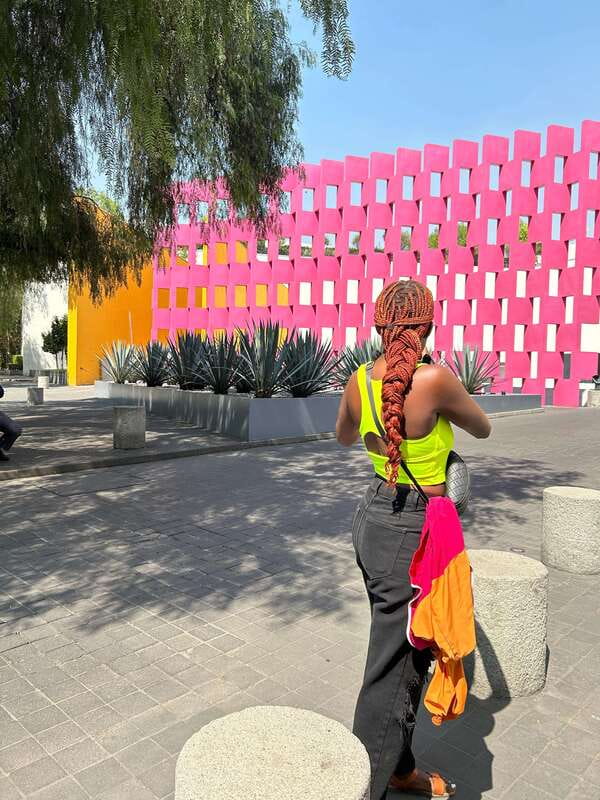
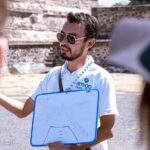
You meet at Chapultepec Porrua Bookstore inside Chapultepec Park, near the ticket booth. This matters because there are multiple Porrua locations in Mexico City, so go specifically to the one in Chapultepec. Your guide waits inside the bookstore with the project logo: WALK MEXICO.
From the start, the tour sets expectations well. It’s a walking tour, but the plan is designed so you don’t spend your whole afternoon trudging around. You’ll want comfortable shoes, but think “short, purposeful strolls” rather than a long city hike.
Also: this tour runs rain or shine, so bring rain gear. The weather in Mexico City can switch fast, and you’ll enjoy the museums more if you don’t end up damp and cold.
You can also read our reviews of more walking tours in Mexico City


The National Museum of Anthropology: cosmogony built into 1960s form
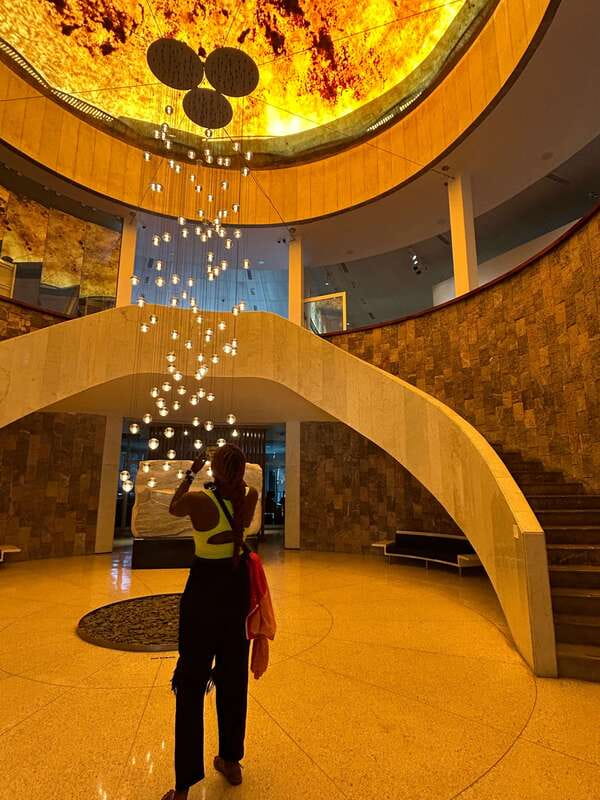
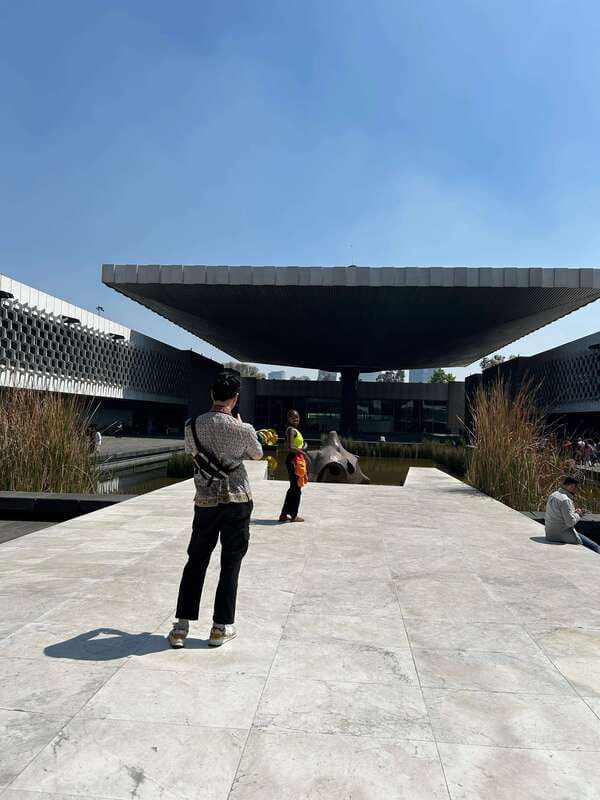
The National Museum of Anthropology is the kind of building that makes you slow down before you even read a label. You start here for a reason: it’s treated as a masterpiece of 1960s Mexican architecture, and the tour explains how the design connects with pre-Hispanic cosmogony—how ancient ways of seeing the universe got translated into modern form.
What I like about this stop is the focus on collaboration. The architecture isn’t presented as a lone creator’s vision. Instead, you learn about the unique way a celebrated architect worked with renowned artists to bring indigenous worldviews into sculpture and design. So when you look at the building, you’re not just seeing concrete and geometry—you’re seeing an intentional attempt to carry deeper cultural ideas into the modern era.
Why this works for you, practically: if you’re visiting Mexico City for the first time, this is a strong anchor point. It gives you a framework for what you’ll see next: a bridge between older symbolism and mid-century ambition. And because you’re in a museum, your pacing is controlled—you can take photos without feeling like you’re sprinting between stops.
A small tip: bring your camera and take a minute to frame the building before you rush into the indoor parts. The exterior and circulation views are often where the design story becomes easiest to read.
Tamayo Museum of Contemporary Art: 1980s modernism, right in the middle of the story
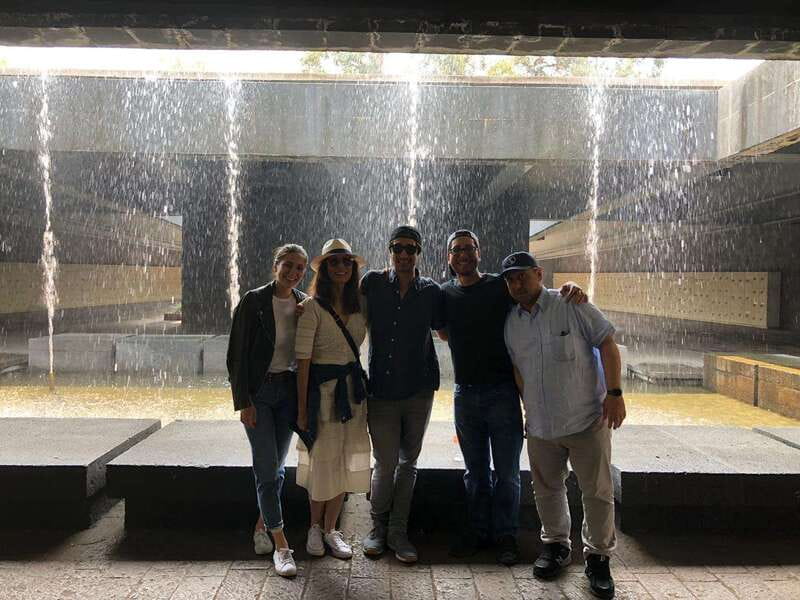
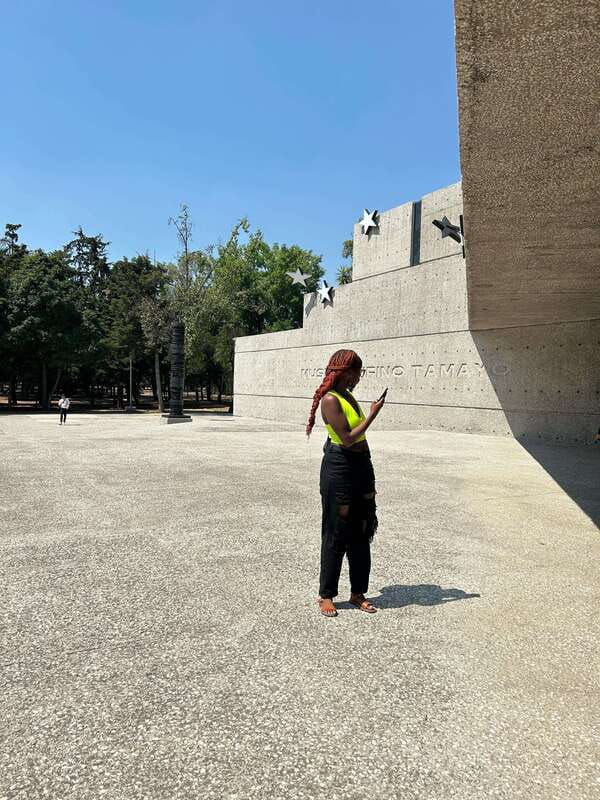
Next up is the Tamayo Museum of Contemporary Art, devoted to Rufino Tamayo. The building itself is described as striking modernism, conceived in the early 1980s by two influential architects. Even though the tour arc is about 1960s to 1970s transformation, this stop helps you see how the momentum continued and changed.
Here’s what I’d watch for: the tour emphasizes how the architecture harmonizes with its natural surroundings while still honoring Mexico’s artistic legacy. That combination is a key theme in modern Mexican design of this era—buildings that feel modern and forward-looking, but not disconnected from place.
If you’re an art person, this is also a nice palate cleanser. The museum’s mission puts you in a mindset of contemporary creation, which makes the architecture feel less like an artifact and more like a living conversation between generations.
One practical note: if you’re prone to museum fatigue, this is where you’ll want to pace yourself. It’s a museum stop, so you’ll do more “looking” than “walking,” and that’s a good trade for a 3-hour tour.
The 1960s Space Age-inspired stop: why futurism mattered
After Tamayo, you get a short walk to a remarkable example of 1960s design influenced by Space Age aesthetics. The tour frames it as capturing the futuristic optimism of its time—design that looks at the future as if it’s something you can shape with architecture.
This is one of those moments where the explanation changes how you see the building. Without context, Space Age-style forms can feel like just another trendy design language. With context, you start to understand them as public optimism made visible: a cultural mood expressed through shape, function, and formality.
How to get the most out of it: pause and look at how the form feels meant to work. The tour is built to help you connect design choices to the era’s attitude. If you like architecture because it reveals the culture behind it, this is your “click” moment.
The Modern Art Museum stop: where style meets politics
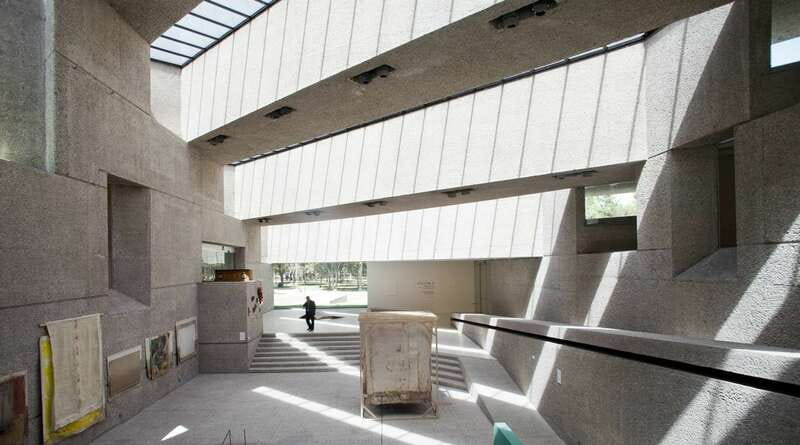
You also include a Modern Art Museum ticket as part of the package. Even when the architecture is the headline, this stop keeps the tour grounded in why these design shifts mattered in the first place.
In the tour’s overall framing, 1960s to 1970s architecture is treated as more than aesthetics. It’s connected to the social and political context of Mexico in those decades—meaning you’ll be encouraged to read buildings as part of a larger national story.
This is also where the tour can feel more history-forward than some people expect (and that’s the main possible drawback for architecture purists). If you love architecture but you’re the type who wants only details like materials, structural systems, and design mechanics, you may find yourself wanting more “how it’s built” talk than “why it was built.”
Still, if you enjoy architecture as a cultural document, this stop is where the meaning clicks into place. You’ll finish the tour with a clearer sense of how art, politics, and national identity all shaped the look of modern Mexico.
You can also read our reviews of more city tours in Mexico City



Hotel Camino Real finale: Olympic VIPs to modern art in a gallery-like setting
The tour ends at Hotel Camino Real, a historic hotel built to host VIP guests during the 1968 Olympic Games. That Olympic connection matters because the late 1960s in Mexico City were about visibility—big events, global attention, and a city presenting itself as modern.
What makes this finale memorable is what the tour says happens behind the walls: there’s a hidden trove of modern Mexican art, turning the space into a blend of hospitality and gallery—an “art hotel” feel that matches the era’s artistic energy.
I like endings like this because they change your perspective. Museums teach you to look carefully. A hotel gallery teaches you to look differently—more like you’re inside a cultural institution rather than staring at a curated display behind glass.
Photo note: the tour is described as very safe and enjoyable for photography, so bring your camera and use the hotel space to capture angles you couldn’t get in museum courtyards or galleries.
Pace, comfort, and what to bring (without overplanning)
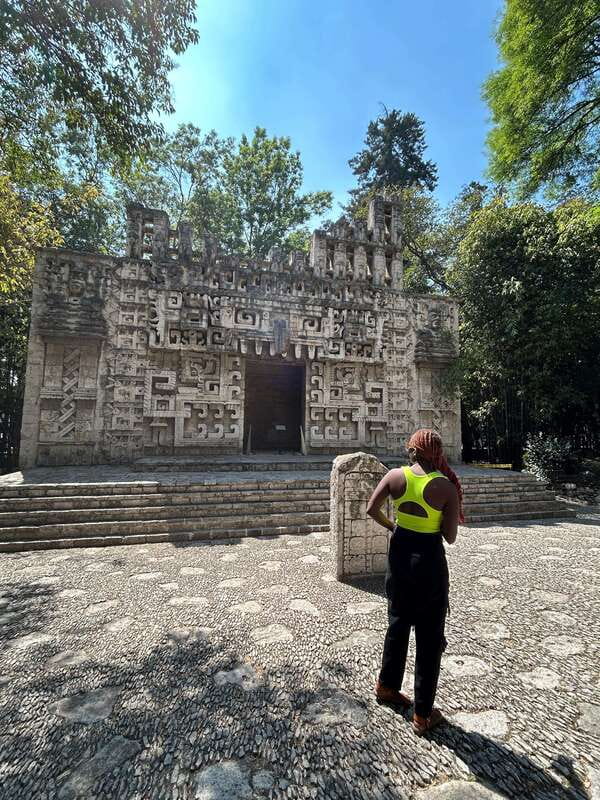
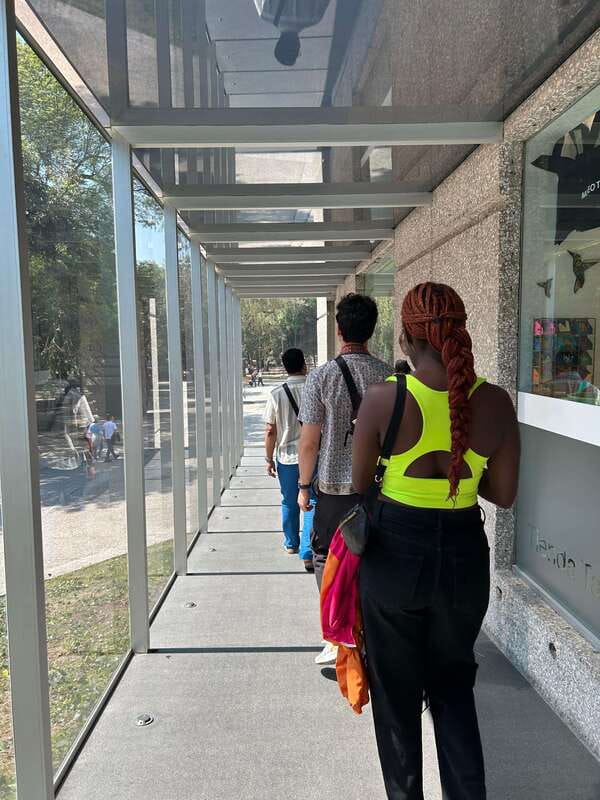
This experience is built around a 3-hour duration with short walking between key places. Even better: the tour specifically notes you won’t have to walk much, which is great if you’re also planning to explore the rest of Chapultepec or central Mexico City afterward.
Still, you should prepare for real-world comfort:
- Wear comfortable shoes (museum flooring and hotel interiors add up).
- Bring sunscreen and rain gear (it’s rain or shine).
- Bring a camera—the stops are safe and you’ll want photos.
It also helps to travel light. The tour says luggage or large bags are not allowed, so plan on using a small day bag.
Accessibility reality check
The tour info lists wheelchair accessible, but it also says it is not suitable for people with mobility impairments. If that describes you, don’t guess—ask Walk Mexico directly before booking. That’s the best way to understand the on-the-ground fit for your needs.
Price and value: does $192 make sense for you?
At $192 per person for 3 hours, the ticket price can feel high—especially if you’re the type who likes to wander museums on your own. The value improves fast if these three things matter to you:
- You want guided interpretation with an academic-level background (the guide holds a graduate academic degree in art history, history, or architecture).
- You want three museum tickets included—so you’re not paying separate admissions and piecing together context yourself.
- You care about the why behind the design shifts, including the social and political context shaping the architecture.
Where the price may not feel worth it is if you’re mostly hunting for quick visual inspiration and you’d rather spend less time in explanations. The tour can also feel more history-oriented than you might expect, which may matter if you’re only interested in design mechanics.
One more practical value signal: the group is capped at 10 participants. That usually means you can ask questions and actually hear the guide, especially since headsets are available for larger groups.
And on at least one past booking, a group tour ended up feeling very close to a private experience when fewer people showed up—so there’s a chance the pacing will feel even more personal than advertised.
Who should book this architecture walking tour?
This tour is a great fit if you:
- Love modern Mexican art and architecture and want the cultural story behind the buildings.
- Like guided museum visits where the guide explains symbolism, design intent, and context.
- Want a compact “greatest hits” route in 3 hours without heavy walking.
It may be less ideal if you:
- Want a purely architectural, nuts-and-bolts style tour focused only on form and structure.
- Prefer food stops or long breaks (this one doesn’t include food and drinks).
- Need lots of mobility support, since the tour flags issues for mobility impairments despite listing wheelchair accessibility.
Should you book this 1960s–1970s Mexico City architecture walk?
If you’re coming to Mexico City for the architecture and you like the idea of reading buildings as part of Mexico’s social and political shifts, I think this is an easy yes. You get three museums, a strong through-line from 1960s modernism to later developments, and an ending that turns an Olympic-era hotel into an art stop.
Before booking, ask yourself one question: do you enjoy context as much as you enjoy visuals? If yes, the $192 price will likely feel like you’re buying time with a strong guide, not just entries to buildings. If you only want technical architecture details, you may want to pair it with a more design-focused alternative.
FAQ
Where do I meet the guide?
You meet at Chapultepec Porrua Bookstore in Chapultepec Park, near the ticket booth. The guide waits inside the bookstore with the WALK MEXICO project logo.
How long is the tour?
The tour runs for 3 hours.
What museums are included?
Museum tickets included are for the National Museum of Anthropology, the Tamayo Museum of Contemporary Art, and the Modern Art Museum.
Is the tour wheelchair accessible?
The tour is listed as wheelchair accessible, but it also notes it is not suitable for people with mobility impairments. If you’re concerned, contact Walk Mexico to confirm fit for your specific needs.
What should I bring?
Bring comfortable shoes, sunscreen, rain gear, and a camera.
Does it run rain or shine?
Yes, the tour takes place rain or shine.