REVIEW · MEXICO CITY
Walking Tour of the Historic Center of Mexico City
Book on Viator →Operated by Kactus Free Walking Tour · Bookable on Viator
Centro Histórico is a living timeline. In just 3 hours, you’ll connect pre-Hispanic and colonial Mexico City through major squares, temples, and art—without needing a big plan.
I love how the route is built around real geography, not just name-dropping. You’ll see landmarks like the Zócalo and the cathedral area, then keep moving to places tied to the Mexica world and the later Spanish-era city. I also love the stop that brings Diego Rivera into the spotlight—Museo Vivo del Muralismo—inside the Ministry of Education, where murals feel less like museum pieces and more like social history you can stand next to.
One thing to consider: this is lots of walking on cobblestones, with few chances to sit. If you’re not used to Mexico City’s elevation, bring water, plan for slow moments, and use the shade when it’s offered.
In This Review
- Key highlights to look forward to
- Why this Centro Histórico walk works as your Mexico City “first map”
- From Plaza de la Constitución to a real sense of place
- Zócalo views, then Catedral Metropolitana’s style shift
- Templo Mayor outside: rain, sun, and why location mattered
- Museo Vivo del Muralismo: Diego Rivera’s early-20th-century Mexico inside the Ministry
- Plaza de Santo Domingo: viceroyalty power, trade routes, and big conflicts
- Plaza Tolsa: rest in the shade, then learn modern Mexico’s roots
- Ventana Arqueológica: the past hiding under your feet
- Palacio de Bellas Artes and Palacio Postal: Mexico City’s big visual statements
- House of Tiles: the photo magnet that still earns its reputation
- Tickets, timing, and what’s actually included in the experience
- Pace and comfort: cobblestones, elevation, and smart break moments
- Is this the right tour for you?
- FAQ
- How long is the walking tour?
- Is the tour offered in English?
- What size is the group?
- Where does the tour start and end?
- Is a mobile ticket used?
- Are any admissions included?
- Are there sites with free admission on the itinerary?
- What sites are marked as not included?
- Is the tour near public transportation?
- What kind of weather does the tour require?
Key highlights to look forward to
- A tight 3-hour loop through the Centro Histórico: big orientation, not a marathon
- Templo Mayor from street level: learn why its location mattered to the Mexicas
- Diego Rivera murals in Museo Vivo del Muralismo: included time inside the Ministry of Education
- Ventana Arqueológica: a quick peek at the past under the city street
- Architecture that changes styles right in front of you: baroque, neoclassical, and civic grandness
- Small group cap (max 10): easier questions and a pace that doesn’t fling people around
Why this Centro Histórico walk works as your Mexico City “first map”
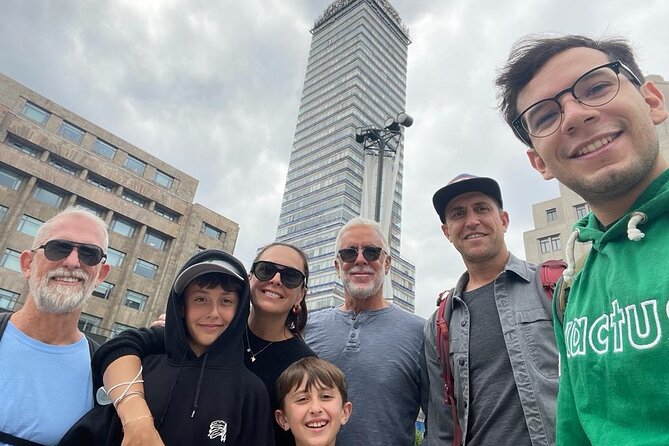
Mexico City’s Historic Center can feel like a lot. The streets are crowded, the buildings are huge, and every corner seems to have another story. This tour helps because it teaches you how to read the city. You start with the obvious power centers, then slide backward and forward in time, so the names on a map start matching what you see on the ground.
What I like is the balance between the heavy and the human. Yes, you’ll talk about empires and institutions. But you’ll also hear how trade, religion, and politics shaped daily life—plus what’s still celebrated in the city today. It’s the kind of tour that helps you return later on your own and feel like you know where you are.
And the small group size matters. With a maximum of 10 people, it’s easier for the guide to answer questions and manage crossings and pauses. Expect stops that are tight but not frantic.
You can also read our reviews of more walking tours in Mexico City


From Plaza de la Constitución to a real sense of place
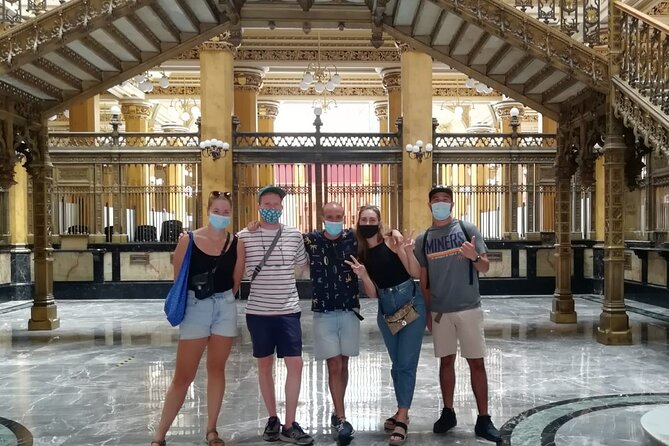
You begin at Plaza de la Constitución—the Zócalo area—one of the most important squares in the country’s public life. From here you can orient fast. The National Palace sits nearby, the Supreme Court of Justice is in the mix, and you’ll also spot silversmith shops—so you immediately see that this isn’t just an “old photo spot.” It’s a working civic hub.
The tour time at Stop 1 is about 15 minutes, and the goal is clear: give you a mental framework. Once you understand how the square functions as a center of power, the rest of the day clicks into place.
Practical tip: if you can, go prepared for sunlight and crowds. The Zócalo area often has a lot going on, and it can be hard to step aside without blocking others. If your guide offers shade breaks later, take them—your feet and your lungs will thank you.
Zócalo views, then Catedral Metropolitana’s style shift
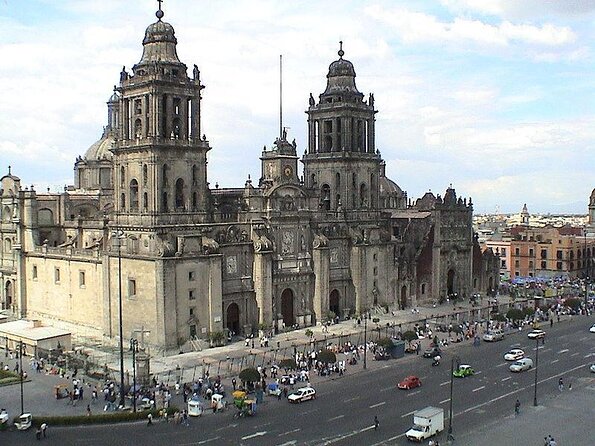
Next up is the Catedral Metropolitana de la Ciudad de México. You’ll focus on the cathedral from the outside—what it represents, where it came from, and how its construction story connects to Mexico City’s colonial era.
This stop is about 10 minutes. The emphasis is on the architectural evolution: Baroque details and later neoclassical influence. That short window is actually smart. You don’t need a long cathedral visit to understand the big idea. Once you see the exterior and learn the style timeline, you’ll notice details later when you pass by again.
What to watch for: changes in façade elements and how the building’s visual weight contrasts with the open space around it. It’s a good contrast lesson—pre-Hispanic sacred spaces had their own logic, and the colonial church complex brought a completely different kind of “center.”
Templo Mayor outside: rain, sun, and why location mattered
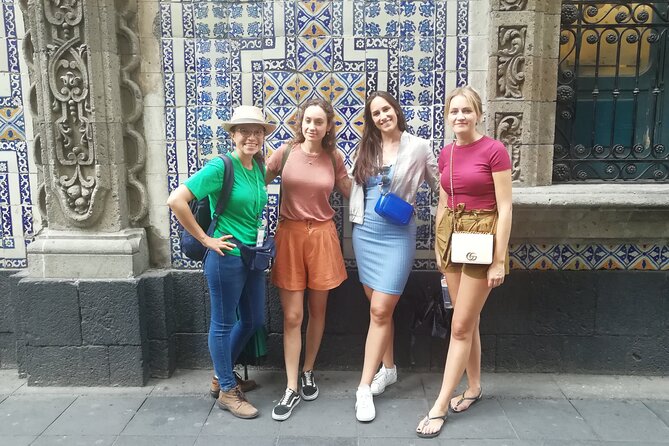
After the cathedral zone, you’ll head to the exterior area of the Templo Mayor ruins. Even though you’re not going deep into the interior during this walk, you’ll still get the core context: this temple was dedicated to the gods of rain and sun, and it was tied directly to Mexica belief and geography.
This part of the tour is short, but it’s concept-heavy. The guide will help you understand why the Mexica world wasn’t just spiritual—it was mapped onto the city’s layout. That’s the point. Once you hear how sacred space connects to land and layout, you start seeing Tenochtitlán as more than a historical headline.
Value for first-timers: you’ll stop making Templo Mayor a vague “cool ruin” and start treating it like a center that explains the rest of the city’s structure.
Museo Vivo del Muralismo: Diego Rivera’s early-20th-century Mexico inside the Ministry
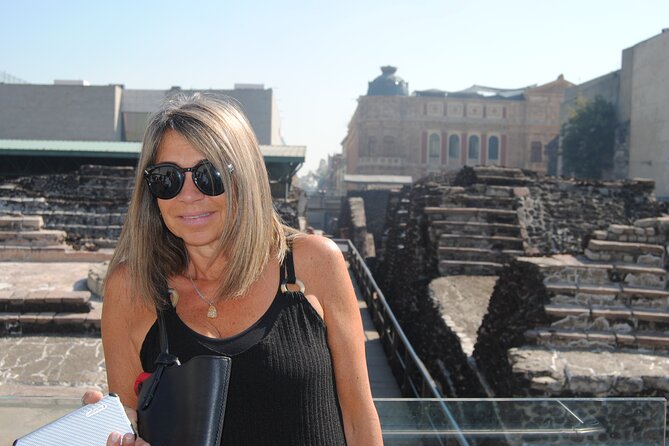
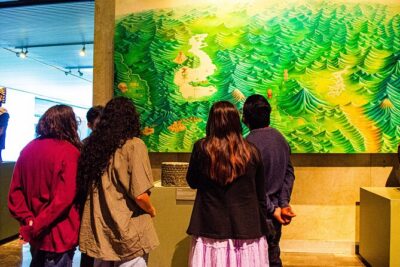
This is one of the best reasons to do the tour. You’ll visit Museo Vivo del Muralismo inside the Ministry of Education, where a major portion of Diego Rivera’s murals is preserved. The time here is about 25 minutes, and the admission is included.
What you get is more than famous art. You’ll connect the murals to themes like festivals and traditions, social struggle, trade, and politics in the early 1900s. In other words: you see how art documented people trying to change their reality.
Why this stop feels worth it: museums can sometimes separate you from history by making everything “behind glass.” Here, the murals are part of a larger setting, and you’re meant to interpret them. It’s an excellent place to learn what to look for—so later, when you see Rivera’s work elsewhere, you understand the why behind the paint.
Comfort note: this is a rare indoor-ish pause on a walk that’s mostly outdoors. If you need a breather, this is the moment.
You can also read our reviews of more city tours in Mexico City



Plaza de Santo Domingo: viceroyalty power, trade routes, and big conflicts
At Plaza de Santo Domingo, you’ll see a square that witnessed major events during the viceroyalty era of New Spain. The talking points go beyond architecture. You’ll connect this area to trade of spices and goods with Asia, the role of the Holy Inquisition, and even attempts by France to conquer Mexico.
Stop length is around 15 minutes, and admission is listed as free. That means you’re spending time learning rather than paying extra to “access” the story.
This is also a good place to pay attention to how squares work in Mexico City. They function like outdoor stages. People pass through, gather, and remember events. The guide’s job here is to help you see why the square mattered, not just that it’s scenic.
Plaza Tolsa: rest in the shade, then learn modern Mexico’s roots
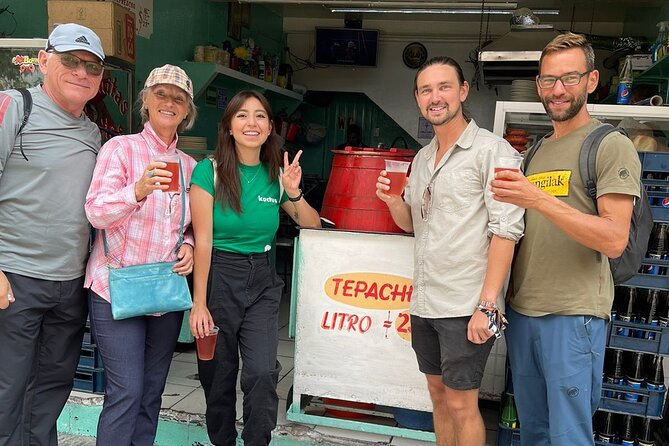
Next you reach Plaza Tolsa, where you get a practical break—about 20 minutes. Admission is free, and this stop is partly informational and partly conversational. Your guide will discuss topics like indigenous languages, the tradition of the Day of the Dead, music, politics, and gastronomy.
This is where the tour stops feeling like a checklist and starts feeling like a guided walk with context. The guide can bring the city’s present into focus while still keeping the historic thread alive.
You’ll also see standout landmarks around the square:
- the equestrian statue of Charles IV, nicknamed the little horse
- the exterior of the National Museum of Art
- the exterior of the Mining Palace
The best part of this stop is that it gives you language for what you’ll notice later. After Plaza Tolsa, you’ll be able to recognize when an experience is rooted in indigenous heritage, colonial influence, or modern reinvention.
Ventana Arqueológica: the past hiding under your feet
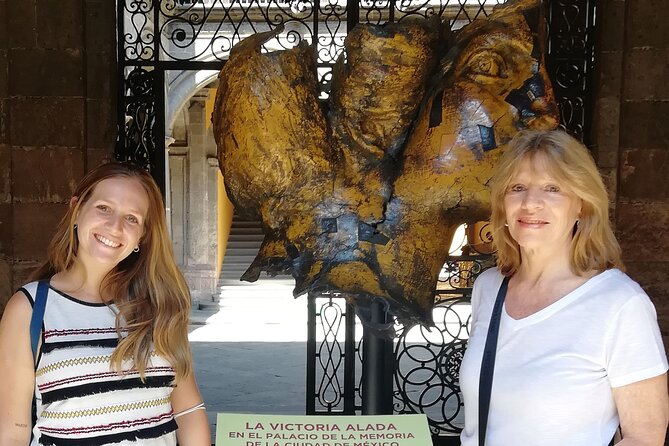
One of the most memorable moments is brief: Ventana Arqueológica. You’ll see the past under a street next to the main temple area, learn how it was found, and hear about secrets many buildings in the Centro Histórico conceal.
This is about 5 minutes, and admission is listed as included. Don’t underestimate the value of a short stop like this. When it’s done well, it changes how you see the entire city. Mexico City has a layered built environment, and this gives you a concrete example of that layering.
If you’re the type who likes “how do they know that?” moments, this is for you.
Palacio de Bellas Artes and Palacio Postal: Mexico City’s big visual statements
Then you move to Palacio de Bellas Artes, a must-see for most first visits. You’ll spend about 15 minutes there, focusing on the interior and exterior as art in its own right. Admission here is listed as free, which is a nice bonus given how iconic this building is.
The Palacio side of Bellas Artes is about spectacle and craft. Even in a short visit window, you’ll understand why it became a headline landmark: it looks like it belongs to a city that wanted to stage its culture at full volume.
After that, you stop at Palacio Postal (Postal Palace). The time is about 10 minutes, and admission is listed as not included. The point of the stop is interpretation: you’ll learn about the economic and political consequences of building a majestic palace that was still operating.
My practical take: if you’re someone who hates paying extra for quick sights, you’ll appreciate Bellas Artes being included while Postal Palace is more of an outside/brief overview here. If Postal Palace matters to you deeply, plan a return when you have extra time to do it properly.
House of Tiles: the photo magnet that still earns its reputation
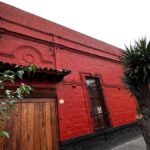
The last named stop is the House of Tiles. It’s one of the most photographed facades in the center, mainly because the tiled look is so distinct. You’ll get about 15 minutes, and admission is listed as free.
This is a nice way to end the tour because it wraps history into something visually immediate. When you’re tired from walking, your brain likes simple rewards—bright surfaces, clear design, an easy landmark to find again later.
The tour ends near the Palace of Fine Arts and the tile house, so you’ll be well positioned to keep exploring on your own.
Tickets, timing, and what’s actually included in the experience
This tour is roughly 3 hours and moves through a set of major sites in the Centro Histórico. The big value is how much you get for your time: lots of exterior architecture stops that don’t require extra admission, plus a couple of important interior moments.
Here’s how the included/extra concept plays out:
- Included admission: Museo Vivo del Muralismo and Ventana Arqueológica
- Free sights: stops like Zócalo and plazas, plus Palacio de Bellas Artes and the House of Tiles (as listed)
- Not included: the cathedral (outside explanation) and Palacio Postal are marked as not included
So you’re mostly paying for guided orientation and storytelling, not an admissions-heavy itinerary. If you care less about buying tickets and more about understanding what you’re seeing, this fits well.
Timing note: the stop lengths are short for a reason. You’re meant to learn, move, and then go back later to spend more time where you want.
Pace and comfort: cobblestones, elevation, and smart break moments
A theme from guide style in this kind of route is pacing. The city center isn’t designed for long strolling breaks every few minutes, so guides who manage comfort well stand out fast.
Here’s what you should plan for based on how this walking style works:
- Expect lots of walking with limited seating.
- Cobblestones can slow the group down.
- Sun can be intense—your guide may offer shade pauses, especially around Plaza Tolsa and other open areas.
- Elevation can make even short transitions feel longer than you expect.
If you’re sensitive to altitude, take advantage of indoor time at Museo Vivo del Muralismo. If you’re traveling with mixed ages or anyone with slower mobility, this itinerary can still work, but you’ll want to go in expecting that the group may move at the pace of the slowest comfortable walker.
Also, this tour allows service animals, and it’s near public transportation—so you can hop out or return to your hotel easier if you need a reset.
Is this the right tour for you?
Book this walking tour if:
- you want a first-day orientation to Centro Histórico with solid context
- you like art plus history and want Diego Rivera’s murals explained in plain language
- you prefer a small group (max 10) where questions are welcome and the pace feels manageable
- you’d rather learn from guided interpretation than spend your time ticket-hunting
Skip it or choose a different format if:
- you hate walking or need frequent places to sit
- you’re hoping for long, deep visits inside every major site (this tour is about highlights and connections)
If you’re doing Mexico City for the first time, I think this is a strong starting thread. You’ll finish with a map in your head and a list of places you actually want to return to.
FAQ
How long is the walking tour?
The tour lasts about 3 hours.
Is the tour offered in English?
Yes, it’s offered in English.
What size is the group?
This activity has a maximum of 10 travelers.
Where does the tour start and end?
It starts at Plaza de la Constitución and ends near Edificio Guardiola, Av. 5 de Mayo 1, at the side of the Palace of Fine Arts and the tile house.
Is a mobile ticket used?
Yes, the tour uses a mobile ticket.
Are any admissions included?
Yes. Admission is included for Museo Vivo del Muralismo and Ventana Arqueológica.
Are there sites with free admission on the itinerary?
Yes. Several stops are listed as free, including Zócalo, Plaza de Santo Domingo, Plaza Tolsa, Palacio de Bellas Artes, and the House of Tiles.
What sites are marked as not included?
Catedral Metropolitana and Palacio Postal are marked as not included.
Is the tour near public transportation?
Yes, it’s near public transportation.
What kind of weather does the tour require?
It requires good weather, and if it’s canceled due to poor weather, you’ll be offered a different date or a full refund.