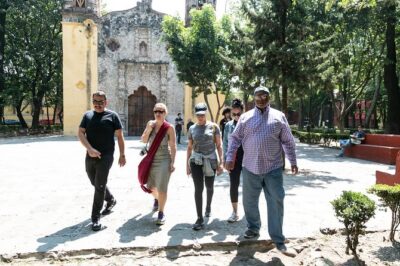
Mexico City can feel like a movie set—this tour lines up the scenes. You’ll start in the Historic Center with major colonial landmarks and Aztec remains, then roll into one of the world’s great museums for a focused look at Mesoamerican cultures. I love how the route pairs street-level walking with planned stops, so you’re not just looking—you’re connecting places.
I also love the museum value: the Anthropology Museum entrance is included (if you pick that option), which makes the day feel complete instead of chopped up. A possible drawback is that timing can be sensitive to traffic and pickup coordination, so wear comfy shoes and keep your schedule a bit flexible.
In This Review
- Key highlights at a glance
- Where this tour really shines: Historic Center + Anthropology Museum
- Fine Art Palace: a stop that sets the tone fast
- Zócalo and the Metropolitan Cathedral: the main square, plus the big questions
- Palacio Nacional and the Rivera frescoes: Mexico’s self-portrait in paint
- Museo del Templo Mayor: walls, doors, and how the Great Temple worked
- Paseo de la Reforma toward Chapultepec: a scenic city spine
- Chapultepec Park sections: 8 museums, 100+ fountains, and a lot of choices
- Museo Nacional de Antropologia: the museum hour that makes the whole day click
- Price and value for $44: when the ticket makes sense
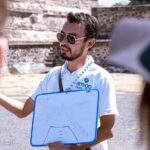
- What kind of guide experience you’re likely to get
- Who should book this walking + museum combo
- Should you book? My take
- FAQ
- How long is the tour?
- What’s the price per person?
- Is hotel pickup included?
- Is the Anthropology Museum ticket included?
- Is there an English guide?
- What’s the group size limit?
- Does it run in bad weather?
- Is this tour suitable for kids?
Key highlights at a glance
- Fine Art Palace as a visual warm-up: art deco + Renaissance-style details, Carrera and Mexican marbles, and a famous Tiffany curtain
- Zócalo in context: the world-famous main square, National Palace and other power buildings, plus Templo Mayor remains
- Diego Rivera frescoes at Palacio Nacional: one stop that teaches you how Mexico tells its own story
- Templo Mayor Museum area: a clear sense of walls, doors, and how the Great Temple functioned
- Chapultepec Park by car, then museum time: you see major landmarks plus a ticketed hour at the Anthropology Museum
- Small group size (max 16): easier to hear your guide and move at a human pace
Where this tour really shines: Historic Center + Anthropology Museum
This is one of those Mexico City combos that makes sense if you want both scale and meaning. The walking portion brings you right into the swirl of the Zócalo—politics, religion, and archaeology side by side. Then you jump to the Museo Nacional de Antropologia, where you finally get the objects, labels, and context that turn those ruins into something you can picture in your mind.
You’ll travel in an air-conditioned vehicle part of the day, which matters in Mexico City. The city can be bright, warm, and busy, and having a break between stops keeps the walking segment more enjoyable. You’re also working with a professional guide, which is huge for places like Palacio Nacional and the Templo Mayor area, where the details are part of the payoff.
One more practical note: this trip is listed for 4 to 5 hours. That’s a sweet spot for people who want a big hit of highlights without sacrificing an entire day. It’s also not the kind of tour that drags you through gift shops; you’re mostly moving between outdoor monuments and museum time.
You can also read our reviews of more walking tours in Mexico City

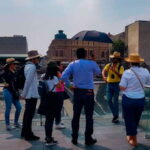

Fine Art Palace: a stop that sets the tone fast
The day starts with the Fine Art Palace, and it’s a strong opening because it trains your eye. The building mixes styles—art deco alongside Renaissance touches—and it uses striking materials like Carrera and Mexican marbles. You’ll also hear about the impressive Tiffany curtain, which is the kind of detail that makes a stop memorable even if you only spend a short time there.
Why I like this as a first act: it gets you thinking about how Mexico City “layers” its identity. Even before you hit the Aztec-adjacent sites, you’re seeing how different eras and aesthetics sit next to each other. That lens helps later when you compare the Zócalo’s power buildings and the Cathedral to the archaeological remnants at Templo Mayor.
Practical tip: if you’re the type who likes to take photos, this is a good place to get rolling early. Light and angles can be better at the start than later, after the day’s crowds build up.
Zócalo and the Metropolitan Cathedral: the main square, plus the big questions
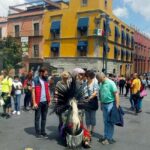
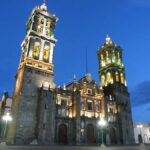
Next up is the Zócalo, the main square of Mexico—so central it basically anchors the whole day. You’ll stand in the area associated with the world’s third-largest square and take in the surrounding political power buildings. Expect to see the National Palace area, Mexico City Hall, the Justice Palace, and the Cathedral zone.
Here’s the value beyond the iconic postcard view: the Zócalo is also where you find the remains connected to the Aztec Empire, including the Templo Mayor area. The square isn’t just “pretty architecture.” It’s a place where eras overlap—Aztec foundations, colonial authority, and modern civic life all share the same physical neighborhood.
You’ll also head to the Catedral Metropolitana de la Ciudad de México, dedicated to the Assumption of the Blessed Virgin Mary. The Cathedral’s main altar is described as Churriguersco style, and you’ll hear the practical engineering point: the ground is swampy, yet the structure stands. That’s one of those details that turns an impressive building into a story you can respect.
Another reason this stop works: the Cathedral’s location matters. It’s on the north side of Plaza de la Constitución, meaning you can connect it spatially to the wider center without needing extra directions or detours.
Potential drawback to keep in mind: this is a major public area, so expect crowds at the square and around the Cathedral. If you don’t like busy spaces, bring sunglasses, keep your phone secured, and plan to move with your guide rather than trying to wander freely.
Palacio Nacional and the Rivera frescoes: Mexico’s self-portrait in paint
After Zócalo, you’ll visit Palacio Nacional de Mexico, the seat of Mexico’s federal executive power. This is a big deal in political terms—and in visual terms, too.
Inside, you’re headed toward the fresco masterpieces by Diego Rivera, which paint the history of Mexico and the cultural richness of Mesoamerican peoples. Even when you only get a short window (the visit time listed is about 25 minutes plus a panoramic view), the fresco reference is meaningful. Rivera’s work is one of the most direct ways to understand how Mexico presents its past and identity.
If your guide is good at explanation (and the reviews you provided strongly point to that), this stop becomes the “bridge” between what you see outside and what you’ll study at the museum. Without the bridge, it can feel like you’re just checking off famous buildings. With it, you start noticing themes: power, ancestry, and how stories are built.
Timing consideration: this part is shorter by design. If you’re the type who wants long photo time and slow reading, you may feel slightly rushed. A smart strategy is to listen first, then photograph key moments once you know what you’re looking at.
Museo del Templo Mayor: walls, doors, and how the Great Temple worked
Then you’ll move to the Museo del Templo Mayor area, tied to the Great Temple of Mexico. The description here is very practical, which is good: the Great Temple is explained as an enclosure that includes constructions, towers, and patios—within a space bounded by a wall with doors leading toward main roads.
Why that matters for you: it helps your brain build a map. Instead of thinking of the Templo Mayor as a single structure, you understand it as a working complex with boundaries and controlled access points. That makes the site feel less abstract and more like a real place with movement, routes, and public visibility.
You also get a sense of why these remains matter for understanding the modern Zócalo area. If you’ve just visited the square, the Templo Mayor stop lets you connect the visible city layout to what the Aztecs used the space for.
Visit length is listed as about 15 minutes, so don’t expect a deep museum-style session here. This stop is best for orientation—figuring out what each space is, then using the main museum later to absorb the details.
You can also read our reviews of more city tours in Mexico City



Paseo de la Reforma toward Chapultepec: a scenic city spine
Between the Historic Center landmarks and the museum day, you’ll get a drive along Mexico City’s “beautiful street,” which connects major zones—Historical Center, Financial Center, cultural landmarks, and up toward Chapultepec Park. You’ll see monumental symbols along the way, including references to the Angel of Independence, the Diana, and Christopher Columbus.
This drive isn’t random. It’s a nice reset. The Historic Center is dense and full of layers. Reforma gives you the “big picture” of how Mexico City stretches and modernizes, with formal avenues that feel designed for visibility.
If you’re someone who struggles with scale, this leg helps. You can look at the city as a system, not just as separate sights.
Chapultepec Park sections: 8 museums, 100+ fountains, and a lot of choices
Next, you pass through the first and second sections of Chapultepec Park, described as a huge urban forest—one of the largest urban parks in the Americas. You’ll get a feel for what makes the park a city within a city: it’s listed as having 8 museums, more than 100 fountains and monuments, rowboats for the lakes, and children’s areas, plus plenty of space to walk.
Even though you aren’t spending hours on-site (you’re passing through with a drive), the stop still gives you useful orientation points you can return to later. You may also be shown highlights such as the Tamayo Modern Art Museum, Chapultepec Lake, the Auditorium, La Casa de los Pinos, and the Chapultepec Fair. The Composers Fountain, Papálotl Museo del Niño, and the Tlaloc Fountain are also mentioned.
Here’s the real practical benefit: if you like to plan your own follow-ups, you’ll leave with a mental map of where to go next. Chapultepec can feel like a maze if you visit without guidance, so seeing major landmarks from the road is a smart way to get oriented.
A consideration: since this is mainly a drive-through, you shouldn’t expect time to wander deeply through the park. If you’re dreaming of long breaks and photos among trees and lakes, plan additional time on a different day.
Museo Nacional de Antropologia: the museum hour that makes the whole day click
This is the main event for most people buying the combo. The Museo Nacional de Antropologia is described as one of the most important museum sites in Mexico and the Americas, built to present the archaeological legacy of Mesoamerican peoples and connect it to Mexico’s ethnic diversity today.
You’re allotted about 1 hour, and the museum entrance is included if you select the option. That’s a big deal for value: you’re not paying again at the door, and your tour time is focused on what you actually came for.
What you should expect from an hour in this museum: you won’t see everything. Instead, you’ll see the main way the museum explains Mexico’s ancient cultures—artifacts, context, and the storyline that connects past to present. If your guide is strong at storytelling, you’ll feel the difference between random objects and a coherent narrative.
Also, this is where the earlier stops pay off. When you’ve stood in the Zócalo area and learned what Templo Mayor functioned as, the museum becomes more than a building. It becomes the place where you can picture those spaces in 3D and understand the cultural logic behind them.
A realistic note: museums take attention. If you’re traveling with heat sensitivity or you get tired easily, use the 1-hour window wisely—prioritize the sections your guide highlights and don’t try to force an everything sprint.
Price and value for $44: when the ticket makes sense
At $44 per person, the tour isn’t a “cheap and cheerful” bargain. It’s a fair price for what you’re getting: a professional guide, air-conditioned transport, and a plan that strings together multiple high-impact sites in one half-day.
The included pieces matter:
- Hotel pickup and drop-off are included for selected hotels
- The Anthropology Museum entrance fee is included if you choose that option
- The itinerary covers both outdoor landmarks and museum time
So the value isn’t just the sights—it’s the structure. You’re saving the effort of figuring out routing across major zones in a day that includes both the Historic Center and Chapultepec.
If you’re on a tight schedule, this combo is a good way to compress a lot into one go. If you have more time and prefer solo wandering, you could do the museum independently and just visit a couple center sites. But if you want “watch it all happen” with an explainer in between, $44 can feel like money well spent.
What kind of guide experience you’re likely to get
Your guide is central to how this tour feels. The reviews you provided name guides including Juan Castro, and also highlight Gabriela and Jesús as particularly informative. That points to a style you’ll want: someone who can connect architecture and ruins to the larger story of Mexico.
To get the most out of your tour, use a simple tactic: ask one question at each major shift. For example:
- After Zócalo: ask what you should focus on at Templo Mayor
- After Rivera fresco references: ask how Mexico’s storytelling connects to what you’ll see later
- At the museum: ask what to prioritize in the one hour you have
Your guide is there for that exact purpose.
Who should book this walking + museum combo
This tour is ideal if you:
- Want a first-time Mexico City day that doesn’t ignore archaeology
- Like guided context more than solo aimless roaming
- Prefer a mix of walking and vehicle time, rather than a full day on your feet
- Plan to spend at least some time in the Historic Center and want it explained clearly
It may be less ideal if you:
- Hate crowds and want total silence at major public squares
- Need long museum time or independent wandering
- Have a very strict schedule and can’t tolerate delays due to traffic or pickup timing
Should you book? My take
If you’re trying to decide whether to book this, I’d say yes if you want a guided “starter pack” of Mexico City’s core identity: Aztec roots, colonial landmarks, and then the Anthropology Museum as the payoff.
The biggest reasons to choose it are practical: museum entry is included if you select it, you get a guide for the story-heavy stops, and the route is arranged to let you see how the city’s layers connect. The main reason to hesitate is timing sensitivity—so give yourself breathing room in your final day plan.
If you do book, wear comfortable shoes, bring water, and keep one mental goal: treat the museum as the place where all the earlier stops finally make sense.
FAQ
How long is the tour?
It runs about 4 to 5 hours.
What’s the price per person?
The price is $44.00 per person.
Is hotel pickup included?
Hotel pickup and drop-off are included for selected hotels. If your hotel is outside the included area, a meeting point is assigned.
Is the Anthropology Museum ticket included?
The Anthropology Museum entrance fee is included if you select the option. Food and drinks are not included.
Is there an English guide?
It’s offered as English guide only under request.
What’s the group size limit?
The tour has a maximum of 16 travelers.
Does it run in bad weather?
Yes, it operates in all weather conditions, so dress appropriately and wear comfortable shoes.
Is this tour suitable for kids?
Children must be accompanied by an adult.