REVIEW · MEXICO CITY
Food and Historic Walking Tour: Private Tortilla Crawl in Mexico City Downtown
Book on Viator →Operated by Mexico a Pie Walking Tours · Bookable on Viator
Some days you want museums. Other days you want lunch with a story. This private downtown walk pairs major landmarks like Palacio Nacional and the cathedral with a tortilla-focused street-food crawl—plus murals tied to Mexico City’s history.
I like that it stays practical: you’re walking through the Centro Histórico in a smart order, with enough time at the big indoor stops. I also like the food plan—four street-food stops plus one sweet, with coffee or tea—so you get a real sample instead of random bites. The main drawback is that it’s not for everyone: the tour isn’t available for gluten-free or vegan diets, and you’ll need moderate walking stamina.
You’ll meet in the heart of the action around Plaza de la Constitución and end near a top art museum area. Expect about 5 hours, in English (with the possibility of other languages), and a certified guide who can tailor the day to your questions and interests.
In This Review
- Key things to know before you walk
- What This Tortilla Crawl Gets Right in Mexico City’s Centro
- Price and Value: Where the $95 Goes
- Before You Go: Timing, Pace, and What to Wear
- Meet at Zócalo and Get Your Bearings Fast
- Palacio Nacional and Diego Rivera Murals: Art With Political Meaning
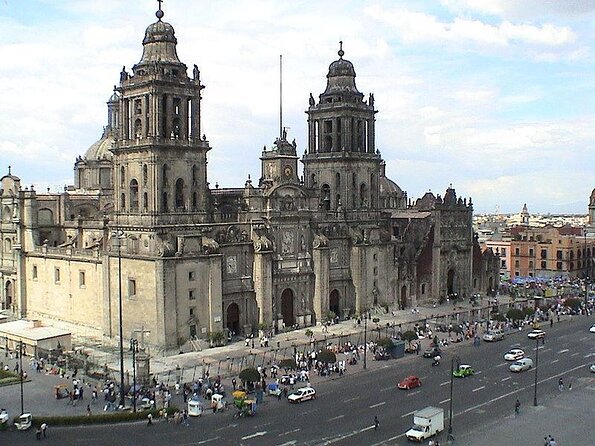
- Cathedral Metropolitana: Spanish Colonial Power in Marble Form
- Templo Mayor Ruins: Where Ancient Life Stays Visible
- Walking Past Markets, Synagogue, and Theater While the Snacks Kick In
- Palacio de Bellas Artes: The 20th-Century Art Moment in Marble
- Food Stops: Tortillas, Sweets, and Coffee or Tea
- Guide Quality and Flexibility (Oscar, Daniela, Emiliano, Monica)
- Who This Tour Suits Best—and Who Should Skip It
- Should You Book This Tortilla Crawl and Downtown Art Walk?
- FAQ
- How long is the private tortilla crawl tour?
- Where does the tour start and where does it end?
- Is this tour private?
- What’s included in the tortilla crawl food stops?
- Are the meals and drinks vegetarian-friendly?
- Is gluten-free available?
- Which attractions require extra admission tickets?
- Is alcohol included?
- What’s the cancellation policy?
Key things to know before you walk
- Food that’s part of the route: 4 street-food stops and 1 sweet stop, plus coffee or tea
- Diego Rivera murals inside Palacio Nacional: real art-history context, not just photos
- Old Mexico meets Spanish Mexico: Aztec Templo Mayor ruins and the Metropolitan Cathedral
- Markets and everyday street life: you’re not only seeing monuments, you’re seeing people
- A private group experience: only your party participates, so your pace matters
- Certified guides who adapt: guides like Oscar, Daniela, Emiliano, and Monica are praised for flexibility and clear explanations
What This Tortilla Crawl Gets Right in Mexico City’s Centro
This is the kind of tour that works because it treats downtown Mexico City like a living place, not a checklist. You’re in the Centro Histórico area where centuries overlap—Aztec roots, Spanish colonial power, and modern Mexico City life all within a walking radius.
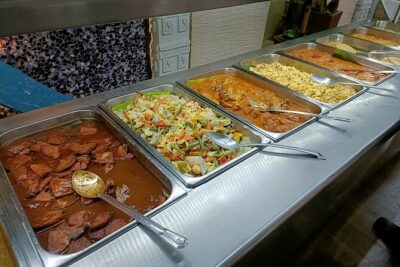
The biggest win is how the food fits the route. Instead of “walk here, then eat wherever,” you’re tasting street snacks while you learn why the city’s traditions show up in the streets, markets, and public spaces. That means tortillas and sweets don’t feel like an add-on—they feel like part of the same story as the murals and ruins.
And because it’s private, the guide can slow down when you want detail, or move faster when you just want the highlights. In feedback from guides such as Daniela, Emiliano, Oscar, and Monica, the common theme is simple: they adjust to the group and keep going with confidence even when the party has mixed ages and needs.
You can also read our reviews of more walking tours in Mexico City


Price and Value: Where the $95 Goes
At $95 per person for about 5 hours, you’re paying for three things:
First, you’re paying for a professional certified guide who handles the flow through major landmarks and the surrounding streets. In a place like Mexico City’s Centro Histórico, that matters. Lines, timing, and knowing where to stand can change your whole experience.
Second, you’re paying for food that’s included, not just an optional meal. With the tortilla crawl option selected, you get 4 street-food stops plus 1 sweet stop, and coffee or tea is included. Street food in Mexico City can be cheap, but a guided sampling plan is what makes it feel intentional.
Third, you’re paying for the mix of art and history. Seeing Diego Rivera murals at Palacio Nacional is a big cultural anchor, and then you layer in cathedral, Templo Mayor ruins, and the art-and-architecture focus at Palacio de Bellas Artes. That combination is hard to duplicate on your own without spending time figuring out what to match together.
For value, I’d call this a good choice if you want both history context and a guided food plan in one day. If you only want one or the other, you might find a cheaper option.
Before You Go: Timing, Pace, and What to Wear
Plan on a 5-hour walking day in Mexico City’s central streets. You should have moderate physical fitness, because you’ll be moving between landmarks and through areas that can include uneven sidewalks.
Wear comfy shoes with good traction. Downtown streets can be crowded and the walking can add up fast. Bring water, and keep your phone charged—especially because you’ll be stopping in places with lots of visual cues (murals, facades, and street scenes).
It also helps to think ahead about food needs. This experience isn’t available for gluten-free or vegan diets. Vegetarian may be possible, but you should let the operator know about allergies in advance. If you have a serious allergy, don’t wait until the day-of.
Meet at Zócalo and Get Your Bearings Fast
The tour starts at Plaza de la Constitución, address 803, in the Centro Histórico. That area is a smart starting point because it’s the center of gravity for downtown Mexico City—both visually and historically.
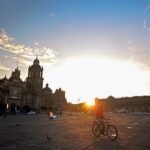
Stop one is the Zócalo itself. You spend around 20 minutes learning what makes the square the heart of the city. This matters even if you’ve seen pictures, because the Zócalo is where so many power shifts and public moments played out over time. Standing there with context gives you a lens for everything you see afterward.
You’ll then move into the next big layer: the seat of national symbolism and the murals that shaped how many people think about Mexican identity in the 20th century.
Palacio Nacional and Diego Rivera Murals: Art With Political Meaning
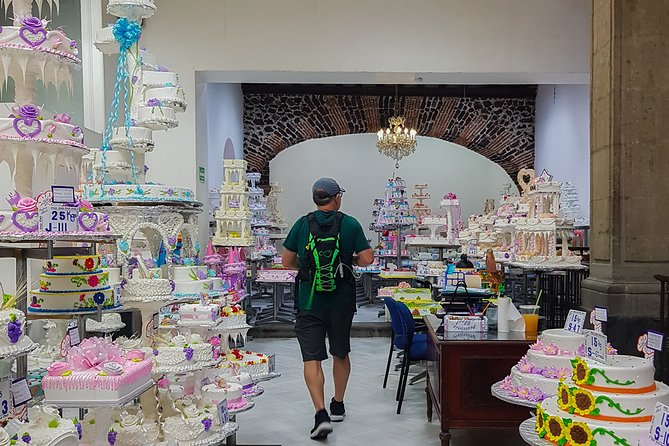
One of the clearest anchors on this tour is time inside Palacio Nacional de México. You’ll spend about 45 minutes there, and the highlight is the murals by Diego Rivera.
This isn’t only about spotting a famous name. You’ll learn how the muralist movement connects art with history, politics, and everyday life. The key value here is learning how the murals frame Mexico City’s past—so when you walk outside and see ruins and churches, you understand the city as a layered narrative instead of random landmarks.
The mural content can be powerful, and the guide’s job is to translate that complexity into something you can actually carry in your head while you’re walking. If you like street-level history with big-venue context, this is the moment that ties it together.
Admission for this stop is free.
You can also read our reviews of more food & drink experiences in Mexico City






Cathedral Metropolitana: Spanish Colonial Power in Marble Form
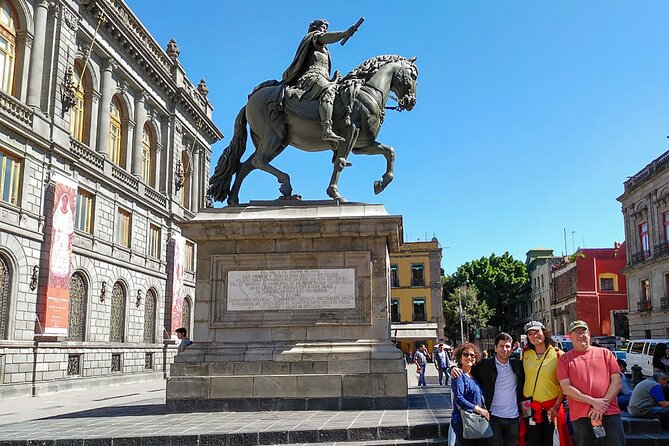
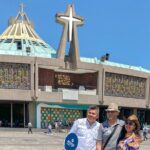
Next comes the Catedral Metropolitana de la Ciudad de México, with about 30 minutes on site. The cathedral is described as the biggest cathedral of the Americas during Spanish colonial time, and you’ll see it from the inside as part of the tour flow.
Here’s why this stop works on a walking-and-food day: it’s a visual contrast. You go from Aztec-era context nearby to Spanish colonial architecture with different design logic, different religious purpose, and a totally different vibe.
Even if churches aren’t your favorite thing, it’s worth pausing because the cathedral shows the scale of colonial ambition. And knowing the surrounding historical context makes the building feel less like a museum object and more like the result of real decisions made by real people.
Admission is free for this stop.
Templo Mayor Ruins: Where Ancient Life Stays Visible
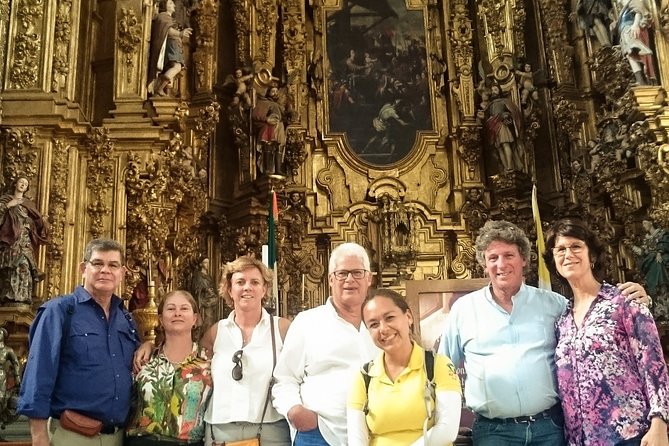
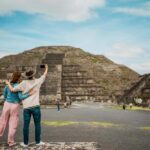
Then you shift into the archeology with Museo del Templo Mayor. You’ll spend about 30 minutes here looking at the Aztec Templo Mayor archaeological site.
This is one of those stops where a guide changes everything. Without context, ruins can feel like “old rocks.” With the right framing, you start recognizing the cultural logic behind the site—how ancient Mexican life was organized, and what the Templo Mayor represented.
One practical note: admission for this stop is not included, so you should budget extra for the ticket.
Still, if you care about the deeper foundations of Mexico City, this is the stop that prevents the day from feeling like art-and-architecture only.
Walking Past Markets, Synagogue, and Theater While the Snacks Kick In
The walking route doesn’t only hit big monuments. Along the way, you also get time at local markets and around key historic sites tied to everyday life. The tour description also includes visits connected to a historic synagogue and a theater.
That blend is useful. Mexico City’s downtown doesn’t function like a theme park; it functions like a neighborhood. Markets show the supply chain for daily food culture. Historic religious sites and performance venues show how community identity and social life were built over time.
And the food timing helps. You’re not eating randomly. You’ll sample regional drinks and flavors such as pulque and mezcal as part of the experience. If mezcal is new to you, your guide can help you understand what you’re tasting and where it fits in Mexican drinking culture.
One small caution: alcoholic drinks are available to purchase, but they aren’t included. If you want alcohol, plan for additional cost.
Palacio de Bellas Artes: The 20th-Century Art Moment in Marble
The final major art-and-architecture stop is Palacio de Bellas Artes. You’ll spend about 30 minutes viewing the emblematic early 20th-century building.
This is where the day feels like a visual finish line. The palace is tied to Mexico’s muralist and mural-adjacent art movements, and it sits in a location that still feels important for public culture. The building is described as marble, and it contains a theater, a concert hall, and multiple galleries—so even outside the main highlights, you get a sense of how art became a public institution.
Admission for this stop is also not included.
If you’re short on time in Mexico City, I’d still prioritize Bellas Artes after the earlier history stops. It helps your brain shift from centuries-old ruins to modern cultural identity.
Food Stops: Tortillas, Sweets, and Coffee or Tea
The food portion is built around a tortilla crawl concept. With the option selected, you get food on us at 4 street-food stops plus 1 sweet stop. You’ll also stop at a local coffee shop for coffee and/or tea.
This is the right structure for two reasons. One, tortillas are the through-line. Even when the fillings and sides change, you’re learning how Mexican street food builds flavor with familiar ingredients. Two, the sweet stop acts like a palate reset, so the day doesn’t turn into one long savory blur.
You should expect you’ll try a mix of street snacks rather than one heavy sit-down meal. That’s ideal for a walking tour because it keeps energy up while you’re moving.
Diet note: the tour isn’t available for gluten-free or vegan diets. Vegetarian may be possible, but you need to ask in advance and flag allergies.
Guide Quality and Flexibility (Oscar, Daniela, Emiliano, Monica)
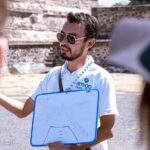
This is a private tour, which means your guide can adapt. In real-world feedback, guides like Oscar are praised as very knowledgeable and helpful, and Daniela is described as able to customize the day to match the group’s needs. Emiliano gets credit for flexibility and for answering questions thoroughly. And Monica is specifically praised for guiding around old downtown areas while explaining concepts like the difference between mezcal and tequila.
What that tells me as a decision-maker is simple: you’re not locked into a script. You’ll get your history and your food, but the guide can adjust the emphasis if you’re more into murals, more into ruins, more into markets, or more into drinks.
One more plus: a guide successfully navigated a larger group (including senior citizens and little kids). That doesn’t mean every group will be large, but it does suggest strong logistics and route management.
Who This Tour Suits Best—and Who Should Skip It
I’d recommend this tour if you want a single day that combines:
- Downtown Mexico City landmarks (Zócalo, cathedral, Palacio Nacional, Templo Mayor)
- Art context tied to Diego Rivera and national identity
- A structured street-food plan with tortillas, sweets, and coffee or tea
You might skip it if:
- You need gluten-free or vegan options (not available)
- You prefer slow, stand-around sightseeing with lots of free time (this is a walking plan with scheduled stops)
- You don’t want any extra tickets, since Templo Mayor and Bellas Artes admissions are not included
If you’re visiting Mexico City for the first time, this tour is a strong orientation day. It gives you landmarks plus the everyday flavor that makes downtown feel real.
Should You Book This Tortilla Crawl and Downtown Art Walk?
Book it if you like your Mexico City days to have both a story and a snack schedule. At $95, the included street-food sampling and coffee/tea make it feel like more than just a history walk. Add Diego Rivera murals at Palacio Nacional, cathedral views, and a stop at Templo Mayor ruins, and you get a day that hits multiple layers without feeling scattered.
Don’t book it if your diet restrictions are strict (gluten-free or vegan), or if you want a totally self-guided experience. Also, if you’re sensitive to walking and uneven sidewalks, consider planning a lighter day elsewhere.
If you do book, my best advice is to message the operator before you go with any allergies. And on the day, tell your guide what you want most: murals and meaning, ruins and ancient context, markets and daily life, or the food and drinks. The guides here seem built for adapting.
FAQ
How long is the private tortilla crawl tour?
The tour is about 5 hours.
Where does the tour start and where does it end?
The start is at P.za de la Constitución 803, Centro Histórico de la Cdad. de México. The end is near the National Art Museum area at C. de Tacuba 8, Centro Histórico, though the ending point can be customizable.
Is this tour private?
Yes. It’s a private tour/activity, and only your group participates.
What’s included in the tortilla crawl food stops?
With the tortilla crawl option selected, food is on us for 4 street-food stops and 1 sweet stop. Coffee and/or tea are included as well.
Are the meals and drinks vegetarian-friendly?
The tour is not available for vegan. Vegetarian may be possible. You should let the provider know your needs and any allergies.
Is gluten-free available?
No. This tour is not available for a gluten-free diet.
Which attractions require extra admission tickets?
Admission for Museo del Templo Mayor is not included, and admission for Palacio de Bellas Artes is not included. Zócalo, Palacio Nacional, and the cathedral are listed as free admissions.
Is alcohol included?
Alcoholic drinks are not included. They may be available to purchase.
What’s the cancellation policy?
You can cancel for free up to 24 hours in advance for a full refund. If you cancel less than 24 hours before the start time, the amount paid is not refunded.