REVIEW · MEXICO CITY
Architecture and History of Mexico City – Small Groups
Book on Viator →Bookable on Viator
Mexico City’s buildings start telling stories fast. I like the small-group pace because it makes the history feel personal, not like a sprint between landmarks. I also love how the guide keeps the focus on seeing: what you’re looking at, what came before it, and how later styles piled on top. One consideration: this is a walking route with a moderate physical demand, so comfy shoes matter.
You start at Torre Latinoamericana and end at the Zócalo, so you’re done in the heart of the action. Most stops are free to enter, you get bottled water, and the route is timed to include movement between sights in about 3 to 3.5 hours. You’ll want to check the mobile ticket on your phone; no extra printed paperwork needed, and you’re capped at a maximum of 6 travelers.
In This Review
- Key highlights to look for on this walk
- Reading Mexico City’s architecture like a local, on foot
- Torre Latinoamericana: start with a citywide “layers” lesson
- San Francisco’s Atrium: materials and the logic behind the buildings
- House of Tiles: artwork plus balconies for a smarter viewpoint
- Palacio de Bellas Artes: how art, politics, and architecture meet
- Palacio Postal and Plaza Tolsa: style swings in a compact walk
- Templo Mayor Museum area: archaeology in the center of the city
- Zócalo wrap-up: turn what you saw into a smart next plan
- What you’re really paying for: value at $83.59
- How long it takes and how to pace yourself
- The guide factor: when Raul’s storytelling style shows up
- Who this tour suits best
- Should you book this architecture and history walk?
- FAQ
- FAQ
- How long is the tour?
- How many people are in a group?
- Is the tour offered in English?
- Where does the tour start and end?
- Is bottled water included?
- Are admission tickets included?
- Do I need to use public transportation?
- Do I need a printed ticket?
- Is the walking level moderate?
- What happens if weather is bad?
- Is it refundable?
Key highlights to look for on this walk
- Layered views from Torre Latinoamericana help you read Mexico City’s evolution quickly
- Atrium of the Templo de San Francisco turns materials and methods into clear context
- House of Tiles uses balconies for perspective, plus an artwork-driven look at change over time
- Bellas Artes and its political-art backdrop connects architecture to the larger story
- Postal Palace, Plaza Tolsa, and the statue setting give you quick hits of distinct styles
- Templo Mayor’s archaeological site brings you right back to the city’s core
Reading Mexico City’s architecture like a local, on foot
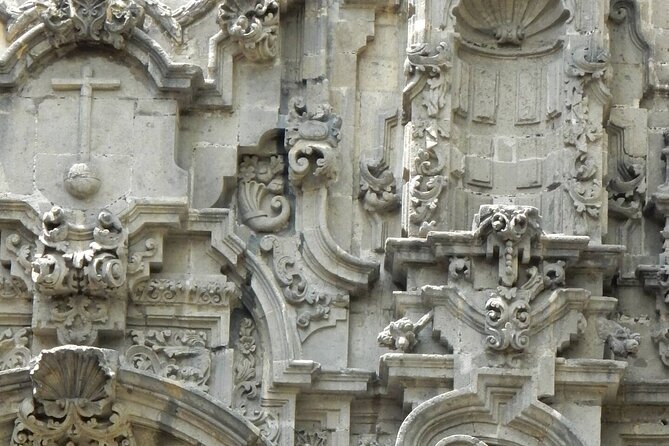
This tour is built for orientation. You’re not just checking boxes; you’re learning how to see the city in layers—pre-Spanish foundations, colonial-era fingerprints, and later style waves showing up in the same downtown block.
The small group size is a big part of the value. With up to 6 people, it’s easier to ask questions and keep the story flowing, instead of tuning out while someone else talks.
And the timing works for a first visit. In roughly 3 to 3.5 hours (including movement), you hit a chain of landmarks that collectively explain how Mexico City got to where it is today.
You can also read our reviews of more city tours in Mexico City


Torre Latinoamericana: start with a citywide “layers” lesson
You begin at Torre Latinoamericana, at a high point that’s great for getting your bearings. The stop is short—about 30 minutes—but it sets the tone. You’ll look out and understand that Mexico City’s architecture isn’t one era at a time; it’s more like stacked chapters.
This is the kind of start that pays off later. Once you learn the idea of layers early, you’ll notice the same pattern as you walk—styles and time periods showing up near each other in unexpected ways.
San Francisco’s Atrium: materials and the logic behind the buildings
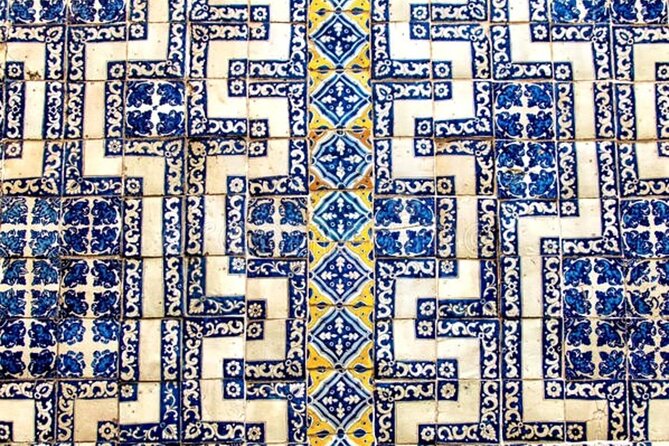
Next comes the Atrium of the Templo de San Francisco, with about 25 minutes here. This stop is less about pretty details from street level and more about the reasoning that shaped construction in Mexico City.
You’ll hear how materials and major historical processes helped make Mexico City what it became. The practical benefit is that it gives you a framework for interpreting what you see later, including why certain design choices feel like they belong to their time.
If you like structure—like knowing the why before the what—this part tends to click fast.
House of Tiles: artwork plus balconies for a smarter viewpoint
At House of Tiles, you’ll spend around 25 minutes. The focus is twofold: there’s an artwork aspect inside, and you also use the balcony views to connect the building to its neighbors.
This is one of the most rewarding stops because it trains your eyes. Instead of treating architecture like isolated photos, you start noticing how one building’s “frame” helps you read the wider street.
You’ll also get the idea of evolution here—this building’s story runs across almost 300 years. That long timeline matters, because it helps you understand why downtown Mexico City feels full of echoes rather than clean transitions.
Palacio de Bellas Artes: how art, politics, and architecture meet
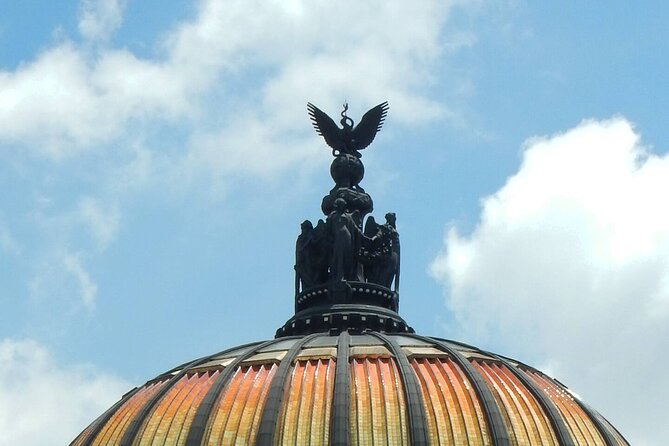
Then you head to Palacio de Bellas Artes, with about 20 minutes. Here, the goal is not just to look; it’s to place the building in its historical and political and artistic context.
A key practical note: admission for this stop is not included. So if you want to go inside, you’ll need to budget extra, or decide on the value of seeing the exterior and nearby relationships versus paying for entry.
This stop is still worth it even if you keep it exterior-focused. You’ll leave with the bigger-picture lens the guide is using to connect the route.
You can also read our reviews of more historical tours in Mexico City




Palacio Postal and Plaza Tolsa: style swings in a compact walk
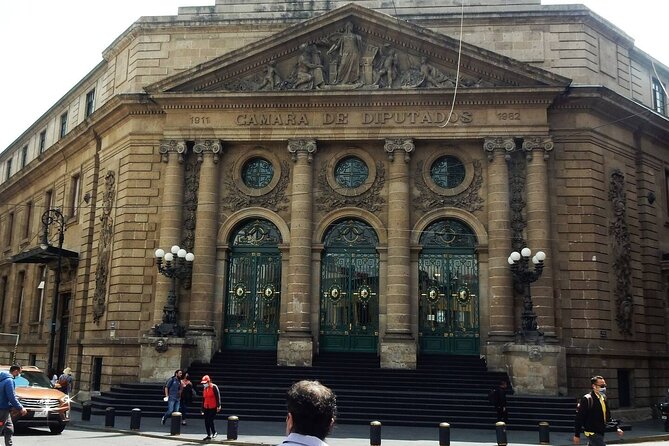
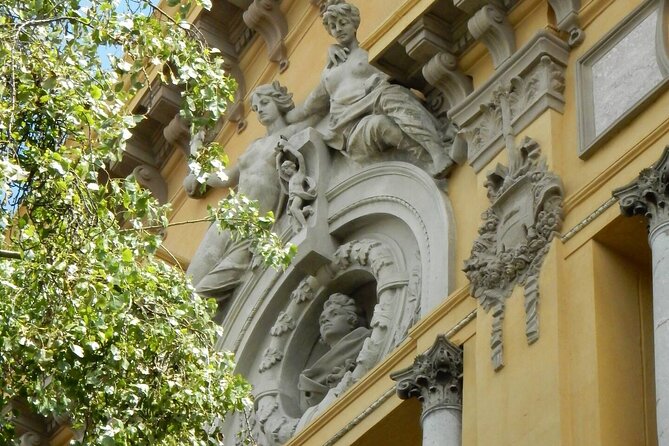
After Bellas Artes, the route shifts again with Palacio Postal for about 20 minutes. This is described as a beautiful post office from the beginning of the XXth century. Even if you’re not a stamp collector, that detail signals what kind of place it is: a civic building where design and function overlap.
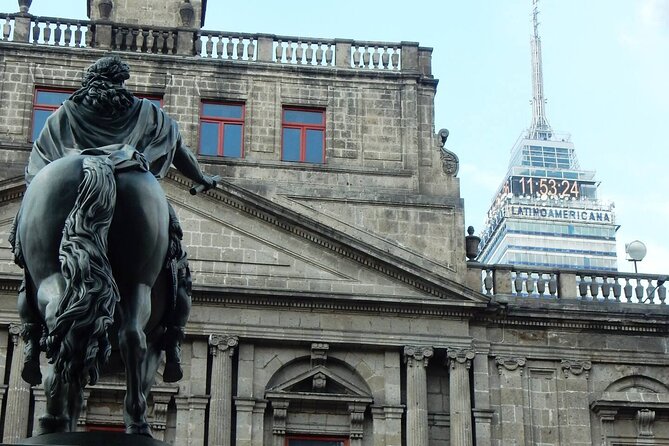
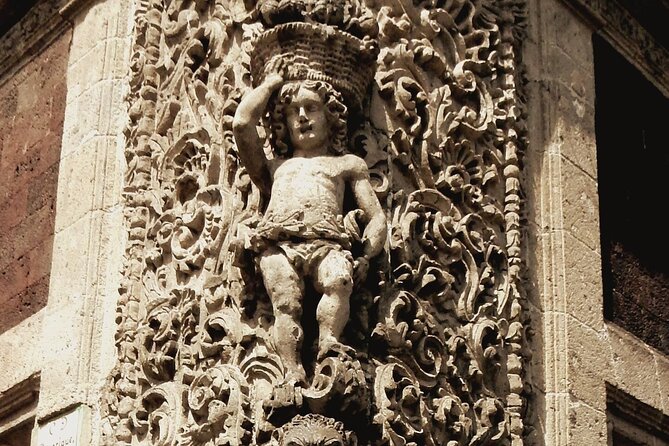
Next is Plaza Tolsa, also around 20 minutes. The setting is centered on Charles IV of Spain, surrounded by eclectic architecture. This is a nice contrast stop. You go from grand cultural institutions to a public-square feel where different styles coexist and the statue anchors the composition.
If you like quick visual variety, this segment delivers it without dragging.
Templo Mayor Museum area: archaeology in the center of the city
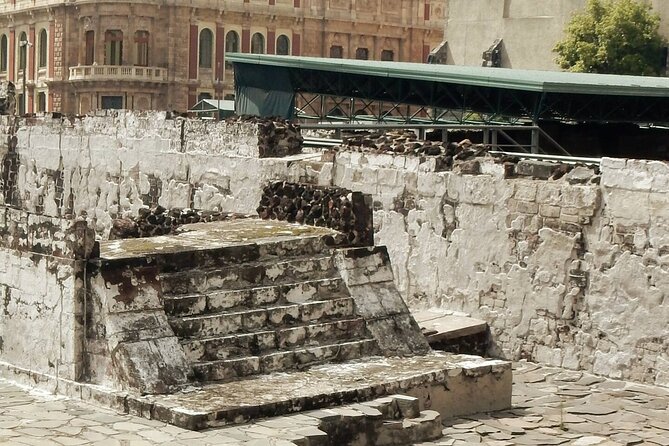
Near the end, you visit Museo del Templo Mayor, an archaeological site right in the city center, for about 20 minutes. This is where the walk stops being only about buildings you can photograph from the outside.
You’ll finish with a reminder that the ground itself holds layers. That’s a big part of why this tour works: you’re not only learning about architecture above street level; you’re also connecting it to the earlier core of the city.
And because this stop is right before your final wrap-up, it tends to “click” with everything you saw earlier—especially the layer concept you practiced at the start.
Zócalo wrap-up: turn what you saw into a smart next plan
The tour ends at the Zócalo (Constitution Plaza). The final stop is about 20 minutes, and this is where the guide ties the story together and answers questions.
This final piece is more useful than it sounds. When you’re new to Mexico City, it’s easy to feel overwhelmed by everything you could do next. Getting recommendations while the day’s architecture lessons are fresh helps you turn facts into a trip plan.
If you’re doing other downtown activities—like museums—the orientation here can make the later places easier to understand.
What you’re really paying for: value at $83.59
At $83.59 per person, this isn’t a budget “grab-and-go” walk. It’s priced for a guided, interpretation-heavy experience that strings multiple landmarks together in one route.
The best value drivers are:
- Small group cap (max 6), which supports Q&A and attention
- Mostly free admissions, so your cost doesn’t balloon at ticket windows
- Bottled water included, which is simple but helpful in the middle of the day
- A route designed around seeing and connecting eras, not just naming places
One more money-saving angle: because so many stops have free entry, you can keep spending focused on Bellas Artes if you choose to pay for it.
Also, this tour tends to get booked about 25 days in advance. If you’re traveling in busier weeks, earlier booking can help lock in your preferred day.
How long it takes and how to pace yourself
Plan for about 3 to 3.5 hours total. The schedule accounts for time spent moving between stops, which is key in Mexico City’s Centro Histórico where street-level timing can change depending on crowd flow.
The tour is listed as moderate fitness. That doesn’t mean it’s a workout, but it does mean you should wear comfortable shoes and keep yourself hydrated. Bottled water is included, but you’ll still feel better if you arrive prepared.
If you’re sensitive to walking distance or heat, do this earlier in the day when you have more energy.
The guide factor: when Raul’s storytelling style shows up
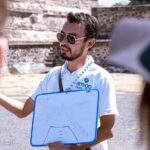
One name that stands out in the experience is Raul. In top feedback, he’s described as warm and engaging, and the tour approach is praised for giving people a strong foundation for understanding both pre- and post-Spanish Mexico.
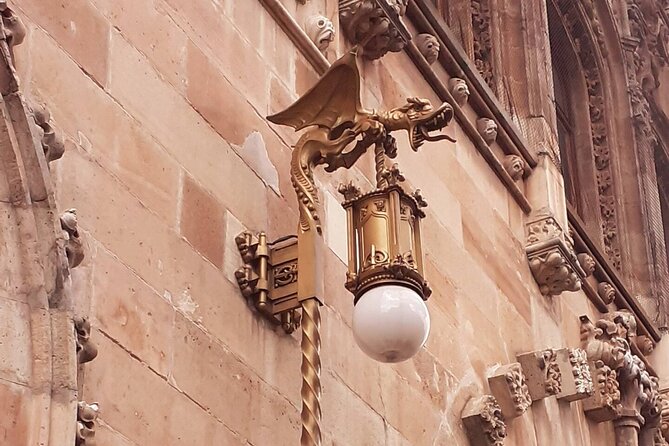
You’ll likely experience more than a list of facts. The emphasis is on connecting styles and eras through what you can see on the street—plus the kind of symbolism that makes architecture feel alive. Some of the story details highlighted include links to muralist movement and the meaning of mythical creatures mentioned in context.
There’s also a practical side: he’s noted for good communication ahead of time and for being flexible when people need help finding the right meeting spot. That kind of calm competence reduces stress on day one.
Who this tour suits best
This is a strong match if you:
- Want a first-day orientation to downtown Mexico City
- Like history that’s tied to buildings you can actually see
- Enjoy asking questions and getting direct explanations
- Prefer a tight group over a big crowd march
It may be less ideal if you hate walking, want lots of time inside buildings regardless of the schedule, or plan to spend your entire tour period indoors rather than on the street-level connections.
Should you book this architecture and history walk?
I think it’s worth booking if you want your Mexico City trip to start with understanding, not confusion. For $83.59, you get a guided route through some of the most recognizable downtown landmarks, with free entries at most stops and a final wrap-up at the Zócalo that helps you plan what comes next.
If you’re willing to walk and you like stories tied to sightlines—balconies, atriums, squares, and archaeological space—this tour gives you a fast, usable foundation.
FAQ
FAQ
How long is the tour?
It runs about 3 hours to 3 hours 30 minutes.
How many people are in a group?
This tour has a maximum of 6 travelers.
Is the tour offered in English?
Yes, it is offered in English.
Where does the tour start and end?
It starts at Torre Latinoamericana and ends at Constitution Plaza near the Zócalo.
Is bottled water included?
Yes, bottled water is included.
Are admission tickets included?
Admission is free for several stops, while Palacio de Bellas Artes is not included. The Zócalo stop has admission included.
Do I need to use public transportation?
Private transportation is not included, and the tour is listed as near public transportation, so you should plan to use transit on your own.
Do I need a printed ticket?
No. It’s described as having a mobile ticket.
Is the walking level moderate?
Yes. It’s suitable for travelers with a moderate physical fitness level.
What happens if weather is bad?
The experience requires good weather. If it’s canceled due to poor weather, you’ll be offered a different date or a full refund.
Is it refundable?
This experience is non-refundable and cannot be changed for any reason.