REVIEW · MEXICO CITY
Walking Tour – Impressive murals in Historical Center of Mexico City
Book on Viator →Operated by Walking Tours Mexico Aztlan · Bookable on Viator
Murals here tell Mexico’s big story. This walking tour strings together three iconic mural sites in the Historic Center, with UNESCO-level art you can actually stand in front of, plus behind-the-scenes context that makes the scenes click fast. You can choose a morning or afternoon start, so it fits the rest of your day instead of swallowing it.
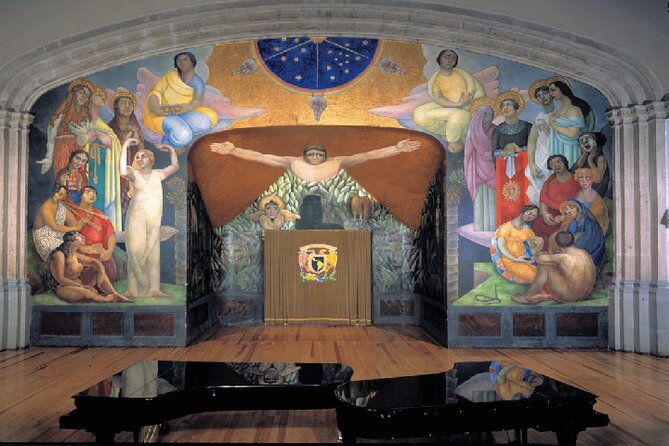
I like how the tour begins where the mural movement becomes real, at Colegio de San Ildefonso, including Diego Rivera’s early work La Creación in the amphitheater. I also like the way the guide connects paintings to politics and everyday life, with guides such as Balaam and Miguel known for clear English and symbol-by-symbol explanations.
One drawback to plan for: it’s still a walking day in the center, so comfortable shoes matter, and the pace can feel long if you’re a slow walker or if the group runs over time.
In This Review
- Key things to know before you go
- Why Mexico City’s Mural Movement Plays Best in Person
- San Ildefonso and La Creación: the mural origin story you can stand in
- Secretaría de Educación Pública: where the murals stretch and start to feel encyclopedic
- Palacio de Bellas Artes murals: the 1934 cultural machine and the walls that keep going
- Price and tickets: what $51 buys (and what you may still pay)
- Walking pace and timing: how to make the route feel easy
- Guides like Balaam and Miguel: how the stories lock in the meaning
- Tuesdays and access changes: how the plan adapts when the Ministry is closed
- Who should book this mural walking tour
- Should you book it?
- FAQ
- How long is the Walking Tour of Mexico City murals?
- What does the price include?
- Are museum tickets included for Palacio de Bellas Artes?
- Is transportation included?
- Is the tour offered in English?
- Where do I meet and where does it end?
- Is the tour suitable for most travelers?
- Does the route change on Tuesdays?
- How big is the group?
- What is the cancellation policy?
Key things to know before you go
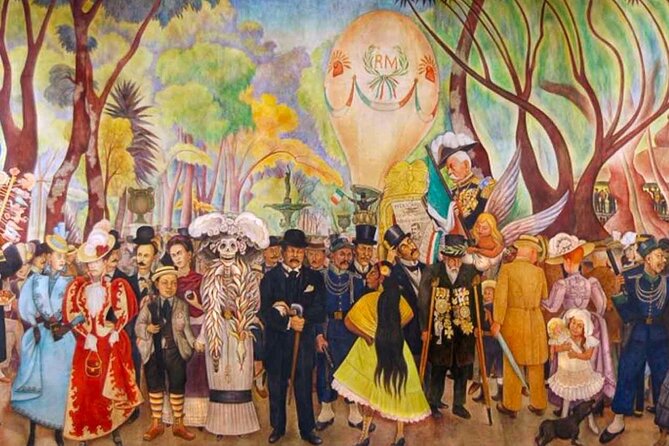
- Three major mural stops in the Historic Center, chosen from the mural sites the tour focuses on.
- A strong start at San Ildefonso, tied to Diego Rivera’s early mural work and Frida Kahlo’s first meeting with Rivera.
- Secretaría de Educación Pública murals come with time inside related rooms, including a library and children’s reading room.
- English-speaking guides with a track record for explaining symbolism and historical context in plain language.
- Palacio de Bellas Artes is included as a stop, but museum/entry tickets there are not included in the price.
- The route can shift on Tuesdays, when the Ministry of Public Education is closed.
Why Mexico City’s Mural Movement Plays Best in Person
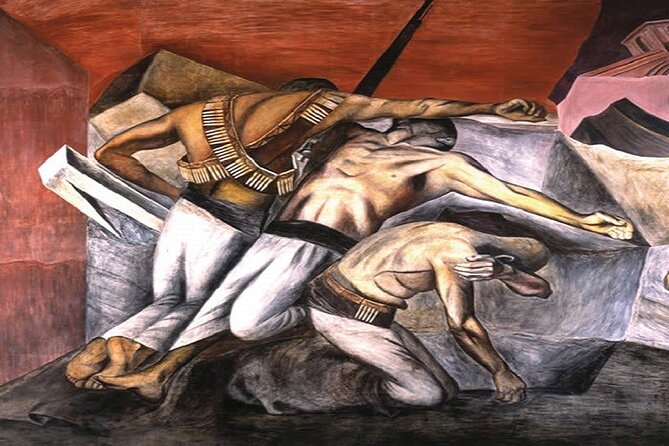
Mexico City’s mural tradition isn’t just something you read about later. It’s something you walk through. And that’s the point of this tour: you don’t just see famous walls. You get the stories behind the images, the reasons certain figures show up, and how art got used as a public megaphone in the 1920s to 1960s.
The tour is designed for art lovers, but you don’t need to be an art history major. The “why this mural matters” explanations are built into the stops. You’ll also be in the Historic Center, where UNESCO-listed sights are close enough that a walking plan makes sense.
Price-wise, the tour sits in the mid-range, but the value comes from what’s included: a guide plus museum entrances at the first two major mural locations. That’s helpful in a city where entry lines and ticket decisions can eat time fast.
Finally, the group size is capped at 25, which usually keeps things moving. Still, walking tours depend on your comfort level. If you want a slow, browse-everything pace, pick your expectations accordingly.
You can also read our reviews of more walking tours in Mexico City


San Ildefonso and La Creación: the mural origin story you can stand in
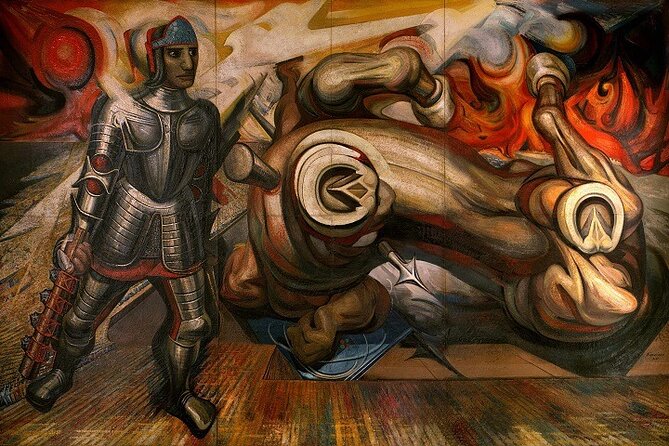
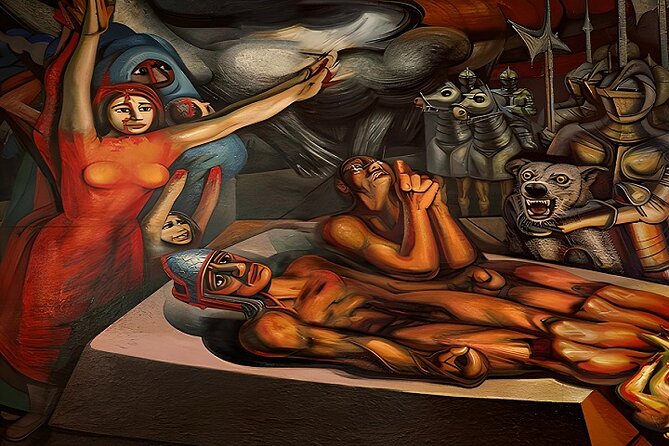
Your first stop is the Antiguo Colegio de San Ildefonso, the old National Preparatory School. This matters because it’s not a random art site. It’s tied to the birth of the mural movement in the most literal way: Diego Rivera’s La Creación is described as the first mural work by Rivera that appears in this setting.
Inside the building, you’ll see La Creación placed in the amphitheater. That location is part of the magic. An amphitheater is meant for gatherings and speeches. So the mural doesn’t feel like decoration—it feels like a statement meant for an audience.
There’s also a memorable historical detail woven into the stop: Rivera would meet for the first time a teenager named Frida Kahlo at this venue. Even if you already know Frida’s name, hearing how these artists intersected in real spaces helps the whole mural era feel less like museum captions and more like a living scene.
Plan on about 30 minutes here. That’s long enough to get oriented, take in the mural, and absorb context, but short enough that you keep momentum for the next buildings.
Secretaría de Educación Pública: where the murals stretch and start to feel encyclopedic
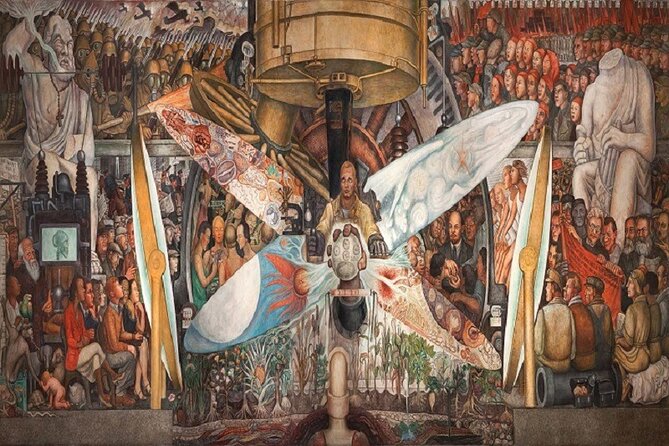
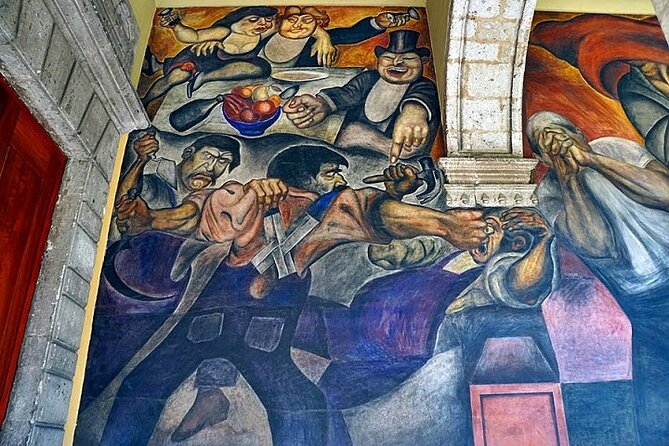
Next you head to Murales de Diego Rivera en la Secretaría de Educacion Publica, a place that’s famous for scale. The tour description calls out over three thousand square meters of murals across courtyards known as the Fiestas y Trabajo spaces. The result is that you don’t view a single masterpiece and move on. You read a wall like a chapter book—over and over—until the themes start repeating in your head.
You’re not limited to Diego Rivera here, either. The mural set includes works by artists such as Jean Charlot, Amado de la Cueva, and Roberto Montenegro, alongside Rivera. That’s a good thing. It helps you see the movement as a network rather than a one-person story.
What I like about this stop is the layout encourages you to slow down without dragging the day. Beyond the murals in the courtyards, you get time in two rooms dedicated to muralism and a multisensory hall filled with artistic and historical pieces. The tour also notes practical amenities you can use while you’re there, including a library, a children’s reading room, an FCE bookstore, and a cozy café.
The time budget is about 40 minutes. That should be enough to see the main murals and still get the context that makes them understandable, especially if your guide is pacing you well.
One practical note: this location is where your “good walking shoes” rule really matters. Even with indoor time, you’ll be moving through corridors and courtyards.
Palacio de Bellas Artes murals: the 1934 cultural machine and the walls that keep going
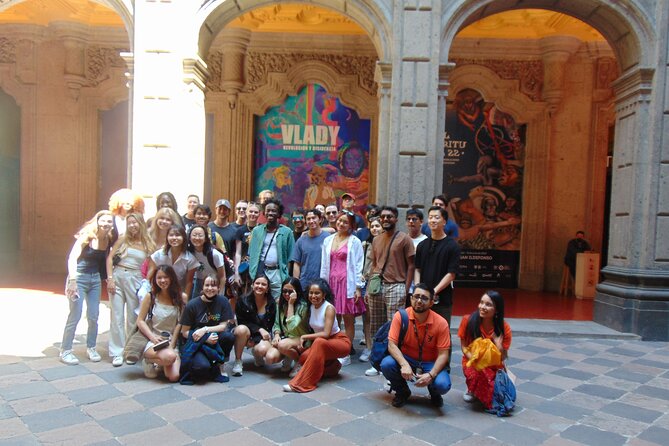
Your final major mural stop is Palacio de Bellas Artes on Juárez Avenue in the Historic Center. The tour frames it as a key moment in Mexico’s public culture: shortly before the building was inaugurated in 1934, several Mexican muralists received official commissions to paint on the enclosure walls.
This isn’t just “nice murals inside a pretty building.” The Palacio is described as Mexico City’s top house for artistic and cultural expression. It hosts exhibitions, dance shows, plays, and more, which means the murals sit in a place that treats art as part of everyday civic life.
The museum opened at the same time as the building, and the tour notes it was the first museum in Mexico. Even if your main reason for coming is the murals, the building’s role helps you understand why mural painting here had a stage-like feel. These aren’t hidden corners. They’re painted into the national spotlight.
Important budget detail: admission tickets for Palacio de Bellas Artes are not included. So while the murals are the star, you’ll want to be ready to pay entry separately if you need it for your access.
Time-wise, you’ll get about 40 minutes. It’s a fair chunk for viewing the mural areas plus taking in the hall and surrounding spaces.
Price and tickets: what $51 buys (and what you may still pay)
At $51 per person, you’re paying for more than “a guide pointing at walls.” The tour includes guide service plus museum entrance tickets for the first two stops. That means you’re not stuck juggling ticket prices and lines at the same time.
The one clear gap is at Palacio de Bellas Artes, where tickets are not included. If you’re trying to keep your day’s budget tight, it helps to plan a little extra for entry there.
The tour also runs as 1 to 3 hours, depending on your group and the pace. In real life, that range matters because murals encourage questions. If your guide is strong (and the guide examples like Balaam and Miguel suggest they often are), conversations can add time. That’s usually good. Just don’t schedule something stressful right after you leave the Palacio.
You also get a mobile ticket, which is convenient in a city where phone access is common and paper can be annoying. There’s group size control (maximum 25), and the tour is offered in English.
Value tip: if you’re already planning to see murals in the center, this tour saves you the “figure out what to see and where to go” time. In a city this big, that matters.
You can also read our reviews of more city tours in Mexico City



Walking pace and timing: how to make the route feel easy
This is a walking tour through the Historic Center, so your body is part of the experience. The reviews and tour design both point to the same practical truth: you’ll be on your feet for most of the time.
A simple plan helps:
- Wear shoes you can walk in for a few hours.
- Keep water in your bag, and use bathroom breaks when your guide offers options.
- If your schedule is tight, pick the start time that gives you recovery time after Bellas Artes.
One useful detail from guide behavior: on occasion, your guide may suggest saving time for the last leg—such as using an e-bike taxi option if needed—so you’re not exhausted when you reach the final stop.
Also, the tour ends at Palacio de Bellas Artes, at Av. Juarez S/N. The location is central, so connecting to other sights is easier once you’re finished.
Morning or afternoon start can also change the feel of the day. Afternoon often pairs well with museums and a slower dinner plan. Morning can help you knock out the “big wall viewing” early, then roam freely after.
Guides like Balaam and Miguel: how the stories lock in the meaning
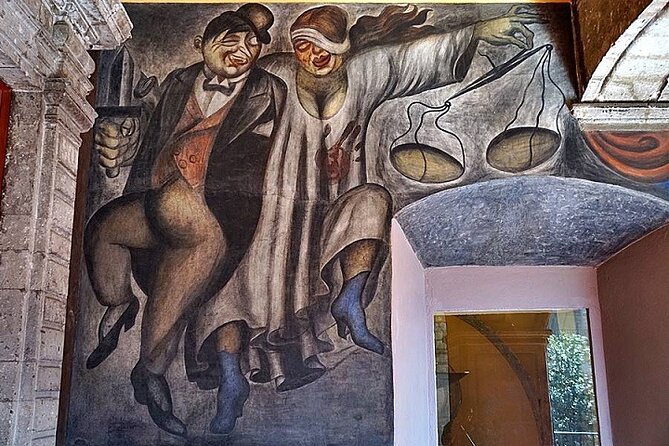
The biggest reason this tour gets such strong ratings is the way the guide translates walls into language you can use. Names that come up often include Balaam and Miguel, and their style appears consistent: they connect mural images to the political and social climate that shaped the work.
This isn’t just background talk. It’s practical interpretation. You learn how symbols function, how figures can refer to real events or cultural origins, and how the art shifts through time.
One theme that shows up clearly is the mural movement as a bridge between indigenous stories, religion, conquest-era imagery, and the Mexican Revolution’s later political messaging. When a guide explains what you’re seeing and why it was used, you start noticing details on your own. That turns a single visit into real learning.
Language quality is also part of the value. The tour is offered in English, and multiple comments highlight that the guides communicate clearly. That matters because murals are dense. If you miss half the explanations, you’re left guessing.
Two small caution flags based on what’s happened for people in the past:
- Sometimes the tour runs a bit long when the guide is on a roll. If you have strict timing, plan buffer time.
- Group size can affect attention. A larger group can mean less question time, so if you’re the type who wants lots of answers, it’s worth considering smaller groups or choosing a quieter time slot when possible.
Tuesdays and access changes: how the plan adapts when the Ministry is closed
Here’s the one schedule snag you should know up front. The Ministry of Public Education (Secretaría de Educación Pública) is closed on Tuesdays. Since one of the tour’s major mural stops is located there, the tour replaces it with another mural focus on that day.
The provided information is straightforward: on Tuesdays, the tour visits a Diego Rivera mural museum instead of the Ministry stop. The goal is to keep your day centered on mural work, even when access changes.
This kind of adjustment matters because murals are often tied to specific buildings and hours. So don’t treat the route like an exact factory line. Treat it like a curated best-of mural day that adapts to what’s open.
If you’re traveling on a Tuesday, expect a slightly different mural mix and build your expectations around seeing Diego Rivera and the broader mural movement themes rather than counting on the Ministry courtyards specifically.
Who should book this mural walking tour
Book this if:
- You want art history with context, not just a list of names.
- You love Diego Rivera but also want to see the mural movement as a team effort by multiple artists.
- You’re in the Historic Center and want a plan that bundles three major mural locations into one guided outing.
- You like guided interpretation that helps you understand symbolism, political messaging, and cultural references.
Skip it (or at least be more cautious) if:
- You hate walking or can’t handle a few hours on your feet.
- You need a tightly timed itinerary with no chance of running late.
- You only want one specific mural and nothing else. This tour is about the mural era as a whole.
It works especially well for first-time visitors to Mexico City’s mural scene. And it’s a good fit for couples and solo travelers who want structured viewing time, plus for families who benefit from guided storytelling in places like the Ministry’s children’s reading room area.
Should you book it?
Yes, if your goal is to understand the murals, not just photograph them. The combination of major mural buildings, included museum entrances for the first two stops, and guides who explain meaning in clear English makes this tour feel like good value for the time you spend.
The only reason to hesitate is logistics sensitivity: it’s still a walking day, and entry at Palacio de Bellas Artes requires separate planning. If you build in a little buffer and wear solid shoes, this is a smart way to see Mexico City’s mural movement where it actually lives—in public, on walls, and in the spaces that shaped the artists.
FAQ
How long is the Walking Tour of Mexico City murals?
It runs about 1 to 3 hours depending on the day and pace.
What does the price include?
The price includes guide service and museum entrance tickets for the stops where tickets are listed as included.
Are museum tickets included for Palacio de Bellas Artes?
No. Admission ticket is not included for Palacio de Bellas Artes.
Is transportation included?
No. Transportation is not included.
Is the tour offered in English?
Yes. The tour is offered in English.
Where do I meet and where does it end?
Meet at the former Colegio de San Ildefonso, Justo Sierra 16, Centro Histórico de la Ciudad de México. End at Palacio de Bellas Artes, Av. Juárez S/N, Centro Histórico.
Is the tour suitable for most travelers?
The tour notes that most travelers can participate.
Does the route change on Tuesdays?
Yes. The Ministry of Public Education is closed on Tuesdays, so the tour visits a Diego Rivera mural museum instead of that stop.
How big is the group?
The tour has a maximum of 25 travelers.
What is the cancellation policy?
You can cancel for a full refund up to 24 hours in advance. If you cancel less than 24 hours before the start time, the amount paid is not refunded.