REVIEW · MEXICO CITY
Private Tour Mexico City VIP FULL DAY
Book on Viator →Operated by Free Tour Mexico City · Bookable on Viator
Six hours, and Mexico City never slows down.
This VIP private day is built around two things I really like: round-trip pickup that keeps you from wrangling taxis, and the chance to see both the grand historic center and creative Coyoacán in one go. The trade-off is real though: with so many stops and Mexico City traffic, you’ll get shorter visits than you might want at your favorite sites.
You’ll also get the part that makes it feel special: a personal guide, tailored pacing, and a WhatsApp group set up before the tour so you can reach the team. It’s offered in English, it’s private (just your group), and tickets are mobile.
In This Review
- Key moments that make this VIP day worth it
- VIP logistics: pickup, private group, and WhatsApp coordination
- How six hours actually feels in Mexico City traffic
- Palacio de Bellas Artes: the art inside the gold and marble
- Palacio Postal and the stained glass ceiling you’ll want to photograph
- Torre Latinoamericana: earthquake-built confidence and a 360 view
- Palacio de Minería and its meteorite “time machine”
- Casa de los Azulejos: blue-and-white tiles and a classic restaurant stop
- Mexico City Cathedral and Zócalo: Spanish-era power with an Aztec foundation underneath
- Museo del Templo Mayor: two Aztec pyramids, and layers you can’t unsee
- Monumento a la Revolución and the Reforma drive: memorials plus skyline theater
- Independence Angel at night value: freedom symbolism, built for 1910
- Chapultepec Park: the green break you’ll appreciate later
- Chapultepec Castle: a museum on a hill with citywide views
- Coyoacán afternoon shift: cobblestones, plazas, and art you can point to
- Plaza Coyoacán and Jardín Centenario
- Mercado de Coyoacán: spices, produce, and craft stalls
- Casa Azul (Frida Kahlo Museum): rooms, garden, and the blue house
- Price and value at $189 per person for a full-day VIP plan
- What to check before you commit to a VIP day
- Who this tour suits best in Mexico City
- Should you book this Private Tour Mexico City VIP FULL DAY?
- FAQ
- Is this tour private or shared?
- Do you offer pickup in Mexico City?
- What’s the duration of the tour?
- What language is the tour offered in?
- Do I get a ticket on my phone?
- Are there admission fees for the stops?
- Can I bring a service animal?
- Where does the guide meet me?
- Is cancellation free?
Key moments that make this VIP day worth it

- Palacio de Bellas Artes murals: Mexico’s best-known artists show up inside.
- Torre Latinoamericana views: a 44th-floor 360-degree look at the city grid.
- Coyoacán + Casa Azul: Frida Kahlo’s home in the afternoon light.
- Templo Mayor museum area: Aztec ceremonial life under the modern streets.
- Chapultepec Park: a huge park break between big monuments.
- Paseo de la Reforma photo road: skyscrapers, fountains, and jacaranda purple season.
VIP logistics: pickup, private group, and WhatsApp coordination
This tour’s biggest practical win is the “door-to-door” rhythm. Pickup is offered from any place in the city center, and your guide meets you at your hotel lobby. Before the tour day, the company creates a WhatsApp group so you can message the guide and administration directly. In a city where plans can shift quickly, that matters more than people think.
It’s also a private tour, so you’re not squeezed into a big-group script. One review even pointed out how flexible the day felt when the guide adjusted to what the couple wanted to see. That doesn’t mean your guide can conjure open doors at closed sites, but it does mean you’re less likely to be dragged along on someone else’s schedule.
Still, “VIP” should come with clear expectations. A couple of departures had complaints about the vehicle being smaller than expected and about the guide’s presentation not matching a VIP vibe. My advice: on booking (or right after confirmation), message and ask what kind of car you’ll have and confirm the meeting time. Also, if you’re dressing up, tell yourself it’s a day that still involves walking, stairs, and stone sidewalks.
You can also read our reviews of more city tours in Mexico City


How six hours actually feels in Mexico City traffic
On paper, the day is about 6 hours. In practice, Mexico City adds friction: traffic, red lights, and the simple fact that famous sights are popular. The schedule includes many major landmarks, and most are quick “arrive, see, learn, photograph, move on” stops.
That can be a plus if you want breadth. You’ll see famous architecture, a major religious site, an Aztec ceremonial center, a revolution monument, and then a full shift into artsy Coyoacán. But it can also feel rushed if you’re hoping to linger with no pressure.
Here’s how to make it work for you:
- Wear comfortable shoes. You’ll be doing short walks and frequent moving.
- Keep your “must-photos” list to 5–8 items. After that, you’ll start repeating shots.
- Pick one “priority stop” where you want to slow down, and accept that the rest will be faster.
One review also mentioned that communication before the tour wasn’t smooth for their group. Your best defense is the WhatsApp connection and keeping your confirmation details handy.
Palacio de Bellas Artes: the art inside the gold and marble
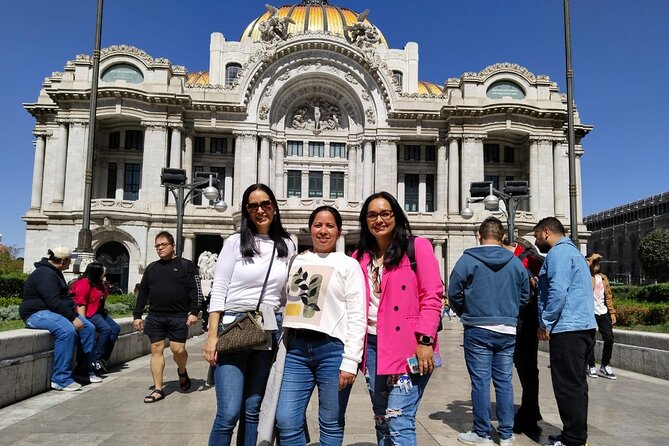
The day begins with Palacio de Bellas Artes, a major cultural hub in Mexico City. What I love here is how the building itself sets the tone. You’re not just looking at a façade; you’re stepping into a space that’s tied to Mexico’s big artistic names.
The palace is known for performances across music, ballet, theater, and exhibitions. For visual impact, the murals are the big reason to go. You’ll find work by artists including Diego Rivera, David Alfaro Siqueiros, and Rufino Tamayo. Even if you only spend a short time inside, those murals give you immediate context for the country’s artistic style: bold, public, and deeply tied to identity.
Time note: the stop is about 15 minutes, so aim to focus. If the crowd is heavy, don’t fight it for every angle. Get one clear view of the mural area and one exterior shot, then move on.
Palacio Postal and the stained glass ceiling you’ll want to photograph
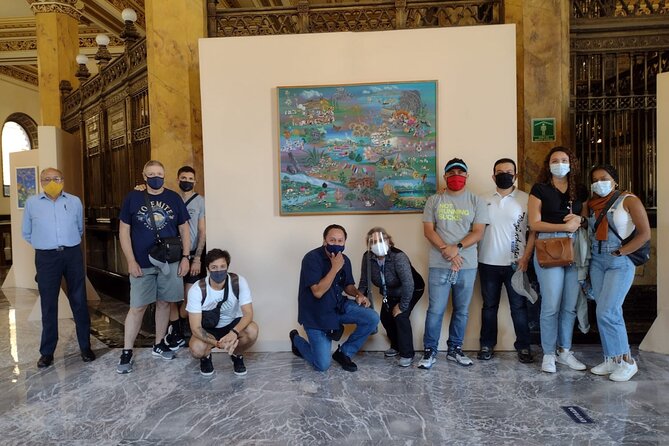
Next comes Palacio Postal—often overlooked because it sits in the historic center like an architectural prize you don’t know you’re hunting for. This building was designed by Italian architect Adamo Boari and finished in 1907. The style leans heavily toward French Renaissance with ornate details and a central dome that feels grand even from the street.
Inside, look up. The hall has marble floors, elegant columns, and a stained glass ceiling that casts warm color across the space. It’s a “stop and stare” moment, even if you’re only there for about 10 minutes.
One small practical tip: stained glass can look flat if you take photos too quickly in bright daylight. If your phone allows, tap to focus on the window area, then take one steady shot. You’ll get a better color result.
Torre Latinoamericana: earthquake-built confidence and a 360 view
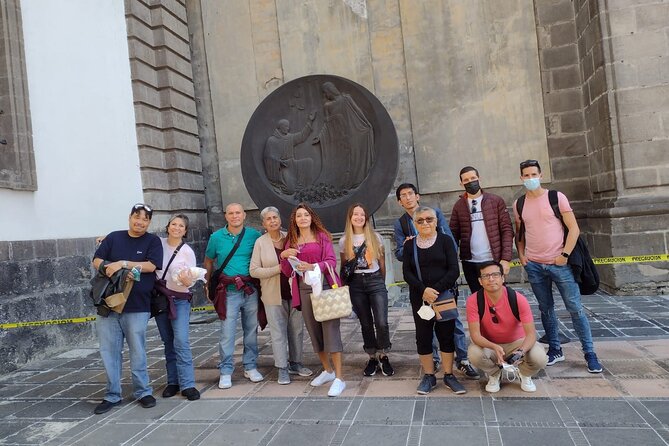
Then you’ll hit Torre Latinoamericana, a landmark skyscraper in the city heart. It reaches 182 meters and was completed in 1956, designed to handle Mexico City’s earthquake reality. That’s not just trivia—it’s a reminder that the skyline you see is shaped by engineering decisions made for this place.
The payoff is the observation deck on the 44th floor. You get a 360-degree panoramic view, with sights like Zócalo, Palacio de Bellas Artes, and Chapultepec appearing from above. There’s also a museum and dining options inside the tower, but with a full-day itinerary, your main win is that top-down orientation.
Given the tight schedule, treat the view like navigation. Use the skyline overview to understand where the older core sits, where Reforma runs, and where the green parks start. That makes later stops easier to follow.
You can also read our reviews of more private tours in Mexico City





Palacio de Minería and its meteorite “time machine”
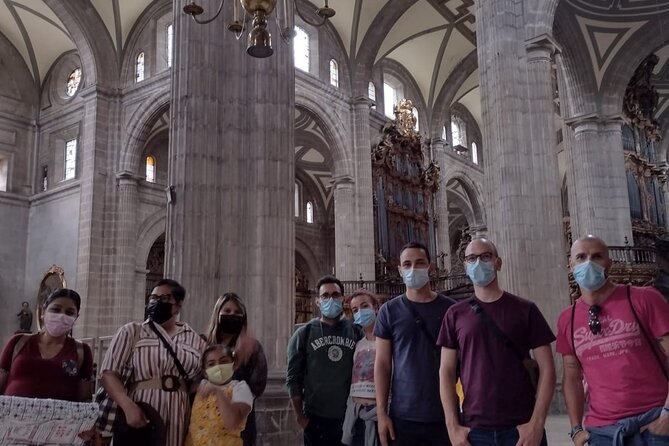
Palacio de Minería is a stop that feels like Mexico City showing off its brain. It’s a key example of Neoclassical architecture in the Americas and was originally built for the Royal School of Mines, training mining engineers.
Today, it’s tied to UNAM (National Autonomous University of Mexico) through the School of Mines and Metallurgy. The façade is the first wow factor: symmetry, classical proportions, and a “serious building” feel.
What makes the visit memorable, though, is what you can see at the entrance: examples of meteorites, including one described as having hit Earth 65 million years ago. In a day packed with monuments, this is a nice break because it adds a science angle to the city’s story.
Expect about 5 minutes here, so don’t plan on deep museum time. Plan on quick recognition and a couple of photos.
Casa de los Azulejos: blue-and-white tiles and a classic restaurant stop
Then the route shifts to Sanborns de los Azulejos, often simply referenced as the building with azulejos (those blue-and-white tiles). The structure dates back to the 18th century, and the façade is dressed in tile imported from Puebla.
Inside, the mix of colonial and Art Nouveau styles gives it that old-world Mexico City charm: antique-style furnishings, chandeliers, and murals. With an 10-minute stop, you’re really getting a “look and feel” visit, not a full meal break.
If you’re the type who likes eating during tours, this is where you might want to linger—but you can’t, because the day is scheduled tight. Still, it’s a helpful morale stop. It’s also one of those places where the architecture does the storytelling for you.
Mexico City Cathedral and Zócalo: Spanish-era power with an Aztec foundation underneath
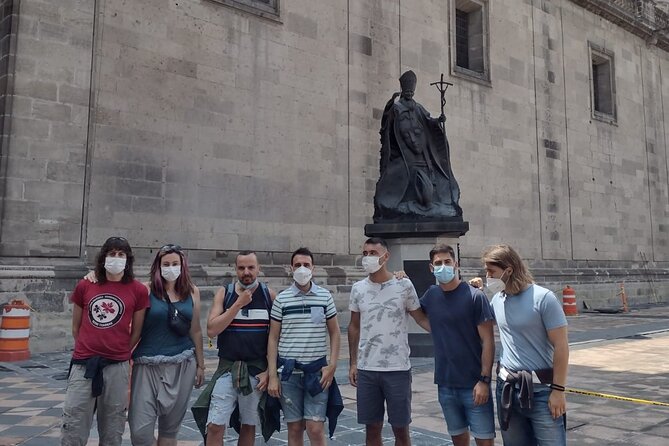
The Metropolitan Cathedral is next. Construction began in 1573 and stretched over 250 years, creating a blend of Gothic, Baroque, and Neoclassical elements. The cathedral is among the largest and oldest in the Americas, with tall bell towers, detailed carvings, and a complex of chapels.
The organ is another highlight mentioned for this stop: it’s described as one of the largest in the region. If you catch any interior sound or choir activity, it can add a whole extra layer to the architecture.
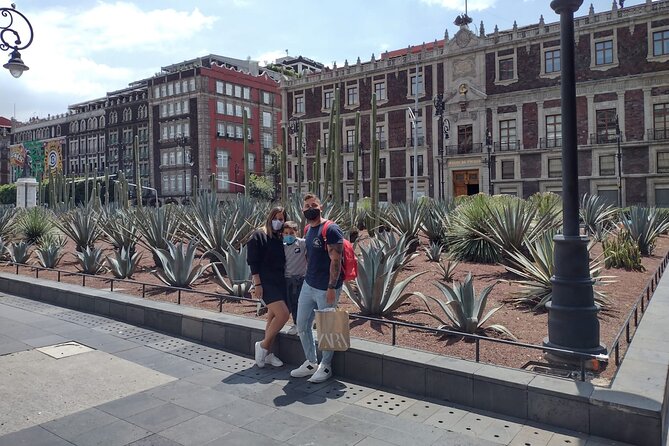
After that comes Zócalo (Plaza de la Constitución), Mexico City’s historic heart. Here’s what’s useful for your understanding: Zócalo sits on the same ground as Aztec Tenochtitlan, the original capital. After the Spanish conquest, the square became the center of the colonial city, and it stays a central hub today.
The square is surrounded by major landmarks, including the National Palace and Templo Mayor. It’s also where national flag ceremonies happen daily, and it’s a constant magnet for events.
Time note: this is about 20 minutes. So your approach should be quick and intentional: pick one focal line of sight (cathedral side, National Palace side, or the flagpole) and get your bearings. Zócalo is huge, and it’s easy to wander without direction.
Museo del Templo Mayor: two Aztec pyramids, and layers you can’t unsee
Then the day turns back toward pre-Hispanic Mexico with Museo del Templo Mayor. This is tied to the Aztec ceremonial center called the Great Temple, and it’s tied directly to the heart of the city.
The complex was built in the 14th century and expanded over time. You’ll see that it centered on two major pyramids dedicated to Huitzilopochtli (war) and Tlaloc (rain and agriculture). The temple was built in layers, with later structures sitting on top of earlier ones—so the site feels like time stacked instead of erased.
With about 10 minutes allocated, you won’t do a full educational session. But even a short visit helps you read the city better. Zócalo stops being just a plaza and becomes a location with deep ceremonial meaning.
Monumento a la Revolución and the Reforma drive: memorials plus skyline theater
Next is Monumento y Museo de la Revolucion. The structure was originally intended to be a legislative palace, but the revolution changed its fate. The result is a monument influenced by Art Deco and neoclassical styles, crowned by a big central dome and smaller domes.
If you’re stopping for photos, the monument’s sculptural details are what you’ll notice first. If you have the time inside (even briefly), the museum explains the Revolution’s significance and there’s an observation option described as providing city views.
Then you’ll ride down Paseo de la Reforma, a long grand boulevard where the city shows both wealth and speed. This road is famous for its jacaranda trees, which get purple flowers for a few months each year. It’s also lined with major sites like the Diana the Huntress Fountain, the Mexican Stock Exchange, and skyscrapers such as Torre Mayor.
A short car ride here is still valuable because you get the “city structure” view: Reforma cuts across the core like a spine. It’s a great moment to look out the window and connect your earlier views from Bellas Artes, Zócalo, and Chapultepec to the modern skyline.
Independence Angel at night value: freedom symbolism, built for 1910
The route includes the Independence Angel (Monumento a la Independencia). This is the bronze winged angel with a laurel wreath and a broken chain—symbols tied to independence.
It was built in 1910 to commemorate the centennial of the start of Mexico’s War of Independence. The monument also works as a mausoleum and is a gathering spot for celebrations and protests, which is why it can feel like more than a photo stop.
This monument is especially noted as beautiful when illuminated. If you’re taking photos, look for that evening glow effect if your schedule lines up. If not, grab your daytime shots anyway—this is still one of the most recognizable shapes in the city.
Chapultepec Park: the green break you’ll appreciate later
After the monuments, you move into Bosque de Chapultepec, a huge urban park described as twice the size of Central Park in New York and spanning about 1,600 acres.
This matters because it gives your day a reset. Big sights can blur together. Green space slows the pace and makes the architecture look less like a checklist.
The park is organized into sections. One includes museums, including the National Museum of Anthropology and the Modern Art Museum. Another offers gardens, lakes, and walking paths. The third includes the Chapultepec Zoo.
Your stop is short, but even a quick walk around the edges helps you feel the scale of this city. It also sets you up for what you’re about to see at the hill.
Chapultepec Castle: a museum on a hill with citywide views
Atop the hill in Chapultepec Park sits Chapultepec Castle. The architecture blends styles including neoclassical and neo-Gothic. The interior houses the National Museum of History, and the castle grounds plus nearby park paths are part of what makes it worth more than a quick glance.
This stop is described as having panoramic views. Even if you only get limited time indoors, the hill position is what makes it feel different from the flat historic center.
Practical note: castling around the hill can mean stairs and uneven stone. If you’re prone to sore feet, plan to take breaks. Short breaks are not failure here; they’re smart touring.
Coyoacán afternoon shift: cobblestones, plazas, and art you can point to
Then comes the change of mood: Coyoacán, where the tour taps into one of Mexico City’s best-known creative neighborhoods. You’ll see cobblestone streets and colonial buildings, plus a lively café-and-market atmosphere.
This part of the day is where the “VIP attention” can really help. You’ll get time centered on arts and everyday life: Plaza Coyoacán, the Coyoacán Market, and the Frida Kahlo Museum (Casa Azul).
Plaza Coyoacán and Jardín Centenario
Plaza Coyoacán is a busy public square framed by colonial-style buildings. The Jardín Centenario inside it is a leafy park area with benches and fountains, including the Fountain of the Coyotes.
Again, the stop time is brief, around 10 minutes, so treat it as a breath stop and a photo anchor. It’s also a good place to grab something from nearby cafés later, even if your tour time doesn’t allow a long sit-down.
Mercado de Coyoacán: spices, produce, and craft stalls
Next is Coyoacán Market, where you’ll find fresh produce, meats, seafood, and spices. This is a sensory stop: herbs, aromas, and ingredients that point directly to traditional Mexican cooking.
It also sells handicrafts and souvenirs, including pottery, textiles, and jewelry. With about 10 minutes allocated, don’t expect to shop for hours. Do expect to spot items and understand what people actually buy for daily cooking and gifting.
Casa Azul (Frida Kahlo Museum): rooms, garden, and the blue house
Finally, the big art moment: the Frida Kahlo Museum, known as Casa Azul. The house is painted blue, and it served as Kahlo’s home and residence with Diego Rivera.
Inside the museum, you’ll see rooms where she lived and worked, a collection of artwork and personal items, and specific spaces like her studio and bedroom. The kitchen is mentioned as still containing her traditional Mexican ceramics collection. There are also temporary exhibitions.
The time here is listed around 10 minutes, so you won’t take in every room slowly. Still, even a short visit does something important: it turns Frida from an image on a poster into a real home and working space.
If you want to enjoy this stop, go in with one goal: find one room or artifact that pulls you in, and let the rest pass quickly.
Price and value at $189 per person for a full-day VIP plan
At $189 per person for about 6 hours, you’re paying for three practical things:
1) Pickup and private transportation so you lose less time to finding rides,
2) a guided, English-speaking experience that connects what you see,
3) and a route that covers the historic center and Coyoacán in the same day.
It’s not a bargain if you only want one neighborhood. But it’s strong value if you’re here for a short stay and you want the big “first-day in Mexico City” hits without building your own schedule.
The main value question for you is time. The itinerary is packed, so if you’re the type who needs long museum hours, you might feel rushed. If you’re okay with short stops and you can pick your favorites, it’s a good way to get orientation fast.
What to check before you commit to a VIP day
Based on the experiences shared, here are the issues that can affect your day—and how to protect yourself:
- Vehicle size and condition: at least one group reported a tiny car that felt wrong for a VIP promise. Ask what the vehicle will be and confirm it fits your group comfortably.
- Guide presentation: there were complaints that the guide’s dress didn’t match the VIP expectation. If that matters to you, mention it ahead of time.
- Closed sites and preparation: one report said some attempted places were closed, and the guide didn’t seem ready. Your best move is to confirm your top 2–3 priorities and ask the guide to have a backup plan for each.
- Communication rhythm: if pre-tour messaging felt weak for some groups, you should make sure the WhatsApp setup is active and you know where the guide will meet you.
- Traffic and commentary: one person felt there was little commentary while traveling. You can prevent awkward silence by asking your guide a question early, like what they’d prioritize if you only had one hour in the historic center.
No plan is perfect. But you can make this one more comfortable with a bit of upfront clarity.
Who this tour suits best in Mexico City
This VIP day is a good match if you:
- Want a private tour without planning every transit leg.
- Like architecture, monuments, and art stops, even when time is tight.
- Are mixing “major hits” with a neighborhood you can feel—Coyoacán does that well.
- Prefer a guide who can adjust the pace to what matters to you, not the tour script.
It’s less ideal if you want slow travel, long museum time, or a day where every stop is spent fully inside. The schedule favors breadth over deep study.
Also: service animals are allowed, and the tour is offered in English. Mobile tickets are used, so you won’t need to print anything.
Should you book this Private Tour Mexico City VIP FULL DAY?
I’d book it if you’re short on time and you want a single-day overview that hits the skyline, the historic core, Aztec layers, and Frida Kahlo’s world, all with pickup and a guide. The value is strongest when you treat it like a smart introduction, not a slow museum crawl.
I’d think twice if you’re highly sensitive to VIP presentation details, long waits, or you need long stays inside each site. In that case, you might prefer a smaller number of stops with more time per place.
If you do book, send a quick message before the day to confirm: vehicle type, pickup timing, and your top priorities for Bellas Artes, the Zócalo/Templo Mayor area, and Casa Azul. That’s how you turn a packed schedule into a smooth, satisfying day.
FAQ
Is this tour private or shared?
It’s a private tour/activity, meaning only your group participates.
Do you offer pickup in Mexico City?
Yes. Pickup is offered from any place in the city center, and the guide waits at the lobby of your hotel.
What’s the duration of the tour?
The tour runs for about 6 hours.
What language is the tour offered in?
The tour is offered in English.
Do I get a ticket on my phone?
Yes. The tour includes a mobile ticket.
Are there admission fees for the stops?
The listed admissions for the stops are noted as free. (Specific ticket rules can vary by site, but the tour’s stop notes show free admission.)
Can I bring a service animal?
Yes. Service animals are allowed.
Where does the guide meet me?
For hotel pickup, the guide meets you at the lobby of your hotel.
Is cancellation free?
Yes. Free cancellation is available up to 24 hours before the experience start time for a full refund.