Walk from Mexica roots to Art City. This three-hour, English-speaking private tour keeps you moving through the Centro Histórico, with Orlando’s story threads and photography help that make the sights stick. I love how he keeps the context simple, so you know what you are looking at instead of just passing it by.
One thing to plan for: it is a lot of walking over a concentrated area. Bring sun protection, and if the weather is rough the experience may be rescheduled since it requires good conditions.
In This Review
- Key things to know before you go
- What this Mexico City walk is really good at
- Meeting at the Zócalo: your orientation point for everything
- Tip
- Museo del Templo Mayor: seeing Mexica culture through the lens of place
- Catedral Metropolitana: the country’s most important cathedral on your route
- A practical note
- Palacio Nacional: the political center from Mexicas to Spaniards
- Francisco I. Madero Avenue: slowing down on Mexico City’s main pedestrian street
- El Atrio del Templo de San Francisco: religious conquest and cultural change
- House of Tiles: architecture you can’t forget
- Plaza Tolsa: a classic viewpoint over landmark neighbors
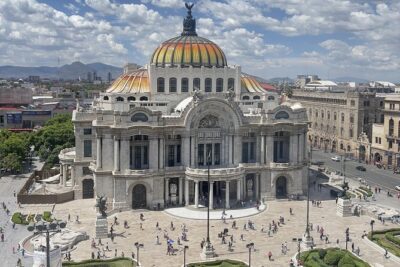
- Palacio de Bellas Artes: finishing in the city’s art spotlight
- Alameda Central: your last reset in a park with deep roots
- Practical tip
- Why the guide makes this tour worth it
- Price and value: what you pay for and what you get
- What to bring, and how to handle the walking
- Who should book this Mexico City tour
- Quick heads-up on weather and flexibility
- Should you book this walking tour?
- FAQ
- How long is the Mexico City walking tour?
- Is the tour offered in English?
- What is the price per person?
- Is this tour private?
- Where does the tour start and where does it end?
- Does the tour use a mobile ticket?
- Are admissions included for the stops?
- Should I bring water or a snack?
- What should I do if the weather is bad?
- What kind of fitness level do I need?
Key things to know before you go
- A tight Centro loop with major stops: Zócalo to Bellas Artes, with landmark breaks along the way.
- Orlando’s explanations are built for real understanding: clear, engaging, and question-friendly.
- Free admission at each listed stop: you spend your money on guiding, not entry tickets.
- Private by default: only your group participates, so the pacing feels personal.
- Good for first-time structure: you leave with a route of history you can revisit on your own.
- Bring practical supplies: snack and water are on you, plus sunscreen and/or a hat helps a lot.
What this Mexico City walk is really good at
This tour is designed for people who want an instant “map in your head.” You start at the Zócalo, then work your way through Mexico City’s big layers: Mexica influence, Spanish-era power, and the arts scene that takes over the center of town today. At $14.87 per person, you are paying for interpretation and a human thread through the sights, not for private transport or big add-on costs.
Because it is private, you can ask questions without feeling rushed. That matters here, since the locations connect to each other in ways that feel much clearer when someone is guiding the order for you.
The end point at Palacio de Bellas Artes is a smart finish. You finish near one of the city’s cultural icons, then you can keep exploring without having to crisscross back across town.
You can also read our reviews of more walking tours in Mexico City


Meeting at the Zócalo: your orientation point for everything
You start at Zócalo, Plaza de la Constitución in the Centro Histórico. This is the kind of meeting point that helps you settle in fast. Even if you have never been to Mexico City before, you can picture the center of it because it is so recognizable.
The tour begins with an overview of Zócalo and how it evolved through time. That sets the tone: you are not just looking at a square, you are learning why the square matters. When you later see churches, government buildings, and major avenues, you will understand how each one relates to what came before.
Tip
If you are prone to sunburn, start thinking about shade right away. Early in the day the light can still hit hard in open plazas.
Museo del Templo Mayor: seeing Mexica culture through the lens of place
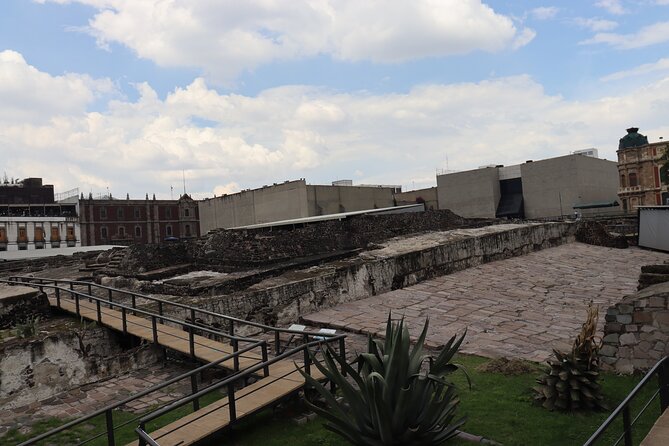
Next is Museo del Templo Mayor. You get a focused look at the past of Mexica culture, with time built in to take it in at a reasonable pace.
This stop is valuable because it gives you a foundation. Without that context, the rest of the Centro can feel like a list of impressive buildings. With it, you start spotting how later eras responded to what was already here.
Even with a short visit, the advantage is that you are not wandering alone. You get the “why” behind the site, and that helps you connect the museum experience to what you see outside it.
Catedral Metropolitana: the country’s most important cathedral on your route
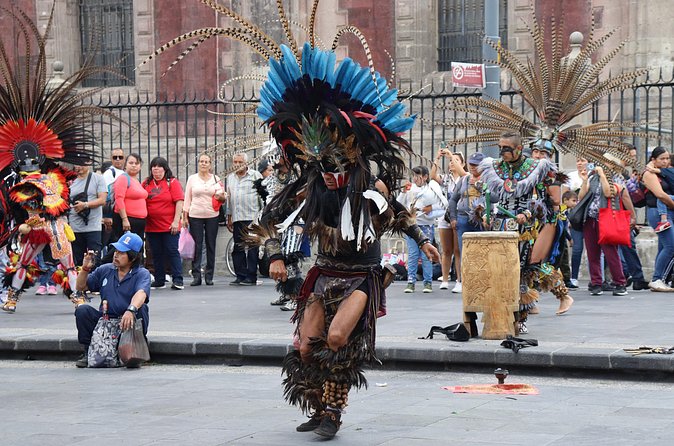
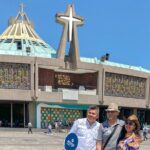
The tour moves on to Catedral Metropolitana de la Ciudad de México. The focus here is straightforward: exploring the most important Cathedral in the country.
This is one of those places where details matter. A guide helps you see the big picture and the smaller points at the same time, so you do not miss the features that make the building important. You also learn how the cathedral fits into the bigger story of Spanish presence in the city center.
You can also read our reviews of more city tours in Mexico City



A practical note
Cathedrals can have different rules and expectations depending on services and visitors. You will do best by following your guide’s lead for where to stand and how long to look.
Palacio Nacional: the political center from Mexicas to Spaniards
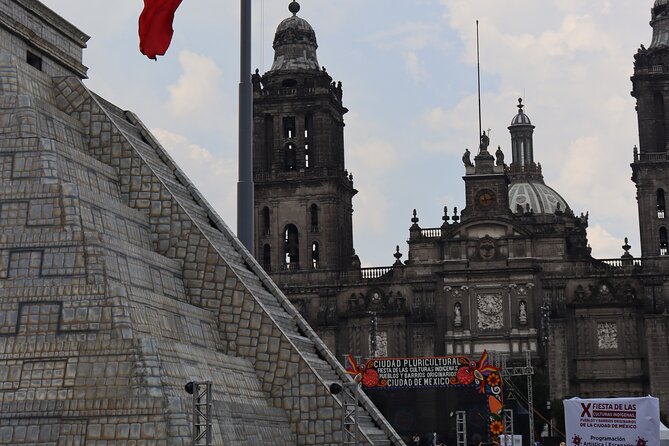
Then it is Palacio Nacional, billed as a main political center from Mexicas to Spaniards. You get about 15 minutes here, which sounds short until you realize the goal is interpretation, not a full building tour.
This stop works because it connects power to place. You start to understand why the Centro Histórico looks the way it does: leadership, ceremony, and control all clustered here. When your guide ties these ideas together, the architecture becomes more meaningful than just “pretty facades.”
Francisco I. Madero Avenue: slowing down on Mexico City’s main pedestrian street
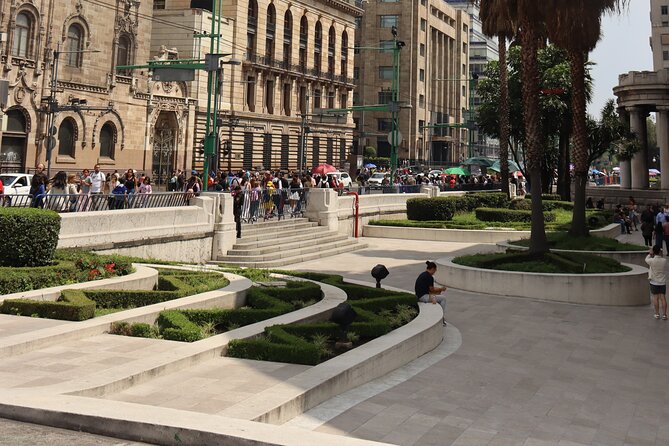
After the heavier history stops, you get a breather on Francisco I. Madero Avenue. This is the main pedestrian street, and the tour uses it to show you beauty at street level, not only monument level.
About 15 minutes here is enough time to regroup. You can look around for storefronts, street life, and the way the avenue links major landmarks. It also helps to break up the heavier stops so you do not feel like you are sprinting from one site to another.
El Atrio del Templo de San Francisco: religious conquest and cultural change
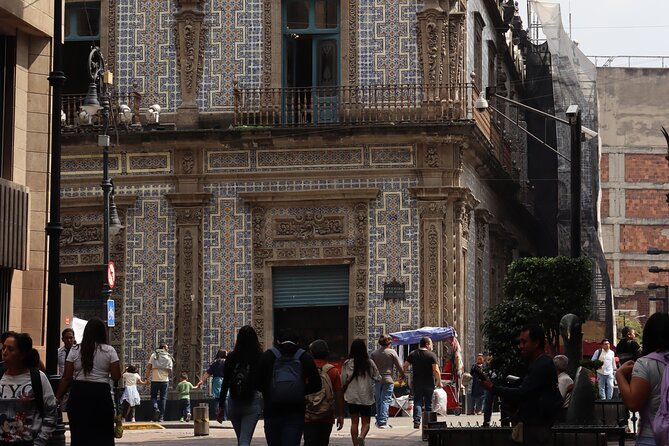
Next is El Atrio del Templo de San Francisco. The tour frames this stop around religious conquest in Mexico and the importance of Mexican culture and destiny.
This is the point where the tour’s “history thread” becomes emotional and meaningful. Your guide is likely to connect how belief systems clashed, merged, and reshaped everyday life. Even if you have read about these periods before, seeing the ideas applied to a real location makes them easier to remember.
This is also a good reminder that the Centro is not just about old stones. It is about how the city’s identity formed.
House of Tiles: architecture you can’t forget
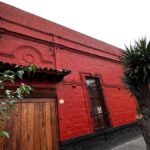
The House of Tiles (Casa de los Azulejos) is next, with about 15 minutes. This stop is where the tour turns more visual and a bit more legendary.
The idea is simple: contemplate the unique architecture and the legends around it. The guide’s role matters here because the building can look stunning without giving you the story behind the look. With guidance, you learn what to notice and why it became such an iconic sight in Mexico City.
Plaza Tolsa: a classic viewpoint over landmark neighbors
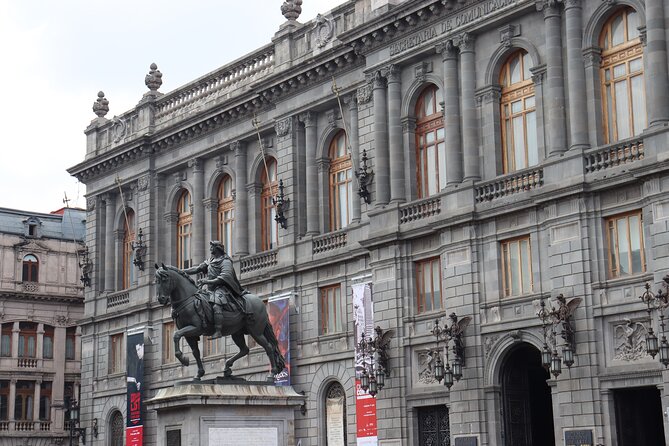
Then you head to Plaza Tolsa for around 20 minutes. This square is described as emblematic, with an impressive view of Minery Palace, MUNAL, and Postal Palace on one of the oldest streets in Mexico City.
What I like about this stop is the “zoom out” effect. After the detailed thinking at earlier sites, you get a view that lets you place multiple landmarks into one mental picture. It also helps you see how dense and organized the Centro area is, without getting lost in the streets.
If you like photography, this is a decent moment to pause. Clear views from a square can produce better shots than trying to frame monuments from random corners.
Palacio de Bellas Artes: finishing in the city’s art spotlight
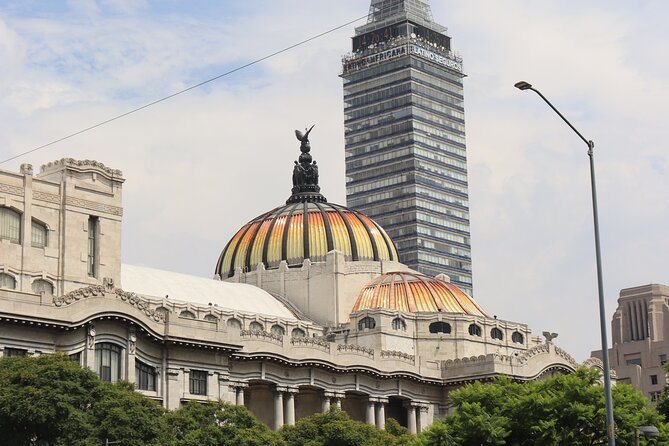
Palacio de Bellas Artes is the big cultural finish, with about 20 minutes. It is presented as the most important center of Arts and Culture in the city, and you can feel that as soon as you arrive.
This stop is a great payoff for the tour. You spend the earlier hours learning about power, belief, and identity. Then the final segment shifts toward arts, style, and public culture. It is a reminder that Mexico City’s story is not frozen in the past.
Your tour ends here at Palacio de Bellas Artes, near Av. Juárez S/N in the Centro Histórico area.
Alameda Central: your last reset in a park with deep roots
Alameda Central comes last, around 15 minutes. It is described as the oldest public park in Mexico City, dating back to 1592.
Even in a short visit, a park stop helps the whole experience land. It gives your feet a rest, and it gives your brain a break from monuments. You can also do some light people-watching and observe how public spaces function in the city today.
Practical tip
Use this moment to check your bearings. From here, you will likely find it easier to decide where to go next without needing a map every two minutes.
Why the guide makes this tour worth it
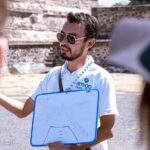
The most consistently praised part of the experience is the guide. People connected strongly with Orlando. He is described as professional, friendly, patient, and very passionate about the history of Mexico City.
That combination matters on a short tour. You only have about three hours, and you hit major sites quickly. A guide like Orlando helps you avoid the common problem of “I saw it, but I do not know what I saw.” The explanations are engaging and easy to understand, and he answers questions instead of rushing past them.
One helpful bonus from the experience: he also helps with photos. That is a small thing, but it changes how your day feels. Instead of awkward selfie attempts, you get images that actually capture you in front of the landmarks. He also offers suggestions of museums, which can save you time later.
Price and value: what you pay for and what you get
At $14.87 per person for about three hours, this is priced like a budget-friendly way to get expert interpretation. The key value points are:
- You get a tour guide plus all fees and taxes included.
- Each listed stop is marked as admission ticket free.
- You are on foot, so you are not paying for private transportation.
So you are mostly paying for guidance and context. If you already plan to visit major Centro sites anyway, this tour can act like a guided study session that helps you understand the layout of Tenochtitlan history and its later Spanish overlays.
If you want to see the sights on your own, you can. But if you care about the meaning behind what you are seeing, this format is a strong deal.
What to bring, and how to handle the walking
This tour fits travelers with moderate physical fitness. It is not described as a low-effort stroll, so treat it like a real walking day.
Here is what I would pack:
- Water: bottled water is not included, so bring some if you want it.
- A snack: lunch is not included, and it is recommended to bring something small.
- Sunscreen and/or a hat that covers your neck: this advice comes up for a reason.
- Comfortable shoes: you will be on pavement for the whole route.
A small strategy also helps. If you want to feel better during the day, eat breakfast before you arrive. That keeps the snack option optional instead of necessary.
Who should book this Mexico City tour
Book it if you:
- Want a first-time-friendly route through the Centro Histórico.
- Prefer walking with structure instead of hopping between stops on your own.
- Like asking questions and getting direct answers.
- Want to understand Mexico City and Tenochtitlan history in the order that you actually encounter it on the ground.
It also makes sense if you are traveling solo. The private format means your experience can feel closer to a conversation than a group lecture, especially if your group size is small.
Quick heads-up on weather and flexibility
The experience requires good weather. If it is canceled due to poor weather, you will be offered a different date or a full refund. And if plans change, free cancellation is available up to 24 hours in advance for a full refund.
Should you book this walking tour?
I think it is a good choice if your goal is understanding, not just checking boxes. The combination of major Centro stops, admission marked free for the itinerary, and a guide who explains clearly makes the price feel fair.
Skip it only if you want a very low-walking, long-sit-down style of sightseeing. This is built to keep moving and connect ideas from one place to the next. If that sounds like your style, you will get a lot out of it.
FAQ
How long is the Mexico City walking tour?
It runs about 3 hours.
Is the tour offered in English?
Yes, it is offered in English.
What is the price per person?
The price is $14.87 per person.
Is this tour private?
Yes. It is private, and only your group will participate.
Where does the tour start and where does it end?
It starts at Zócalo, Plaza de la Constitución in the Centro Histórico area, and it finalizes at Palacio de Bellas Artes at Av. Juárez S/N in Centro Histórico.
Does the tour use a mobile ticket?
Yes. You get a mobile ticket.
Are admissions included for the stops?
Admissions are listed as free for each stop in the itinerary, and the tour includes all fees and taxes.
Should I bring water or a snack?
Lunch is not included, so bringing a snack is recommended. Bottled water is not included, so bringing water is also recommended.
What should I do if the weather is bad?
The tour requires good weather. If it is canceled due to poor weather, you will be offered a different date or a full refund.
What kind of fitness level do I need?
You should have a moderate physical fitness level. The route involves walking through multiple stops.