REVIEW · MEXICO CITY
Walk around UNAM campus, a UNESCO World Heritage Site
Book on GetYourGuide →Operated by Joaquin Diez Canedo · Bookable on GetYourGuide
UNAM’s campus feels like a sculpture you can walk through. In just 3 hours, you get Mexico’s modernist architecture in the open air, plus major murals by Diego Rivera and David Alfaro Siqueiros—all set against rocky volcanic ground. I love how the tour turns famous buildings into something you can actually interpret, not just photograph.
Two more things I like a lot: you’ll get time at Juan O’Gorman’s Central Library, and the guide connects the campus design to real student life and the wider social and political picture in Mexico. One possible drawback: it’s a 4 km / 2.5 mile walk, rain or shine, and you may find it tricky to locate a toilet.
In This Review
- Key things that make this UNAM tour worth your time
- Modern Mexico in concrete and volcanic rock
- The UNESCO campus effect: seeing why it matters
- Mural stops: Rivera and Siqueiros in public space
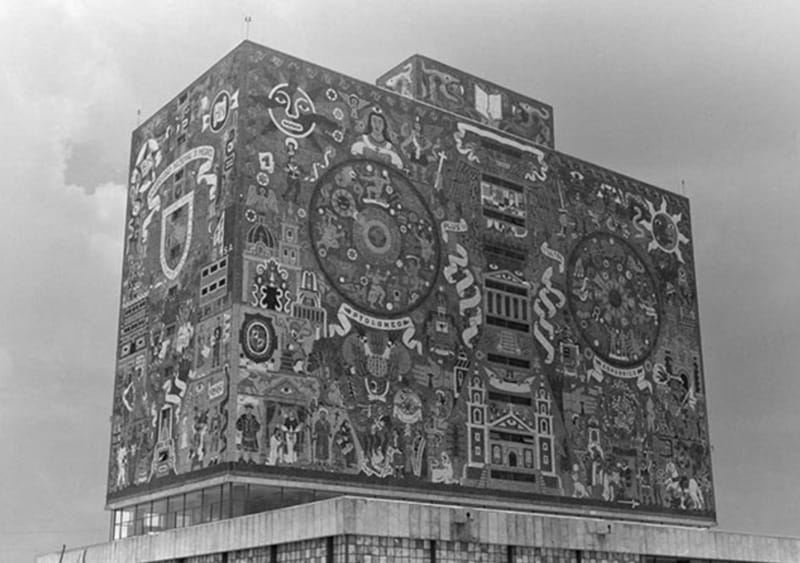
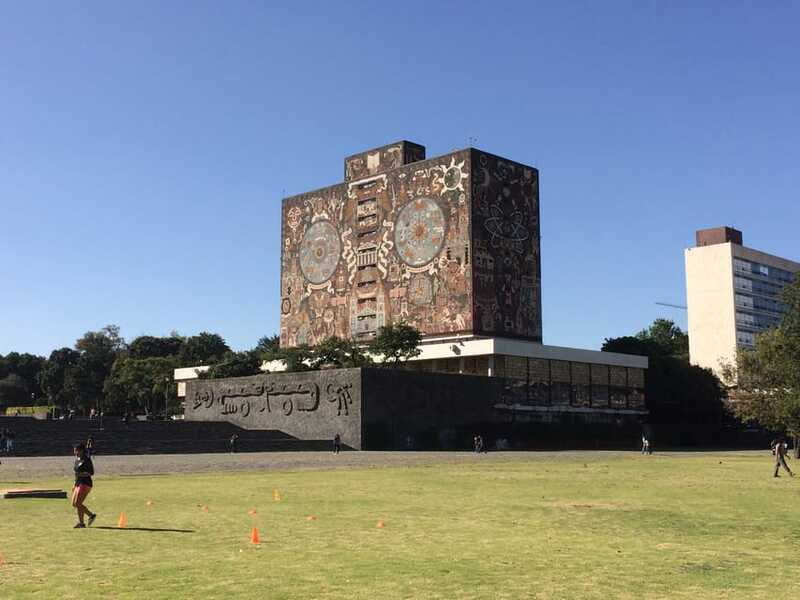
- Juan O’Gorman’s Central Library: architecture as an idea
- Walk it like a campus: rocky footing and smart pacing
- Who you’ll learn from: Sebastián and the campus behind the buildings
- Getting there: meeting at Estadio Olímpico Universitario
- Included value: what you get for $76 in 3 hours
- Should you book this UNAM campus modernism tour?
- FAQ
- Where is the meeting point?
- How long is the tour?
- Is UNAM’s campus part of UNESCO?
- What’s included in the price?
- Are food and drinks included?
- What should I know about timing and weather?
- How much walking is involved?
- What languages is the guide available in?
Key things that make this UNAM tour worth your time
- Rivera and Siqueiros murals up close: see major muralism in its original public setting
- UNESCO World Heritage campus: architecture that’s recognized for a reason
- Juan O’Gorman’s Central Library: modern design tied to how knowledge is imagined
- Rocky volcanic terrain: the grounds shape the experience as much as the buildings
- Sebastián’s student-life perspective: history, art, and daily campus realities in one thread
Modern Mexico in concrete and volcanic rock
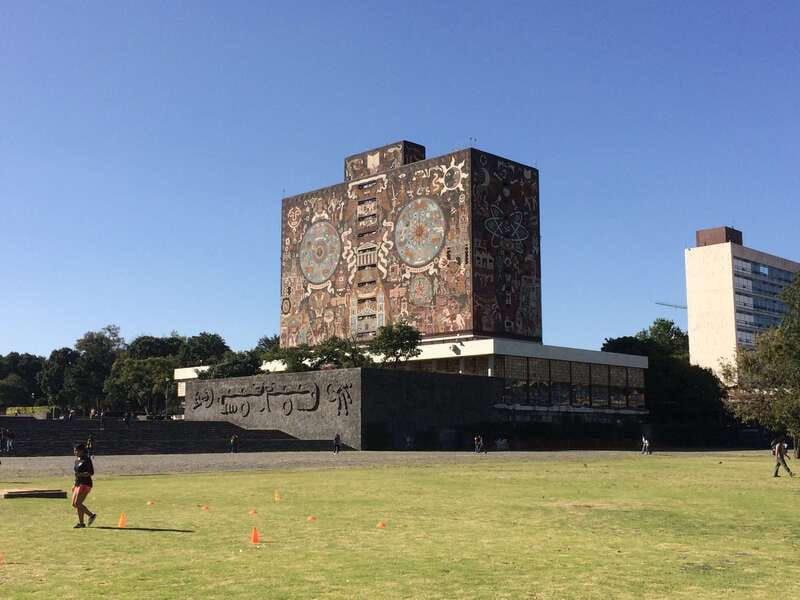
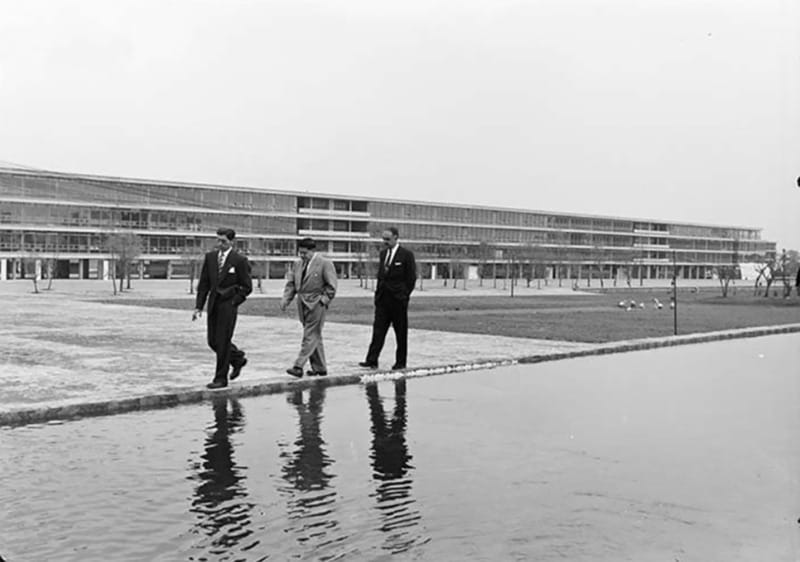
UNAM (Universidad Nacional Autónoma de México) isn’t just a university you pass by on the way to somewhere else. It’s a full-on architectural statement—built in the 1950s, when Mexico was leaning into its own identity after years of upheaval, and when there were intense cultural and political currents between Mexico and the United States.
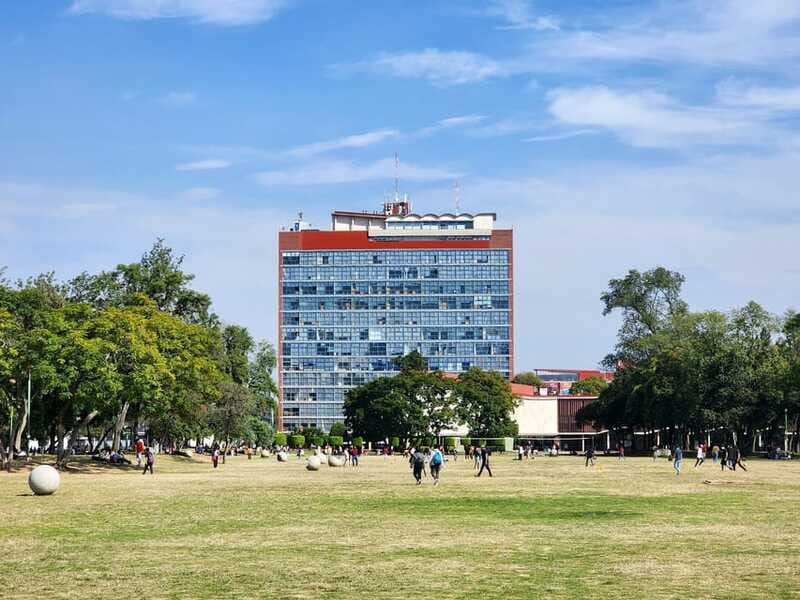
The campus sits on rocky, volcanic terrain. That matters because it changes how you experience the space. Instead of a neat, flat walking route, you move through a landscape of stone and structure where the buildings feel placed as much as they feel built. Early on, you’ll start seeing how the campus layout and architecture work together to create views, rhythms, and focal points—especially once you reach the mural sites.
The value here is the way the tour makes design readable. You’re not stuck trying to figure out what you’re looking at. The guide helps you connect the physical form—walls, volumes, materials—to the ideas behind them. And if you’re the type who cares about how art functions in everyday life, this is a strong match.
You can also read our reviews of more walking tours in Mexico City


The UNESCO campus effect: seeing why it matters
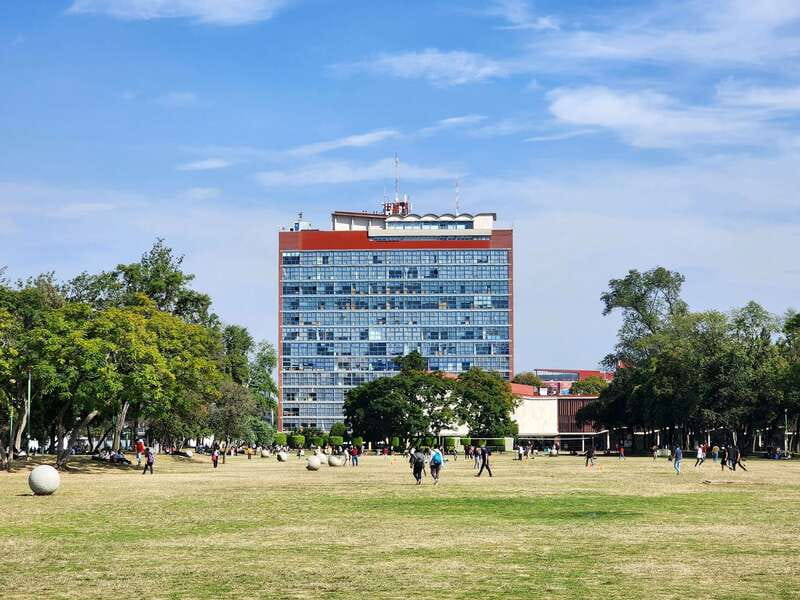
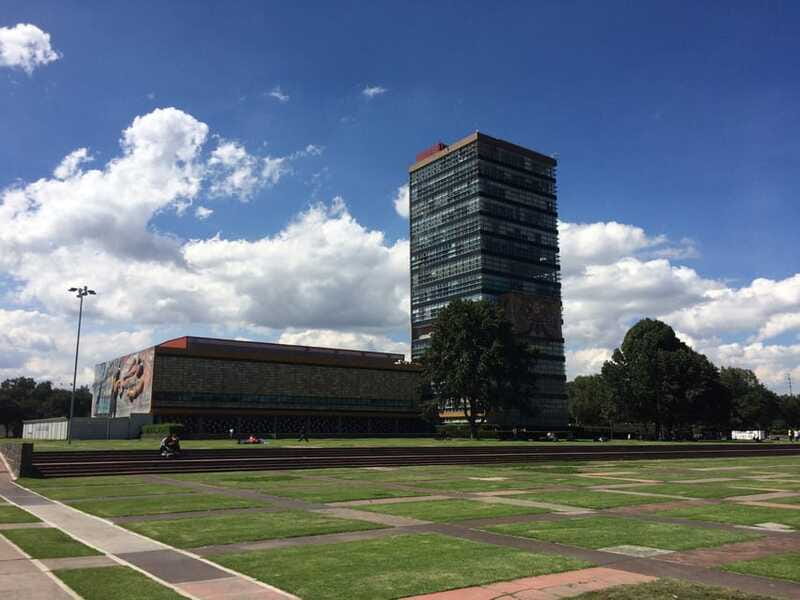
This walk is more than a sightseeing loop. It’s a visit to a UNESCO World Heritage Site, and that label isn’t just paperwork. UNAM’s modernist architecture, muralism, and the overall campus concept are part of why the whole place is internationally recognized.
What I find satisfying is that you don’t just hear facts. You walk the campus and watch those facts become obvious. The murals are integrated into the environment. The buildings relate to the terrain. The campus feels planned, but not sterile—it’s made for public life and education, not just for display.
If you like architecture tours, you’ll probably enjoy how the guide frames modernist design as a cultural move. Modernism at UNAM isn’t decoration. It’s a statement about Mexico, education, and who gets to shape public space.
Mural stops: Rivera and Siqueiros in public space
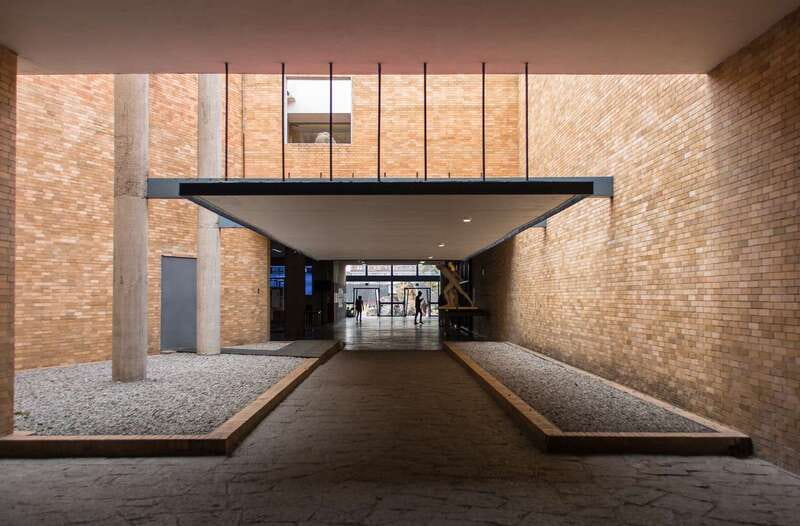
UNAM’s murals are a big reason people take this route. You’ll look at some of Mexico City’s most famous mural works, including art by Diego Rivera and David Alfaro Siqueiros.
Here’s the practical way to think about it: murals are usually treated like background when you’re touring a city. At UNAM, the murals are the point. They’re placed where people study, walk, and gather—so the art has a daily job. It communicates ideas at human scale, not just behind glass.
The guide also helps you read the symbols and the message behind the scenes. That’s where the tour separates itself from just “look at that wall.” You’ll pick up why muralism at UNAM matters to Mexico’s broader cultural and political conversation, and how those themes connect back to the campus itself.
If you’re traveling with someone who’s less into architecture, murals still keep the experience lively. Even if you only catch fragments, the sheer scale and the strong visual storytelling do a lot of the work for you.
Juan O’Gorman’s Central Library: architecture as an idea
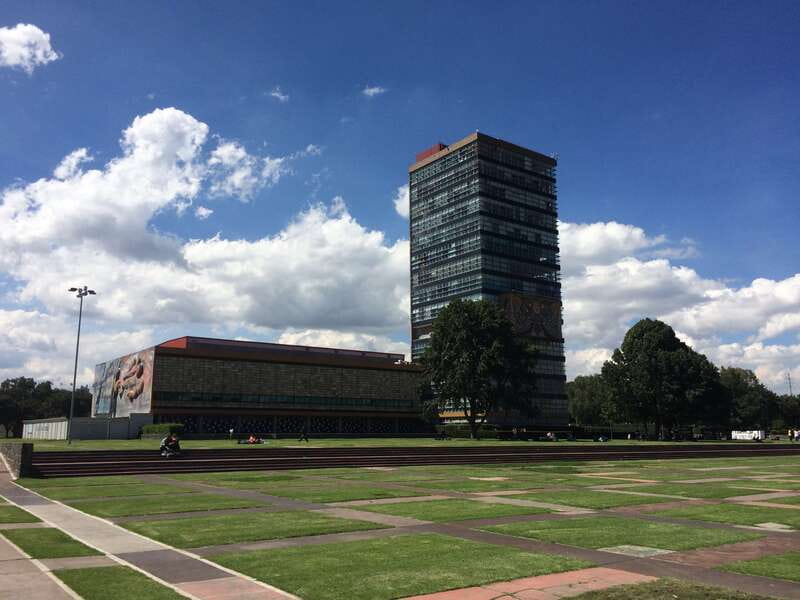
One stop I’d target even if you weren’t into murals is Juan O’Gorman’s Central Library. This is where modernist architecture starts to feel like a philosophy you can touch.
O’Gorman’s approach is closely tied to the idea that learning isn’t abstract. It’s physical—tied to spaces, to circulation, to light and structure, to the way knowledge is organized and presented. You’ll hear the story of the library and how it fits into UNAM’s broader modernist vision.
I like this part because it gives your eyes a new way to move through the campus. After seeing murals, you switch from reading images to reading form. You stop asking only what you’re looking at, and start asking why this shape, why this layout, why this building here.
Walk it like a campus: rocky footing and smart pacing
The tour covers about 4 kilometers / 2.5 miles. That’s not crazy, but it is a real walk—so you’ll want to treat it like one. It also happens rain or shine, which means you should bring a plan for wet ground and reduced visibility.
Here’s how I’d prepare based on what you’ll likely experience:
- Wear shoes you trust on uneven ground. The rocky setting isn’t a hazard story, but it does mean you should watch your footing.
- Bring water. Water is included, but you still want to pace yourself.
- Expect that toilet options may be limited. The tour notes it can be hard to find one, so don’t assume there will be easy stops.
Also, a small note that affects comfort: it’s not suitable for pregnant women. If that applies to you, it’s worth choosing a different UNAM visit that matches your needs.
Wheelchair accessibility is listed, so if you use a wheelchair or mobility device, this is a possibility—just be sure the route and pace work for you.
You can also read our reviews of more historical tours in Mexico City



Who you’ll learn from: Sebastián and the campus behind the buildings
The biggest quality jump on this tour is the guide. You’ll often get a first-rate explanation, but more than that, you’ll get a sense of what the campus feels like when it’s not on a brochure.
In the guide stories, Sebastián comes up again and again. People describe him as patient with questions and able to connect the architecture to everyday student life. One theme that kept showing up: he doesn’t only explain buildings and murals—he connects them to how students experience UNAM day to day, including socioeconomic and political realities.
That kind of context changes how you see everything. A campus becomes less like a photo set and more like a living place with different faculties, different vibes, and different challenges. In fact, the tour experience includes walking through multiple faculties and murals, so you can feel how the university is structured internally rather than treating it as one uniform site.
You may also visit an auditorium connected to Okupa Che. That’s a detail worth paying attention to because it shows how UNAM isn’t just history in concrete—it’s also active culture and debate happening now.
Getting there: meeting at Estadio Olímpico Universitario
You meet in front of the Estadio Olímpico Universitario. That’s handy because it’s a recognizable landmark, and it puts you close to the UNAM campus entry zone.
Transport options are straightforward:
- Uber: about a 30-minute ride from Condesa or Roma
- Metrobús: take Línea 1, exit at Dr. Gálvez Station, then walk south of Insurgentes Avenue for about 10 minutes
What matters for your plan: you should arrive a little early so you’re not rushing in the middle of getting your bearings. Once the walk starts, you’ll want to settle in quickly and keep your energy for murals and the library stop.
One more thing: there’s no hotel pickup, so build your schedule around meeting at the stadium.
Included value: what you get for $76 in 3 hours
At $76 per person for 3 hours, this isn’t a bargain-basement tour. It’s also not overpriced for what you’re getting—especially if you care about interpretation.
Here’s the value equation:
- You get guided muralism and modern architecture (not just “see the sights”)
- You get water included
- You get the UNESCO setting without spending extra time hunting for the best viewpoints
The tour also pays off if you’re the type who wants context. When the guide connects the campus design and murals to how Mexican society and student life work, that’s the difference between passing through and actually learning something useful.
If you only want a quick photo stop, you might not get full value from a guided format. But if you want to come away with a clear understanding of what you saw—and why it matters—this price starts to make sense fast.
Should you book this UNAM campus modernism tour?
Book it if you’re interested in architecture, murals, and how art and design connect to real life in Mexico. This is also a smart choice if you want a tour that treats UNAM as a living institution, not an academic backdrop.
Skip it (or choose a different option) if you dislike walking—because the 4 km is real—and if rainy weather and limited toilet availability would make the experience stressful. And if pregnancy is a factor, it’s listed as not suitable.
If you can handle a solid walk and you like your sightseeing with meaning, you’ll probably leave with a new way to see Mexico City modernism. The campus stops feeling like a landmark and starts feeling like a message you can read with your feet.
FAQ
Where is the meeting point?
You meet in front of the Estadio Olímpico Universitario.
How long is the tour?
The duration is 3 hours.
Is UNAM’s campus part of UNESCO?
Yes. The tour is about UNAM’s campus, which is a UNESCO World Heritage Site.
What’s included in the price?
Water is included, plus muralism and modern architecture as part of the guided experience.
Are food and drinks included?
No. Food and drinks are not included.
What should I know about timing and weather?
The tour takes place rain or shine.
How much walking is involved?
It’s a 4 kilometer (2.5 mile) walk.
What languages is the guide available in?
The live tour guide is available in English and Spanish.