REVIEW · MEXICO CITY
Diego Rivera Frida Kahlo Studio House Tour
Book on Viator →Operated by Agave Tours · Bookable on Viator
Two houses, one unforgettable art partnership. This 1.5-hour studio house visit in San Ángel lets you see how Diego Rivera and Frida Kahlo worked in the same creative orbit, with a real focus on the architecture and the objects inside. What I like most is the chance to view both homes connected by a bridge, and to get clear guide-led stories that make the art and relationship easier to grasp. One watch-out: access to parts of the visit (especially Frida’s house) can depend on what’s happening onsite, and English quality can vary by guide.
You meet at the Museo Casa Estudio Diego Rivera y Frida Kahlo in San Ángel Inn, and you’ll be guided in English for a small group capped at 15. The whole thing runs about 90 minutes, which is a good length if you want depth without losing an entire afternoon to museum lines.
If you’re doing Mexico City on a tight schedule, this tour is a smart use of time. It’s also ideal if you love art, but you’d rather understand the setting—light, layout, and tools—than just snap photos and move on.
In This Review
- Key things to notice before you go
- San Ángel’s linked studios: what you see in 90 minutes
- Juan O’Gorman’s bridge and the architecture you can feel
- Frida Kahlo’s house: smaller, personal, and more human-scale
- Diego Rivera’s studio: sketches, tools, and pre-Hispanic art
- Guides can make or break the experience (so plan around English)
- Price and time: is $49.52 worth it?
- Practical tips for a smooth visit (without stress)
- Should you book this Diego Rivera and Frida Kahlo studio house tour?
- FAQ
- How long is the Diego Rivera and Frida Kahlo studio house tour?
- What does the tour cost?
- Is admission included?
- What language is the tour offered in?
- How many people are in the group?
- Where does the tour meet?
- Do I need to plan for weather?
- Are service animals allowed?
Key things to notice before you go
- Small group size (max 15): you can actually ask questions and hear the guide.
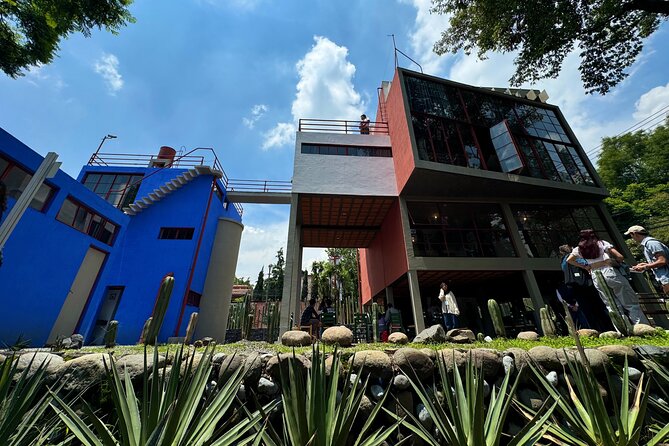
- Two houses joined by a bridge: the layout is part of the story, not just a design detail.
- Functionalist architecture by Juan O’Gorman: lots of natural light and clean, purposeful lines.
- Frida’s house details: personal items and an intimate feel that reads like daily life.
- Diego’s studio focus: sketches, brushes, work tools, plus a major pre-Hispanic art collection.
- Guide styles vary: names like Mauricio, Leonor, Roman/Román, Cynthia, and Ivan came up as standout narrators.
San Ángel’s linked studios: what you see in 90 minutes
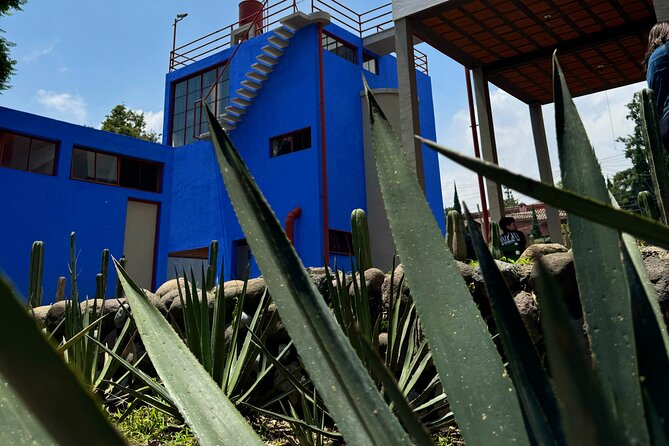
This tour is built around one core experience: the Museo Estudio Diego Rivera y Frida Kahlo, the place where Diego Rivera and Frida Kahlo lived and created part of their work. It’s not a “walk by and read a sign” kind of visit. You’ll be led through the spaces with enough context to connect what you’re looking at with what mattered to them.
The time window is about 1 hour 30 minutes, so expect a focused route. You’ll spend most of your time inside the two house spaces and the attached studio areas, rather than wandering the neighborhood for long stretches. That makes it easier to fit into a day that already includes other stops around Centro Histórico or Coyoacán.
Another practical bonus: it’s capped at 15 people, and that usually means better listening and fewer bottlenecks at key rooms. Still, the houses aren’t huge. If there are special displays inside on the day you go, you can feel the squeeze.
I’d put this tour in the “art meets architecture” category. Yes, you’ll see famous names and major collections. But the bigger payoff is how the physical spaces—light, layout, and even the bridge—help you understand their creative independence and close relationship.
You can also read our reviews of more tours and experiences in Mexico City.



Juan O’Gorman’s bridge and the architecture you can feel
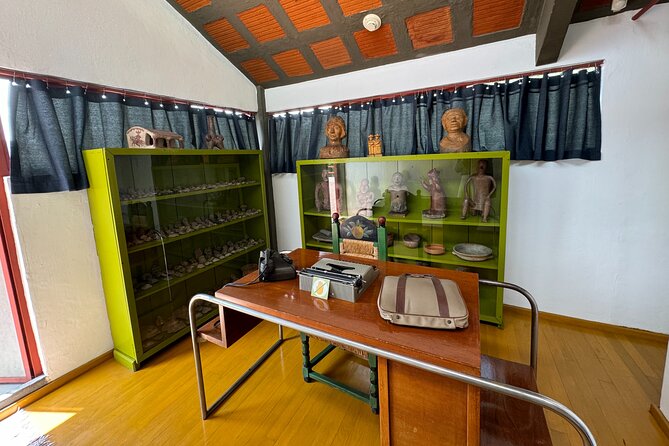
One of the smartest parts of this experience is that it doesn’t treat architecture like background. It treats it like a character in the story.
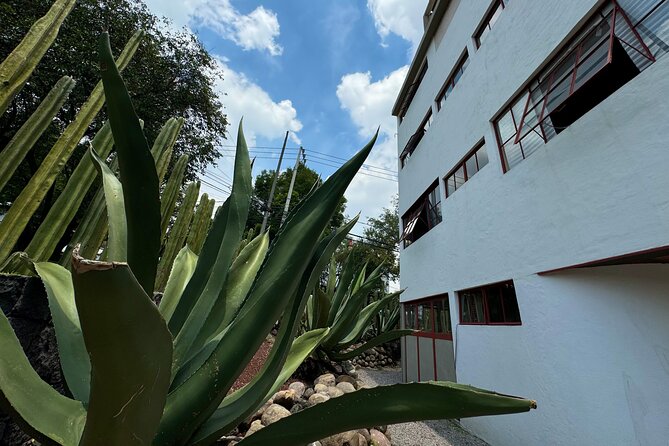
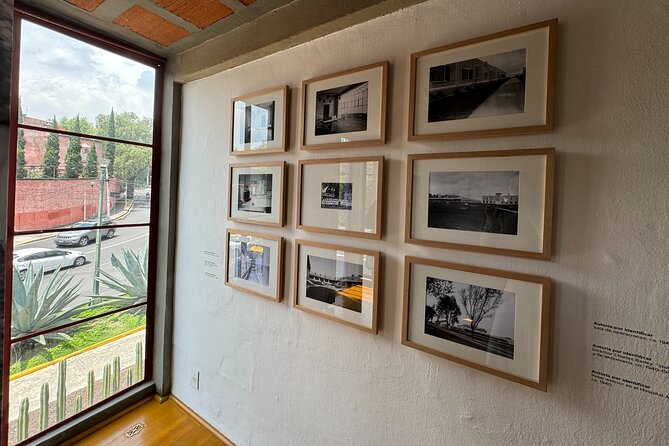
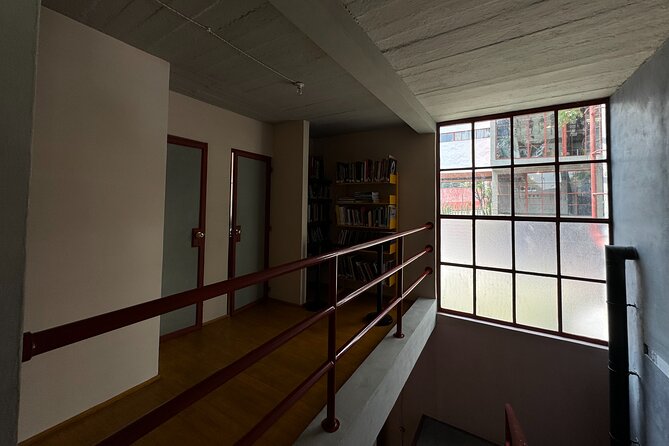
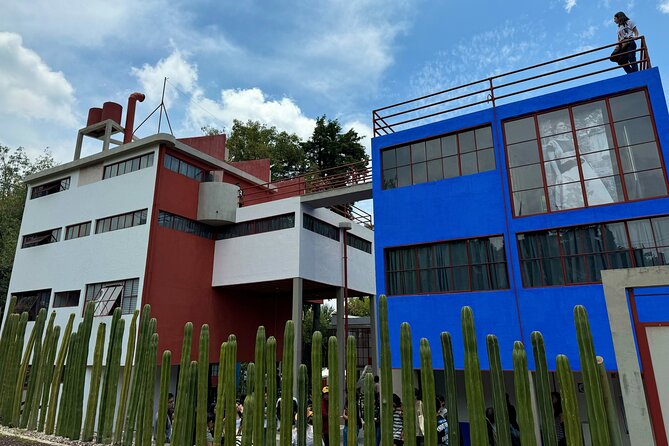
Frida’s architect and close friend, Juan O’Gorman, designed the houses with a functionalist approach: austere lines, practical shapes, and a lot of natural light. Even if you’re not an architecture nerd, this matters because light and space change how you read a room. In these houses, you’ll notice how the design keeps the environment open and usable—exactly what you want when artists are working.
You’ll also see how the two homes are joined by a bridge. That’s not just a scenic detail. The point is symbolic: the houses reflect independence, while the connection keeps the couple’s shared world present. A good guide will point out how that layout shapes movement and daily routine—how you’d navigate between spaces, and how that might influence work and privacy.
If you care about theory, there’s room for it. Some guides lean into how the couple’s relationship and working life may have connected to the design and to O’Gorman’s role. Names like Angel, Daniel, Cynthia, and Cynthia again (she showed up in the guide feedback with strong storytelling) are examples of guides who helped people understand the “why,” not just the “what.”
Possible snag: if a display takes up a lot of room, the architecture can feel harder to see in full context. I’ve seen comments about big seasonal decor placed in areas that can block your view of the space’s intended flow. It’s rare, but it’s worth knowing so you can adjust expectations.
Frida Kahlo’s house: smaller, personal, and more human-scale
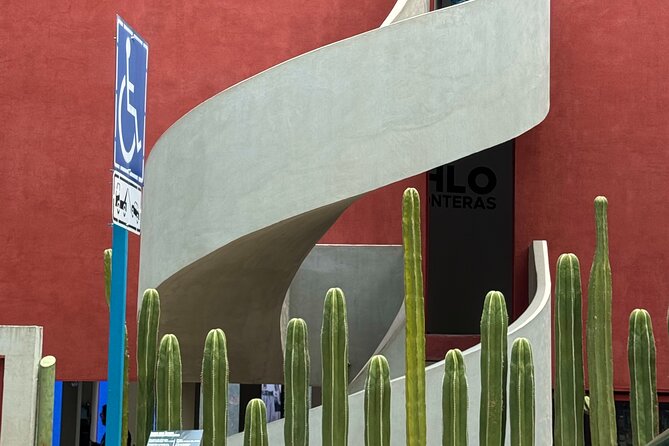
Frida’s house tends to hit you emotionally before you even start studying objects. It’s smaller than Diego’s, and that difference shows. The vibe is intimate, like you’re stepping into a lived-in environment instead of a staged exhibit.
Inside, you’ll encounter Frida’s personal items and decorative details that help explain her eye and her temperament. The point isn’t to turn her life into a theme park. It’s to show how everyday objects and personal style became part of her visual language.
A good guide will also help you connect her space to her working rhythm. You may hear how the house’s layout supported daily life—where you’d pause, where you’d focus, and how the rooms functioned. If you’ve only seen Frida through paintings, this is where you start seeing the environment that fed those images.
Keep in mind: access can vary. One visitor reported that entry into Frida’s house wasn’t available on their day due to onsite closures tied to conditions like water or an ongoing exhibit. If Frida’s interior rooms are the reason you’re booking, I’d treat this as a “best case” experience and not a guarantee. The architecture and Diego’s studio are still strong even if one side is restricted, but your plan should include that possibility.
Tip from the guide feedback: bring sun protection. Several guests suggested wearing a hat and using a lot of sunscreen since Mexico City sun can be intense, even when you’re mostly indoors for part of your visit.
Diego Rivera’s studio: sketches, tools, and pre-Hispanic art
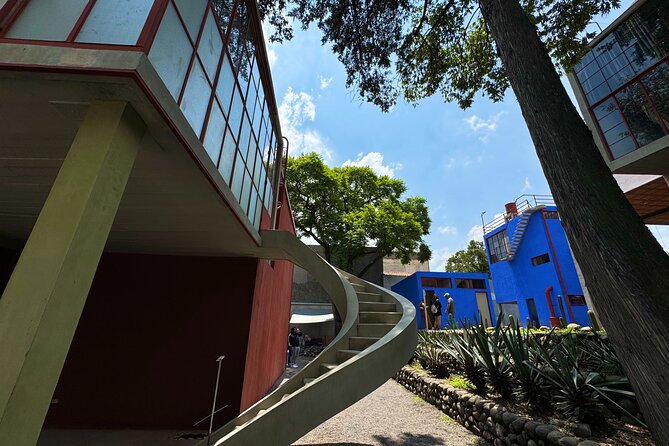
Diego’s house is the larger space, and his studio is often described as the best part. That makes sense. This is where you get a clear sense of how a working artist moves from idea to draft to finished work.
You can still see items that feel like they’re mid-process: sketches, brushes, and work tools. It’s the kind of detail that makes the whole creative story feel real instead of myth-like. You’ll look at the studio as a workplace, not a shrine.
Diego’s side of the house also includes a large collection of pre-Hispanic art. That’s important context for understanding his interests and how he engaged with Mexico’s visual traditions. If you’ve ever wondered how his style relates to cultural memory, this collection helps you make that connection in a tangible way.
One review note to file away: sometimes an ofrenda or seasonal decorations can take up space inside O’Gorman’s studio area. In at least one case, that changed how visitors could experience the room and made parts of the collection harder to distinguish. If your goal is pure studio viewing, you might want to mentally prepare for occasional overlap between exhibits and holiday displays.
When the guide is strong, you’ll still get value. Guides like Mauricio (praised for historical delivery), Roman/Román (noted for architecture and English), and Ivan (praised for making context digestible) tend to keep the focus on what you’re seeing and why it matters, even when the room setup isn’t perfect.
Guides can make or break the experience (so plan around English)
The tour is offered in English, but English fluency and clarity can vary by guide. That shows up in the guide feedback: some guests had no problem following along, while one mentioned their guide didn’t speak English well, which made the visit harder to understand.
This is one reason I think it’s smart to arrive ready to be interactive. Ask questions early, even if your question is simple. If your guide’s explanations are clear, you’ll learn a lot quickly. If they’re still finding their rhythm, questions help you steer the conversation toward the parts you care about: architecture, the couple’s relationship, or Diego’s artistic influences.
The good news: there’s clear evidence of standout guides who bring energy and organization. Cynthia came up more than once with praise for being funny and knowledgeable, and for explaining each part of the house in a way that works for adults and kids. Leonor and Angel were also highlighted for detailed knowledge and friendly delivery. Omar was praised for charisma and passion.
Also, pay attention to communication. Your guide reaches out by WhatsApp or SMS, and you should answer promptly when they contact you. It’s the simplest way to avoid any last-minute confusion about timing or meeting details.


Price and time: is $49.52 worth it?
At $49.52 per person for about 1 hour 30 minutes, you’re paying for three things: access to the site, a guided interpretation, and a small-group experience. The value is best when you care about the “how” and “why,” not just the “who.”
Here’s what you’re getting that’s hard to replicate on your own, at least without extra work. The houses’ layout can be confusing at first glance. A good guide translates the symbolism of the bridge, explains the functionalist design, and connects objects to artistic life. With the right guide, you leave with a clearer picture of how these two artists actually lived and made work.
You’re also saving time. Instead of building your own route through separate sites, this tour concentrates on the museum spaces you came for. That matters in Mexico City, where good days often include museum hopping.
Potential value wobble: if you arrive expecting access to both homes but end up with a closure or limited entry on the day, you might feel the price more sharply. Also, a heavy display setup (holiday decor taking over rooms) can reduce how “hands-on” the studio experience feels.
Still, with the overall strong rating and frequent praise for guides, this tour tends to pay off. If you want art plus context—architecture, objects, and studio details—it’s a solid choice.
Practical tips for a smooth visit (without stress)
You can make this tour easier with a few small moves.
First, wear sun protection. Even before you get inside, the city sun can hit hard. Hat and sunscreen are a smart call, especially if you’ll be walking outside to reach the museum.
Second, bring a question list. This helps you get value from the short timeframe. Good topics: O’Gorman’s role, what functionalist design changes in how you use space, how Diego’s pre-Hispanic art collection connects to his artistic interests, and why the couple’s homes are connected the way they are.
Third, be flexible about which rooms feel most satisfying. If Frida’s house access is restricted on your date, Diego’s studio still offers real studio details like sketches, tools, and brushes. If Diego’s studio has a big setup display that day, lean on your guide to focus you back to the studio storytelling.
Finally, watch your phone. Since the guide messages by WhatsApp or SMS, you don’t want to miss their coordination. Answering quickly keeps the whole experience calm.
Should you book this Diego Rivera and Frida Kahlo studio house tour?
Book it if you want a guided, small-group way to see both artists’ working spaces in San Ángel. I’d especially recommend it if architecture interests you—O’Gorman’s functionalist design and the bridge layout are not just background facts; they shape the whole story.
Skip or reconsider if your trip plan depends on guaranteed access to every room on a specific schedule. On-site conditions can affect entry, and one visitor flagged an issue with water and restricted bathrooms/Frida house access. Also, if you’re very sensitive to English-language nuance, it’s worth mentally preparing that guide styles vary.
My practical bottom line: for most visitors, the studio details—especially Diego’s working materials—and the quality of interpretation from guides like Mauricio, Leonor, Roman/Román, Cynthia, and Ivan are exactly what turn this from a sightseeing stop into a meaningful art-and-architecture experience.
FAQ
How long is the Diego Rivera and Frida Kahlo studio house tour?
It runs for about 1 hour 30 minutes.
What does the tour cost?
The price is $49.52 per person.
Is admission included?
Yes. The admission ticket is included in the tour.
What language is the tour offered in?
The tour is offered in English.
How many people are in the group?
The maximum group size is 15 travelers.
Where does the tour meet?
The meeting point is Museo Casa Estudio Diego Rivera y Frida Kahlo, Diego Rivera s/n, San Ángel Inn, Álvaro Obregón, 01060 Ciudad de México, CDMX, Mexico.
Do I need to plan for weather?
Yes. The tour requires good weather. If it’s canceled due to poor weather, you’ll be offered a different date or a full refund.
Are service animals allowed?
Yes, service animals are allowed.