REVIEW · MEXICO CITY
Tortilla Class and Workshop in Mexico
Book on Viator →Operated by Eat Mexico Culinary Tours · Bookable on Viator
Corn tastes different when you make it yourself. In Mexico City, this hands-on tortilla workshop turns nixtamal and heirloom corn into something you can actually smell, grind, cook, and eat. You start with a quick, engaging talk about why Mexican corn matters, then you move straight to the old-school tools that still make tortillas better.
I especially like that you get to use a metate to grind your own corn, not just watch. And I also love that the class doesn’t end at tortillas—your work becomes a quesadilla with Oaxaca cheese, plus fresh salsa made using a molcajete.
One consideration: it’s a small group, but the 1 hour 30 minute pace is real. If you want long explanations or lots of downtime, this might feel a bit fast.
In This Review
- Key Points to Know Before You Go
- Nixtamal and Heirloom Corn: The Lesson That Changes How You Eat
- Grinding Heirloom Corn on a Metate (Volcanic Rock)
- Making Tortillas and Cooking on the Comal
- Quesadilla Time: Oaxaca Cheese and Your Own Salsa
- Salsa with a Molcajete: Crush, Mix, Taste, Adjust
- Who Leads and What the Class Feels Like (Clara and Ariane)
- Timing, Meeting Point, Group Size, and What That Means for Your Day
- Price and Value: Is $95.31 Worth It?
- Practical Tips to Get the Most Out of the Workshop
- Should You Book This Tortilla Class in Mexico City?
- FAQ
- How long is the Tortilla Class and Workshop?
- What does the price include?
- Is the class offered in English?
- How many people are in the group?
- What time does it start?
- Where do I meet for the tour?
- Is transportation or alcohol included?
- What’s the cancellation policy?
Key Points to Know Before You Go
- Heirloom corn + nixtamal basics: You’ll learn why the process matters before you cook.
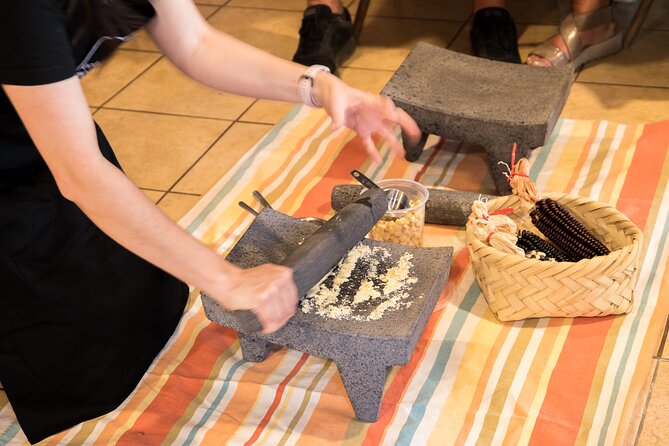
- Metate grinding is the centerpiece: You’ll do the grinding on a volcanic-rock stone.
- Comal cooking hands you the skills: Fresh tortillas, cooked right in front of you.
- Molcajete salsa: You’ll crush and mix your own sauce to match your tortilla.
- Small group, English-friendly: Maximum of 8 travelers, with the class offered in English.
- You eat what you make: Quesadilla is included, plus the tortillas from your hands.
Nixtamal and Heirloom Corn: The Lesson That Changes How You Eat
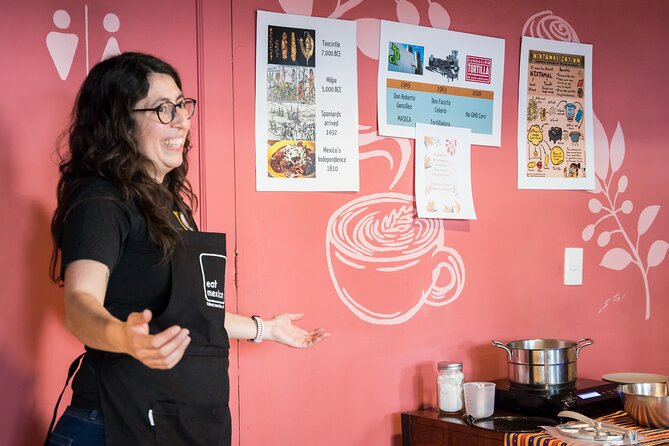
This experience starts with a short lecture that gets to the heart of Mexican corn: why it matters culturally, and why heirloom strains are under pressure. The message is simple. Corn is not just an ingredient. It’s a whole food system.
Then you get the key science-and-tradition bridge: nixtamal. You learn that nixtamal is the essential process that transforms corn into what becomes tortilla dough. It’s not just about soaking and cooking corn. It’s about making the corn workable for tortillas and building the flavor and texture tortilla makers chase.
What I like about the way this class is framed is that it connects the dots between what’s in your tortilla and how it ends up on your plate. The workshop makes the point that many packaged tortillas don’t match the quality and nutritional content of ancient, handmade tortillas. Even if you’re not a food nerd, you’ll leave with a practical instinct for what better tortillas taste like.
You can also read our reviews of more tours and experiences in Mexico City



Grinding Heirloom Corn on a Metate (Volcanic Rock)
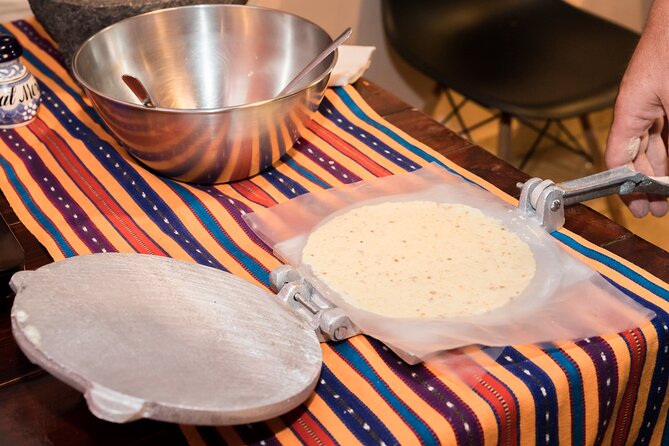
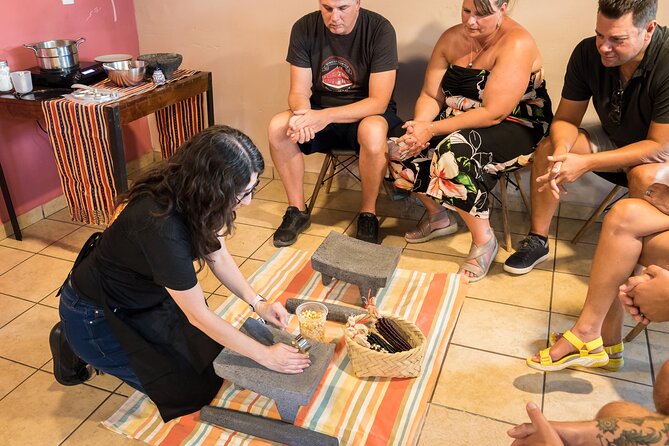
After the intro, you go to work. The metate is the star here: an ancestral Mexican volcanic-rock grinding stone. This is not a gimmick photo op. Grinding is the slow, physical part that teaches you control.
As you grind heirloom corn, you understand what tortilla dough really is: ground, prepared corn that’s ready to be formed. Your arms learn the rhythm. Your senses learn what the dough should feel like. And your brain learns the difference between a tortilla made with care and one assembled from shortcuts.
In the class, you’ll also have that rare opportunity to compare. One reason people get hooked is that you don’t just taste one kind of tortilla. You may grind and eat tortillas made from the corn you work on at the metate, then taste tortillas prepared from masa from a mill, and also a third option using Maseca harina. That kind of side-by-side comparison is brutally educational. It shows you why tortilla makers defend their method.
And yes, it’s fun. Kids love it too—school-age kids get a kick out of the action of grinding, and it keeps adults engaged because everyone can see the process happening.
Making Tortillas and Cooking on the Comal
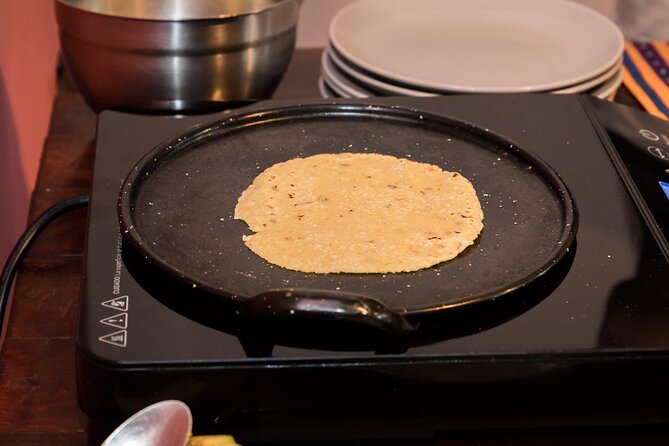
Once the dough is ready, you make your own tortilla. This is where the workshop turns from lesson to skill.
You form tortillas and then cook them fresh on the comal, the griddle-like cooking surface used across Mexico. The comal cooking teaches you timing. Tortillas go from raw to cooked fast, and they’re better when you pay attention to how they change. You’ll get the hands-on guidance needed to avoid the two classic mistakes: tortillas that are too thick and tortillas that cook too long.
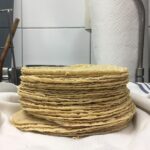
The comal part matters for flavor and texture. Freshly cooked tortillas are soft, warm, and fragrant in a way that packaged tortillas just can’t match. And because you cooked yours, you notice the details: how they puff, how edges set, and how the tortilla behaves when folded.
The class also leans practical. You’re not just “making food.” You’re learning the steps you can repeat later if you want to cook Mexican-style tortillas at home.
Quesadilla Time: Oaxaca Cheese and Your Own Salsa
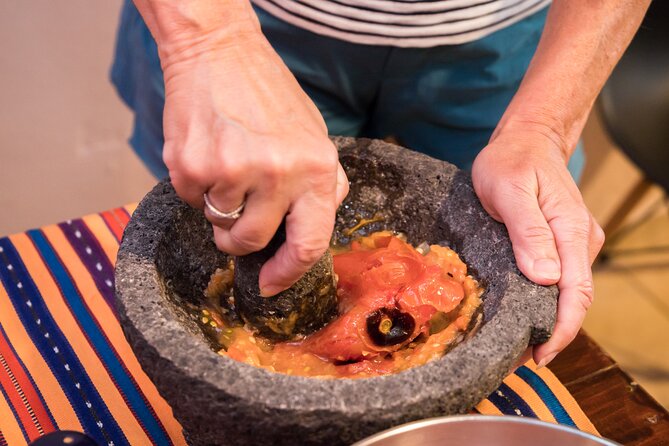
Then you transform your tortilla into something you’ll happily overeat: a quesadilla.
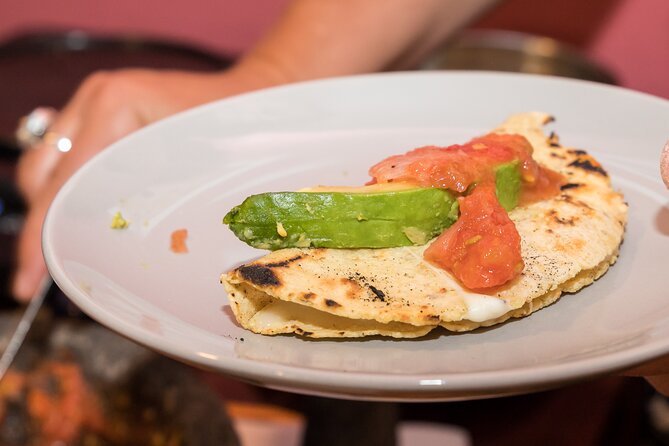
Your quesadilla uses fresh Oaxaca cheese, and it gets topped with salsa you made yourself using the molcajete. This is a clever part of the experience, because it trains your taste. You learn that salsa isn’t decoration. It’s flavor architecture for the tortilla and cheese combination.
Oaxaca cheese is stretchy and mild, and it works well with the earthy, corn-forward tortilla base. That matters because the workshop is teaching you to value the tortilla, not hide it. When your tortilla is good, you can taste it even with cheese.
Also, this is the moment where the class becomes social. People chat while the food is cooking, and the atmosphere stays friendly and relaxed rather than stiff. It’s easy to ask questions when you’re already standing next to the tools.
Salsa with a Molcajete: Crush, Mix, Taste, Adjust
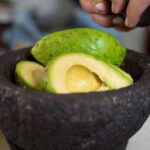
Your salsa comes from the molcajete, the classic stone mortar. Salsa made this way isn’t just “homemade.” It has texture. Crushed ingredients hold onto a roughness that tastes fresh instead of blended into flatness.
Using a molcajete also trains you to adjust flavor by feel. You’ll learn that salsa can be tuned—more bite, more tang, more balance—rather than treated like a fixed recipe. Even if you’re not a strict recipe follower, you’ll understand the method.
This is also where guides like Clara shine. In the experiences people describe, Clara is engaging, warm, and serious about explaining why corn and cooking methods matter. That kind of guide makes the difference between a class that’s only hands-on and one that actually sticks in your head.





Who Leads and What the Class Feels Like (Clara and Ariane)
Eat Mexico runs this workshop with a culinary expert local guide. In the feedback, Clara and Ariane come up as key instructors, and the consistent theme is that they make the history and technique feel clear—not academic, not boring.
The best part of good teaching in a cooking class is pacing. You want enough explanation to do the steps right, but you also want time to hands-on cook. Here, the flow feels designed: a short lecture, then you grind and cook while asking questions.
You also get a small-group format (maximum of 8 travelers). That matters because it keeps the experience from feeling like a conveyor belt. You’re more likely to get help when you need it, and you can actually talk with your guide while you’re cooking.
Timing, Meeting Point, Group Size, and What That Means for Your Day
This class starts at 5:00 pm and runs about 1 hour 30 minutes. It ends back at the meeting point, so you don’t have to worry about a complicated route to your next stop.
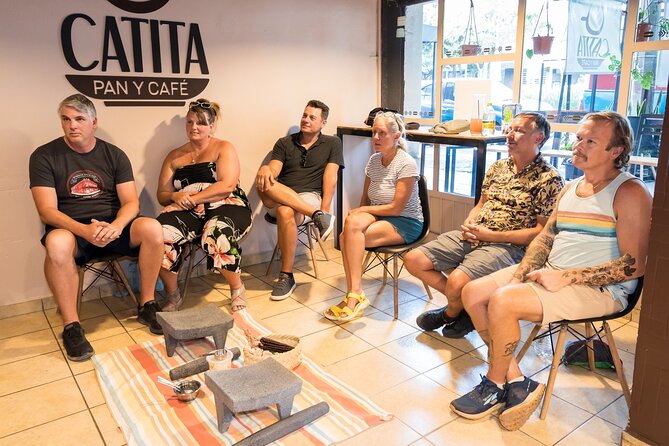
The meeting point is Catita Pan y Café on C. Dr. José María Vértiz 997, Narvarte Poniente, Benito Juárez, 03020 Ciudad de México. The location is near public transportation, which is a relief in Mexico City where traffic can be unpredictable.
Two practical notes for your schedule:
- Plan for an early dinner window. You’ll eat what you make, so you might not need a huge meal right after.
- Wear shoes you can stand in. You’ll be at the cooking stations.
The class also runs in English and uses a mobile ticket. That’s useful if you want everything kept simple on your phone.
Price and Value: Is $95.31 Worth It?
At $95.31 per person, this is not a budget cooking class. But it also isn’t just a tasting. You’re paying for technique, tools, ingredients, and a small-group setup where you do the work.
Here’s what you get for the price:
- You use real traditional tools: metate and molcajete.
- You cook fresh tortillas on the comal.
- Your meal includes a quesadilla made with Oaxaca cheese and the salsa you prepared.
- You receive instruction from a culinary expert local guide, with time to ask questions.
If your travel style is hands-on and you care about learning a method you can repeat, it’s good value. If you only want to sample street food without doing prep work, you may find a different tour fits better.
Also, this activity is commonly booked about 47 days in advance. That’s a soft sign of demand. If you want a specific time window in Mexico City, booking earlier can make planning easier.
Practical Tips to Get the Most Out of the Workshop
A few things will make your experience smoother:
- Come hungry-ish. You’ll snack and eat a quesadilla, but the class activities build toward that meal.
- Be ready for hands-on work. Grinding is physical. It’s part of the point.
- Ask questions while you cook. The best learning happens when you see the tools and steps in action.
- Pay attention to texture. Tortillas and salsa taught by the senses stick better than memorized instructions.
- Bring a learning mindset. This class is about process—nixtamal, grinding, cooking—so you can recreate the idea later even if you can’t buy the exact same tools.
If you’re traveling with kids, this workshop is a strong fit. The grinding and cooking steps are kid-friendly when they’re excited to participate.
Should You Book This Tortilla Class in Mexico City?
If you want more than a food walk and you like learning by doing, I’d book it. The big win here is that the workshop teaches the steps that shape tortillas—nixtamalization, grinding on a metate, comal cooking, and molcajete salsa—then you eat the results while they’re fresh.
It’s especially worth it if:
- you care about Mexican food beyond tacos,
- you like hands-on classes,
- you want to understand what makes tortillas better (and why),
- you’re traveling with family members who enjoy interactive activities.
If you dislike process-heavy classes, or you’d rather just sample a variety of foods without cooking, you might feel this is more work than you want. But if you’re in the mood to learn how real tortillas are made, this is a very solid way to spend a 5 pm slot in Mexico City.
FAQ
How long is the Tortilla Class and Workshop?
It runs about 1 hour 30 minutes.
What does the price include?
You get snacks in the form of the quesadilla you make, plus instruction from a culinary expert local guide.
Is the class offered in English?
Yes, the workshop is offered in English.
How many people are in the group?
The class has a maximum of 8 travelers.
What time does it start?
It starts at 5:00 pm.
Where do I meet for the tour?
You meet at Catita Pan y Café, C. Dr. José María Vértiz 997, Narvarte Poniente, Benito Juárez, 03020 Ciudad de México, CDMX, Mexico. It ends back at the same meeting point.
Is transportation or alcohol included?
Private transportation and alcoholic beverages are not included.
What’s the cancellation policy?
You can cancel for a full refund up to 24 hours before the experience start time. If you cancel less than 24 hours before, the amount paid is not refunded.