REVIEW · MEXICO CITY
Private Tour in the Historic Center of CDMX with Local Guide
Book on Viator →Operated by Tours by Hilary · Bookable on Viator
Aztec stones meet art murals on foot. This private Centro Histórico walk, led by local guide Hilary, connects the old Aztec capital story to today’s grand Mexico City sights, with explanations as you move.
I love how Hilary keeps the narrative clear, including the conquest of the Aztec capital as you pass the Tenochtitlan area near Zócalo.
I also love the right mix of included entries and free stops. You spend less time guessing what to pay for on your own, and more time listening, looking up, and getting your bearings fast.
One drawback: it’s a fast-moving route. If you want to linger in a single church or hall for a long time, you may feel slightly rushed because the tour packs major stops into about 3–4 hours.
In This Review
- Key highlights to look for
- Where the tour starts: Zócalo to a focused, walkable route
- Aztec origins: the Aztec temple area and Tenochtitlan traces near Zócalo
- Palacio de Bellas Artes: why this building matters in the Centro Histórico
- Museo Vivo del Muralismo: Diego Rivera murals, explained in a way you’ll remember
- Catedral Metropolitana de la Ciudad de Mexico: built in 1573, still teaching
- Palacio Nacional area and House of Tiles: power and prestige in a very short stop
- San Francisco de Asís convent: Franciscan history you can feel
- Zócalo again in your brain: the “heart of Mexico City” perspective
- Palacio Postal: an Art Nouveau beauty that still works
- Museo Antiguo Palacio de Iturbide: a quick museum stop with emperor-era roots
- How the 3–4 hour pace works (and how to not feel rushed)
- Price and value: $65 per person with tickets handled
- Should you book this Centro Histórico private tour?
- FAQ
- How long is the tour?
- How much does the tour cost?
- Is this a private tour?
- What language is the tour offered in?
- Where do we meet for the tour?
- Where does the tour end?
- Are tickets included for the stops?
- Is transportation included?
- What fitness level is required?
- Is there free cancellation?
Key highlights to look for
- Hilary’s art-history strengths and high-energy pacing
- A walking route that links Aztec origins to colonial and modern Mexico City
- Included admissions at major sites like Palacio de Bellas Artes and Palacio Postal
- Diego Rivera murals explained at Museo Vivo del Muralismo
- Quick hits at iconic architecture: Catedral Metropolitana, San Francisco, and more
Where the tour starts: Zócalo to a focused, walkable route
This is a private tour, so you’re not stuck with a big herd or waiting on strangers. You meet at Zócalo Central Hotel on Av. 5 de Mayo 61, in the Centro Histórico, and you finish at Palacio de Bellas Artes. That start-to-finish flow matters: you’re walking through the core of the city instead of bouncing around with shortcuts that don’t teach you much.
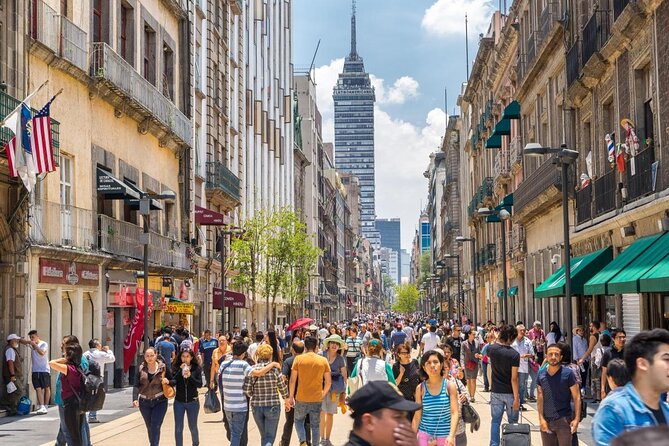
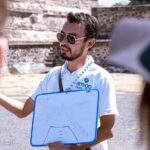
Hilary’s approach is practical. The meeting point is straightforward, and once you’re moving, she keeps the tour tightly organized. In a place like Mexico City’s historic center, that’s a big deal. The streets can feel like a maze if you’re on your own, and the monuments can blur together if you’re just following your phone map.
Expect moderate walking. The itinerary is designed for people who can handle a steady stroll and short stops at each place—think comfortable shoes, not marathon shoes.
You can also read our reviews of more guided tours in Mexico City
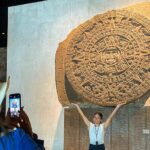
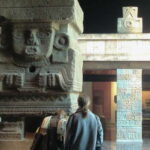
Aztec origins: the Aztec temple area and Tenochtitlan traces near Zócalo
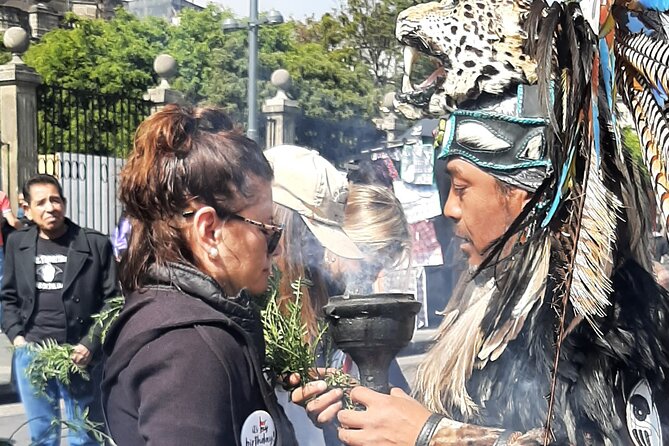
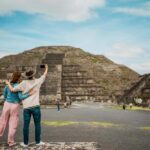
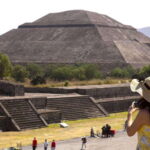
The tour’s opening moves you into the city’s older layers. It starts at the main temple of the Aztecs, then brings you toward Zócalo, the heart of the Centro Histórico.
This is where the walking tour format becomes more than convenient. A guide can point out what you’re looking at—why it’s placed where it is, and how the Spanish conquest changed the map of power. On one recent day, Hilary also guided the group through what a public demonstration can look like when it happens near major government buildings. In other words: history isn’t trapped behind glass.
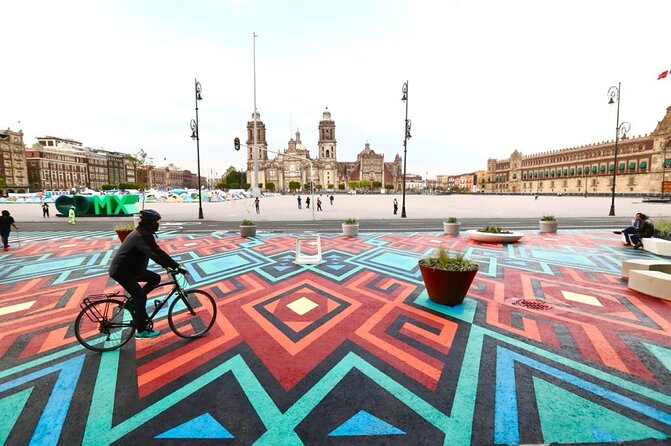
At Zócalo, take a moment before you move on. Even in 15 minutes, the square gives you scale. It’s one of the biggest squares in the world, and the size changes how you understand everything around it. You get a clearer sense of why the Aztecs’ central space was so important, and why the colonial and modern structures use the same idea—control the center, and you control the city’s story.
Practical note: Zócalo is a place where crowds can form quickly. If something is going on, your guide can help you keep the tour moving without losing the context of what you’re seeing.
Palacio de Bellas Artes: why this building matters in the Centro Histórico
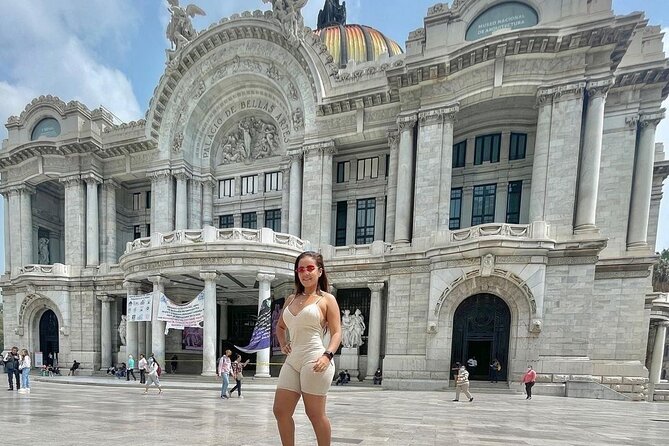
Next comes Palacio de Bellas Artes, one of the most emblematic buildings in the Historic Center. You’ll have about 30 minutes, and the admission ticket is included.
Even if you’re not the type who stops for architecture, this is one of those places where the building communicates its purpose before you even read a label. It’s tied to Mexico City’s cultural self-image—opera, theater, art—wrapped in a grand, cinematic exterior. With a guide, you don’t just look at the facade. You learn how to read what you’re seeing: the mix of influences, the way the building sits in the center of everything, and why it’s a symbol people reference even when they’re not museum-goers.
In a short stop, the goal is focus, not exhaustion. You’ll see enough to understand why it’s so central to Mexico City’s identity, and then you’ll move on before the tour drifts into museum fatigue.
Museo Vivo del Muralismo: Diego Rivera murals, explained in a way you’ll remember
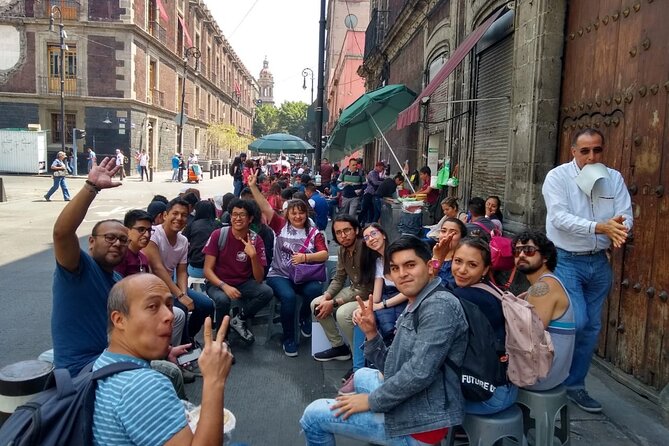
After Bellas Artes, the tour shifts to street-level art impact with Museo Vivo del Muralismo, timed for about 40 minutes. The entry is listed as ticket free, and your tour includes the needed tickets for Rivera’s murals.
This is one of the best spots for a guided experience. Murals can look impressive, but they’re also full of symbols and politics, and it helps to have someone translate the “what am I supposed to notice here” moment.
Hilary’s art-history knowledge came through strongly in the reviews, and that kind of expertise pays off here. You’ll get explanations of Diego Rivera’s work instead of just getting facts. The difference is subtle but huge: you’re not memorizing dates. You’re learning what the paintings are communicating, and how they fit into the broader cultural history of Mexico City.
If you like art that has something to say—social, political, historical—this stop is worth the walk time. If you’re not an art person, this is still a smart stop because murals are storytelling at scale, and a guide helps you catch the storyline fast.
Catedral Metropolitana de la Ciudad de Mexico: built in 1573, still teaching
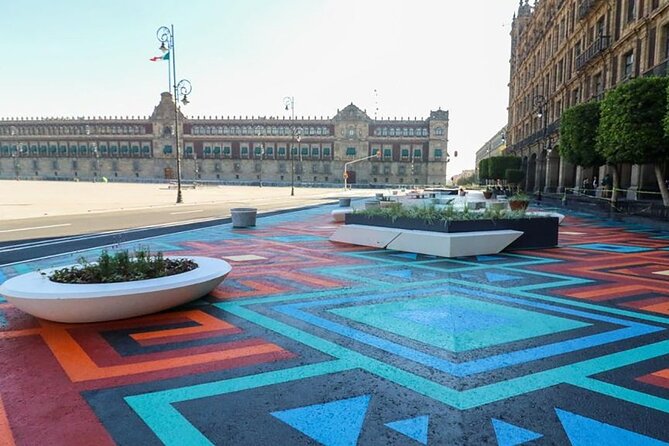
The tour includes a stop at Catedral Metropolitana de la Ciudad de Mexico, around 15 minutes. It’s free entry, and you learn key context: it’s the seat of the archbishopric and dates back to 1573.
In a short visit, the trick is to see the cathedral as more than a photo backdrop. With a guide, you’ll get a sense of what makes the construction difficult—how big projects take time, and how decisions echo for centuries. You also get the sense that the cathedral sits on layers: religious power, political power, and a city that kept changing its mind about what the center should look like.
This isn’t the stop for deep quiet. It’s a quick but guided orientation. You’ll leave with clearer mental images of the cathedral’s role in Mexico City, not just a vague memory that it was impressive.
You can also read our reviews of more private tours in Mexico City




Palacio Nacional area and House of Tiles: power and prestige in a very short stop
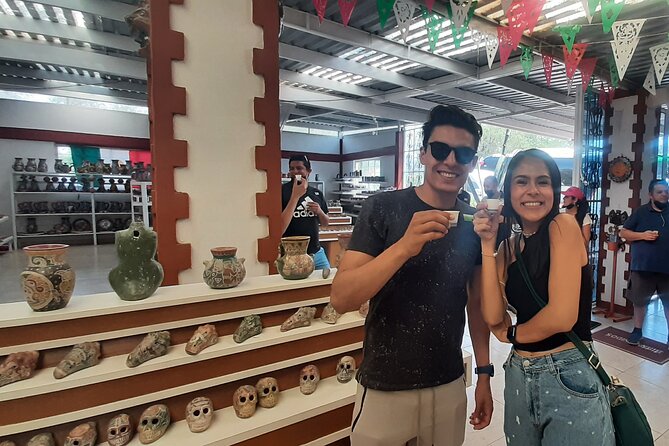
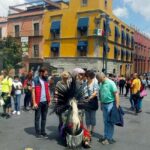
The tour then makes a quick stop connected to the official presidential presence of Mexico. On at least one recent day, there was a large public demonstration at Palacio Nacional, and Hilary helped explain why that sort of event is a common sight there.
Even if you don’t plan around it, it’s useful to be prepared for this reality: the historic center is still a working civic space. When something happens, the city becomes part of the tour, not something you try to ignore.
Then you get the House of Tiles, where the vibe shifts to a different kind of history. It was the residence of the Counts of the Orizaba Valley during the 18th century and today it functions as a restaurant. You’ll have about 10 minutes here, and it’s free to enter.
This is a good stop if you like details: the kind of place where the architecture is the story. Tiles, patterns, and interior refinement show you what status looked like in earlier Mexico City, and how that status got repurposed over time.
It’s quick, so don’t treat it like a full meal break. Think of it as a visual appetizer. If you want food there, you’ll likely need extra time on your own.
San Francisco de Asís convent: Franciscan history you can feel
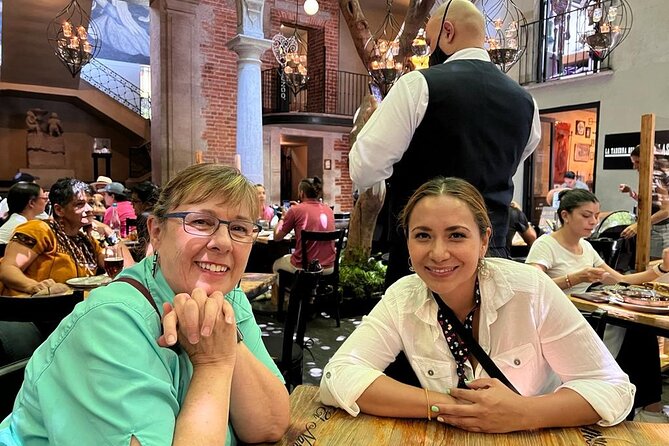
Next is Templo y Exconvento San Francisco de Asis, about 30 minutes, with admission ticket included.
This is the first convent of the Franciscan order, built in the 16th century. That matters because you’re not just looking at a church. You’re looking at an early religious complex that shaped how orders operated, taught, and built communities.
A guided stop helps here because the space is layered—church elements, convent layout, and the feel of a place meant for devotion and routine. If you’ve never visited a Franciscan complex before, you’ll probably notice how practical the design is, not only how beautiful.
One warning in a friendly way: this stop can draw people in for selfies and quick glances. Stay with your guide’s explanation long enough to understand what you’re actually looking at, and you’ll get much more out of the time.
Zócalo again in your brain: the “heart of Mexico City” perspective
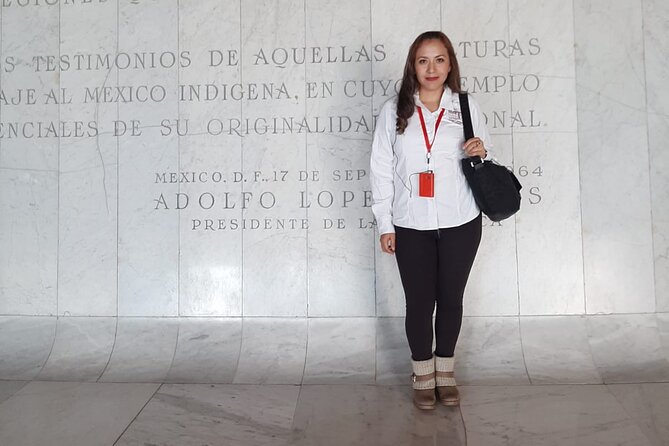
Zócalo is listed as a stop with about 15 minutes, free entry. Even if you’ve seen the square at least once in photos, being there in person changes how it lands.
Why? Because everything feels oriented around it. The Aztec temple area, colonial structures, major civic buildings, and the pathways between them create a mental map where Zócalo is the anchor point.
After you’ve seen Rivera’s murals, the cathedral, and the Franciscan complex, returning to the square in your mental timeline gives you a clearer picture of what the city centers choose to celebrate at different points in history.
Palacio Postal: an Art Nouveau beauty that still works
If you only see the Historic Center through churches and museums, you’ll miss a piece of how Mexico City grew into a modern city. That’s where Palacio Postal comes in.
You’ll stop for about 15 minutes. Entry is included, and you’ll be looking at a beautiful porphyriate building that still functions as a post office. It’s also described as a gem of Art Nouveau.
This is one of those places where functioning matters. If you’re used to historic buildings that exist only as museum shells, a working building changes the feel. You get to see how art and daily civic life can share the same space.
Hilary’s art-history strengths are especially useful here. The building is striking on first glance, but a guide helps you understand what makes it Art Nouveau and why it’s memorable in the Centro.
Museo Antiguo Palacio de Iturbide: a quick museum stop with emperor-era roots
The final museum stop is Museo Antiguo Palacio de Iturbide, about 15 minutes, free entry. It was the residence of the first Mexican emperor, and today it hosts art exhibitions.
This is a smaller, flexible-feeling wrap-up: you get a sense of how political power used to be housed, then you end by stepping into the idea that today the building supports art and public visiting.
Because it’s short, don’t expect a complete museum experience. Instead, treat it as a finale that ties themes together: power, culture, and identity—played out through architecture and exhibitions.
How the 3–4 hour pace works (and how to not feel rushed)
This tour runs about 3 to 4 hours and hits a lot of named places. That’s the trade-off. You get variety. You don’t get long, slow wandering.
You’ll move between major landmarks, with guided explanations at each stop. Sites like the cathedral, Zócalo, and House of Tiles are shorter. Others—Bellas Artes, Museo Vivo del Muralismo, and the San Francisco complex—give you more time.
So here’s the practical approach I recommend:
- Wear shoes you can walk in for a steady stretch.
- Carry water, and don’t rely on thinking you can buy it anywhere nearby.
- If you’re a slow reader of signs, know you’ll need to skim and then ask your guide questions.
Also remember: the historic center can experience crowds and public events. If there’s activity near major buildings, it can change how quickly you pass through streets. Your guide’s job is to keep your understanding on track while adapting.
Price and value: $65 per person with tickets handled
The tour price is $65.00 per person. What makes it feel like value isn’t just the price tag—it’s what’s included and how time is used.
Here’s what you’re getting in the included value:
- All fees and taxes
- Tickets for Rivera’s murals
- Tickets for the places included (Bellas Artes, San Francisco de Asis, and Palacio Postal are listed as ticket-included stops)
- A mobile ticket
- A private format (only your group)
- Group discounts, plus it’s offered in English
Transportation is not included, so you’ll start by getting yourself to the meeting point near public transportation. But once you’re there, the tour takes on the ticket and timing parts that usually eat up a DIY day.
In plain terms: if you want a tight, guided, ticketed circuit that covers big monuments and art in a single sitting, $65 isn’t a bad deal. If you’d rather roam alone with a long lunch and slow museum time, this format may feel too structured.
Should you book this Centro Histórico private tour?
I’d book it if you want a guided route that connects the dots: Aztec origins near Tenochtitlan, Spanish-era landmarks like the cathedral, major cultural stops like Bellas Artes, and Rivera murals explained clearly. It’s also a good choice if you care about art context and you want that context from a guide who can move fast without losing clarity.
I’d skip or rethink it if you need long stays inside every site. This is designed for highlights in a limited window, not for lingering.
If you like your history with architecture and art side-by-side, and you appreciate a guide who keeps energy high, this private Centro Histórico tour is a solid pick.
FAQ
How long is the tour?
It runs about 3 to 4 hours (approx.).
How much does the tour cost?
The price is $65.00 per person.
Is this a private tour?
Yes. It’s a private tour/activity, and only your group participates.
What language is the tour offered in?
The tour is offered in English.
Where do we meet for the tour?
The meeting point is Zócalo Central Hotel, Av. 5 de Mayo 61, Centro Histórico de la Cdad. de México, Centro, Cuauhtémoc, 06000 Ciudad de México, CDMX, Mexico.
Where does the tour end?
The tour ends at Palacio de Bellas Artes, Av. Juárez S/N, Centro Histórico de la Cdad. de México, Centro, Cuauhtémoc, 06050 Ciudad de México, CDMX, Mexico.
Are tickets included for the stops?
Yes. Included items cover all tickets for the places included, and tickets for Rivera’s murals are included as well.
Is transportation included?
No. Transportation is not included.
What fitness level is required?
A moderate physical fitness level is recommended.
Is there free cancellation?
Yes. You can cancel for a full refund up to 24 hours in advance of the experience’s start time.