A street corner can turn into a timeline fast. This private tour links Mexico City’s big landmarks to the stories behind them, so you get your bearings in the Historical Center. I like the private, local-led approach, and I especially liked how the guide connects architecture and politics over time, with clear English and plenty of room for your questions.
What you’ll walk away with is confidence. You visit key sights one after another, including major churches, Mexica ruins, and famous cultural buildings, then you leave with a mental map you can reuse for the rest of your trip. I also like that the tour includes bottled water and keeps the pace moderate for a 4-hour stroll.
One possible drawback: you’ll be doing a fair amount of walking, and the sites are outdoors-to-interior. If you’re not into that kind of mobility, plan for slower breaks, and bring a little extra patience if weather shifts plans.
In This Review
- Key highlights worth your attention
- A private walk through Mexico City’s Historical Center landmarks
- Price and what you actually get for $98
- Meeting point to final square: how the flow works
- Stop 1: Catedral Metropolitana and the Catholic heart of Mexico
- Stop 2: Museo del Templo Mayor and Mexica ruins
- Stop 3: Gran Hotel Ciudad de México and art nouveau grandeur
- Stop 4: Casa de los Azulejos and why tiles matter
- Stop 5: Palacio Postal and Mexico City’s early 1900s presence
- Stop 6: Palacio de Bellas Artes and the cultural icon
- The guide makes or breaks this tour
- Who this tour suits best (and who should think twice)
- Small practical tips that make the day easier
- Should you book? My take on booking this icons tour
- FAQ
- How long is the Mexico City Historical Centre Icons tour?
- Is this a private tour or shared with other people?
- What language is the tour offered in?
- What’s included in the price?
- Where does the tour start and where does it end?
- What is the cancellation and weather handling like?
Key highlights worth your attention
- Private tour for just your group, so questions and timing stay flexible
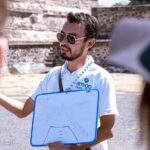
- English-speaking guides (Alejandro and Tlilal are named in past tours) with clear explanations
- A tight run of iconic stops: Catedral Metropolitana, Templo Mayor, Casa de los Azulejos, Bellas Artes
- Free entry is listed for each stop, which helps this feel like strong value
- Problem-solving on the fly if something is closed, so you still see art and context
A private walk through Mexico City’s Historical Center landmarks
Mexico City’s Historical Center can feel like sensory overload at first. One minute you’re staring at a cathedral façade, and the next you’re thinking about pre-Hispanic ruins buried under everyday life. That’s exactly why this kind of tour works: it turns the area into a readable story instead of a grab-bag of photos.
This is a private tour, so it’s just your group. In practice, that matters. You don’t get rushed, and your guide can slow down when you ask about architecture, culture, or how the modern city grew out of older decisions. Past guides (including Alejandro and Tlilal) are especially praised for staying organized over time—helpful when you’re trying to make sense of centuries in one morning.
The price is $98 per person for about 4 hours, which can be a good deal when you compare it to the cost of a longer guided day or separate paid tours. One thing to keep in mind: it’s a walking experience, and you’ll want comfortable shoes.
You can also read our reviews of more city tours in Mexico City


Price and what you actually get for $98
At $98, you’re paying for more than access to a checklist of famous places. You’re paying for a guide who can connect details that most people miss—why buildings look the way they do, how power shifted across time, and how the city kept reinventing itself.
Here’s the value equation that makes this stand out:
- Bottled water is included, so you don’t have to scramble early.
- The tour stops list free admission tickets for each site on the schedule.
- You get a structured overview that helps you explore later without feeling lost.
What’s not included is also important. Private transportation is not included, and there’s no mention of snacks. Also, while the stop list shows free entry, the tour data still notes that museum entrance fees aren’t specified in every case—so if you plan to enter special exhibitions that are ticketed separately, it’s smart to confirm on the day.
If your goal is a guided foundation for the Historical Center, this is the kind of “set up your day” purchase that pays off.
Meeting point to final square: how the flow works
You start at P.za de la Constitución 803, Centro Histórico de la Cdad. de México and finish near Palacio de Bellas Artes (ending around the Av. Juárez S/N area in the Centro Histórico).
The tour is designed as a walking circuit, with each stop timed to keep the momentum. The duration is about 4 hours, and the on-site time per stop is short enough that you won’t spend your whole day waiting in lines—though of course, real-world crowds can still affect timing.
Because it’s near public transportation, you can also tack on extra time before or after. The end point near Bellas Artes is handy if you want to continue with nearby cafés, galleries, or simply people-watch in one of the most recognizable public squares in the city.
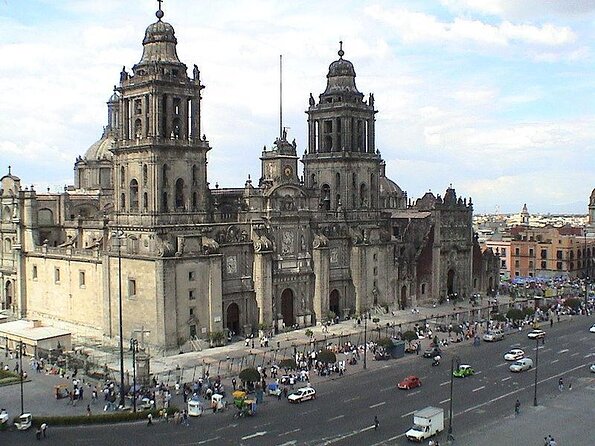
Stop 1: Catedral Metropolitana and the Catholic heart of Mexico
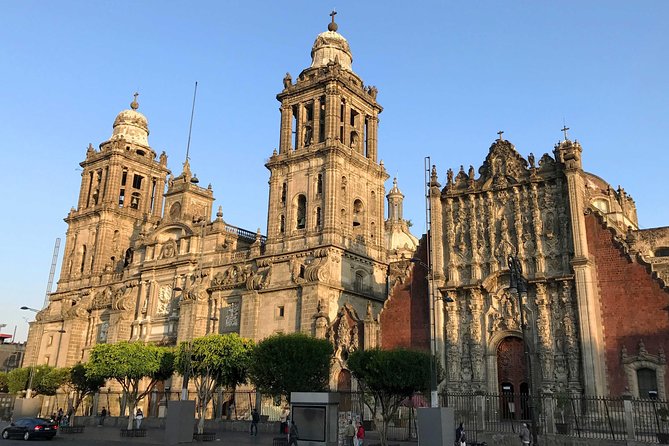
The tour begins at Catedral Metropolitana de la Ciudad de Mexico, the monumental Catholic temple that sits at the center of Mexican Catholic life. This isn’t just a photo stop. A good guide uses the cathedral as an entry point into how Mexico City’s Spanish-era power worked—and how the church became part of the city’s long-term identity.
You’ll spend about 30 minutes here, and the focus is on history and context, not just standing under the main doors. Even if you’ve seen other cathedrals before, Mexico City’s one has its own timeline, shaped by what came before and what came after.
Practical note: the cathedral can be busy. If you want the best views for photos, go early in the day or ask your guide where to stand for cleaner sightlines.
Stop 2: Museo del Templo Mayor and Mexica ruins
Next is Museo del Templo Mayor, where you can connect to the Mexica ruins of the pre-Columbian city. This stop helps you break the common illusion that Mexico City’s story starts with the Spanish.
You’ll spend around 30 minutes here. The main value is the way the guide explains the site so you can “see” what you’re looking at. Instead of treating ruins like a random museum object, you get them as part of a living urban system—then you can compare that to the Spanish city that grew above it.
If you’re the type who likes to understand why something is important, not just what it is, this is a highlight. It also makes the next architectural stops land better, because you start noticing how different eras show off power.
You can also read our reviews of more historical tours in Mexico City





Stop 3: Gran Hotel Ciudad de México and art nouveau grandeur
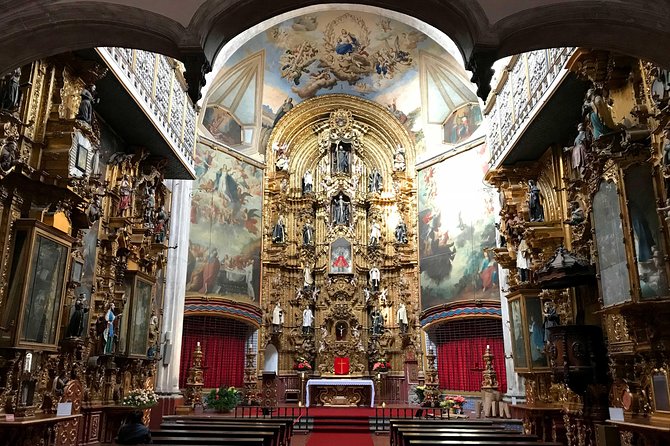
A quick change of pace brings you to the Gran Hotel Ciudad de México, an impressive building in the art nouveau style from the late 19th to early 20th century.
This stop is short—about 15 minutes—but it’s a smart one. It shows how Mexico City didn’t just inherit old-world styles. It also built new identities through architecture, especially as the city modernized.
A strong guide will help you look past the obvious ornament. You learn what to notice: shape, materials, and the way design choices communicate status. Even if you’re not an architecture nerd, you’ll likely leave with at least a few features you can spot on your own later.
Stop 4: Casa de los Azulejos and why tiles matter
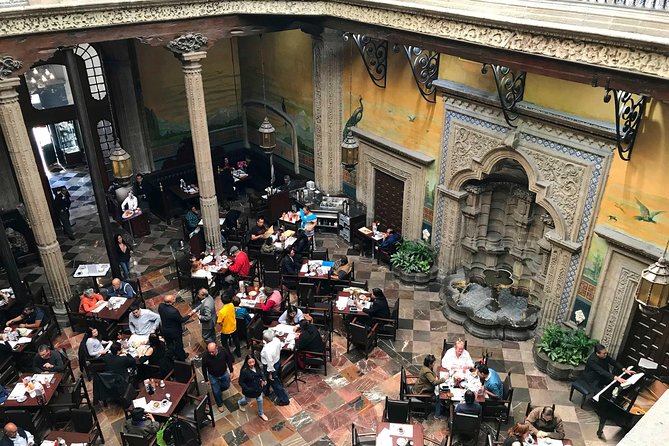
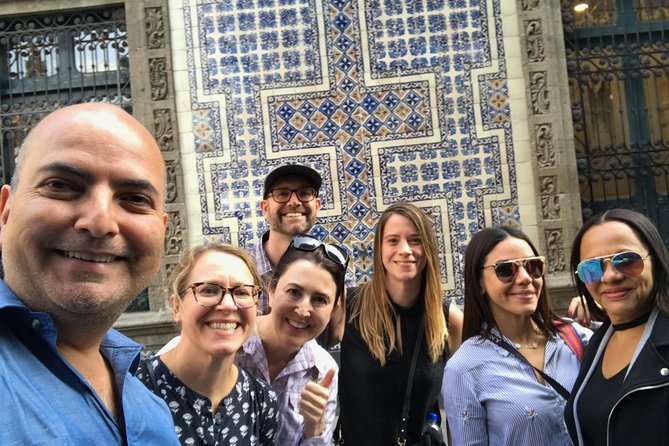
Now you hit one of the most iconic visual surprises in the area: the House of Tiles (Casa de los Azulejos), an 18th-century building known for its striking tilework.
You’ll spend about 30 minutes here. The tiles aren’t just pretty—your guide connects them to taste, trade, and the way wealthy neighborhoods signaled identity. This is one of those stops where you’ll understand why it’s famous instead of just accepting it as a background set for selfies.
What makes it memorable on a guided walk is the interior access. The tour data and guide feedback highlight that you may see building features you would otherwise miss if you just wandered in or looked from the sidewalk.
Stop 5: Palacio Postal and Mexico City’s early 1900s presence
Next up is Palacio Postal—the impressive post office from the early 20th century. It’s a building that feels like it should be part of a grand civic program, not a place you’d rush through.
You’ll spend about 15 minutes admiring it. This stop is less about deep museum-style time and more about connecting dots: why public buildings like this were made to be monumental, and how communication infrastructure becomes a symbol of nation-building.
If you like architecture, you’ll likely enjoy the details your guide points out. If you’re tired, it still works because the stop is short and focused.
Stop 6: Palacio de Bellas Artes and the cultural icon
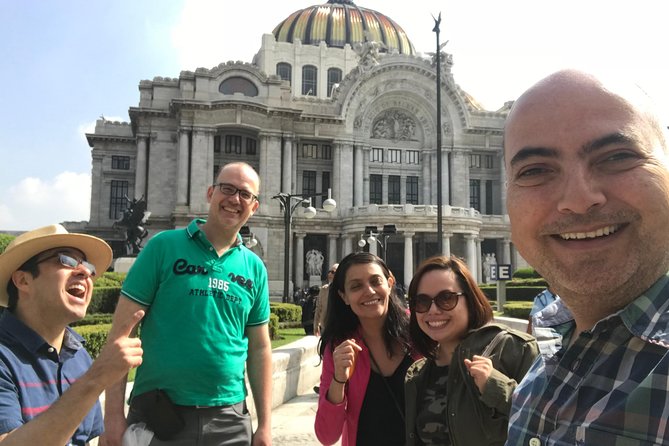
The tour ends at the square around Palacio de Bellas Artes, one of Mexico City’s most recognizable cultural landmarks. You’ll spend about 30 minutes here, which is enough to understand why it’s an icon without turning your whole afternoon into a waiting game.
This is the payoff stop. By the time you reach Bellas Artes, you’ve moved from pre-Hispanic roots to colonial power, then into modern civic and cultural identity. That makes the building feel like more than a stop on a route—it becomes the final chapter tying it together.
If you want to continue after the tour, you’re positioned well. Bellas Artes is surrounded by lots of options, and you’ll likely feel oriented enough to choose where to go next instead of bouncing around aimlessly.
The guide makes or breaks this tour
In the reviews tied to this experience, one theme keeps showing up: the guides are strong at turning facts into a story you can follow.
Names that come up include Alejandro and Tlilal. Both are praised for friendliness and for explaining not just architecture and history, but also how the city functions today. One review highlights that the guide answered questions about current events, too—so if you like your history connected to real life, this tour has that angle.
There’s also a practical skill: flexibility. One guide adjusted when a planned murals viewing spot was closed on a Monday, swapping to a different option that matched the group’s interests. That’s the kind of competence that keeps your morning from feeling wasted when a plan doesn’t work out.
If you want a tour that feels like a conversation, not a lecture, this one is built for you.
Who this tour suits best (and who should think twice)
This works well if:
- You want a first-day orientation for the Historical Center.
- You like seeing a cluster of major landmarks in a logical time sequence.
- You care about explanations that connect architecture, politics, and culture.
You might think twice if:
- You dislike walking for a few hours on uneven city sidewalks.
- You want a lot of free time at just one building. This tour keeps moving, by design.
The activity lists moderate physical fitness as the expectation. So if you’re comfortable walking for 4 hours with short stops, you’ll likely be fine.
Small practical tips that make the day easier
A few quick moves can keep you comfortable:
- Wear shoes with grip. Mexico City sidewalks can be smooth one block and slanted the next.
- Bring your own small snacks if you get hungry between stops. The tour does not include snacks.
- Use the bottled water you’re given, and keep an eye on your pace rather than your photo count.
- Ask questions early. The guide’s explanations are strongest when you steer a bit toward what you care about—church history, Mexica context, or city development.
And if weather changes: the experience is described as requiring good weather, with a plan to offer a different date or a full refund if the tour is canceled due to poor conditions. That’s one more reason to be flexible and not schedule the day as a do-or-die mission.
Should you book? My take on booking this icons tour
If your goal is to make the Historical Center make sense fast, I think this is a strong booking choice. The mix of stops hits both the big visual icons and the deeper layers—cathedral, Mexica ruins, and major architectural statements from later centuries. The private setting keeps it personal, and the guide quality is a consistent part of the experience.
Book it if you want:
- A guided route that gives you a reusable mental map.
- English explanations with room for questions.
- Free admission at the core stops, which improves value.
Hold off if you only want to linger in one museum or you can’t handle walking. This isn’t a slow, sit-and-savor kind of day. It’s a smart, efficient way to get the city’s story straight.
If you’re choosing between doing nothing structured and jumping from landmark to landmark, pick the tour. It’s the kind of foundation that makes everything else in Mexico City easier to enjoy.
FAQ
How long is the Mexico City Historical Centre Icons tour?
It lasts about 4 hours (approx.), with short time at each major stop.
Is this a private tour or shared with other people?
It’s a private tour/activity, meaning only your group participates.
What language is the tour offered in?
The tour is offered in English.
What’s included in the price?
Bottled water is included. Admission for the listed stops is shown as free on the tour schedule.
Where does the tour start and where does it end?
It starts at P.za de la Constitución 803, Centro Histórico de la Cdad. de México, and it finishes at the square near Palacio de Bellas Artes (Centro Histórico de la Cdad. de México, around Av. Juarez S/N).
What is the cancellation and weather handling like?
You can cancel for a full refund up to 24 hours in advance. The experience requires good weather, and if it’s canceled due to poor weather, you’ll be offered a different date or a full refund.