REVIEW · MEXICO CITY
Day of the Dead Tour in Mexico City
Book on Viator →Operated by Amigo Tours · Bookable on Viator
Day of the Dead feels different at night. This tour takes you past iconic Mexico City sights, then into a nighttime Pantheon for altar displays and Day of the Dead context you’ll actually use later, before ending with a Xochimilco trajinera ride under the lights with live mariachi.
I like two things the most. First, the cemetery visit focuses on how families build altars and what the blend of pre-Hispanic and Catholic ideas means in real life. Second, the live mariachi during the canals part is a major payoff after a long day.
One thing to think about: in peak season, bus logistics and traffic can steal time, so the experience may feel more about transport than about slow, thoughtful wandering unless you’re flexible.
In This Review
- Key highlights you should care about
- Getting the vibe: Mexico City’s Day of the Dead, on a schedule
- The pre-cemetery drive: landmarks you’ll recognize
- Pantheon at night: altars, family ritual, and what to notice
- The main drawback at this stop
- Xochimilco by trajinera: mariachi, chinampas, and night visibility
- A practical reality check: darkness changes what you see
- Food, bathrooms, and the stuff nobody wants to think about
- Guides and group size: why your experience can vary
- If you want the clearest explanations
- Price and value: $73 worth it, if you match the tour style
- My practical value verdict
- What the day feels like end-to-end
- Who should book this tour (and who should skip)
- Should you book?
- FAQ
- What time does the Day of the Dead tour start?
- How long is the tour?
- Is the tour offered in English?
- What’s included in the price?
- Is food included?
- Is the tour suitable for children?
Key highlights you should care about
- Nighttime cemetery altars explained with a guide, so you know what you’re looking at
- Panoramic drive by major landmarks before you reach the first stop
- Xochimilco trajinera ride with live mariachi and views of chinampas from the water
- Live entertainment on the canals is a frequent standout, even when schedules get tight
- A big, scheduled group experience (up to 99) means you’ll spend more time moving than you might expect
Getting the vibe: Mexico City’s Day of the Dead, on a schedule
This is a classic Mexico City night format for Día de Muertos. You start at 6:00 pm and you’ll be out for about 7 to 8 hours, with round-trip transportation from the meeting point. It’s also designed for an easy language setup: the tour is offered in English, and you get a mobile ticket.
What makes it interesting is the structure. You’re not just going to see one thing. You’re seeing how the holiday shows up in two different worlds: a cemetery at night (deeply personal, family-focused) and the Xochimilco canals (music, social energy, and a very visual setting).
The tradeoff is that this is a group tour with a lot of moving pieces. Even when the guides do a good job, you can lose time to queues, traffic, and coordinating multiple buses or boats. If you’re the kind of traveler who wants a calm, slow night, go in with patience.
You can also read our reviews of more city tours in Mexico City


The pre-cemetery drive: landmarks you’ll recognize
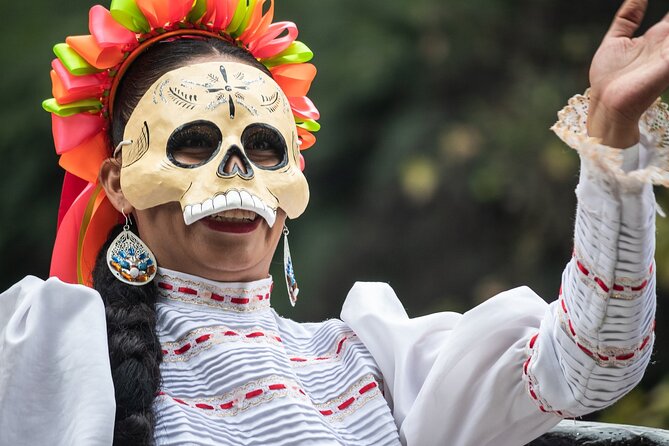
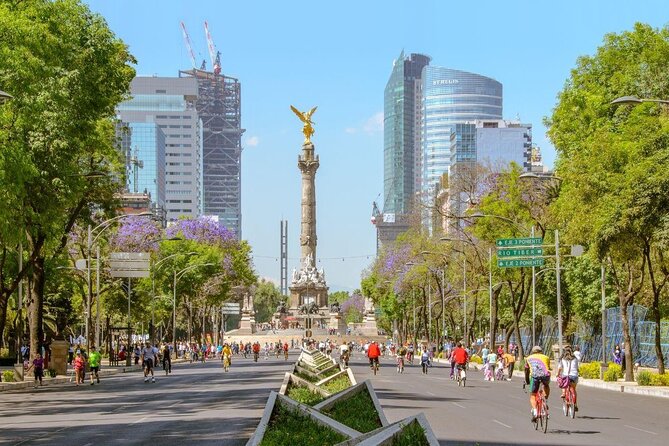
Before the cemetery stop, you get a panoramic drive past big-name sights. Expect views of places like Monumento a la Revolución, the Ángel de la Independencia, and Paseo de la Reforma as you head out.
For many people, this part is useful because it helps you get your bearings fast. It also gives context for the scale of Mexico City. Day of the Dead is intensely local, but the city itself is massive and loud, and you’ll feel that on the road.
One thing to keep in mind: this drive is often long in practice, because the tour is running on a holiday schedule. That doesn’t mean it’s bad. It just means the best attitude is to treat the ride as part of the experience, not a neutral transfer.
Pantheon at night: altars, family ritual, and what to notice
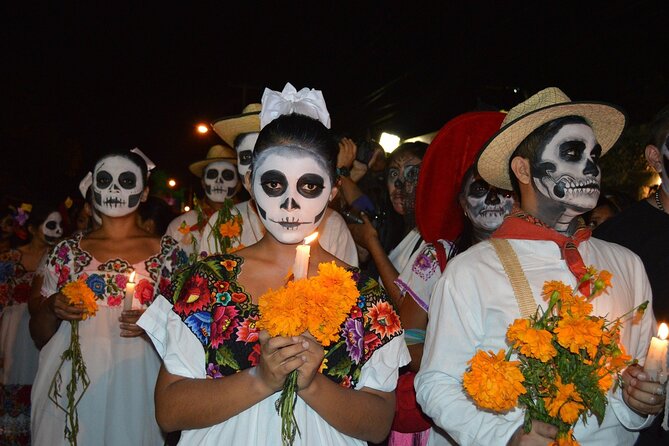
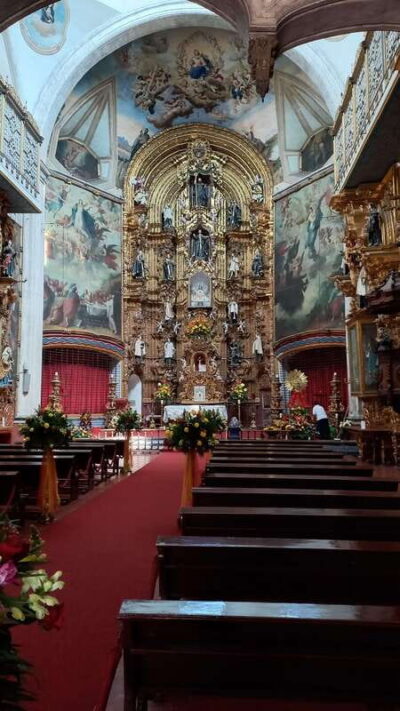
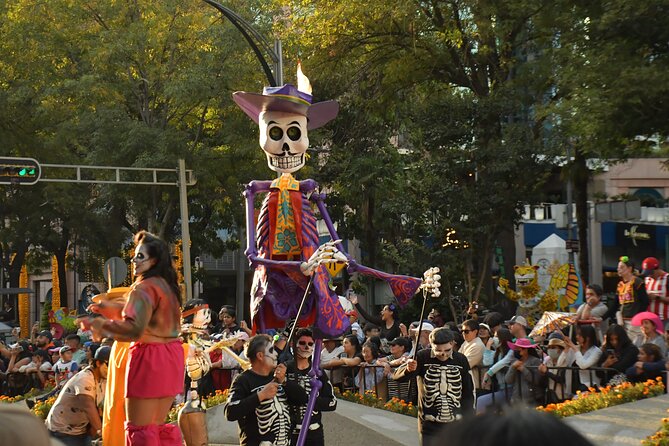
The first major stop is the Pantheon visit at night. This is where the tour earns its name. You’ll see beautifully crafted altars made by local families to honor ancestors, and your guide explains the meanings behind what you’re seeing—especially the blend of pre-Hispanic and Catholic ideas about death.
The setting is the point. Altars are meant to be seen in a specific mood: nighttime, candles, and that careful mix of solemn and celebratory. If you’ve only seen Day of the Dead from postcards, you’ll likely find this more grounded and human.
Here’s what you should actively look for during the visit:
- The altar layout (families arrange things for a reason)
- The presence of offerings and how they connect to memory
- How the cemetery feels in motion—not like a museum, more like a gathering
Time is also part of the deal. The cemetery segment is listed at about 2 hours, and you’ll likely have moments for photos and wandering. Some guides are more talkative on-site; others focus more on key explanations, so pay attention right at the start when the group is oriented.
The main drawback at this stop
In a few instances, the cemetery portion has been affected by factors beyond the tour’s control. So if this is your one must-see for Día de Muertos, I’d plan for the possibility that timing could feel less flexible than you hoped. Your best protection is flexibility—arrive ready to adapt.
Xochimilco by trajinera: mariachi, chinampas, and night visibility
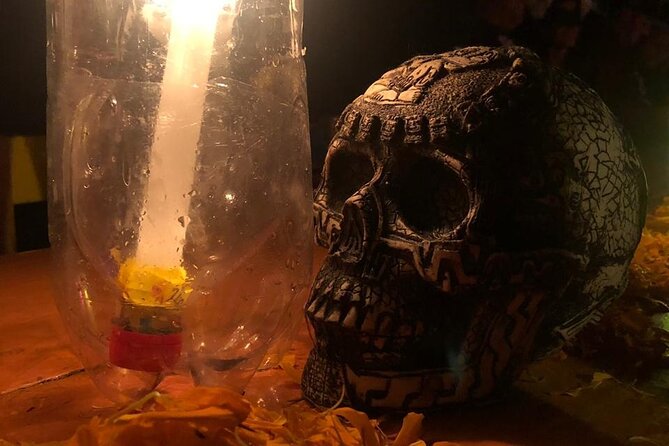
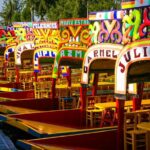
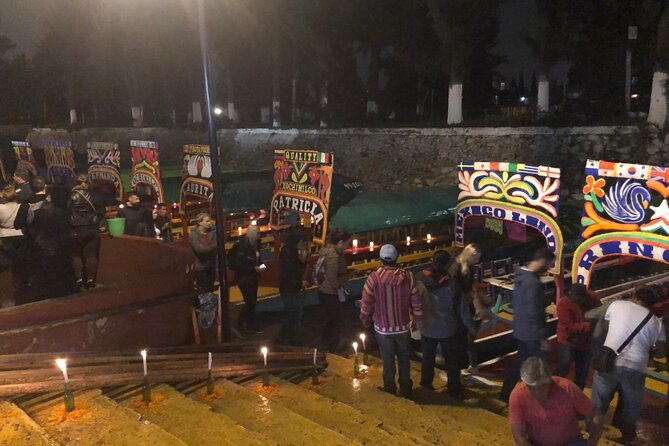
After the cemetery, the tour heads to Xochimilco, one of Mexico City’s most famous canal areas. Here you get the centerpiece you’ll remember for the social energy: a trajinera boat ride with live mariachi.
The Xochimilco portion is listed as about 2 hours, and it’s designed for a fun, musical atmosphere. You’ll glide past the floating gardens, known as chinampas. Even when you’re not reading everything on the shore, you’ll get the visual idea: this is farming and community built into the water.
Also, the sound matters. Multiple guides and tour descriptions emphasize live mariachi, and in real terms, that’s often what people cite as the best part. One name you might hear in this context is Gabe, and another guide mentioned in experiences is Lilly—both names show up as the kind of guide-led energy that can make the boat ride feel more than just a slow cruise.




A practical reality check: darkness changes what you see
This is an evening boat ride. In the dark, you’ll still enjoy the experience, but you may not see as many details along the canal as you’d get in daylight. That’s not a deal-breaker—sometimes it even makes the vibe better—but it’s good to know what you’re buying: music + motion + atmosphere more than sightseeing to-the-last-detail.
Food, bathrooms, and the stuff nobody wants to think about
Food is not included on this tour. That matters because the itinerary moves from one event to another, with time on the ground at the cemetery and time on the water at Xochimilco. You might find food available where you pause, but you shouldn’t count on meals being part of the price.
From a comfort standpoint, one repeating complaint in experiences like this is that the night can involve long stretches on the road. That’s where you’ll want to be practical:
- Use the bathroom before you leave (or at the earliest practical stop)
- Dress for cool canal air even if the day felt warm
- Bring a small buffer snack if you’re the type who gets hungry fast
This isn’t about being fancy. It’s about protecting the parts of the night you actually care about: the altar moments and the mariachi boat energy.
Guides and group size: why your experience can vary
This tour runs with a maximum of 99 travelers. That’s a big group by any standard, and it affects everything—how long you wait, how groups split, and how much time you get with a guide’s attention.
You may notice that some people feel their English portion isn’t fully supported if the logistics force mixing. Others report that the information they got was clear and helpful. Both reactions make sense in a group this size: if staff and guiding are tight, the quality of explanations can swing.
Still, when it works, it works. Guides mentioned by name include Lilly (credited with cultural context on some departures) and Pamela (mentioned as present and trying to solve problems when plans went sideways). That’s the real value: a guide who stays engaged can rescue the night when timing gets messy.
If you want the clearest explanations
Choose seats where you can hear. On buses with two levels, sound can be an issue—especially if the guide is speaking from the front and the bus is loud. If you’re near the back, you might find it harder to catch details. The simplest fix is positioning plus patience: bring your focus to the moments when the group stops.
Price and value: $73 worth it, if you match the tour style
At $73 per person, this tour isn’t the cheapest way to do Día de Muertos in Mexico City—but it’s also not priced like a private experience. The value comes from what’s bundled:
- Round transportation (you don’t have to coordinate night transit)
- A certified guide
- Entrance to the Pantheon
- Trajinera boat ride
- Live mariachi performance
That’s meaningful. A lot of visitors end up spending time and money piecing together the same parts. Here, you pay for the one-ticket flow.
The downside is that the tour’s value depends on execution. When traffic and queues run long, you end up paying for a schedule that might feel heavier on transport than on altar time and canal time. In that case, you’re still seeing the key elements—but the emotional payoff can drop because you’re tired.
My practical value verdict
You’ll probably feel the best value if:
- You want a guided night itinerary and don’t want to plan transport
- You’re okay with crowds and waiting
- You want mariachi + canals as a must-do, not optional
You might feel it’s not worth it if:
- You want a quiet, intimate experience
- You’re very time-sensitive and hate delays
What the day feels like end-to-end
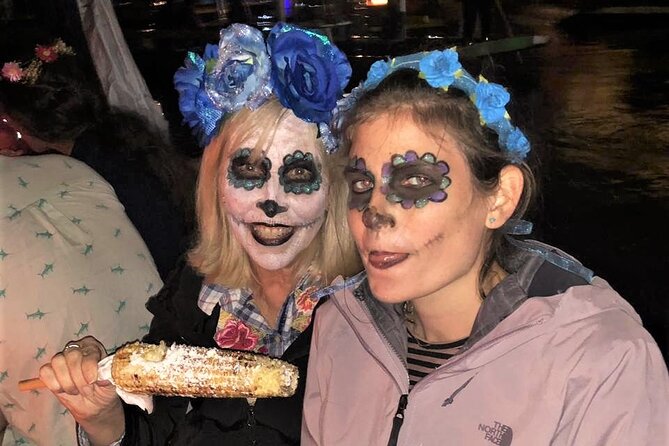
Here’s the rhythm you should expect, based on the structure:
- 6:00 pm start with pickup and initial orientation
- A panoramic drive past major downtown landmarks
- A night visit to the Pantheon with explanations and time to explore
- Travel to Xochimilco
- A trajinera ride with live mariachi and time on the water
- Return by bus to end at the meeting point
That’s a lot of nighttime energy. Some people love it. Some people find it tiring because so much time can be spent in transit. The best preparation is mindset: treat the night like a set meal deal, not a choose-your-own-adventure.
Who should book this tour (and who should skip)
This tour suits you best if you want the classic pairing: Day of the Dead cemetery altars + a musical canal ride. It’s also a smart pick if you’re visiting for the first time and you’d rather have a guide handle the logistics.
Skip or reconsider if you:
- Hate waiting in lines and on buses
- Need lots of bathroom access during transit
- Want long, unhurried time at each place
One more good tip: if you do book, check the tour language and your seating plan. Being able to hear the guide matters more than you might think at night.
Should you book?
I’d book this tour if you’re aiming for the holiday’s two big moods: reverent and musical, all in one night. The cemetery altars are the part that turns Día de Muertos from spectacle into meaning. The Xochimilco trajinera with mariachi is what makes it feel like a party without losing the cultural theme.
But if you’re the type who gets frustrated fast with delays, this is not the trip for you unless you’re willing to roll with holiday chaos. At its best, it’s a memorable night. At its worst, you’ll still see the headline places, but the timing may test your patience.
If you’re flexible and you want a guided night that hits the core traditions, this is a solid way to do Día de Muertos in Mexico City.
FAQ
What time does the Day of the Dead tour start?
The tour start time is 6:00 pm.
How long is the tour?
It runs about 7 to 8 hours.
Is the tour offered in English?
Yes. The tour is offered in English.
What’s included in the price?
It includes round transportation from the meeting point, a professional certified guide, entrance to the Pantheon, a trajinera boat ride at Xochimilco, and a live mariachi performance.
Is food included?
No. Food and beverages are not included.
Is the tour suitable for children?
Children below 12 years old are not permitted.