REVIEW · MEXICO CITY
Explore Mexico City: A Journey Through History, Art, and Cuisine!
Book on Viator →Operated by Andares Free Walking Tour · Bookable on Viator
Mexico City can feel huge. This 2-hour walk gives you a clear route through Aztec roots, major landmarks, and classic candy stops.
I like how the itinerary moves fast but still makes sense. You’ll start at the Aztec heart at Museo del Templo Mayor, then connect the dots through the Zócalo and Mexico’s later history in a single, easy flow.
One thing to plan for: even with a low price, don’t assume every museum stop is fully ticketed for you. I’d budget extra time and money for possible entry tickets, especially around Palacio de Bellas Artes.
In This Review
- Key things to know before you go
- A two-hour walk that makes Mexico City easier to read
- Museo del Templo Mayor: Aztec power, explained in a major temple
- Zócalo: the square that explains the city’s changes
- Catedral Metropolitana: architecture that’s really a history lesson
- Dulcería de Celaya: why the candy stop feels cultural, not random
- Casa de los Azulejos (House of Tiles): art and illusion in plain sight
- Palacio Postal: a working landmark with a story
- Palacio de Bellas Artes: architecture plus ticket reality
- Diego Rivera murals at SEP: read Mexican tradition through 20th-century art
- Price, tips, and what you may spend beyond the $20
- The walk itself: pace, comfort, and who it fits
- Guides and the small-group feel: why it matters
- Should you book this Centro Histórico tour?
- FAQ
- How long is the tour?
- What does it cost?
- What language is the tour in?
- Where does the tour start and end?
- What time does the tour start?
- Is it a walking tour?
- Is admission included for the stops?
- How big is the group?
- Are service animals allowed?
- Can I cancel and get a refund?
Key things to know before you go
- Centro Histórico in two hours: A tight orientation walk that helps you understand where everything fits.
- Aztec to 20th century, same route: Templo Mayor, then Diego Rivera murals at SEP.
- Great “photo anchors”: Zócalo, Catedral Metropolitana, Palacio Postal, and Palacio de Bellas Artes.
- Food and craft stop isn’t an afterthought: Dulcería de Celaya is part of the history, not just a snack.
- Small group cap (max 20): Easier pace and better chances to ask questions.
- Ticket reality check: Plan to buy some entries yourself if needed, rather than assuming you’re covered.
A two-hour walk that makes Mexico City easier to read
This is the kind of tour that helps you stop feeling lost. Mexico City’s Centro Histórico can be a maze of plazas, churches, and museums, so having a guide’s structure is a big deal.
You start and end right in the historic core, so you can build the rest of your day without a long commute. The group is capped at 20, which usually means the pacing stays human, and you won’t spend the whole time trying to squeeze through crowds.
Best of all, you’re not just ticking off monuments. The route blends empire-era Aztec history, colonial-era architecture, and 20th-century art, with a stop at a candy shop and other working-city landmarks.
You can also read our reviews of more city tours in Mexico City
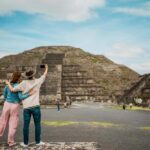


Museo del Templo Mayor: Aztec power, explained in a major temple
Your first stop is the Museo del Templo Mayor, with time set at about 15 minutes. This is where the tour puts you close to the Aztecs’ story: where they came from, how they lived, and why they built such a powerful empire.
What I like about starting here is the logic. When you understand Tenochtitlán’s center and the role of the major temple, the rest of the Centro landmarks feel less random. You’re seeing the roots, not just the leftovers.
Practical note: the schedule lists admission as free, but you should still be ready for ticket realities at museums. If you arrive and something needs payment, it’s better to be calm than caught off guard.
If you like history that connects buildings to people, this first stop will do the heavy lifting.
Zócalo: the square that explains the city’s changes
Next up is the Zócalo, with about 10 minutes. You’ll hear why it’s called Zócalo and what stood here before the Spanish arrived.
This matters because the Zócalo is more than a giant open space for photos. It’s a living timeline: political power, religious meaning, and the way new eras layer over old ones.
From here, you also get a view toward the National Palace, and your guide points out what makes the place special. In a short walk, this is one of the best “big picture” locations.
One drawback: since it’s an open plaza, you’ll feel the crowds and the street noise. If you’re sensitive to bustle, bring patience and expect a bit of chaos before the calm sets in later.
Catedral Metropolitana: architecture that’s really a history lesson
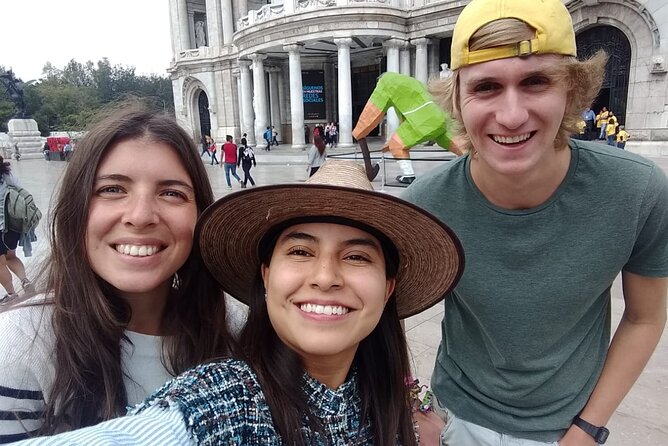
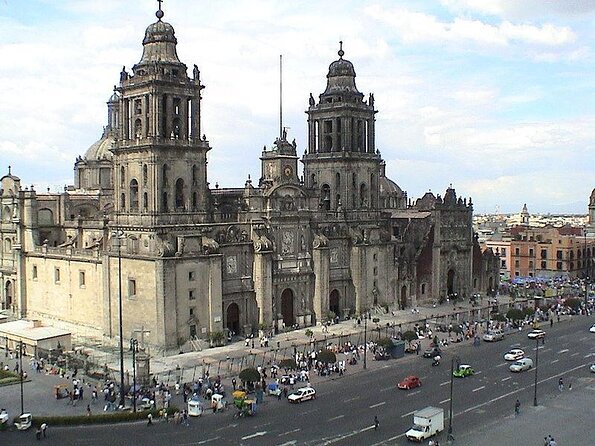
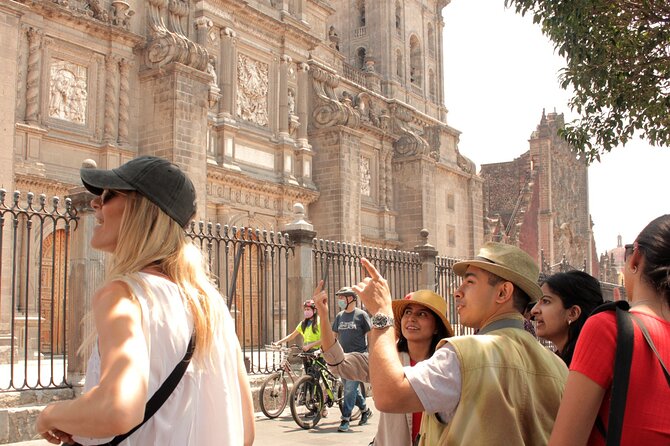
The tour continues to Catedral Metropolitana de la Ciudad de México for around 8 minutes. You’ll learn about its architectural style and history, with the cathedral serving as the colonial-era anchor.
In a lot of cities, cathedrals are just impressive buildings. Here, the cathedral works like a visual argument: it shows the power shift after the Spanish arrival, and it helps you see why the Zócalo became such a central stage.
Eight minutes is short, so you won’t soak up every chapel or detail. But if you’re using this as a first orientation, it’s a good hit of context without dragging your day out.
Dulcería de Celaya: why the candy stop feels cultural, not random
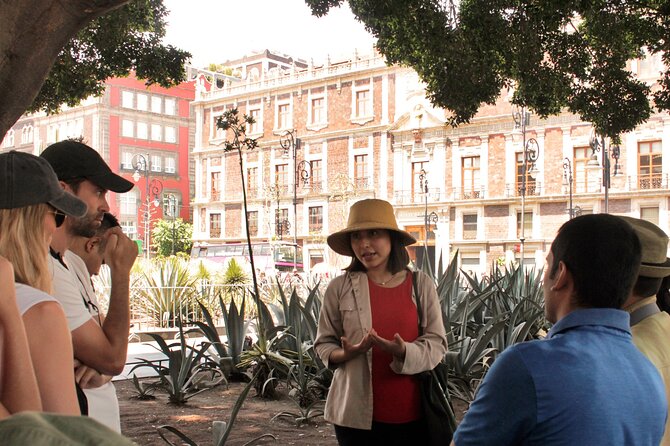
You’ll then make time for Dulcería de Celaya, about 10 minutes. This is described as the oldest candy store in the city, and your guide explains what sweets are sold, which are traditional, and how they’re prepared.
I like this stop because it’s tied to everyday life. Big monuments are important, but they don’t show you how people actually spend time, celebrate, and carry traditions. Candy shops in Mexico City are part of that living culture.
It’s also a good energy reset. After churches and museums, you get something sensory and immediate: smells, textures, and the idea that history can be chewy.
Tip: if you want to buy something, have a little cash or plan ahead. This tour doesn’t mention bottled water, so snacks can double as comfort while you walk.
You can also read our reviews of more historical tours in Mexico City




Casa de los Azulejos (House of Tiles): art and illusion in plain sight

Next is the House of Tiles (Casa de los Azulejos), with about 15 minutes. The guide brings you inside and shares its history and the art the building contains.
The name already tells you a lot: the tiles aren’t just decoration. They’re part of the building’s identity, and the guide helps you understand why that style mattered at the time.
This stop is one of those moments where you’ll feel the tour pays attention to aesthetics, not only dates. It’s quick, but it gives you something to look at instead of only reading plaques.
Palacio Postal: a working landmark with a story
After that, you head to Palacio Postal for around 15 minutes. You’ll learn what the palace was before and how it still functions today, plus some of its history.
What I like here is the “still in use” angle. Not every historic building is active. When a place still works, the history doesn’t freeze in time. It keeps moving with the city.
This is also a nice change of pace from museum rooms. You get architecture plus real-world function, which makes it easier to picture the past as something connected to daily life.
Palacio de Bellas Artes: architecture plus ticket reality
Then comes Palacio de Bellas Artes, about 15 minutes. You’ll learn about its architectural style, curiosities, and history, and there’s also a mention of its billboard.
This is one of the most recognizable stops in the Centro, so even a short stop can feel satisfying. It’s also a great chance to understand the style of the building as a statement about culture and identity.
Here’s the practical thing to know: at least one guide experience in the provided info warns that entry to some museum-style stops may not be fully covered, and that tickets for Palacio de Bellas Artes may not be sold online. I’d plan for this in your schedule and budget, rather than assuming you can walk in with no extra step.
If you want the inside experience, give yourself a bit more flexibility on the day so you’re not rushing.
Diego Rivera murals at SEP: read Mexican tradition through 20th-century art
The final stop is Murales de Diego Rivera en la Secretaria de Educacion Publica, with about 20 minutes. This is where the tour leans into 20th-century culture through one of Mexico’s best-known painters.
You’ll look at the murals as a window into Mexican traditions and customs. That’s a smart way to close the loop: you started with Aztec life and power, and now you’re seeing how Mexico tells its own story in later art.
Twenty minutes is enough to get the main ideas without wearing you out. I also like the fact that the murals aren’t treated like distant art objects. They’re framed as meaning you can interpret, not just images to pass by.
Price, tips, and what you may spend beyond the $20
The tour price is listed at $20 per person and the experience runs about 2 hours. The provider is a free walking tour model, meaning the guide service is offered and you’re encouraged to tip if you want.
So how do you think about value? In practical terms, you’re paying for structure: a route, context at each stop, and a guide who knows how to connect Templo Mayor, the Zócalo, major buildings, and the mural stop into one story.
Because parts of the route involve major sites, your real total cost can vary based on whether entry tickets are required and whether they’re handled for you. Since there’s conflicting information in the provided details about ticket inclusion, I’d plan conservatively:
- assume you might need to purchase some entry tickets yourself
- bring some extra cash just in case
- build your time so you can handle a line or ticket step without stress
Also note: bottled water isn’t included, and this is a walking tour. Bring water and keep it simple.
At the end, tips are optional, but a tip is common for good guiding. If a guide mentions a suggested amount, decide your comfort level beforehand so it doesn’t feel awkward.
The walk itself: pace, comfort, and who it fits
This tour is designed for people who want to see a lot without doing a marathon. Stops are scheduled in short blocks, from 8 minutes at the cathedral to 20 minutes at the Rivera murals, so you’re constantly moving and listening, but not stuck standing in one place forever.
Most travelers can participate, and the maximum group size is 20. That’s ideal for families, couples, and solo travelers who want a clear plan but still prefer street-level experience over a bus tour.
It’s also listed as near public transportation, which matters because the Centro is dense. You can usually connect easily before the 9:30 am start.
If you don’t like walking, or if you need long seated breaks, you might find the pace demanding. It’s not described as slow and scenic throughout; it’s more like a guided sprint with smart pauses.
Guides and the small-group feel: why it matters
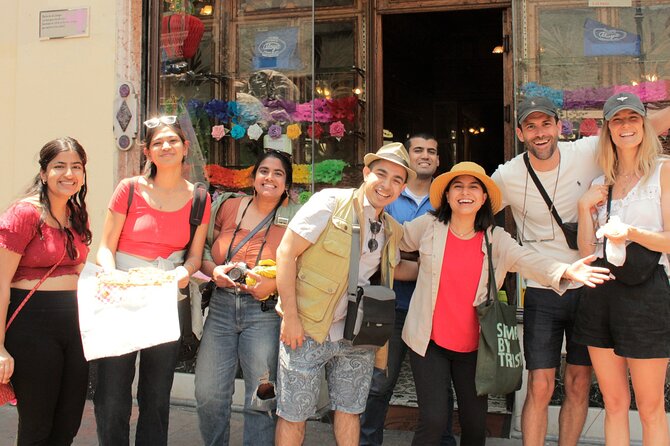
The name on this experience is Andares Free Walking Tour. The provided info also includes examples of guides like Belen, Sara, and Diego, and the comments point to a few consistent strengths: clear explanations, friendly energy, and a focus on both landmark history and smaller local details.
That last part is key for value. A tour that only repeats textbook facts can feel flat. Here, the route is built to include specific places such as the oldest candy store and the original post office that still works, which adds texture beyond the big-name photos.
In a group of up to 20, you’re more likely to actually interact, ask questions, and keep your momentum instead of being stuck behind people who walk slower than the guide’s rhythm.
Should you book this Centro Histórico tour?
Book it if:
- you want a fast orientation to Mexico City’s Centro Histórico
- you like your history tied to buildings and street-level context
- you want classic sights plus one or two everyday culture stops like the candy shop and working postal palace
Consider skipping or adjusting your expectations if:
- you hate walking and tight stop times
- you need a fully ticket-free experience, because museum entry requirements may not be handled exactly the way you expect
- you want deep museum time. This is more about getting oriented than spending hours inside
My take: for $20 and a 2-hour structure, this is a smart way to start your Mexico City trip. Just plan for tickets, bring water, and show up ready to connect the dots across Aztec, colonial, and modern Mexican stories in one walk.
FAQ
How long is the tour?
The tour lasts about 2 hours.
What does it cost?
The price is $20. The guide service is described as free, and you can pay a tip at the end if you want.
What language is the tour in?
The tour is offered in English.
Where does the tour start and end?
It starts at República de Guatemala 4, Centro Histórico, and ends at Palacio de Bellas Artes on Av. Juarez S/N, Centro Histórico.
What time does the tour start?
The start time is 9:30 am.
Is it a walking tour?
Yes. It’s a walking experience through the historic center, so bring water since bottled water is not included.
Is admission included for the stops?
The tour description lists admission tickets as free for the listed stops. However, you should still be prepared to purchase entry tickets on your own if needed, including for Palacio de Bellas Artes.
How big is the group?
The group has a maximum of 20 travelers.
Are service animals allowed?
Yes, service animals are allowed.
Can I cancel and get a refund?
You can cancel for a full refund if you cancel at least 24 hours before the experience’s start time. Within 24 hours, there is no refund.