Walk Roma Norte like a local. This guide-led afternoon stroll threads together Condesa and Roma Norte with small-group pacing, so you can focus on what you’re seeing instead of route math.
Two things I really liked: first, the architecture storytelling—Art Deco geometry on streets like Amsterdam, plus the mix of neo-Gothic, Art Nouveau, and eclectic facades all day. Second, Ricardo’s style of pointing out details while keeping it fun, with conversation that moves from Mexican art and culture to what’s changed around these neighborhoods.
One possible drawback: it’s a long walk for 1 city block at a time. Expect moderate physical fitness and plan for around 4.5 hours (often closer to 5), even with breaks built into the route.
In This Review
- Key highlights worth your time
- A 4.5-hour walk that actually teaches you the city
- Meeting at El Moro and ending at Huerto Roma Verde
- How the guide-led format works (and why it’s worth paying)
- From Parque México to Amsterdam: Condesa’s park-and-street rhythm
- Why this opening matters
- Condesa’s rooftop views, Madrid’s fountain copy, and a house full of art
- UNAM’s book house, Sagrada Familia, and the Plaza Rio de Janeiro pair
- Casa Basalta to Pushkin Garden: art spaces and neighborhood quiet
- Avenida Álvaro Obregón to Casa Prunes: Art Deco streets meet Art Nouveau drama
- El Parián, Casa Lamm, Calle Orizaba, and the final stretch to Huerto Roma Verde
- Price and value: why $59 feels fair here
- Pace and what to bring for a smooth 1-day walk
- Who should book this (and who might skip)
- Should you book this Condesa and Roma Norte walking tour?
- FAQ
- How long is the Epic Condesa and Roma Norte Walking Tour?
- How much does the tour cost?
- Is the tour offered in English?
- Where does the tour start and end?
- What is the group size limit?
- Are admission tickets required for the stops?
- Do I get a mobile ticket?
- How physically demanding is it?
- Can I cancel for a full refund?
Key highlights worth your time
- Ricardo, an English-first guide who keeps the story clear and the stops interesting
- You won’t have to navigate—the group stays on track end to end
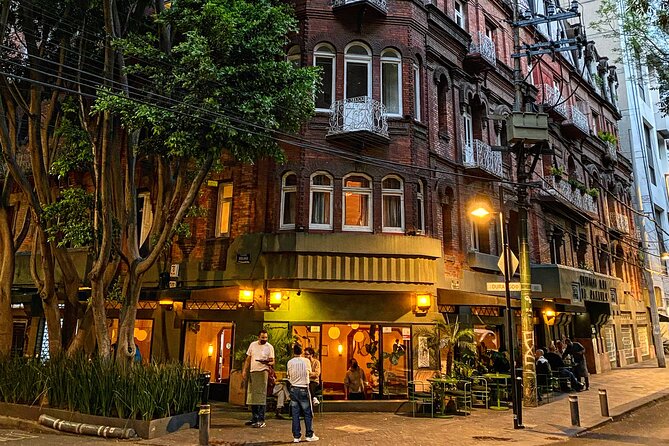
- Architecture meets everyday life in parks, hotel rooftops, and real neighborhood streets
- Lots of free-entry stops so your $59 goes to the guide and time, not ticket fees
- Designed for a small crowd (max 12), which makes questions and small detours easier
- A finish at Huerto Roma Verde, where the last stretch feels like a reward, not a slog
A 4.5-hour walk that actually teaches you the city
This is the kind of Mexico City tour that feels made for real travel days. You’re out for about 4 hours 30 minutes, mostly on foot, with the route laid out for you and an English-speaking guide leading the way. The goal isn’t just to say you visited Condesa and Roma Norte—it’s to help you read the neighborhoods like a local.
The price is $59 per person, and for that you get guided interpretation across a wide range of sights. A lot of the stops are listed as free admission, so the value isn’t just the walking. You’re paying for expert wayfinding, context, and time in places you might otherwise overlook or not know how to connect.
You can also read our reviews of more walking tours in Mexico City


Meeting at El Moro and ending at Huerto Roma Verde
You start at Churrería El Moro (Av. Michoacán 27) in Hipódromo. It’s a practical meeting point: easy to find, and it sets a good tone because the neighborhood around it is already very “day in the city,” not a sterile tourist zone.
The tour ends at Huerto Roma Verde (Jalapa 234) in Roma Sur. That finish matters. Huerto Roma Verde isn’t just a final photo stop—it’s an urban garden space with community energy, so the day ends with a change of pace from architecture-heavy street scenes.
How the guide-led format works (and why it’s worth paying)
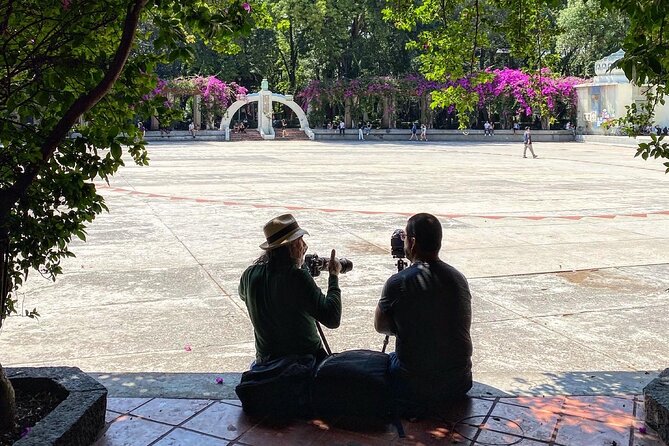
This is a walking tour, so you could theoretically do it yourself. But the payoff here is that you don’t have to guess what’s important. Ricardo keeps the pace human while still covering a lot of ground, and he’s the type of guide who points out the things that look similar at first—then explains the differences.
A second big win: when you’re in small-group mode (max 12 travelers), you’re more likely to get your specific questions answered on the spot. That changes the whole vibe, especially in a city where the streets can look simple from far away and complicated up close.
From Parque México to Amsterdam: Condesa’s park-and-street rhythm
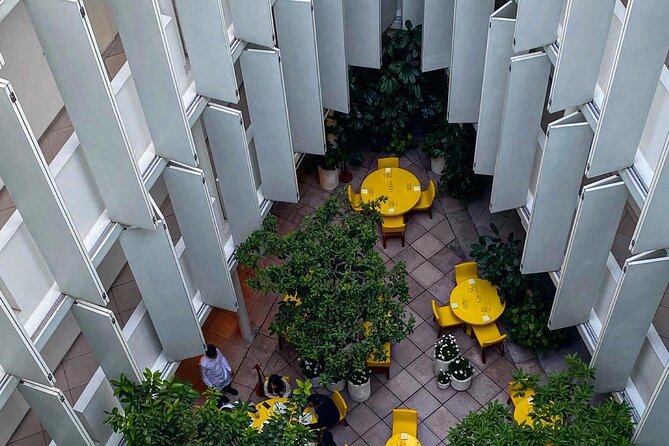
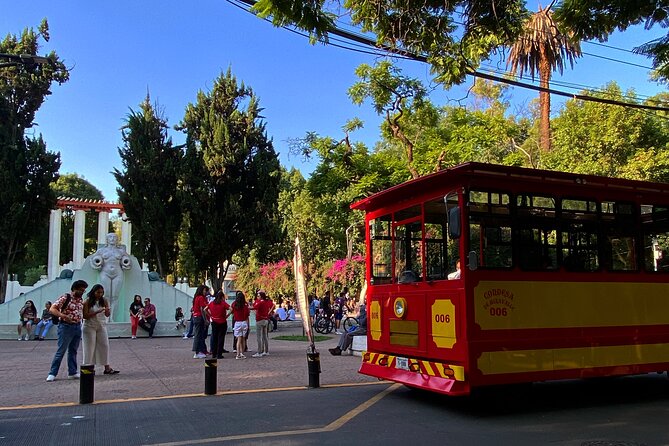
The route starts in Parque México, where you’ll slow down and look closely. You’re not just passing through greenery here. Ricardo’s focus is on the neighborhood feel and the Art Deco influence in and around the park space, which helps you understand why Condesa became such a model for stylish, planned living.
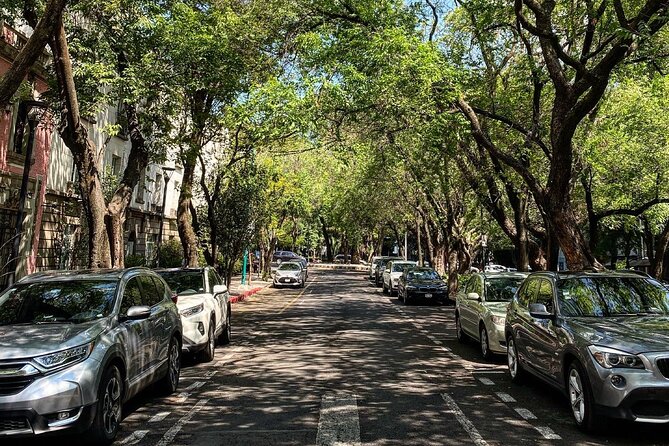
Next comes Ámsterdam, the street that curves around what used to be a horse race track. The geometry is the point. As you walk along, you’ll notice how the street’s elliptical layout creates that distinctive rhythm—buildings and greenery sit in a designed relationship, not a random one.
Then you move to Parque España, a quieter stretch with lush paths and a chance to spot sculptures and historic monuments. This stop is the “take a breath” moment in the route, which matters because the day is packed. It also helps you reset your eyes before the more architectural stops ramp up.
Why this opening matters
If you want to enjoy Condesa and Roma Norte, you need a frame. The park-to-street sequence gives you that. By the time you’re walking among the buildings, you already understand the design logic behind what you’re seeing.




Condesa’s rooftop views, Madrid’s fountain copy, and a house full of art
After the park and street intro, the tour shifts into more built heritage.
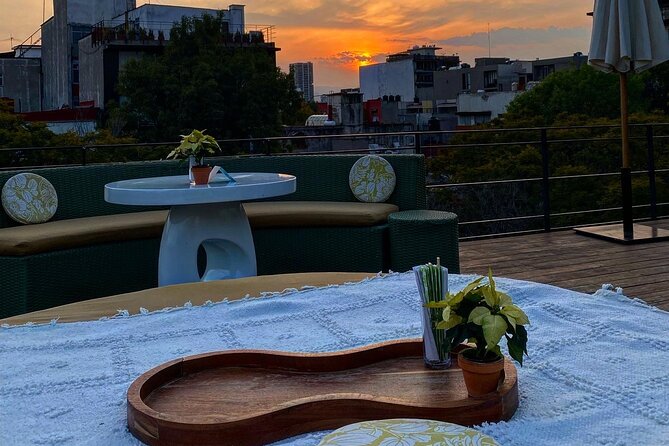
You’ll stop at Condesa DF, a boutique hotel and design-forward spot where the focus is on how modern and colonial styles can share the same street. The real treat here is the interior design and the rooftop views, which help you understand the scale of the neighborhood from above.
Then it’s Fuente de Cibeles, where you’ll see a replica of Madrid’s famous fountain. That may sound like a “wait, why is that here?” moment, but the symbolism is the point: it highlights Mexico–Spain cultural ties. Even if you’re not a history person, a fountain like this becomes a story anchor because you can literally point at what you’re looking at.
Next is Casa Museo Guillermo Tovar de Teresa, a preserved house turned museum-like stop with art and antiques. You’ll also learn about the life of one of Mexico’s prominent art historians. This is where the tour stops being only architecture and starts feeling like an education in how art thinking travels through families, institutions, and houses.
UNAM’s book house, Sagrada Familia, and the Plaza Rio de Janeiro pair
In Roma Norte, the mood gets even more specific.
You’ll look at Casa Universitaria del Libro UNAM, a historical mansion-style building with temporary exhibitions. The helpful part of this stop is context: you see how university culture appears in everyday neighborhood spaces, not only big campuses.
Then comes Parroquia de la Sagrada Familia, a neo-Gothic church. Ricardo’s emphasis is on its historical significance as one of the oldest churches in Roma Norte, and you’ll get a clear sense of why the style is so visually distinctive in this neighborhood.
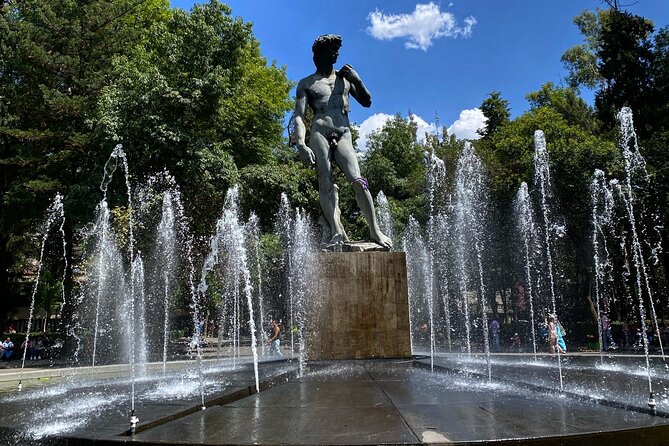
From there, you step into Plaza Rio de Janeiro, where the center of attention is a replica of Michelangelo’s David. Around it, the surrounding buildings give you an instant lesson: this plaza isn’t just an isolated statue—it’s part of a wider urban composition.
You’ll also pass Edificio Río de Janeiro, an eclectic building described as one of the area’s iconic structures. This is a great stop for anyone who likes architecture but gets overwhelmed by jargon. The building becomes a real-world example of how mixed styles can still create a coherent street personality.
Casa Basalta to Pushkin Garden: art spaces and neighborhood quiet

The tour continues with stops that blend culture and community.
At Casa Basalta, you’ll see a space that mixes art, dining, and culture. It’s an early 20th-century mansion now housing the MAIA Contemporary art gallery, plus a meditation center and restaurants. Even if you don’t go inside for long, it’s a strong signal of how Roma and Condesa balance creativity with daily life.
Then you’ll wander through La Romita, including narrow streets and Plaza de la Romita. Here Ricardo shares origins tied to a pre-Hispanic village of Aztacalco, and you’ll see how layers of time sit on top of each other in an ordinary neighborhood walk.
After that, you cross Pushkin Garden, named after the Russian poet. This is a short stop, but it gives you a payoff: the tour isn’t only “big monuments.” It also pays attention to small public spaces that shape how the neighborhood feels day to day.
Avenida Álvaro Obregón to Casa Prunes: Art Deco streets meet Art Nouveau drama
Now you shift toward the livelier street energy, without losing the architectural theme.
You’ll walk down Avenida Álvaro Obregón, an iconic street known for Art Deco architecture, trendy shopping, and nightlife. This stretch is a good reminder that Condesa/Roma Norte aren’t museum sets. People live here now, and the styles you’re studying are part of an active modern neighborhood.
Then you’ll see Casa Prunes, famous for its Art Nouveau look and the restaurant inside. Ricardo also points out hidden-feeling details—places that don’t scream for attention but reward looking closely.
From there, it’s a calmer moment at Plaza Luis Cabrera, a peaceful square with a fountain and green spaces. This stop is your “sit-then-look” breather before the route turns more into passageways and cultural anchors again.
El Parián, Casa Lamm, Calle Orizaba, and the final stretch to Huerto Roma Verde
The last segment moves you through a string of culture-and-street-life stops.
El Parián is a historic passage dating back to 1926, now lined with local shops and restaurants. It’s the kind of place where architecture and commerce share the same corridor, which makes it feel more real than a typical shopping street.
Next is Casa Lamm Centro de Cultura, a cultural center in an early 20th-century building. Even without going deep into exhibitions, the value is in seeing how these old structures now function as creative spaces.
You’ll then stroll Calle Orizaba, a street known for early 20th-century architecture and a lively neighborhood atmosphere. By the time you reach this point, you’re less likely to see “pretty buildings” and more likely to notice patterns—materials, proportions, and how streets were designed to feel human.
Finally, you end at Huerto Roma Verde, the urban garden finish. It’s a fitting conclusion because it shifts you from architecture reading to real-world community space and sustainability practices. It also gives you a strong last photo and a place to reset before your evening plans.
Price and value: why $59 feels fair here
At $59, you’re paying for three things: a guide, a small group cap, and a walking route that links multiple high-signal neighborhood sites in one afternoon.
What makes that value feel especially solid is the number of stops listed as free admission. You’re not constantly paying entry fees to keep the day moving. Instead, most of your cost goes to interpretation—someone explaining why a fountain replica matters, why a church style looks so specific here, and why the street layout around a former track changes how the neighborhood feels.
If you’re trying to choose between doing Condesa and Roma Norte on your own versus booking a tour, this is the angle that usually wins: pay once for the framework, then you can enjoy the neighborhoods on your own later with better eyes.
Pace and what to bring for a smooth 1-day walk
The tour includes breaks, but it’s still a lot of walking in one stretch. Build your day around it. Wear comfortable shoes with grip. Bring water. If you like photos, plan to take some, not all—this route gives you plenty of chances to stop and look.
Also, since this is a small-group experience (max 12), show up ready to move at the pace the guide sets. The best value comes from staying with the group so you get the full thread of stories.
Who should book this (and who might skip)
Book it if you want:
- A guided architecture and culture walk through Condesa and Roma Norte
- An English-speaking guide who can connect details to bigger themes
- A route that includes parks, plazas, and cultural buildings rather than only one type of sight
You might skip if:
- You prefer short stops with lots of sitting time, because this is still a long walking-focused format
- You don’t care much about architecture styles (Art Deco, Art Nouveau, neo-Gothic) and would rather do a museum-heavy day
Should you book this Condesa and Roma Norte walking tour?
Yes, if your goal is to understand these neighborhoods instead of just collecting landmarks. The combination of an English-speaking guide (Ricardo), a small group, and a route that mixes parks, streets, churches, plazas, and cultural houses makes the afternoon feel efficient without feeling rushed.
If you’re even slightly into architecture, public spaces, or how design shapes daily life, this is a great use of one day in Mexico City. Start at El Moro, end at Huerto Roma Verde, and you’ll come away with a clearer sense of why Condesa and Roma Norte became such influential parts of the city.
FAQ
How long is the Epic Condesa and Roma Norte Walking Tour?
It lasts about 4 hours 30 minutes.
How much does the tour cost?
The price is $59.00 per person.
Is the tour offered in English?
Yes. The tour is offered in English.
Where does the tour start and end?
It starts at Churrería El Moro, Av Michoacán 27 (Hipódromo). It ends at Huerto Roma Verde, Jalapa 234 (Roma Sur).
What is the group size limit?
The tour has a maximum of 12 travelers.
Are admission tickets required for the stops?
Admission tickets are listed as free for the stops on this route.
Do I get a mobile ticket?
Yes, the tour uses a mobile ticket.
How physically demanding is it?
It’s recommended for travelers with a moderate physical fitness level.
Can I cancel for a full refund?
Yes. You can cancel up to 24 hours in advance for a full refund.