REVIEW · MEXICO CITY
Walking Tour of the Historic Center in Mexico City
Book on Viator →Operated by Vibe Adventures · Bookable on Viator
Time travel, but with comfortable shoes. This 3-hour walk links Aztec remains, colonial icons, and mural-adjacent theater stops in Mexico City’s core, led by a local guide who keeps the route clear and photo stops plentiful.
I especially like the mix of eras in one loop: you go from the Great Aztec Temple area to the grand 16th-century Catedral and then into the colonial showpieces that still shape the streets today. I also like that the tour has built-in time for looking closely, including the Talavera-tile exterior and interior details at the House of Tiles.
One thing to consider: it’s a walking tour with scheduled time blocks, so if you want lots of slow seating breaks or very flexible lingering, the pace may feel a bit tight. Also, it depends on good weather to run as planned.
In This Review
- Key things I’d mark on your map
- Why this walk beats wandering alone in Centro Histórico
- Museo del Templo Mayor: start with the Aztec layer
- Catedral Metropolitana: the story in architectural layers
- Zócalo: the square that kept changing jobs
- House of Tiles: Talavera color plus a real interior surprise
- Palacio Postal: art-nouveau drama that still works as a post office
- Palacio de Bellas Artes: finish with mural talk at street level
- How the pacing really works (and how to make it work for you)
- Language and group style: what changes between semi-private and private
- Price and value: what you’re paying for
- Who this tour is best for
- Should you book this Historic Center walk?
- FAQ
- How long is the Historic Center walking tour?
- Where does the tour start and where does it end?
- Is the tour offered in English?
- Are entrance fees included?
- Can I customize the route?
- Is hotel pickup included?
- What should I bring for the walk?
Key things I’d mark on your map
- Aztec Temple remains up front: start at Museo del Templo Mayor and get context before you hit the big landmarks
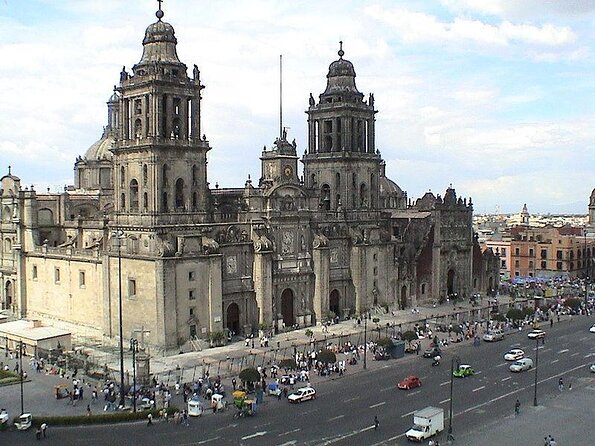
- A “look up” cathedral stop: the Catedral Metropolitana is about layers—style changes over generations
- Zócalo with meaning: the main square is explained as Aztec-era space turned public stage
- House of Tiles for color + interior moments: Talavera tiles outside, then art and a glass-ceiling atrium inside
- Palacio Postal for Instagram-ready details: art-nouveau facade plus a museum/post-office vibe
- Bellas Artes finish: the outside stop focuses attention on the murals inside
Why this walk beats wandering alone in Centro Histórico
Mexico City’s Historic Center is huge, and most “I’ll just stroll around” plans turn into random turns and missed context. This tour gives you a route that makes sense—one neighborhood thread, multiple time periods. The guide’s job is to connect the dots: what you’re seeing, why it matters, and how the city changed without losing the plot.
You also get practical value: the pace is set for a real human experience (about three hours), and the stops are arranged so you’re not constantly recalculating “What is this place and why should I care?” Even better, a lot of the key sights on the route have free admission tickets, so you’re not getting whiplash from unexpected costs.
You can also read our reviews of more walking tours in Mexico City


Museo del Templo Mayor: start with the Aztec layer
Your first real anchor is Museo del Templo Mayor, where the day’s story begins before the Spanish era takes over. You’ll see remains tied to the Great Aztec Temple area, plus nearby building traces that date back to early phases of the neighborhood. It’s not just “wow, ruins”—it’s the kind of stop where the guide sets the political and cultural background so what you’re looking at has a spine.
This is a smart move for your brain. When you understand how the Aztecs organized belief, daily life, and social order, the later colonial landmarks stop feeling random. You start noticing that Mexico City wasn’t built from scratch—it grew over an older plan.
Time plan: about 40 minutes here, and the admission ticket is free.
Watch-outs: since this is museum-and-ruins territory, it’s worth wearing comfortable shoes and giving yourself permission to look slower than you think you need.
Catedral Metropolitana: the story in architectural layers
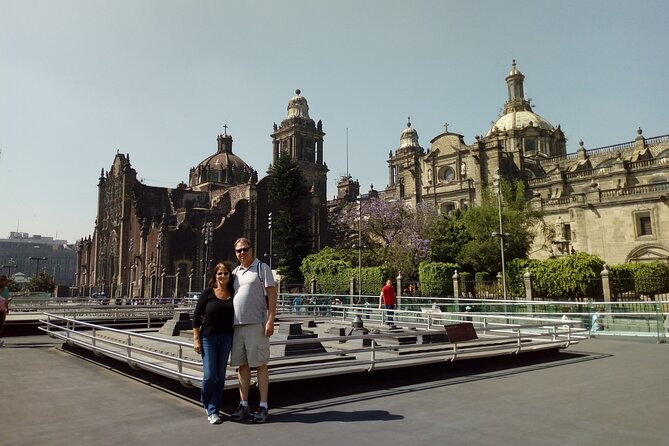
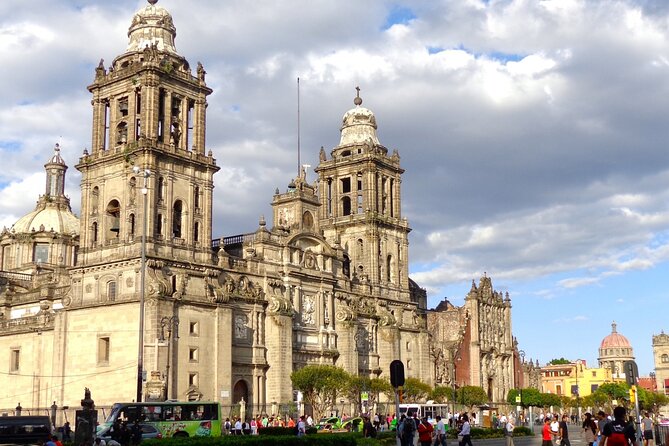
Next comes the Catedral Metropolitana de la Ciudad de México, an iconic stop because it’s not one style—it’s a timeline. The cathedral dates back to the 16th century, and the big idea is that it became a kind of catalog of architectural and artistic approaches. Builders kept updating and expanding it as innovations appeared and as generations took over.
This kind of explanation is what turns a pretty building into a meaningful one. Instead of just snapping photos of stone and doors, you start noticing how the place carries different moments in time. That makes your walk feel less like sightseeing and more like reading a living document.
Time plan: about 30 minutes, and admission is free.
Photo tip: shoot upward if you can—this is a building that rewards vertical attention.
Zócalo: the square that kept changing jobs
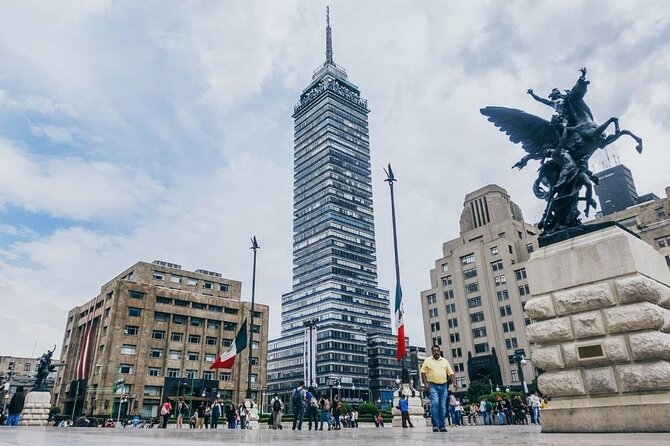
The Zócalo is the big public room of Mexico City, and your guide treats it like more than a postcard plaza. You’ll learn how it connects back to Aztec times and how it became a gathering place for public life. From there, the story moves into modern uses: cultural events, festivals, ceremonies, and military parades show how the space keeps getting reassigned as the city’s needs change.
This stop is excellent for first-timers because it gives you a mental map. Once you understand how the square functions as a stage, the surrounding buildings feel less like isolated monuments and more like supporting characters.
Time plan: about 40 minutes, admission is free.
One practical consideration: plazas can be windy and loud, and it’s easy to lose track of time. If you prefer moving constantly rather than pausing, tell your guide early so they can steer the pacing.
House of Tiles: Talavera color plus a real interior surprise
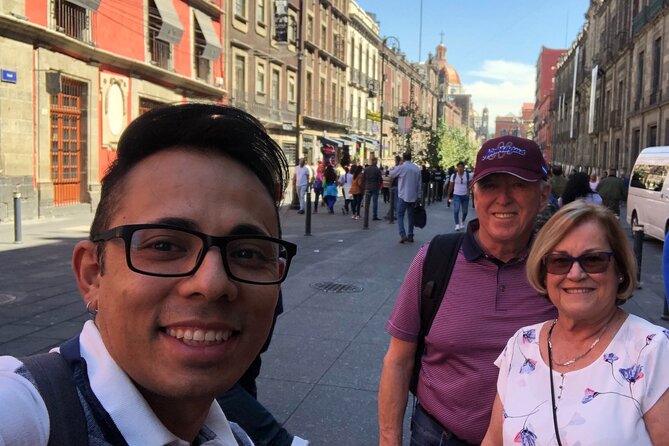
Now for a stop that’s all about details you’d miss on your own. The House of Tiles (Casa de los Azulejos) is famous for a facade covered in colorful Talavera tiles that have been preserved over centuries. Even from the street, it’s the kind of exterior that makes you slow down without being told.
What makes it worth the time is what happens inside. You’ll have a chance to see a mural by José Clemente Orozco, and the property also features a glass-ceilinged atrium with stone pillars, murals, and a fountain. This is one of those places where the guide helps you look: you’re not just walking through rooms; you’re being pointed toward the art, the architectural choices, and what the design is doing.
Time plan: about 20 minutes, admission is free.
Photo tip: the tile facade is great in daylight, but don’t ignore the interior light once you go in.
You can also read our reviews of more city tours in Mexico City




Palacio Postal: art-nouveau drama that still works as a post office
Palacio Postal is the next “wait, look at that” moment. The facade has that art-nouveau feel—ornamentation and flourishes that make it look almost too fancy for a working building. Inside, you’ll see decorations and details that include elements like gargoyles and marble ornaments, plus plasterwork that gives the whole place a theatrical vibe.
What I like here is the combination of beauty and function. This building still works as a post office, and it also has a museum that displays objects and historical documents. That means you’re not just admiring a shell—you’re stepping into a historic civic space that keeps doing its job.
Time plan: about 20 minutes, admission is free.
If you like practical breaks: this is a good moment to reset—your guide will help you focus so you’re not wandering in circles.
Palacio de Bellas Artes: finish with mural talk at street level
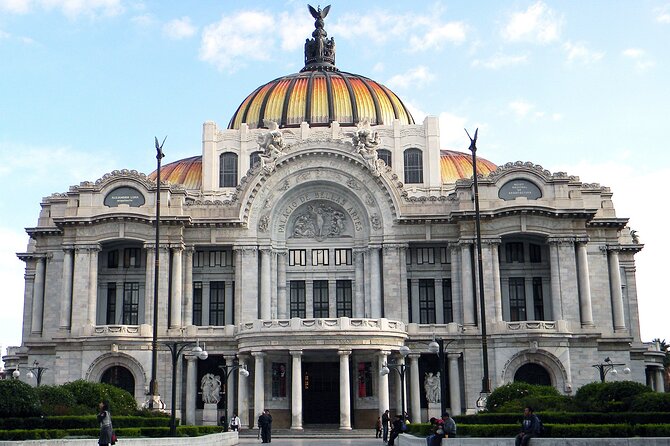
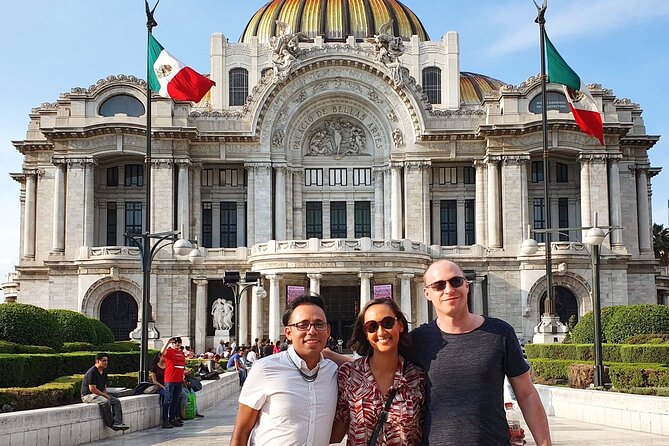
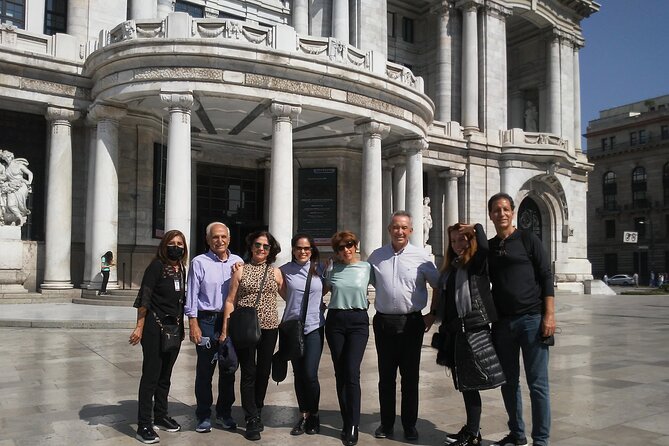
You wrap up at Palacio de Bellas Artes, one of the city’s most important performance venues. The stop is outside, so you’ll appreciate the building’s uniqueness from the exterior while your guide points you toward what’s inside. The big emphasis is the mural work painted by major Mexican artists from the 1930s, including Diego Rivera and other prominent names associated with that era.
This is a strong ending because it connects the route to what people actually do in the city today. The Palacio de Bellas Artes isn’t frozen in time; it hosts national and international cultural events like operas, recitals, lectures, and rotating art exhibitions. You end the walk thinking about the arts, not just buildings.
Time plan: about 20 minutes outside. Admission is not included here.
Practical note: if you want to go inside beyond what the guide covers from outside, expect that to be an add-on cost since admission isn’t included.
How the pacing really works (and how to make it work for you)
A walking tour lives or dies on rhythm, and this one is built to cover a lot without turning into a sprint. The tour clocks roughly three hours total, but the experience feels longer in the best way because you have real time at major sites instead of only quick curb stops.
Also, the guide model matters. People often remember the guide more than the street view. In this case, several guides have been described as turning the architecture-and-ruins content into a clear story, with good attention to the murals at Bellas Artes. Names like Andrés, Eduardo, Ivan, and Diana show up in past customer experiences, and the consistent theme is that guides explain what you’re looking at in a way that helps you remember it.
To get the most out of the walking pace:
- Wear comfortable shoes you trust for uneven sidewalks.
- Bring sun protection; even short stops can feel long under bright light.
- If you have mobility limits or want fewer stand-and-listen moments, say so early so the guide can adjust your experience.
Language and group style: what changes between semi-private and private
Language is handled well. The experience is offered in English, and the guiding team is described as local and bilingual, with Spanish/English as the baseline.
Group style is where you should choose carefully.
For a small-group or semi-private format, the group size is capped (up to 12), and customization isn’t part of the plan. If you prefer a structured route with minimal decision-making, this is your lane.
For a private tour, you get more flexibility, because you can adjust the time spent at destinations as long as it fits the default duration and doesn’t require major route changes. That’s the best option if you want the guide to add a stop for an attraction or market you’ve already picked out.
Price and value: what you’re paying for
At $29 per person, the headline price looks reasonable for the amount of ground covered. The key value is that you’re paying for a local guide and a route that hits major sites without you doing the heavy planning.
It also helps that several stops on the route have free admission tickets (including the museum/temple area, the cathedral, the square context, the House of Tiles, and the Palacio Postal). That can matter in Mexico City, where costs can add up fast when you’re trying to see everything.
The one place where admission isn’t included is the Palacio de Bellas Artes. Since the stop is outside, you aren’t paying for entry as part of the tour price. But if you decide you want to go in, you should plan extra funds for that.
So the value equation looks like this: guided context + multiple high-impact sights + mostly free admissions for key stops. That’s a strong deal for a first-time orientation to Centro Histórico.
Who this tour is best for
This is a great fit if you want a structured orientation to Mexico City’s center. It’s also ideal if you like understanding how different eras overlap—Aztec space, Spanish colonial power, and 20th-century artistic identity all show up in one route.
It’s especially good for:
- First-time visitors who don’t want to guess their way through the Zócalo area
- Couples or friends who like photos but also want context
- Travelers who appreciate murals and public art tied to major institutions
- People who’d rather spend time listening to a guide explain what they’re seeing than reading long signs alone
If you hate walking or you want long seated hangs in one spot, you’ll need to manage expectations. This tour is built for movement and “look, learn, photograph, move on.”
Should you book this Historic Center walk?
I’d book it if you’re aiming for a smart first pass through Centro Histórico—especially if you want both the Aztec-to-colonial story and the art layer connected to Bellas Artes. The route makes practical sense, the guide role is central, and the mostly free admissions keep it from turning into a fee-fest.
I would pause before booking if you need frequent seating breaks or a very flexible itinerary with extra lingering. In that case, a private format with time adjustments might suit you better, and you should flag any pacing preferences early.
FAQ
How long is the Historic Center walking tour?
It runs for about 3 hours (approx.).
Where does the tour start and where does it end?
The tour starts at MUMEDI at Av. Francisco I. Madero 74, Centro Histórico (for small-group departures) and finishes at Palacio de Bellas Artes on Av. Juárez S/N, Centro Histórico.
Is the tour offered in English?
Yes, it’s offered in English.
Are entrance fees included?
Most stops are listed with free admission tickets. Palacio de Bellas Artes has admission not included, and you’ll be finishing outside.
Can I customize the route?
Small-group departures are not customizable. Private tours are customizable, as long as changes fit the default duration and route limits.
Is hotel pickup included?
Hotel pickup is not included.
What should I bring for the walk?
Wear comfortable shoes and clothes, bring a hat/cap, sunscreen, and sunglasses, and consider bringing some cash and a personal ID. Valid travel insurance is also recommended, along with good mood and curiosity.