REVIEW · MEXICO CITY
Tour to Teotihuacan includes Cuevas a mystical History
Book on Viator →Operated by Explora México Teotihuacan · Bookable on Viator
That walk into Teotihuacán starts with caves.
This tour strings together craft traditions, a cave stop, and the big Teotihuacán monuments in one morning outing. I like that the first stop connects you to everyday materials like obsidian and maguey before you ever see the pyramids. I also like that you get a guide inside the archaeological zone, plus a site museum visit built into the main stop.
One thing to keep in mind: timing depends on pickups and traffic. Several past departures ran late, and that can squeeze your day if you booked something tight right after.
In This Review
- Key highlights you should care about
- Teotihuacan feels bigger when it starts with Tlalocan and Cuevas
- Stop 1 at Tlalocan: obsidian, maguey, and typical drink tasting
- Cuevas stop: natural caves and why they mattered
- Teotihuacán with a guide: Sun, Moon, Avenue of the Dead, and Quetzalcoatl
- Museum stop inside Teotihuacán: where facts get practical
- Optional lunch at Restaurante Huehueteotl: when it’s worth it
- Price and what $59.68 really buys you
- Real-world logistics: pickup time, traffic, and the group size effect
- Who should book this Teotihuacán with caves, and who should skip it
- Should you book this tour?
- FAQ
- How long is the tour?
- What time does the tour start?
- What’s included in the price?
- Is lunch included?
- Are entrance tickets included?
- How large is the group?
- Is the tour offered in English?
- Where does the tour end?
- What’s the cancellation refund rule?
Key highlights you should care about
- Tlalocan tasting + artisan explanations: you start with typical drinks and learning about obsidian and maguey from local artisans.
- Cuevas stop with context: a full hour at completely natural caves, plus why they mattered to the region.
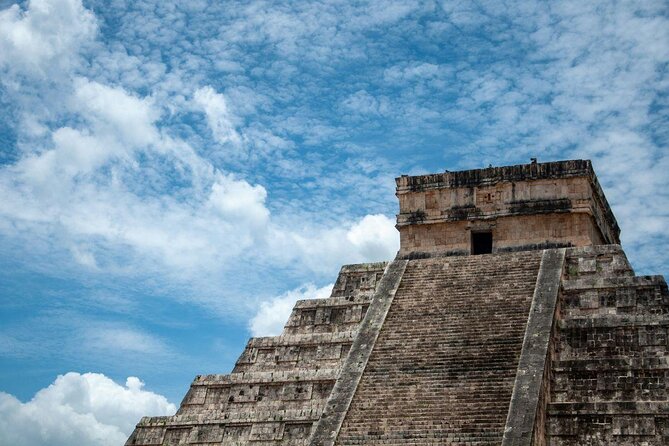
- Two major pyramids in focused time: Pyramid of the Sun, Pyramid of the Moon, and the Avenue of the Dead are all covered.
- Temple of Quetzalcoatl walkthrough: you’ll hear about the feathered-serpent symbolism as you move through the site.
- Built-in museum time: you get a deeper understanding without needing to plan extra tickets.
- Optional lunch where the price is on you: you can choose a cave restaurant meal, or skip it and grab food elsewhere.
Teotihuacan feels bigger when it starts with Tlalocan and Cuevas
Teotihuacán can feel like one of those places you either “get” fast or you don’t. The trick here is order. You don’t head straight to the pyramids and hope the story lands. You start with materials and meaning, then you step into the caves, then you arrive at the monumental city.
I like how the flow gives your brain handles to hold onto: obsidian and maguey first, caves second, then the Avenue of the Dead and temples. It’s the difference between seeing objects and understanding what people built their lives around.
There’s also a very practical upside: this is a half-day format (about 5 hours 40 minutes), and it’s set up for small groups with a max of 20. That helps the experience stay manageable at Teotihuacán, where the site is huge and you can easily lose time if you go it alone without a plan.
Still, go in with realistic expectations. If the day runs behind schedule, you’ll feel it more here than on a tour that’s designed for a slower pace. Teotihuacán is big, and the drive time around Mexico City can be unpredictable.
You can also read our reviews of more historical tours in Mexico City


Stop 1 at Tlalocan: obsidian, maguey, and typical drink tasting
Stop 1 is Tlalocan artesanías y experiencias, where your morning starts with reception and a tasting of typical drinks. You also get an explanation of obsidian and maguey from native artisans of the region.
Why this matters: Teotihuacán wasn’t just stone and geometry. It was a society built on resources, trade, and craft knowledge. Obsidian in particular is tied to ancient tools and ritual use, and maguey connects to fibers, food, and fermented drinks in central Mexico. Even if you’re not a museum person, learning what these materials are used for gives your pyramid tour something to attach to.
You’ll also be on “live” workshop energy for a short stretch. A few reviews mention that the early part can include opportunities to buy souvenirs from a shop connected to this kind of stop. If you want to browse, great. If you want zero shopping pressure, just be clear with yourself and keep an eye on your time.
Expect about 40 minutes here, and plan to arrive hungry for stories. You’re not in Teotihuacán yet, but you’re setting the stage for how you’ll interpret what comes next.
Cuevas stop: natural caves and why they mattered
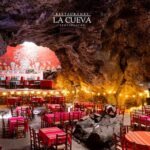
After Tlalocan, you head to Cuevas for about an hour. This is a visit to completely natural caves, with an explanation of the importance of caves for the region.
This stop is the tour’s emotional palate cleanser. Teotihuacán is bright, open, and wide. The caves are the opposite: controlled darkness, echo, and a sense of being under the earth. Even if you don’t see “fancy” rock formations, you can still understand why cave spaces show up in Mesoamerican thinking. They’re not just scenery. They’re tied to water, underworld symbolism, and sacred geography.
Practically, an hour is a good slot. It’s long enough to experience the caves and get the explanation, without stealing too much time from the pyramids, which are the main event.
Also note the logistics here: admission for the caves is listed as free for this activity. So this is one of the parts where you’re paying for the experience rather than feeling nickel-and-dimed for each entry.
If you’re sensitive to cooler temperatures underground, bring something light. Caves can feel chilly even on warm mornings.
Teotihuacán with a guide: Sun, Moon, Avenue of the Dead, and Quetzalcoatl
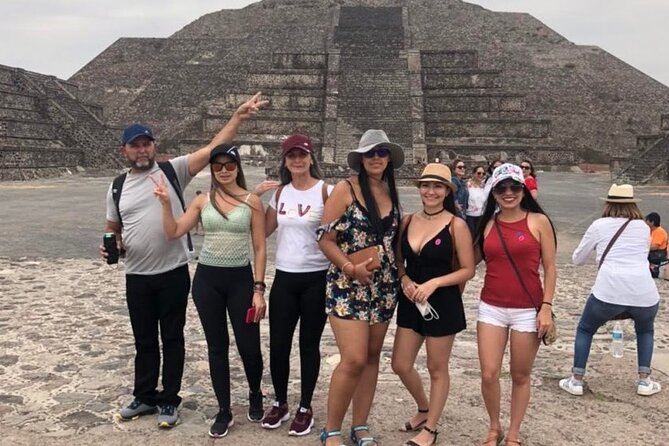
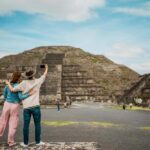
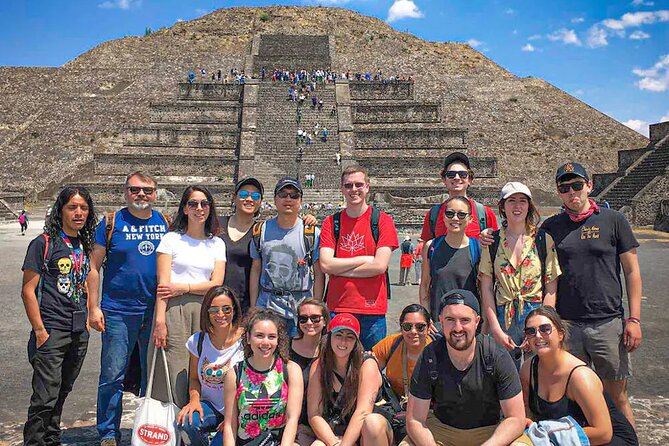
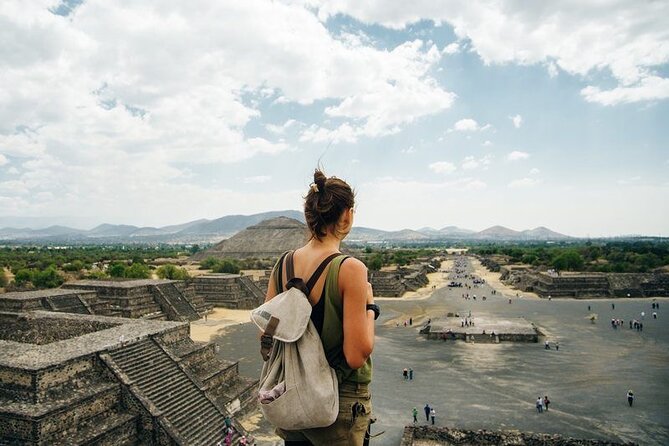
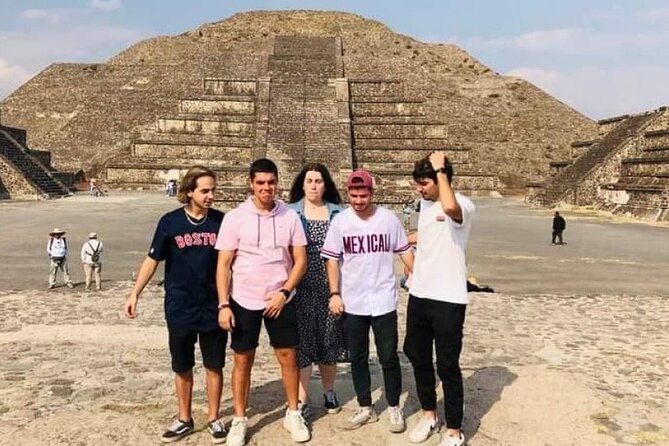
The core of the tour is the Teotihuacán archaeological zone, and you get around 2 hours here, plus admission included. This is where you see the Pyramid of the Sun, the Pyramid of the Moon, and you walk along the Avenue of the Dead (about 2.5 kilometers, connecting the two main pyramids).
Here’s the key value: the guide work happens inside the site, so you’re not left with vague directions or only signage. In past tours, the guide experience has made the difference. Reviews specifically praise guides like Rubí and Daniel, plus Irwin, Pancho, Susana, and Juan for keeping explanations clear and questions answered. When a guide is good, Teotihuacán stops being a photo spot and starts being a readable city.
What you’ll focus on inside the walk:
- Pyramid of the Sun: the largest structure in Teotihuacán and one of the largest pyramids in the world.
- Pyramid of the Moon: positioned at the northern end of the Avenue of the Dead.
- Avenue of the Dead: the long spine of the site, where the scale hits you fast.
- Temples and palaces along the way: including the Temple of Quetzalcoatl, known for intricate feathered-serpent sculptures.
You should also know about climbing expectations. Several reviews note that you can’t climb the pyramids the way old photos suggest. UNESCO stopped people from climbing years ago, so you view from the ground and railings instead. That can feel disappointing if you planned around the climb, but it still leaves plenty of angles for understanding the layout.
One more reality check: two hours means you see major highlights, not every corner. Teotihuacán is too big for that, so the tour is designed for “best-of with meaning,” not “complete inventory.”
Museum stop inside Teotihuacán: where facts get practical
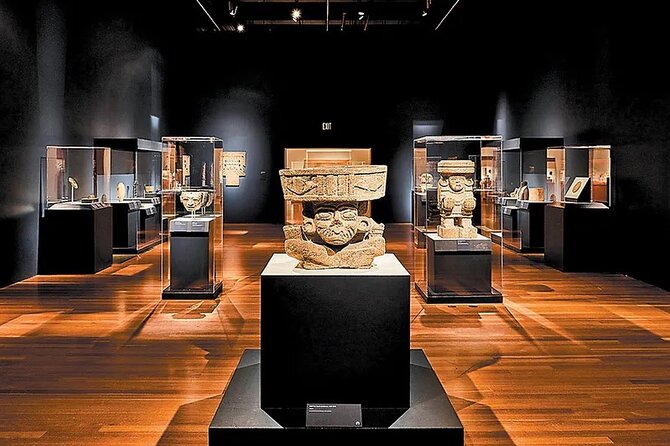
Within the Teotihuacán time, there’s also a Site Museum stop included. This is one of the smartest add-ons in the whole itinerary because it turns big visuals into real context.
When people leave a site museum too quickly, they miss the point. Here, the museum can help you connect what you’re seeing outside to what the people likely used those spaces for, and it gives you more than the headline story.
I’d treat the museum like a reset button. After walking the Avenue of the Dead, you’ll have visual memory. Then you can use the museum to label what you just walked past.
If your guide is strong with questions, ask about what you see in the sculptures near the Quetzalcoatl reference. Even simple back-and-forth can make the symbolism click.
If your guide is still finding English in real time, don’t be shy about asking for a slower explanation. In one review, a guide mentioned English limitations, and follow-up answers didn’t always land deep. The lesson for you: come with curiosity, and keep your expectations realistic if you want ultra-technical detail.



Optional lunch at Restaurante Huehueteotl: when it’s worth it
The itinerary includes an optional Restaurante Huehueteotl stop for about 2 hours, but lunch is not included in the tour price. This restaurant is described as having a garden area, lounge, and terrace.
What’s on the menu highlights list:
- Escamoles, often called Mexican caviar
- Mango passion fruit margarita
- Molcajetes
Two ways to think about this stop:
- If you want less decision-making, go with it. One review calls the restaurant clean with good service and flavor.
- If you’re on a budget or you dislike tourist pricing, you can skip it. Some reviews say the included cave/restaurant option felt overpriced or that the group ended up eating somewhere else that they liked more.
Timing matters here too. Several reviews mention that ending time can run late, so if lunch is optional and you have another plan, you may want to opt out early. One solo traveler even requested skipping the restaurant due to a later appointment and still arrived later than planned.
My practical advice: check your schedule before you commit. If you want food, eat. If you have a reservation later, consider skipping lunch and using that time as a buffer.
Price and what $59.68 really buys you
At about $59.68 per person, this tour is priced in the “good value” zone for Mexico City day trips. Why it feels fair: you’re not just paying for the sites. You’re also paying for round-trip transportation, a private driver, and a bilingual guide operating in the archaeological zone, plus the typical drink tasting at the first stop.
That combination matters in practice. Teotihuacán is easy to underestimate from the city. If you try to DIY it without a plan, you end up spending time figuring out routes, entry steps, and how to structure your visit. Here, you get a pre-set flow with the major monuments and a museum covered.
The “value” breaks down when logistics wobble. Multiple reviews report late pickups, shop detours, and long return traffic. If your day gets stretched, part of your money’s worth shifts from experiences to sitting in a car.
So I’d frame it like this: the tour can be a smart deal when everything runs on time. When it doesn’t, you still get the pyramids, but the rest of the day may feel less efficient.
Real-world logistics: pickup time, traffic, and the group size effect
The tour is scheduled to start at 8:00 am and ends back at the meeting point. Group size is capped at 20 travelers, and you’ll get a mobile ticket.
Here’s the part you should plan for: pickup timing. Several reviews report:
- the pickup time shifting later than posted
- delays that caused late arrival at Teotihuacán
- long return rides because of traffic
- drop-off happening somewhere other than the exact original pickup point
In one account, the driver couldn’t drop everyone at the original spot, and people walked about a mile back. In another, the group ended up changing plans because the day ran so late.
What that means for you:
- Try not to schedule a hard commitment immediately after.
- Give yourself a timing cushion for the return to Mexico City.
- Keep your expectations flexible about minor stop order changes and short shopping stops.
On the positive side, multiple reviews also praise punctual pickup and strong communication. One couple said they were picked up directly from in front of their Airbnb, and another mentioned using WhatsApp for communication. So it’s not universally chaotic. It’s more like: this tour can be smooth, but you should plan as if morning traffic might mess with the timetable.
Who should book this Teotihuacán with caves, and who should skip it
This is a good fit if you want:
- a half-day structure
- highlights at Teotihuacán (Sun, Moon, Avenue of the Dead, Quetzalcoatl)
- a guide to explain what you’re looking at while you’re actually there
- a first stop that connects craft traditions and materials to the bigger monuments
- a cave experience that adds atmosphere and meaning before the site
It’s less ideal if you want:
- a deep, text-heavy archaeology lesson at every stop
- a perfectly timed day with zero slippage
- zero shopping stops
Also, if you’re the type who loves full independence, you might do better with a private car and a museum-first plan. Some reviews suggest that approach when the guided group visit felt too basic or when key parts like museum time seemed shortened. You can still use this tour as a backup plan, but if you care about ultra-detailed coverage, compare options.
Kids can do well here too. One review mentions the pacing worked well for a 13-year-old son, which usually means the guide kept things moving and understandable.
Should you book this tour?
Yes, I think you should book it if your goal is a well-paced Teotihuacán highlights day with extra texture from caves and crafts. The price makes sense for the mix of transportation, bilingual guiding inside the site, and included museum time.
But book with your eyes open. If you’re sensitive to delays, don’t stack tight appointments after the tour. And if you dislike any kind of shopping stop, mentally prepare yourself for a brief detour early on.
If you’re aiming for awe plus context in one morning, this itinerary can deliver. When you get a strong guide like Susana, Pancho, Irwin, Rubí and Daniel, or Carmen in the early tasting, it turns Teotihuacán from a list of monuments into a story you can actually follow.
FAQ
How long is the tour?
It runs about 5 hours 40 minutes (approx.).
What time does the tour start?
The start time is 8:00 am.
What’s included in the price?
You get round-trip transportation, a bilingual guide (Spanish and English) within the archaeological zone, a private driver, and a tasting of typical drinks.
Is lunch included?
No. Lunch at Restaurante Huehueteotl is optional and not included in the tour price.
Are entrance tickets included?
Admission is included for the Teotihuacán stop, and the cave stop is listed as free. The Tlalocan stop includes an admission ticket.
How large is the group?
The tour has a maximum of 20 people.
Is the tour offered in English?
Yes. English is available.
Where does the tour end?
It ends back at the meeting point.
What’s the cancellation refund rule?
You can cancel for a full refund up to 24 hours before the start time. If you cancel within 24 hours, the amount paid is not refunded.