REVIEW · MEXICO CITY
Private Walking Tour Gems of the Historic Center of Mexico City
Book on Viator →Operated by TRAVELEZZA · Bookable on Viator
Some cities need context fast. This private Historic Center walk gives you exactly that, starting with Aztec origins at Templo Mayor and ending with the world-famous Palacio de Bellas Artes murals. I love that you get the freedom of a private guide who can pace the day and answer your questions, and I especially like that the route is built around big story beats, not random stops. One drawback to plan for: you’ll be walking a lot and some major interior visits are limited, like Templo Mayor (exterior only) and the National Palace (panoramic view only).
You’ll spend about four hours tracing Mexico City’s layers—Aztec, colonial, church power, and early 20th-century art—while also getting practical breaks. A coffee or tea break is included, and the tour avoids forced shopping stops. If crowds or demonstrations are an issue on your date, the city center can slow access, so it helps to stay flexible.
In This Review
- Key Points Before You Go
- Templo Mayor to Bellas Artes: A Four-Hour Route That Makes Sense
- Templo Mayor: Aztec Mexico, Seen from the Best Angle
- Zócalo + National Palace Views: Where Power Stayed Put
- Metropolitan Cathedral: A Style Mash-Up You Can Actually See
- Madero Street: The Walk That Turns Landmarks into a Story
- Iturbide Palace, La Profesa, House of Tiles: Baroque Details at Human Scale
- Former Convent of San Francisco + Plaza Tolsa + Palacio Postal Courtyard
- Palacio de Bellas Artes: The Murals That Make the Price Feel Worth It
- Price and What You’re Actually Paying For
- Who This Tour Is Best For
- Should You Book This Historic Center Private Walk?
- FAQ
- How long is the private walking tour?
- Is this a private tour or a group tour?
- What language is the tour offered in?
- Is Palacio de Bellas Artes admission included?
- Do we go inside Museo del Templo Mayor?
- Is food included?
- What happens if the weather is bad?
Key Points Before You Go
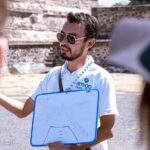
- Private, certified bilingual guide: You get one guide for your group, and they can tailor the pace.
- Big-ticket cultural payoff is included: Entry to Palacio de Bellas Artes is part of the tour price.
- Aztec to modern Mexico in one route: You connect Templo Mayor → Zócalo → cathedral → murals without wasting time.
- Some sites are view-only: Templo Mayor is exterior-only; the National Palace interior isn’t allowed.
- Coffee break included: A real breather on a long walking stretch.
Templo Mayor to Bellas Artes: A Four-Hour Route That Makes Sense
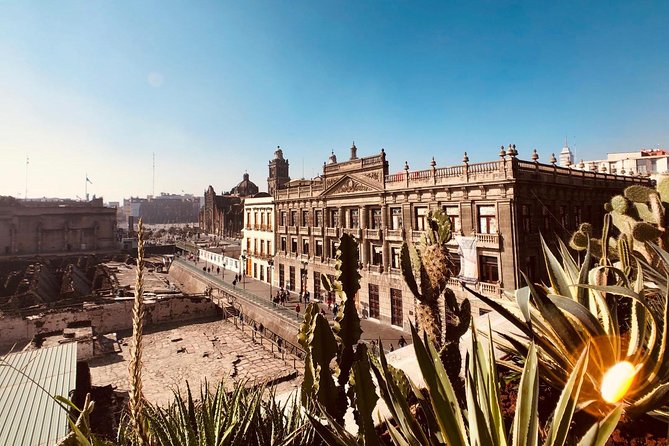
This is a smart orientation walk for first-timers because it hits the major “story landmarks” of Mexico City’s Historic Center in a logical order. You start where the city began (Aztec Tenochtitlan), then move through the colonial and church-era power center, and finish with one of the most important mural destinations in Mexico.
The private format matters here. On a self-guided loop, you’ll see buildings; with a guide, you understand why those buildings ended up where they are and what they meant to the people living inside them.
Also, you should expect a true walking tour. One recent group described it as close to 10,000 steps (about four miles). Wear comfortable shoes, and don’t plan anything strenuous right before or right after.
You can also read our reviews of more walking tours in Mexico City


Templo Mayor: Aztec Mexico, Seen from the Best Angle
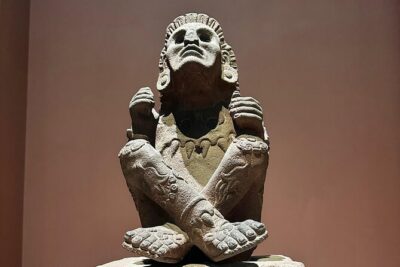
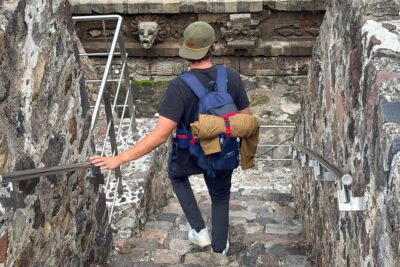
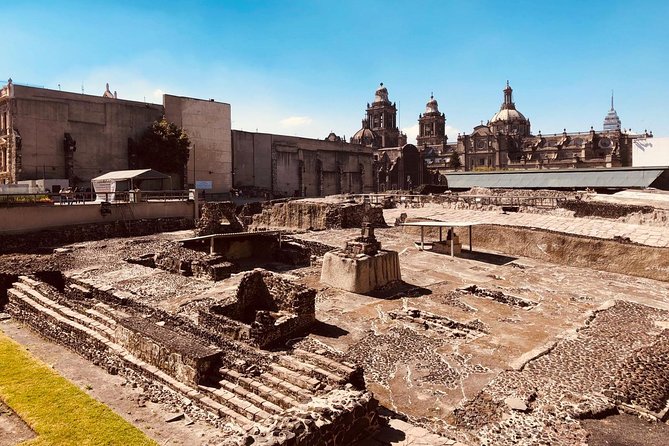
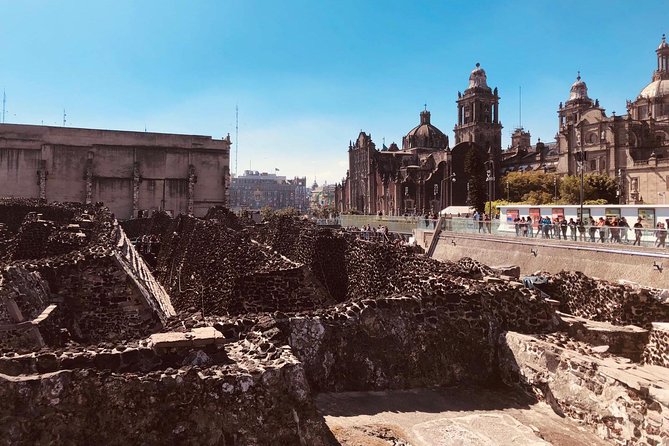
Your first stop is Museo del Templo Mayor’s neighborhood, but the key detail is this: the tour focuses on the exterior archaeological site. You’ll look at the ruins of Templo Mayor from outside with big-picture context, but a guided visit inside the Templo Mayor Museum is not included.
This is still a powerful way to start because it frames the scale and symbolism of the site right away. The ruins are described as the axis mundi, the sacred center of the Aztec world—plus you’ll hear how a city could consolidate immense power in roughly 300 years.
What to do with this stop: take your time with the surroundings and the sightlines. If you’re the type who enjoys knowing what you’re looking at before you enter a museum later, this opening works really well.
Zócalo + National Palace Views: Where Power Stayed Put
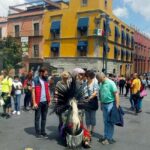
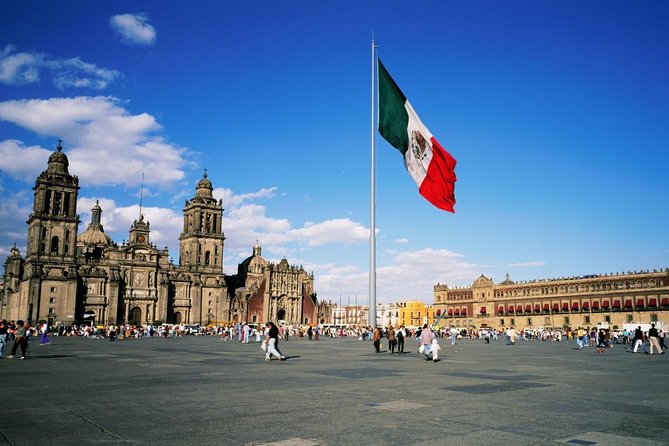
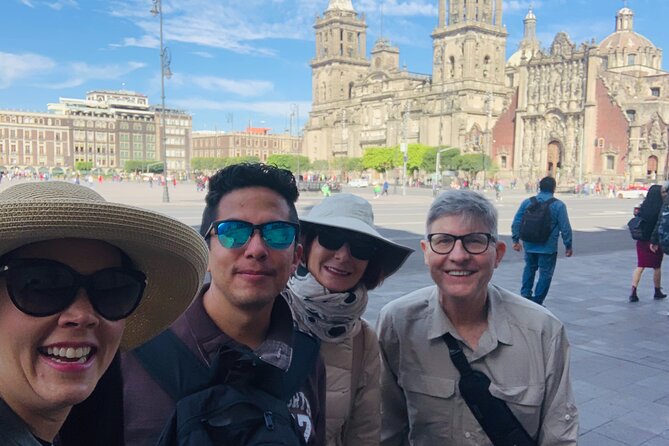
Next comes Plaza de la Constitución, better known as the Zócalo. This isn’t a “quick photo” stop. You’ll walk across the main square while your guide explains the significance of the buildings around it—from colonial-era roles to independence moments and modern celebrations.
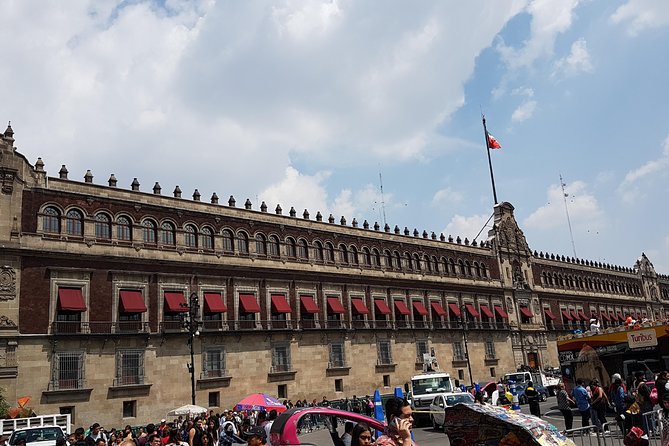
From there, you get a panoramic view of the National Palace from the Zócalo. You’ll learn that the site sits on ground once occupied by Moctezuma’s palace, and that this building has served as Mexico’s seat of political power for centuries, housing the offices of presidents.
Important reality check: you won’t be going inside. The tour is view-based here because entry isn’t allowed. Still, the value is the connection your guide makes between Aztec history and later political authority in the same central zone.
Metropolitan Cathedral: A Style Mash-Up You Can Actually See
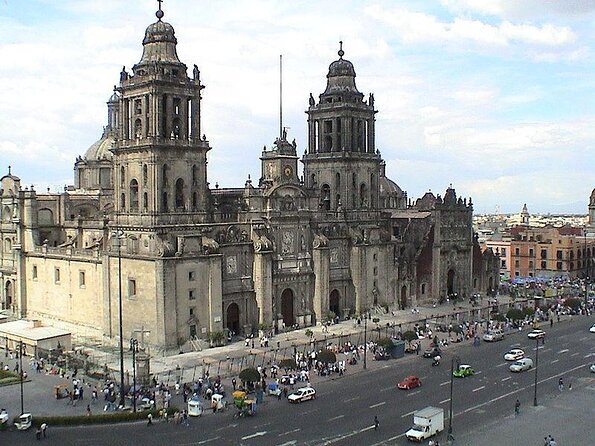
At the Metropolitan Cathedral, you get one of the best “timeline in stone” experiences in the center. The exterior and interior are described as a fusion of Gothic, Herrerian, Mexican Baroque, and Neoclassical styles, which sounds academic—until you see how the building shifts mood as you move through it.
Inside, you’ll focus on chapels and Catholic Church history. Depending on timing and access, there’s a special treat: you may get access to the Sacristy, often called the Mexican Sistine Chapel, or you might get a closer look at the church organ.
If you love art and craft, this is a good stop to ask your guide what to prioritize that day. Even with “only” 20 minutes on the clock, a guide can point you toward the most impressive details you’d otherwise miss.
Madero Street: The Walk That Turns Landmarks into a Story
Then you shift to Francisco I. Madero Avenue, one of the Historic Center’s iconic pedestrian stretches. You’re still in history mode, but now it’s more “living museum” than ruins and relics.
Your guide brings colonial buildings and historic churches to life with anecdotes and factual context. The pace is described as flexible—you’ll pause when you need a break, and you’ll also enjoy a complimentary coffee as part of the tour.
This is the part where the tour becomes fun in a practical way. You get walking rhythm, street-level atmosphere, and a chance to cool down without feeling like you’re abandoning the day.
You can also read our reviews of more city tours in Mexico City




Iturbide Palace, La Profesa, House of Tiles: Baroque Details at Human Scale
As you keep heading along the center, the tour turns into an architecture and art walk.
- Museo Antiguo Palacio de Iturbide (Iturbide Palace): you get a brief look at the exterior and learn about Agustín de Iturbide and the influence of Mexican Baroque.
- The Professed (Temple of San Felipe Neri): you’ll focus on Baroque artwork, especially the Baroque altarpiece and the sacred art collection.
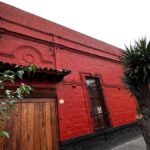
- House of Tiles (Casa de los Azulejos): you stop at the famed tiled facade and have a chance to appreciate its interior, plus murals and architecture.
These short stops are quick, but that’s the point. You aren’t trying to become an expert in one building; you’re learning what to notice when you see similar styles later around town. If you ever wished you could read Mexico City’s buildings like a language, this part helps.
Former Convent of San Francisco + Plaza Tolsa + Palacio Postal Courtyard
Next is a calmer run of exterior and one interior payoff.
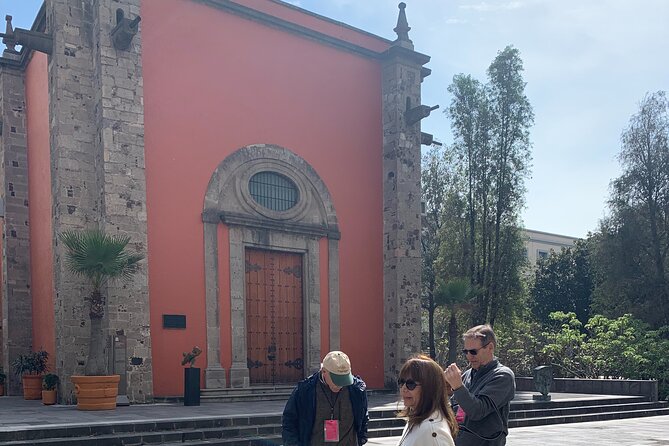
At the Former Convent of San Francisco, you’ll be able to admire the Chapel of Aranzazú, described as a preserved depressed section of the remains of the original church and convent. It’s a small stop, but it reinforces how layered the Historic Center is—things change, rebuilds happen, yet fragments remain visible.
Then you pause at Plaza Tolsa and the Mining Palace exterior area (Manuel Tolsá Square). The tour frames this as a strategic pause—another moment to reset your legs and grab photos.
Finally, you reach Palacio Postal. Here, you do get an interior courtyard visit, and the highlight is the stained-glass display. This is the kind of stop that feels worth the walk because it’s visually direct: you’ll see the payoff fast, and it’s included.
Palacio de Bellas Artes: The Murals That Make the Price Feel Worth It
The tour finishes at Palacio de Bellas Artes, and this is where you’ll feel the tour’s value most clearly.
Entry is included, and you spend about 50 minutes exploring the lobby area and then moving up to the second and third floors to see major 20th-century murals. You’ll focus on works by artists like Diego Rivera, David Alfaro Siqueiros, and Rufino Tamayo (and other artists are mentioned too).
Even if you think you’re only visiting because it’s famous, you’ll likely leave with more than a snapshot. The murals connect modern Mexican identity to the country’s broader story—and having a guide makes the themes easier to follow in the time you have.
This ending works especially well if you plan the rest of your trip as “follow-up days.” After Bellas Artes, you’ll have a set of historical threads you can track while you explore more on your own.
Price and What You’re Actually Paying For
At $156 per person for about four hours, this isn’t a bargain deal in the cheap sense. But it’s fairly priced for a private walking tour that bundles real access.
Here’s what makes it better value than a basic highlights loop:
- Private certified bilingual guide (the main cost driver)
- Coffee/tea break included
- Palacio de Bellas Artes admission included
- Most other stops are free-entry or view-based, which helps you keep control of your schedule
The one thing to weigh is that some major “inside” experiences are not part of this specific route—Templo Mayor Museum isn’t included, and the National Palace interior isn’t allowed. If you’re the type who wants maximum indoor access at every stop, you may want to plan one or two add-on museum visits later.
Who This Tour Is Best For
This tour fits best if you want:
- A clear, guided orientation to the Historic Center
- A route that hits major landmarks without feeling like a checklist
- Story connections between Aztec Mexico, colonial authority, cathedral power, and 20th-century mural art
It’s also a great pick for couples and families, since the guide can usually adapt to your pace and keep the day from feeling rigid. And if you’re specifically into art, ending at Bellas Artes with Rivera and Siqueiros murals is a very strong finish.
Should You Book This Historic Center Private Walk?
Yes—if you want a high-value introduction that ends with a real cultural anchor. The included Bellas Artes access is the strongest reason to book, and the private guide format helps you turn monuments into context instead of just scenery.
I’d hesitate only if you’re expecting interior access everywhere, because Templo Mayor is exterior-only and the National Palace is view-only. Also, on days with demonstrations and crowd control in the center, you may need extra patience and flexibility.
If you’re booking this to kick off your Mexico City trip, I think you’ll get your money’s worth fast: you’ll know where you are, what you’re seeing, and what to prioritize next.
FAQ
How long is the private walking tour?
It runs about 4 hours (approx.).
Is this a private tour or a group tour?
It’s a private tour/activity, so only your group participates.
What language is the tour offered in?
It’s offered in English, and it includes a private certified bilingual guide.
Is Palacio de Bellas Artes admission included?
Yes. Admission to Palacio de Bellas Artes is included, and you’ll visit the lobby plus the second and third floors to see important murals.
Do we go inside Museo del Templo Mayor?
No. The tour focuses on the exterior archaeological site of Mexico-Tenochtitlan, and a guided visit to the Museum of Templo Mayor is not included.
Is food included?
A coffee/tea break is included. Lunch and beverages are not included.
What happens if the weather is bad?
This experience requires good weather. If it’s canceled due to poor weather, you’ll be offered a different date or a full refund.