REVIEW · MEXICO CITY
Private Tour Mexico City – VIP
Book on Viator →Operated by Free Tour Mexico City · Bookable on Viator
Three hours, a lot of Mexico City. This VIP-style private tour strings together the big sights in Centro Histórico with a guide who helps you read what you’re seeing, not just snap pictures. I especially like the meteorite moment at Palacio de Minería, where you learn how mining history connects to real specimens. One catch to plan for: English clarity can vary by guide, so if you need precise explanations, set expectations early.
You’ll ride in a private car, start in the historic center near Av. Juárez, and finish back where you began. Expect short stops—enough time to understand the place, not enough for an all-day museum crawl.
In This Review
- Key points before you go
- Price and what $99 per person really buys
- Meeting at Av. Juárez, hotel pickup, and how the WhatsApp group helps
- Zócalo and the Cathedral: Mexico City’s center of gravity
- Bellas Artes and Torre Latino: murals inside, views outside
- Palacio Postal and Sanborns de los Azulejos: postal service, but make it grand
- Palacio de Minería: meteorites and the mining story
- From Aztec ruins to independence monuments along Reforma
- Chapultepec Castle and the park: a big finish with free entry
- How to make it feel VIP: guides, customization, and pacing
- Who this private Mexico City highlights tour suits best
- Should you book Private Tour Mexico City – VIP?
- FAQ
- How long is the Private Tour Mexico City – VIP?
- Where does the tour start?
- Is pickup offered?
- What language is the tour offered in?
- Are entrance tickets included?
- Can I cancel for a full refund?
Key points before you go
- Private car, short hops, less transit stress: you spend more time looking up at buildings and less time figuring routes.
- Meteorites at Palacio de Minería: a standout stop with a mining story and real impact specimens on display.
- Architecture you can read fast: Bellas Artes murals, Torre Latino views, Palacio Postal interiors—each one has a “why.”
- Centro core coverage: Zócalo, the Met Cathedral, and the Templo Mayor museum keep the timeline moving.
- WhatsApp contact before the tour: your guide coordinates directly so you’re not guessing at meeting points.
- Guides who tailor the pace: people like Veronica and Rosa Maria are often praised for packing facts without killing your time.
Price and what $99 per person really buys
At $99 per person for about 3 hours, you’re paying mainly for three things: a private guide, private transportation, and an efficient route through the city’s top “starter landmarks.” Every stop on the route is marked as free admission, which matters because Mexico City can add up fast once tickets and guided entries pile on.
The value is best if you want a guided orientation—figuring out why these places matter and how they connect across eras (Aztec, colonial, modern Mexico). It’s less ideal if you’re hunting for slow museum time. Think of this as a sharp highlights sampler.
Also, this tour tends to get booked around a month ahead, so if your dates are fixed, don’t wait until the last week to secure a time.
You can also read our reviews of more city tours in Mexico City


Meeting at Av. Juárez, hotel pickup, and how the WhatsApp group helps
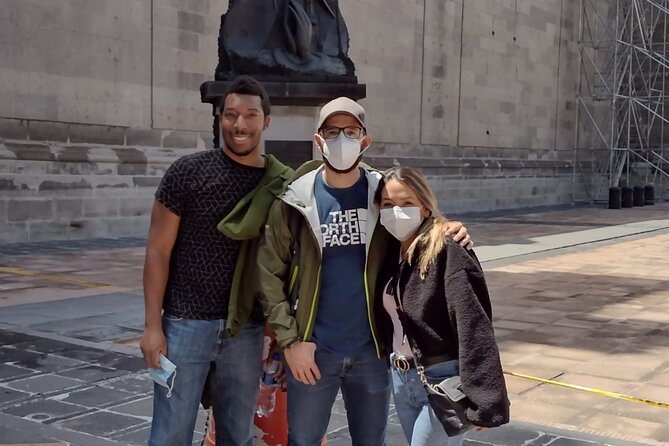
Your start point is in Centro Histórico near Av. Juárez S/N (Cuauhtémoc area). If you’re staying in the city center, pickup is offered: your guide meets you at your hotel lobby, and you’ll get WhatsApp coordination before the day of the tour.
That WhatsApp group is practical. It’s the difference between arriving, waiting, and wondering, versus being able to message quickly and confirm where you are. I’d use it even if you think you know the meeting point—Mexico City is big, and traffic is real.
One more thing to keep in mind: in a private tour, your group size matters for comfort. Some cars can feel tight if your party is larger than expected, so count heads carefully when you book.
Zócalo and the Cathedral: Mexico City’s center of gravity

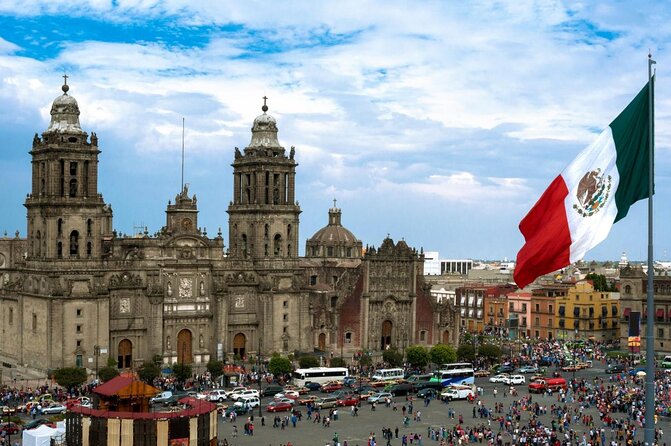
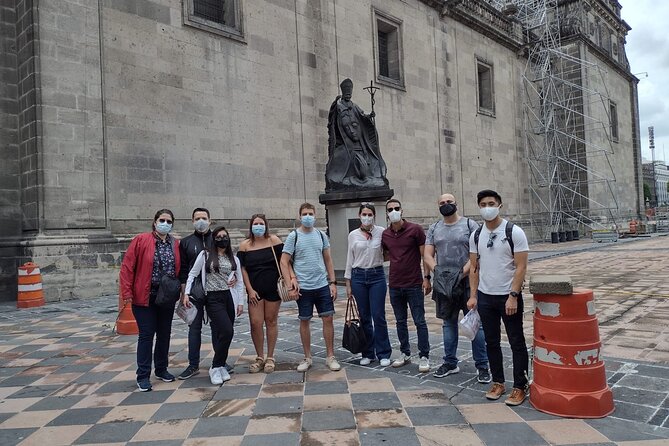
The route kicks off around the historic heart of the city, with time at the Zócalo (Plaza de la Constitución). This square is where Aztec Tenochtitlan sat, then it became the colonial center, and today it still functions like a public living room. You’ll see the surrounding “power walls” of the city—Metropolitan Cathedral, National Palace, and the Templo Mayor archaeological area nearby.
What I like about starting here is that it gives you a reference point for everything else. When you understand the Zócalo, the rest of the city reads like a story in motion.
From there, the tour moves to the Metropolitan Cathedral. Construction began in 1573 and stretched for over 250 years, so you’re seeing a mix of styles—Gothic, Baroque, and Neoclassical. Even if you keep your time short, the cathedral’s size and craftsmanship hit hard, and the big organ (one of the largest in the Americas) adds a “this place mattered for centuries” feeling.
Bellas Artes and Torre Latino: murals inside, views outside
Next up is Palacio de Bellas Artes (Palace of Fine Arts). If you only have a few hours in Mexico City, this is a smart stop because it connects art, politics, and national identity. Inside, you’ll find murals by major Mexican artists like Diego Rivera, David Alfaro Siqueiros, and Rufino Tamayo. Even with limited time, the murals help you decode Mexico City’s visual language.
After that, you shift from art walls to sky views at Mirador Torre Latino (Torre Latinoamericana). The tower was completed in 1956 and was once the tallest in Latin America. From the observation deck on the 44th floor, you’re looking at a 360-degree panorama—Zócalo, Palacio de Bellas Artes, and Chapultepec Park included. Short stop, big payoff: this is where you get your bearings fast.
If you’ve ever felt like Mexico City landmarks are “all over the map,” this view is the fix. You’ll leave the tower understanding the city’s scale and how the neighborhoods spread.
Palacio Postal and Sanborns de los Azulejos: postal service, but make it grand
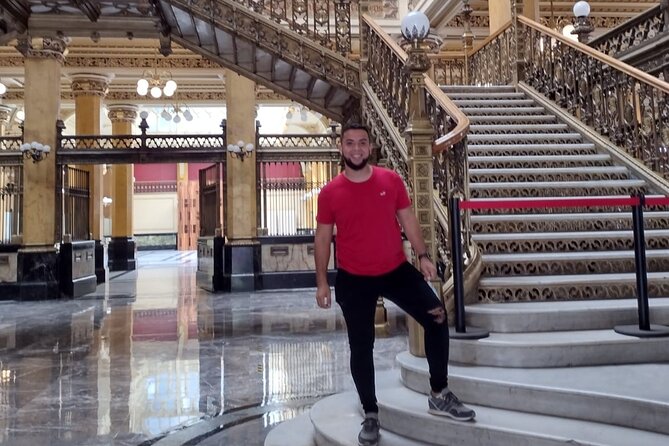
The Palacio Postal (post office) is one of those “how is this real?” buildings. Designed by Italian architect Adamo Boari and completed in 1907, it blends French Renaissance influences with ornate stonework and a central dome.
Inside, pay attention to the details: marble floors, elegant columns, and a stained-glass ceiling that throws warm color into the central hall. Balconies and mezzanines wrap around the space, so even a quick look feels like you’re inside a small architectural universe. The building still functions as a working post office, so this isn’t just a decorative facade.
Then you head to Sanborns de los Azulejos, often known as the House of Tiles. The exterior is famous for blue-and-white tilework, with azulejos imported from Puebla. Inside, you’ll find a mix of colonial and Art Nouveau vibes—chandeliers, antique-style pieces, and colorful murals.
Even if you don’t stop for a full meal, this is a good place for a quick palate reset. It breaks up the “big monuments” vibe with something more human-sized.
You can also read our reviews of more private tours in Mexico City





Palacio de Minería: meteorites and the mining story
If you only remember one stop from this tour, make it Palacio de Minería. This Neoclassical building was originally built to house the Royal School of Mines, which means mining isn’t just a footnote here—it’s built into the architecture and the purpose.
Today, it’s linked to UNAM’s mining and metallurgy education and also hosts cultural events. When you arrive, you can admire examples of meteorites, including specimens connected to the 65-million-years-ago impact story.
I love this stop because it connects science to place. You’re not just looking at old buildings—you’re learning how the city’s identity shaped its institutions, and how geology became part of public education.
It also tends to land well for families and curious adults because it’s concrete. Real meteorites are hard to ignore.
From Aztec ruins to independence monuments along Reforma
The tour then leans into Mexico City’s “layers” with two key stops: Museo del Templo Mayor and Monumento a la Revolución mexicana.
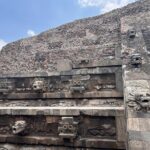
At the Templo Mayor museum, you’re looking at the ceremonial heart of Aztec Tenochtitlan. The original complex included two major pyramids dedicated to Huitzilopochtli (war) and Tlaloc (rain and agriculture). The museum setup helps you understand why rituals and offerings mattered, and the site’s ongoing presence in modern Mexico City keeps the Aztec story from feeling like ancient history behind glass.
Then you move to the Monumento a la Revolución mexicana. It was intended as a legislative palace, but construction was interrupted by the Mexican Revolution, and it was repurposed into a memorial. Expect a big dome-centered structure with Art Deco and neoclassical influences, plus an interior museum element and city views from an observation level.
From there, the route flows along Paseo de la Reforma—the iconic boulevard where you’ll see skyscrapers beside jacaranda trees. If you’re there during jacaranda season, purple blossoms can turn the street into a photogenic corridor. Even outside peak bloom, Reforma is a great “Mexico City modernity” contrast to the historic center.
Finally, there’s El Ángel de la Independencia. This bronze winged angel statue on top of a tall column symbolizes independence. It’s also a focal point for gatherings and demonstrations, and it’s especially dramatic at night when illuminated.
Chapultepec Castle and the park: a big finish with free entry
Later in the tour, you’ll reach Chapultepec Castle and the surrounding Bosque de Chapultepec park area.
Chapultepec Castle is famous across the Americas for its setting and history, and even with limited time, it gives you that “this city has a royal past” feeling. Bosque de Chapultepec is huge—described as twice the size of Central Park in NYC—and it’s the kind of green space where you feel the city’s stress drop.
These stops are a smart way to finish because they add breathing room after a heavy run of architecture and museums. If you’re tired of standing in crowds, this is your chance to reset.
How to make it feel VIP: guides, customization, and pacing
This “VIP” label mostly means private access and guide attention, but the real difference shows up in how your guide narrates the places and how flexible they are with your interests.
From what I’ve seen in guide feedback, people often highlight certain guides for being especially effective at packing information into short visits. Veronica is repeatedly praised for being knowledgeable and for practical touches like supplying water. Rosa Maria is mentioned for being able to cover a lot of ground while still letting people linger. Arturo gets called out for strong knowledge and for taking great photos.
That said, English ability isn’t uniform across every guide shift. One bad day of communication can make a short tour feel even shorter. If this matters to you, do two things:
- Use the WhatsApp group early to share what you want emphasized (architecture, Aztec history, art, photography, etc.).
- Ask one simple question on day one that requires more than a yes or no, then adjust your expectations from there.
Also, keep your own timeline realistic. Some days traffic can mess with drive times. If you’re visiting with a tight schedule, treat this tour as your main “orientation” segment, not as a series of guaranteed long stops.
Who this private Mexico City highlights tour suits best
This tour fits you if:
- You’re visiting Mexico City for the first time and want the major icons in a logical route.
- You like architecture and want quick context at each stop.
- You prefer a private guide over self-guided wandering.
- You want an efficient 3-hour plan that covers both historic center landmarks and modern viewpoints.
It may not be ideal if:
- You want slow, deep museum time at any one site.
- You need highly advanced English narration and complex Q&A throughout.
- Your group is large and you expect a roomy vehicle.
Should you book Private Tour Mexico City – VIP?
Yes, if your goal is a guided “greatest hits” orientation with free-admission stops and private transport that saves you time. The Palacio Postal and Palacio de Minería combination alone is worth it for the architecture-plus-science contrast, and Torre Latino gives you that map-in-your-brain panorama.
I’d book with a simple mindset: arrive ready to move, bring a curious attitude, and communicate your priorities early in the WhatsApp chat. If you do, this tour is a solid way to understand Mexico City fast—without spending the day in transit.
FAQ
How long is the Private Tour Mexico City – VIP?
The tour lasts about 3 hours.
Where does the tour start?
It starts at Av. Juárez S/N, Centro Histórico de la Cdad. de México, Centro, Cuauhtémoc, 06050 Ciudad de México, CDMX, Mexico.
Is pickup offered?
Yes. Pickup is offered from places in the city center, and the guide waits at the hotel lobby. You’ll also be added to a WhatsApp group before the tour.
What language is the tour offered in?
The tour is offered in English.
Are entrance tickets included?
Admission tickets are listed as free for the stops in the tour route.
Can I cancel for a full refund?
Yes. You can cancel up to 24 hours in advance for a full refund.