REVIEW · MEXICO CITY
Private Tour in Mexico City – Best Rated
Book on Viator →Operated by Free Tour Mexico City · Bookable on Viator
A city this big needs a smart first plan. This private tour strings together major Centro landmarks in a smooth, human-paced loop, from Mirador Torre Latino to the Templo Mayor ruins. It’s designed to help you understand what you’re looking at and how the pieces fit together, not just to check boxes.
I like that you get a real guide who can connect the dots between architecture, history, and everyday Mexico City life. Guides such as Efrain and Erick have been called out for being engaging and easy to talk to, with plenty of time for questions. I also love the flexibility: you can pick morning, afternoon, or evening, and the tour is 100% customisable, so you’re not stuck with one rigid script.
One thing to consider: while the highlights are mostly free-entry, this is still a walking tour in a busy historic center, and you’re not including transportation or special admissions. So wear good shoes, and if you’re sensitive to cancellations, keep an eye on your WhatsApp messages the day of.
In This Review
- Key highlights worth showing up for
- A 3-Hour Private Walk That Gets You Oriented Fast
- Meeting in Centro: Av. Juárez and the WhatsApp Setup
- Mirador Torre Latino: Earthquake-Surviving Views That Change Your Perspective
- Palacio Postal: The Working Post Office Made of Italian Marble and Gold
- Palacio de Mineria: Mining Lessons and a Meteor Moment
- Palacio de Bellas Artes: Your Orientation Stop for Art and Architecture
- Zócalo: The Center of the Center
- Museo del Templo Mayor: Real Aztec Ruins in the Middle of the City
- Mexico City Metropolitan Cathedral: The Most Important Church With Endless Stories
- How Much It Costs and Why This Can Be Solid Value
- Guides Matter: Efrain, Victor, Joss, Ismael, Joseline, and Erick
- Potential Downsides: When Things Don’t Go Smoothly
- Who Should Book This Private Centro Tour
- Should You Book This Private Tour of Mexico City’s Historic Center?
- FAQ
- How long is the private tour?
- Where does the tour meet?
- Is hotel pickup available?
- What language is the tour offered in?
- Is this a private tour?
- What’s included in the tour price?
- What’s not included?
- Are any admissions free at the stops?
- Can I cancel for a full refund?
- Are service animals allowed?
Key highlights worth showing up for
- Mirador Torre Latino views with a story about surviving major earthquakes
- Palacio Postal: Italian marble and gold details, and it still works as a post office
- Palacio de Mineria includes a chance to see a real meteor linked to the region’s geology
- Zócalo + Templo Mayor: the civic center plus an Aztec ruin right in the city
- Bellas Artes as the “orientation stop” that frames the art and history theme
- Private, guided, English-language experience with WhatsApp support from booking
A 3-Hour Private Walk That Gets You Oriented Fast
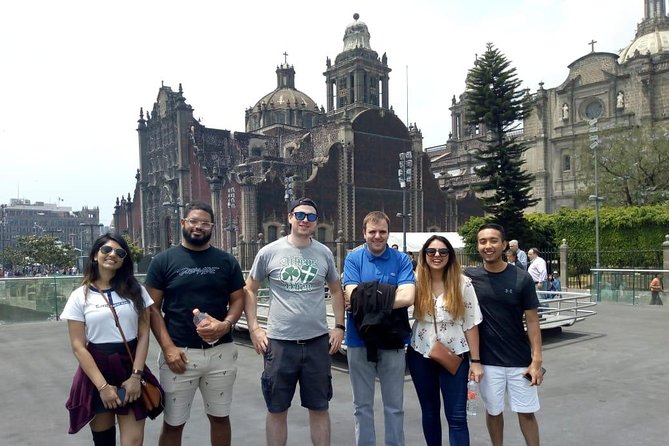
This is a private tour in Mexico City’s historic core, built for people who want an overview without spending your whole day lost in transit. The total time is about 3 hours, so the pacing is tight enough to feel efficient, but not so rushed that you miss the meaning of each place.
You can also choose a tour window—morning, afternoon, or evening—which matters in a city where light changes everything. If you want photos, the morning and late afternoon tend to be more forgiving. If you’re more interested in learning and moving, any start time can work as long as you arrive ready to walk.
The biggest value here is that it’s not just a route. It’s a guided narrative. The stops are carefully chosen to help you understand how Mexico City layered Spanish-era civic power, church authority, and modern urban life over older civilizations.
You can also read our reviews of more city tours in Mexico City


Meeting in Centro: Av. Juárez and the WhatsApp Setup
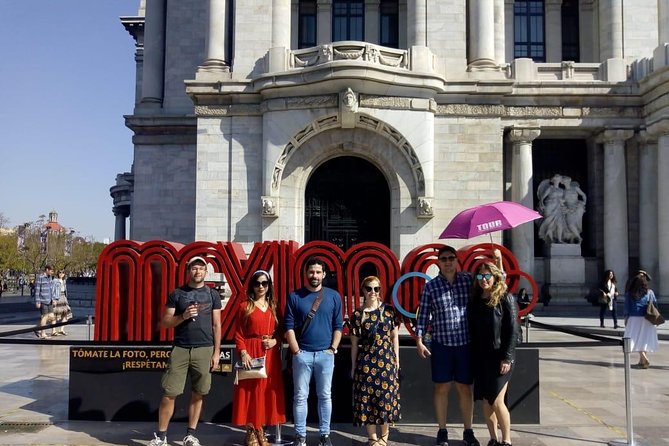
Your starting point is Av. Juarez 1, Colonia Centro, Centro, Cuauhtémoc, 06050. If you prefer pickup, the tour offers hotel transfers in the city center, with your guide waiting in the hotel lobby.
What I appreciate is the communication method: before the day of the tour, they create a WhatsApp group so you can message the guide and the administration directly. That’s the kind of “small detail” that pays off in a big city. It reduces the stress of trying to locate a moving meeting point while you’re also juggling traffic, weather, and your own jet-lag.
Also note the tour is listed as near public transportation and most travelers can participate. Still, treat it like a walk through busy streets: plan for crowds around the Zócalo area and for stairs or uneven surfaces at older buildings.
Mirador Torre Latino: Earthquake-Surviving Views That Change Your Perspective
The tour begins with Mirador Torre Latino, a viewpoint stop that gives you instant context for scale. The building used to be the tallest in Latin America, and it now stands as a survivor of three major earthquakes. That fact alone adds depth, because it turns the skyline into more than postcard scenery.
You’ll spend about 15 minutes here, which is enough time to get oriented without turning it into a long detour. From a practical perspective, this kind of first stop helps you later understand why landmarks sit where they do. You’ll also get a sense of how Centro’s density shapes the city’s everyday rhythm.
Potential drawback: viewpoints can be weather-dependent. If visibility is poor, you still get the building story, but your photo payoff might be lower than on a clear day.
Palacio Postal: The Working Post Office Made of Italian Marble and Gold
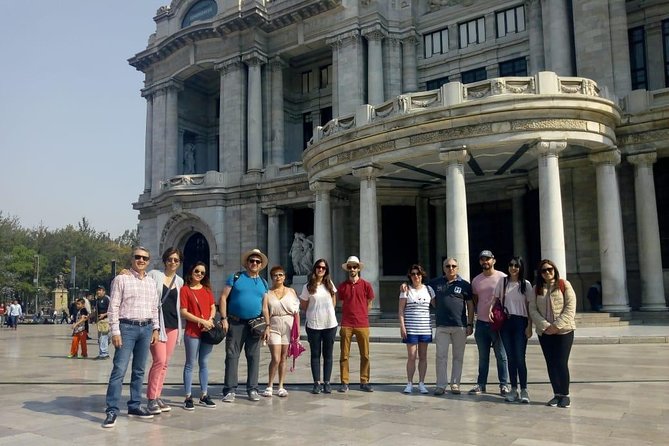
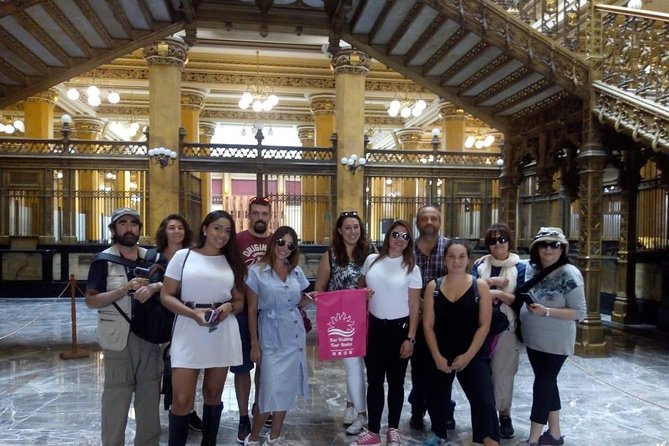
Next up is Palacio Postal, and it’s exactly the kind of place you’ll appreciate even if you’re not a “museum person.” The building is famous for its Italian marble and gold decorations, and it’s still active as a post office. That last part matters. You’re not just looking at history behind glass—you’re seeing a civic space still doing its job.
This stop is also around 15 minutes, with free admission noted for the visit window. In that short time, a good guide can explain what you’re seeing: the way Italianate design language landed in Mexico City, and how that connects to the broader story of modernization.
What you should watch for: the building is beautiful enough to make you slow down (in a good way). If you’re short on time in Mexico City, this stop is a strong use of those minutes because it’s both functional and spectacular.
Palacio de Mineria: Mining Lessons and a Meteor Moment
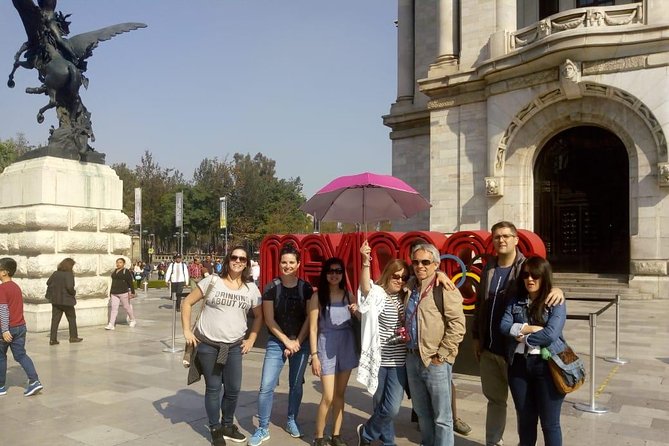
At Palacio de Mineria, the theme shifts from grand civic design to Mexico’s industrial and scientific side. You’ll learn about mining in Mexico, and you’ll even get to see a real meteor that crashed into Earth. It’s a surprisingly memorable combination: metallurgy and space material in one building.
Again, expect about 15 minutes. That’s intentional. The tour uses this stop to add “wow” and to broaden your idea of what counts as history. In a city where people often focus on ruins or cathedrals, this brings in the story of resources, technology, and discovery.
One consideration: because the meteor element is specific, it can feel extra worth it if you have any science curiosity. If you’re not interested in that angle, you might still enjoy the architecture and the mining context, but it won’t feel as personal.
You can also read our reviews of more private tours in Mexico City





Palacio de Bellas Artes: Your Orientation Stop for Art and Architecture
Then comes Palacio de Bellas Artes, where the tour starts with an introduction to the city and the day’s theme. From there, you’ll get history tied to the palace itself and to the country’s art scene. The palace is one of those locations where a guide can make the building feel less like a façade and more like a chapter in Mexico City’s identity.
This stop is listed for around 15 minutes. In a short tour, that’s a smart choice. Bellas Artes often acts like a mental reset: you’ve already seen civic power and industrial history, and now you’re being handed the cultural language to interpret the rest of Centro.
Tip: if you tend to skim text on your own, rely on the guide for this one. Bellas Artes is the kind of place where a couple of good explanations can dramatically change how you experience it.
Zócalo: The Center of the Center
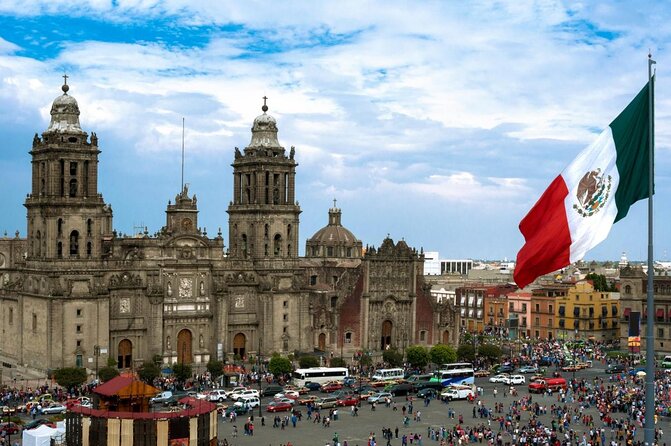
The heart of the walk is Zócalo, described as the biggest square in this hemisphere and the second biggest in the world. Whether or not you remember those exact ranking numbers, you’ll feel the truth of it fast. It’s huge, and it’s surrounded by power: civic space, religious importance, and city-level identity all at once.
You’ll spend about 20 minutes here. That time is useful because Zócalo isn’t just for standing and staring. A guide can place it in context—why a square like this matters to the city’s structure, how it relates to older layouts, and how modern life flows through it.
Practical heads-up: this is also the area where crowds can build. If you prefer calmer photo moments, aim to arrive with a plan: ask your guide where to stand and when, so you don’t waste time hunting for the perfect angle.
Museo del Templo Mayor: Real Aztec Ruins in the Middle of the City
After Zócalo, you’ll hit Museo del Templo Mayor, one of the most compelling stops on the route. This is where you see a real Aztec ruin right in the modern city. The guide will talk about ancient civilizations of Mexico, tying the archaeological setting back to the idea of Mexico City as layered ground.
This part runs about 20 minutes, with free admission noted for the visit. That short window can still be meaningful if your guide focuses on a few core ideas: what you’re seeing, why it’s important, and how it connects to the larger story of the city.
The benefit of placing Templo Mayor after Zócalo is simple: it helps you understand that Centro is not only about Spanish-era buildings and later monuments. The square’s presence and power were built on top of older meanings.
Mexico City Metropolitan Cathedral: The Most Important Church With Endless Stories
The tour closes with the Mexico City Metropolitan Cathedral, described as the country’s most important church, and the guide will share the stories tied to it. Expect about 20 minutes here, again marked as free admission.
This stop works best if you enjoy architecture that comes with a backstory. Cathedral spaces can feel overwhelming at first—high ceilings, shifting styles, and lots of details. With a guide, you’re less likely to feel like you’re staring at random stone and more likely to understand what each layer represents.
Practical note: cathedrals can be cooler and calmer than the street outside, which makes the ending feel like a natural wind-down.
How Much It Costs and Why This Can Be Solid Value
The price is $43.00 per person for a private tour lasting about 3 hours. At first glance, that can feel like a lot—until you compare what you’d pay for separate guided time or for multiple stops on your own.
Here’s why it can be good value:
- You’re paying for a professional guide to connect the sites into a single narrative.
- Most stops on the route are marked as free admission, which keeps your spending predictable.
- Because it’s private, your pace can adjust. If someone in your group has questions, the tour can usually flex.
What’s not included: transportation and entrances are listed as not included. That sounds contradictory to the free-admission notes for the stops, so I’d treat it as a “confirm day-of” situation. In practice, the itinerary is built around free entry for the marked locations, but you’ll still want to verify that nothing changes on the day you go.
Guides Matter: Efrain, Victor, Joss, Ismael, Joseline, and Erick
The tour’s quality rises or falls on the guide, and the names that show up in the guide record are a clue. I’ve seen a pattern of praise for guides such as:
- Efrain, credited with making the experience better
- Victor, praised for strong knowledge and warm teaching about Mexico City’s architecture and history
- Joss, described as passionate and engaging, mixing history and culture and even helping with photos
- Ismael, highlighted as excellent, courteous, and passionate
- Joseline/Joselyn, praised for insight and patience with questions
- Eric/Erick, recognized for strong English and for helping people get their bearings fast
The practical takeaway for you: if English clarity and room for questions matters, this tour style tends to work. It’s especially helpful as a first-orientation walk, because you’ll get city context and also likely leave with a shortlist of where to go next on your own.
Potential Downsides: When Things Don’t Go Smoothly
Let’s be honest: no tour operator is perfect. In this case, the biggest reported issue is that sometimes the tour can fail to start on time due to a guide no-show or a last-minute cancellation. There are also complaints tied to the guide’s English level, where the explanations weren’t as clear as expected.
This doesn’t mean you should avoid it. It means you should go in with good habits:
- Use the WhatsApp group messaging setup and confirm your meeting details.
- If you’re on a tight schedule, plan a backup activity nearby so one change doesn’t derail your whole day.
- If English is essential, message your questions in advance so you know communication will be smooth.
The tour has a strong overall rating, but the negative cases you see are the ones you want to protect against with preparation.
Who Should Book This Private Centro Tour
This tour is a strong match if:
- You want a structured introduction to Mexico City’s historic center.
- You like walking tours that explain what you’re seeing instead of just naming places.
- You’re traveling as a couple, small family, or friends and want a private experience rather than a large group scramble.
It may be less ideal if:
- You hate walking through crowded city blocks.
- You need a fully guaranteed start with zero risk of disruption, because occasional cancellations have appeared in the tour record.
- You dislike art or architecture storytelling and prefer only ruins or only food—this route balances both, but it’s not a single-theme tour.
Service animals are allowed, and the tour is described as near public transportation. That makes it easier to fit into a day plan, even if your hotel isn’t right next door to Centro.
Should You Book This Private Tour of Mexico City’s Historic Center?
If you’re choosing between wandering on your own and booking a guide for a first pass, I’d lean toward this. The stops are meaningfully grouped: skyline context at Torre Latino, civic beauty at Palacio Postal, industrial-science angle at Palacio de Mineria, art orientation at Bellas Artes, then the emotional core of Centro at Zócalo and Templo Mayor—ending with the cathedral.
Book it if you want to get your bearings fast and leave with a clearer mental map of Mexico City’s layers. Skip it (or adjust your expectations) if you’re extremely sensitive to last-minute changes or if your group wants transportation included as part of the price.
If you do book, my best advice is simple: send a message on WhatsApp ahead of time, wear comfortable shoes, and bring curiosity. This is the kind of tour where a good guide can turn “pretty buildings” into a real understanding of how Mexico City became what it is today.
FAQ
How long is the private tour?
It lasts about 3 hours.
Where does the tour meet?
The meeting point is Av. Juarez 1, Colonia Centro, Centro, Cuauhtémoc, 06050 Ciudad de México, CDMX, Mexico. The tour ends back at the meeting point.
Is hotel pickup available?
Yes. Pickup is offered to meet you in the city center, with the guide waiting at the lobby of your hotel.
What language is the tour offered in?
The tour is offered in English.
Is this a private tour?
Yes. It’s private, meaning only your group participates.
What’s included in the tour price?
Included items are a professional tour guide, 100% customisable experience, and WhatsApp support from booking.
What’s not included?
Transportation and entrances are listed as not included.
Are any admissions free at the stops?
The itinerary marks admission tickets as free for the listed stops.
Can I cancel for a full refund?
Yes, you can cancel up to 24 hours in advance for a full refund.
Are service animals allowed?
Yes, service animals are allowed.