REVIEW · MEXICO CITY
La Catrina & Muralism: Diego Rivera’s Legacy & Frida Kahlo
Book on Viator →Operated by Estación México · Bookable on Viator
Murals tell Mexico’s story fast. This tour connects Diego Rivera and Frida Kahlo to the big themes of Mexican muralism—plus you’ll see how Día de Muertos and La Catrina show up in the art. What I really like is that you’re not just looking at paintings; you get the why behind the images, with a guide who brings the context into focus as you move from site to site.
One heads-up: the experience is mostly a walking museum outing, and the timing can stretch in real life. You’ll want to plan for some standing time, and bring patience if you’re hoping for a perfectly tight 2.5-hour schedule.
In This Review
- Quick take: what makes this mural tour worth it
- Where Mexican muralism comes alive, one site at a time
- Stop 1: Antiguo Colegio de San Ildefonso and the Rivera–Kahlo origin story
- Stop 2: Museo Vivo del Muralismo and the feeling of walking through mural ideas
- Stop 3: Museo Mural Diego Rivera and La Catrina’s role in Día de Muertos
- Stop 4: Palacio de Bellas Artes and Rivera’s controversial US mural, preserved
- Price and logistics: what $66.14 really buys you
- Who should book this Rivera, Kahlo, and La Catrina mural tour
- Should you book La Catrina & Muralism?
- FAQ
- How long is the tour?
- What is the price and what’s included?
- Where does the tour start and end?
- Is the tour in English?
- Are food and drinks included?
- Is there free cancellation?
Quick take: what makes this mural tour worth it
- Small group size (max 12) keeps the pace human and makes questions easier
- Three museum stops plus Bellas Artes gives you both street-level meaning and major institutional scale
- La Catrina + Día de Muertos focus explains why these symbols matter in Rivera’s world
- Tickets included means less hassle and more time spent actually looking
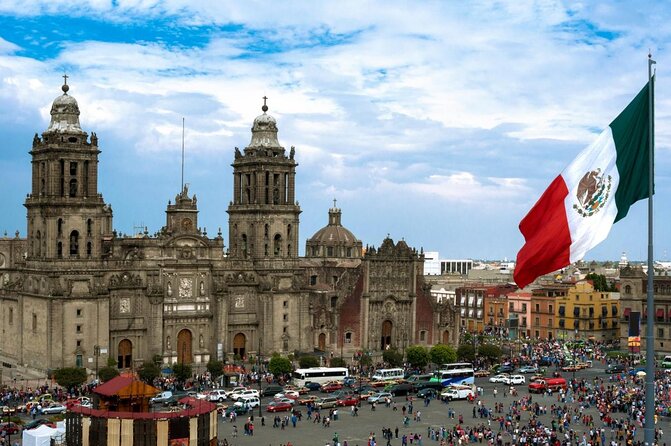
- Central meeting point in Centro Histórico makes the whole route feel straightforward
- English language format helps you follow the stories without translation gaps
Where Mexican muralism comes alive, one site at a time
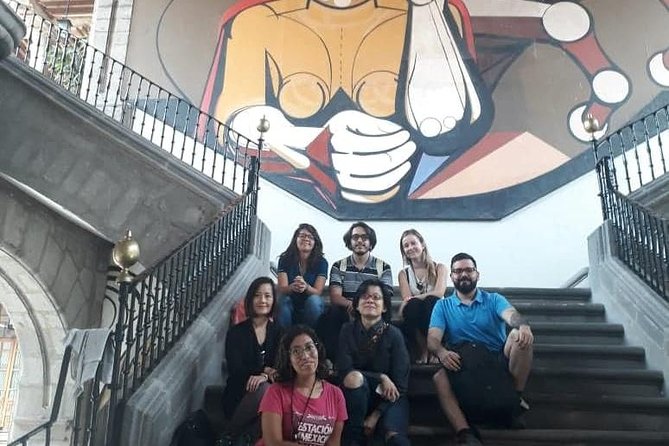
Mexico City can feel like a mural museum you didn’t buy a ticket for. This tour does something smarter: it builds an art-history story across four real locations tied to the Rivera legacy. You start near Centro Histórico and end at Palacio de Bellas Artes, so you get both an intimate museum mood and the drama of Mexico’s most famous cultural building.
You’ll also notice the tour’s structure: it isn’t just “see mural, take photo, move on.” Each stop is timed enough to take things in, but short enough that you stay moving—your guide keeps the thread between Diego Rivera’s work and the bigger movement of Mexican muralism, including the social purpose behind the paintings.
And because the tour includes museum admission and public transportation, you can focus on the art rather than budgeting your way through it. At $66.14 per person, the best value is that it’s bundled: entrance fees plus guided storytelling plus transport support, instead of piecemealing your day.
You can also read our reviews of more tours and experiences in Mexico City.


Stop 1: Antiguo Colegio de San Ildefonso and the Rivera–Kahlo origin story
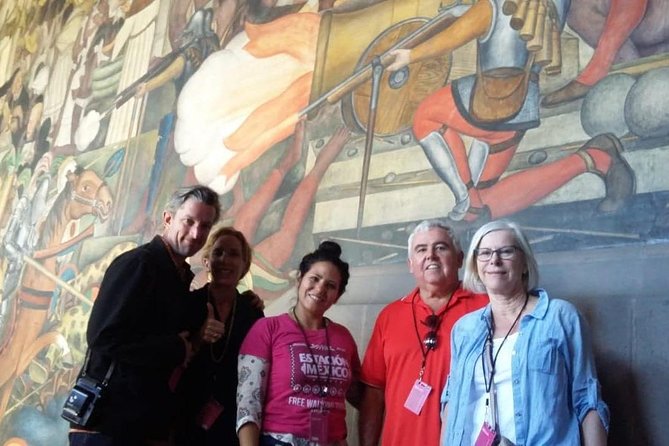
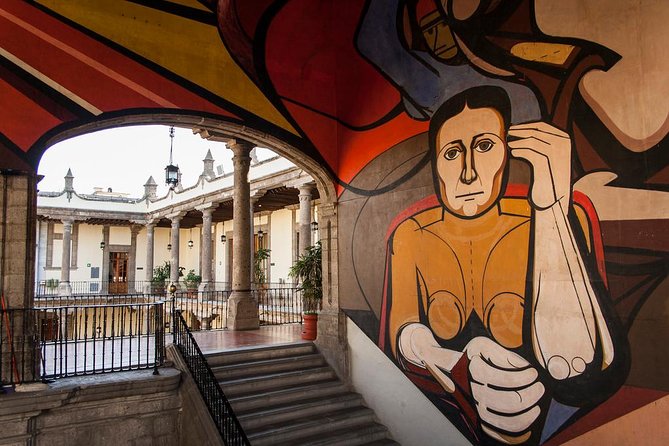
You begin at the Antiguo Colegio de San Ildefonso on Justo Sierra 16. This is a strong start because it anchors the whole experience in a place loaded with meaning. Here, you get a short introduction to Diego Rivera’s life and work, and you learn that this venue witnessed the birth of the love between Rivera and Frida Kahlo—two names that still shape how people read Mexican art today.
Why this matters for you: starting with a location tied to both artists gives you a shortcut to understanding the murals’ emotional stakes. Rivera isn’t presented as a distant figure; the guide frames him as a person whose work grew out of relationships, political climate, and Mexico’s larger cultural story. If you’ve ever felt that mural art can be too symbolic to decode, this first stop is the part that helps you start decoding fast.
Practical detail: this stop is about 35 minutes, and it includes admission ticket. That means you’re not paying extra to get oriented, and you’re able to begin with context rather than scrambling for entry once you arrive.
Stop 2: Museo Vivo del Muralismo and the feeling of walking through mural ideas
Next comes Museo Vivo del Muralismo, a site built for seeing murals as space, not just as flat artwork. You spend about 35 minutes here, and the layout is the point: two courtyards and three levels. Instead of a single room, the building’s structure helps you understand how muralism works in layers—history stacked over time, messages passing between walls, and symbolism repeating like a visual language.
You’ll likely feel the difference between looking at murals on a checklist versus experiencing how the setting amplifies the art. Courtyards are a big deal for mural art because open-air light changes how colors and textures land. Multiple levels also encourage a different kind of looking: you stop, angle your body, then realize the mural narrative might be meant to be seen from more than one viewpoint.
This is also where you’ll appreciate the tour’s pacing. A half-hour at each stop keeps you from getting museum fatigue, but it’s long enough for your guide to connect the scenes you see to the themes you heard at the first location. The result is you start building a mental map: not only where Rivera’s art appears, but what it was trying to say.
Stop 3: Museo Mural Diego Rivera and La Catrina’s role in Día de Muertos
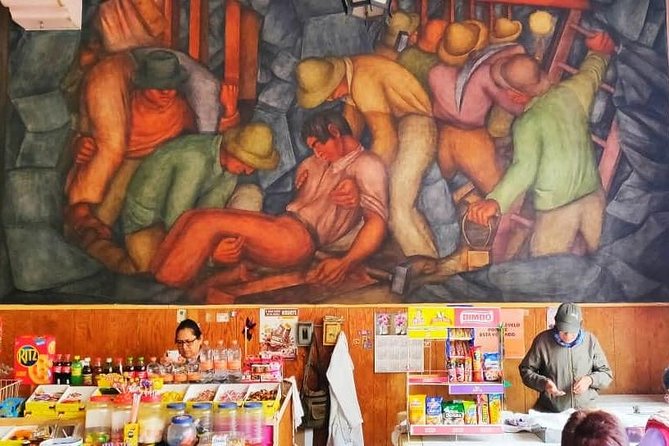
Then you move into Museo Mural Diego Rivera for about 30 minutes, focused on one of the most famous and representative works of Mexican muralism. This is where the tour’s title really delivers: the mural weaves together the essence of Día de Muertos and the figure of La Catrina.
If you only know La Catrina as a face on a souvenir, this stop is a reset. The guide’s job here is to help you read La Catrina as more than decoration. In muralism, symbolism carries weight—especially when artists are working in a historical moment when public art was meant to reach people, not just impress them.
Why I think this stop is a highlight for you: Dia de Muertos isn’t just a spooky festival vibe. It’s a cultural framework for memory and identity. When Rivera’s murals reference it, the holiday becomes part of a bigger conversation about society—who gets remembered, what gets criticized, and how art can make uncomfortable truths visible without losing visual power.
Admission ticket included here too, so the stop feels complete. You’re not leaving early because you’re waiting for ticket lines or scrambling to find the right room.
Stop 4: Palacio de Bellas Artes and Rivera’s controversial US mural, preserved
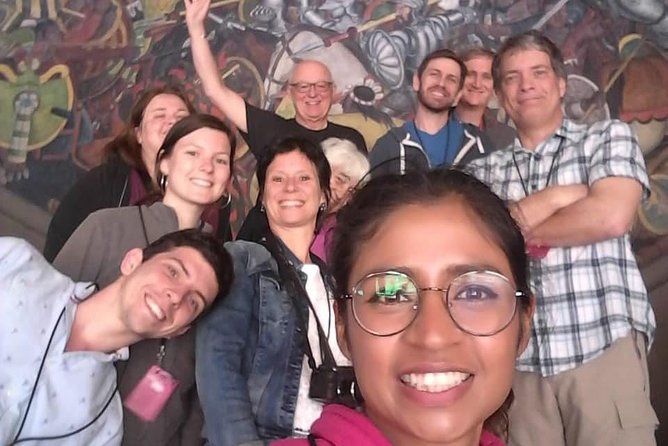
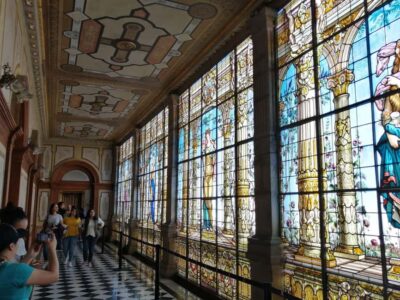
The tour ends at Palacio de Bellas Artes, about 30 minutes, in Av. Juárez S/N. This is a perfect finish because it shifts the story from the murals’ everyday public purpose into the scale of a national cultural landmark.
Palacio de Bellas Artes is home to Diego Rivera’s most controversial mural created in the United States, and the work is preserved for you to see. Even if you don’t know the whole story of why it was controversial, the placement at Bellas Artes tells you something important: institutions can’t erase a mural’s impact just because it sparked conflict.
For you, the value is in perspective. Rivera’s muralism is often discussed as revolutionary, political, and built for public audiences—but ending at a major venue makes you ask the question: what happens when revolutionary art is kept inside a monument?
Your guide should help you land that connection by tying the mural’s symbolism back to what you’ve already seen earlier—especially the way figures, festivals, and social commentary get packed into the same painted language. Once you finish, you’re right by a top area for post-tour wandering and snacks.

Price and logistics: what $66.14 really buys you
Let’s talk value in plain terms. At $66.14 per person, you’re paying for:
- a guided English experience
- admission tickets for the museum stops
- public transportation support
- a tour that moves through four meaningful locations
- a maximum group size of 12
That’s a lot bundled for a half-day outing. If you tried to do this solo, you’d likely pay for museum entries anyway, then add the cost of transit and the time it takes to figure out context on your own. Here, your guide acts like the missing map.
Still, consider two logistics realities:
1) The tour is active. Even with a manageable distance, expect you’ll be on your feet most of the time. One of the most repeated notes is to bring water and snacks, since there may not be a formal break built in.
2) The listed duration is about 2 hours 30 minutes, but schedules can run longer. That doesn’t mean the tour is poorly organized—it often means you’re spending extra time on the art and questions, which is usually a good sign. Just don’t plan a super tight dinner right after without buffer.
My practical packing advice: bring water, wear comfortable shoes, and if you’re easily hungry, bring a small snack. Even if the day stays close to the estimate, you’ll feel better.
Who should book this Rivera, Kahlo, and La Catrina mural tour
This is a smart choice if you want Mexican muralism explained through a clear, narrative route. It’s especially good for you if:
- you like art with social meaning, not just pretty decoration
- you want the Día de Muertos and La Catrina symbolism connected to Rivera’s themes
- you prefer guided context at museums, where reading everything solo can feel slow
- you’re in Mexico City for a short stay and want a concentrated art-history experience
It may not be the best fit if:
- you want a sit-down, low-walking museum day
- you need guaranteed snack or restroom breaks at fixed times (the schedule doesn’t promise them)
- you get stressed when a tour runs past an exact time window
On the plus side, most travelers can participate, and the small maximum group size helps keep the experience from turning into a noisy rush.
Should you book La Catrina & Muralism?
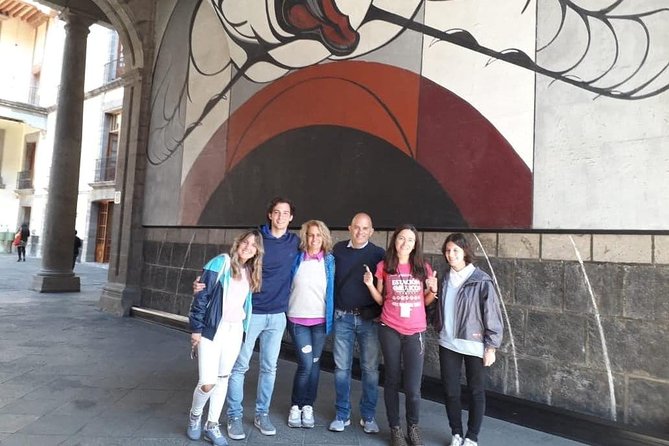
If you’re trying to understand why Diego Rivera matters—and how Frida Kahlo’s story connects to the Rivera legacy—this tour is an efficient, story-led way to see major muralism touchpoints in a single morning-to-late-morning loop. The price feels reasonable because museum tickets and admission are included, and the guide’s job is clearly to help you see the artwork as meaning, not just images.
Book it if you want context, symbolism, and a route that ends in a place you’ll want to stick around afterward. Skip it only if you’re not comfortable with standing/walking for an active museum outing or you can’t handle the possibility of extra time spent looking and asking questions.
FAQ
How long is the tour?
It’s listed at about 2 hours 30 minutes.
What is the price and what’s included?
The price is $66.14 per person. Included features are the museum tickets, public transportation, and the English-language format.
Where does the tour start and end?
It starts at Former College of San Ildefonso, Justo Sierra 16, Centro Histórico. It ends near Palacio de Bellas Artes at Av. Juárez S/N in Centro Histórico.
Is the tour in English?
Yes. It’s offered in English.
Are food and drinks included?
No. Food and drinks are not included.
Is there free cancellation?
Yes. You can cancel for a full refund up to 24 hours before the experience start time.