REVIEW · MEXICO CITY
Night Tour of Mexico City Panoramic Ride on a Double-Decker Bus
Book on Viator →Operated by TURIBUS · Bookable on Viator
Streetlights hit different in Mexico City. This night bus tour strings together the city’s key landmarks fast, with an audio guide and a prime second-floor view.
What I like most is the quick panorama effect: you get big-picture orientation in one go. I also love how the audio guide helps you connect what you’re seeing—Zócalo, Reforma, and the major monuments—without needing to plan a route.
The main thing to weigh is audio and language reliability. A few nights have seen Spanish overpowering other language audio, and some headphone issues pop up, plus traffic can stretch delays and make the ride feel shorter than expected. Still, if you plan for a simple, scenic loop, it’s a strong first-night option.
In This Review
- Key takeaways before you ride
- Why a Turibus night loop is smart for your first night
- Getting on the bus: meeting point and what timing feels like
- Zócalo after dark: the Historic Center’s loudest “start here”
- Paseo de la Reforma lights: the avenue with politics and pageantry
- Three towers and a mall stop: seeing the modern CDMX layer
- Independence Monument: the mausoleum that glows
- Benito Juárez monument: neoclassic columns at night
- Audio in English, Spanish, and French: how to make it work
- Photo opportunities: second-floor perks and the slow-roll advantage
- Comfort and weather: dress for open air, even in the city
- Price and value: what $10 really buys you here
- Who should book this night bus tour?
- Should you book this Mexico City night bus tour?
- FAQ
- How long is the night tour?
- What time does the tour start?
- Where is the meeting point?
- Is this a hop-on hop-off tour?
- Is there an audio guide, and what languages are offered?
- Are food and drinks included?
- Do they provide round-trip transportation to hotels?
- What is the cancellation policy?
Key takeaways before you ride
- Second-floor views for photos: From up high, the light-and-monument combo is easier to frame and feels worth the ticket.
- Audio guide with earphones: English, Spanish, and French narration are available through the system, not just over the bus speakers.
- Historic Center to Reforma in one loop: Zócalo to Paseo de la Reforma keeps your first night efficient.
- Modern skyline stop included: You’ll see a three-tower complex with shopping and movie theaters.
- Two major monuments with night lighting: Independence history and Benito Juárez’s neoclassic columns look especially good after dark.
- Not hop-on, hop-off: You stay on the bus for the full experience, which helps time budget—but limits flexibility.
Why a Turibus night loop is smart for your first night
Mexico City is huge, and your feet will pay for it. This tour helps you buy time back by covering major sights in one evening window, so you can spend the next day digging deeper where you actually want to go.
At about 45 minutes, it’s short enough to avoid the “we’re stuck on a bus forever” problem. You get a nighttime feel too: traffic sounds, lighted facades, and people out and about along the major corridors.
If you’re the type of traveler who wants a guided orientation more than a deep, slow walking history lesson, this fits. It’s also budget-friendly at $10 per person, so you can treat it like a low-risk city intro.
You can also read our reviews of more city tours in Mexico City


Getting on the bus: meeting point and what timing feels like
This tour starts at 7:30 pm at Turibus Tours, C. de Monte de Piedad, Centro Histórico de la Cdad. de México, Centro, 06000 CDMX. You’ll end back at the same meeting point, and there’s no hotel pickup included.
The group size is kept fairly small, with a maximum of 30 travelers. That matters on a double-decker bus: less crowding usually means you can find a seat and settle in without a long scramble.
One practical note: this ride is in the evening and it can be chilly since you’re up top with more exposure. I’d plan for cool air and consider a light layer even if daytime felt warm. Ponchos can be worth it if rain hits, because the bus still runs.
Zócalo after dark: the Historic Center’s loudest “start here”
The loop begins where Mexico City’s center energy lives: Plaza de la Constitución, the Zócalo. This is the main square, surrounded by major landmarks like the Metropolitan Cathedral and Palacio Nacional, plus older government buildings ringing the plaza.
In the middle, you’ll see a huge Mexican flag, which gives the whole scene a strong patriotic focal point. At night, that symbol and the surrounding architecture can look surprisingly cinematic from street level and from the bus window.
What to watch for: look past the headline monument views and notice how the plaza acts like a hub. Even from the bus, it’s easy to see why this is where major civic moments happen.
Possible consideration: the Historic Center can be crowded depending on the night. If there are events or street activity, traffic can slow everything down, and the bus may spend more time crawling than rolling.
Paseo de la Reforma lights: the avenue with politics and pageantry
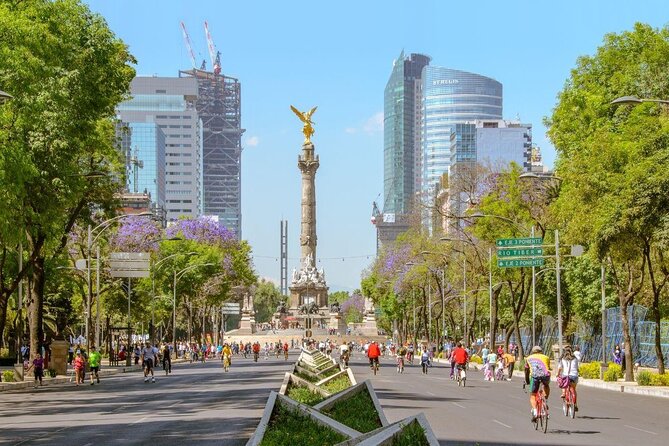
Next you roll onto Paseo de la Reforma, Mexico City’s biggest, most emblematic avenue. This isn’t just a pretty boulevard—it’s a stage for historic moments: concerts, protests, marches, and major civic life.
At night, Reforma shifts into a different mood. The street layout, long sightlines, and illuminated buildings make it feel like the city is moving even when you’re sitting still.
This stop is valuable even if you’ve never heard a Reforma fact in your life. You start to understand how the city is structured: the Historic Center energy funnels outward into this grand, modern spine.
Three towers and a mall stop: seeing the modern CDMX layer
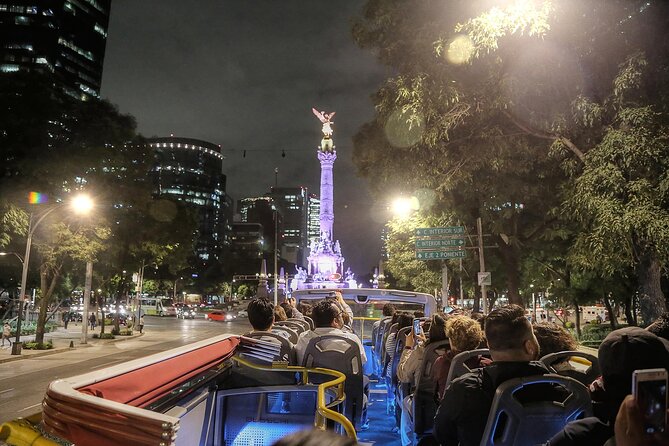
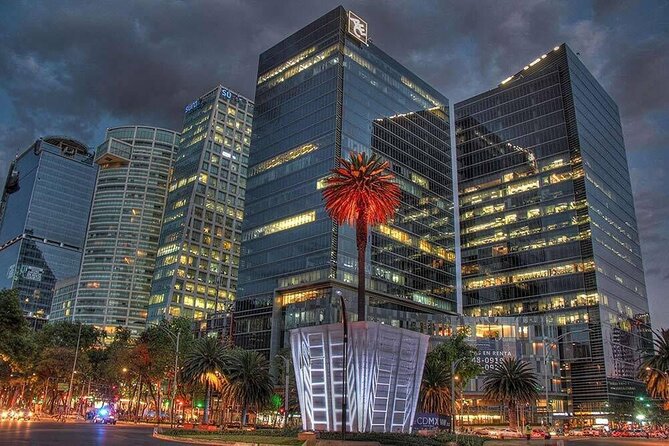
Midway through the loop, you’ll pass a modern complex of three towers. This cluster changed the skyline view and is known for its modern architecture.
The practical reason this stop matters: it shows you the contrast between old Mexico City gravity (Zócalo) and newer urban ambition (skyline towers). You also get a clue about day-to-night life here, since the complex includes a shopping center and movie theaters.
From a night bus, the towers are less about reading details and more about grabbing the silhouette and layout. If you like quick mental maps, this is a helpful marker for later planning.
You can also read our reviews of more evening experiences in Mexico City


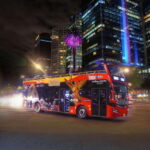


Independence Monument: the mausoleum that glows
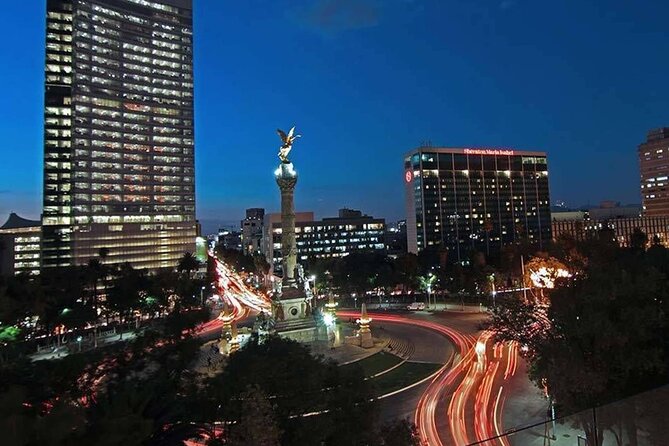
One of the most emblematic symbols on the route is the Monument to Independence, inaugurated in 1910 for the 100th anniversary of Mexico’s Independence. It functions as a mausoleum for the heroes who lost their lives during the war.
At night, the lighting helps you see why this is a cultural icon. Even if the monument details blur through the bus windows, it still lands as a major “this matters” point in the city’s story.
This is one of those places where audio helps a lot. If you can hear the narration clearly, it turns the monument from a pretty stop into a meaningful one.
Benito Juárez monument: neoclassic columns at night
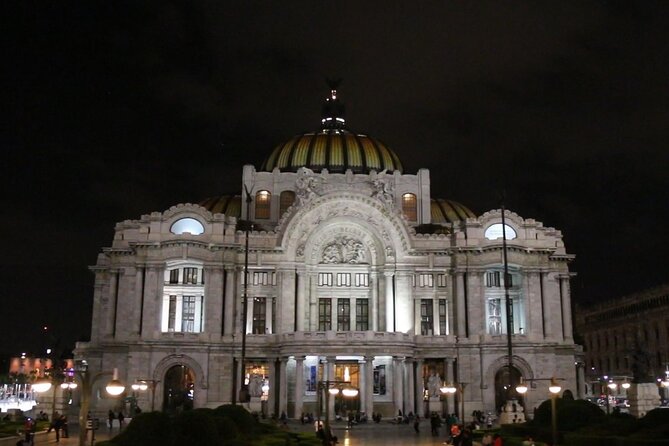
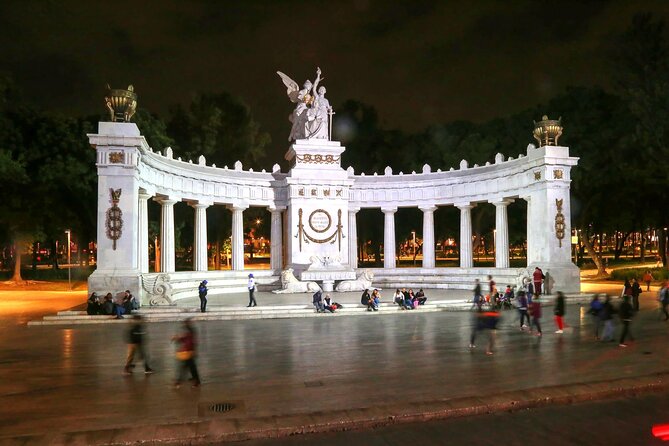
Another night-friendly highlight is the monument honoring Benito Juárez, a former Mexican president. It’s described as neoclassic, built with 12 Doric columns made of marble.
The columns are the takeaway. They’re visually strong in daylight, but the night lighting is specifically mentioned as making it look stunning.
If you care about photo ops, this is a good “slow moment” candidate. The bus usually moves at a pace that gives you a chance to frame the architecture rather than shooting while fully turning a corner.
Audio in English, Spanish, and French: how to make it work
The tour includes an audio guide with languages listed as English, Spanish, and French, plus earphones. That’s the right setup on paper. The reality you should plan for is that audio quality can vary by night and by seat.
Here’s how to protect your experience:
- If you’re counting on English, confirm you’re plugged into the correct system before the main narration starts.
- Listen for whether the bus speakers are overpowering everything. If that happens, it can cancel out what you’re trying to hear through earphones.
- If an outlet or headphone connection fails, ask staff quickly. Some past issues involved non-working outlets and low sound even after adjusting volume controls.
I also suggest picking a seat where the earphone connection point seems accessible. You want the ability to troubleshoot without turning it into a whole production.
A final point: some guests reported that when celebrations and traffic chaos hit, the ride pacing and audio timing felt off. That doesn’t always mean the audio system is broken—it can also be about how the route plays out that evening.
Photo opportunities: second-floor perks and the slow-roll advantage
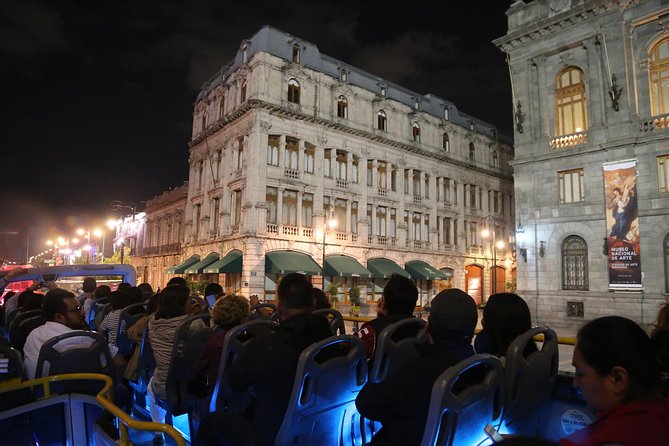
Multiple people highlighted the same practical benefit: you can get better photos from the second floor because the bus moves slowly through parts of the route. That slow pace gives you a chance to aim rather than click blindly.
Night photography on a bus is still tricky—you’re photographing through glass, with motion and street glare. But this tour’s timing often gives you enough window moments for shots that actually show the monument shape and lighting.
What I’d do: keep your phone/camera settings simple, aim for the brightest landmarks (Zócalo flag area, Reforma street stretches, and the monument silhouettes), and don’t chase every single passing building. The best results come from waiting for the bus to level out.
Comfort and weather: dress for open air, even in the city
This ride can feel cold. Even when you’re in the city at night, open-air exposure and wind can make a big difference. One suggestion that came through clearly is bringing a warm layer or even a poncho if rain shows up.
Also expect normal city noise. You’re in the flow of cars and people, so this is not a quiet, museum-style experience. If you like a sense of place, that’s part of the fun. If you hate noise, bring earphones even if your language setting is perfect.
Price and value: what $10 really buys you here
At $10 per person, this tour is priced like a practical shortcut. You’re not paying for a private guide or stops where you get off and explore for an hour. You’re paying to get views, orientation, and basic narration in a short block of time.
That’s where you should be realistic. Some experiences have run into delays from traffic, and a few people reported durations shorter than advertised—like 30–35 minutes feeling like the “real” ride time even though the tour is listed around 45 minutes.
Still, the cost-to-sights ratio can be excellent if you treat it as a fast orientation tour. If your expectation is a fully flexible sightseeing tour, you may end up disappointed—because this is explicitly not hop-on, hop-off.
Who should book this night bus tour?
This is a good fit if:
- You want a first-night orientation across the Historic Center and Reforma.
- You like a light structure: sit, look, listen, and get the city’s layout in your head.
- You’re aiming for photos and city lights without committing to a long walking day.
It may not fit as well if:
- You need reliable English audio above all else and you’re highly sensitive to audio clarity.
- You’re traveling during nights with major street activity, where traffic can slow the bus down significantly.
- You want to get off at stops. This tour returns to the meeting point and does not include hop-on hop-off freedom.
Should you book this Mexico City night bus tour?
I’d book it if you want a budget-friendly nighttime overview and you’re okay with a “sit and see” format. The combination of major landmarks, a short time commitment, and the chance to capture city-light photos from the second deck makes it a smart move, especially on your first evening.
I’d skip or downgrade expectations if your plan depends on perfectly working English audio at all times. The tour includes language options and earphones, but the experience can be inconsistent in a few real-world situations—especially when the bus speakers get too loud or headphone outlets don’t perform as expected.
If you go with a flexible mindset—dress warm, bring your patience for traffic, and plan to enjoy the views even if audio isn’t perfect—you’ll likely feel like the $10 was a win.
FAQ
How long is the night tour?
It runs for about 45 minutes.
What time does the tour start?
The start time is 7:30 pm.
Where is the meeting point?
You meet at Turibus Tours, C. de Monte de Piedad, Centro Histórico de la Cdad. de México, Centro, 06000 CDMX.
Is this a hop-on hop-off tour?
No. It’s not hop-on hop-off, and the activity ends back at the meeting point.
Is there an audio guide, and what languages are offered?
Yes. There is an audio guide available in English, Spanish, and French, and earphones are included.
Are food and drinks included?
No. Food and drinks are not included.
Do they provide round-trip transportation to hotels?
No. Round trip transportation to and from your hotel is not included.
What is the cancellation policy?
You can cancel for free up to 24 hours in advance for a full refund. Canceling less than 24 hours before start time is not refunded.