One smart guide can turn a big museum into a clear story. This private tour at the Museo Nacional de Antropología in Mexico City walks you through Mesoamerica with a real archaeologist mindset, not just a list of objects.
I especially liked two things: the way Pakalito (David Huesca) explains context, and the use of digital support material (visual aids) to make symbols and timelines easier to grasp. You also get your entrance taken care of, so you can focus on learning instead of logistics.
One possible drawback: the museum is enormous, and at around 3 hours, you’ll see major highlights rather than every gallery or every single object. If you want a slow, do-it-yourself crawl, this style may feel a bit structured.
In This Review
- Key things to know before you go
- A Private Archaeology Lesson at Mexico City’s National Anthropology Museum
- Inside the Main Halls: How You Get a Coherent Route Through the Museum
- Timing matters
- Reading Artifacts Like an Archaeologist: Religion, Politics, Economy, and Architecture
- Visual aids make the ideas stick
- Mesoamerica Beyond Maya and Aztec Names You Already Know
- Why the museum matters to an archaeologist
- Planning Your 3 Hours: What Fits Best and What to Expect
- Who this tour is for
- Price and value
- A practical tip
- Should You Book This Private Archaeologist Tour?
- My quick decision rule
- FAQ
- What is the duration of the tour?
- Where does the tour start and end?
- What is included in the price?
- What is not included?
- Is the tour offered in English?
- Can I get a full refund if I cancel?
Key things to know before you go
- A true archaeologist guide (Pakalito / David Huesca) who teaches like a storyteller, not a lecturer
- Clear focus on Mesoamerica beyond the headline names, so you don’t leave with a one-civilization view
- Digital support materials help you understand symbolism, not just memorizing facts
- A route through the main exhibition halls designed to reduce overwhelm in a huge museum
- Interactive pacing for different ages and interests, from history buffs to kids
A Private Archaeology Lesson at Mexico City’s National Anthropology Museum
The Museo Nacional de Antropología can feel like information overload. There’s so much to see, and the museum is famous for how much it holds—so many cultures, so many timelines, and so many objects that blur together if you don’t have a guide.
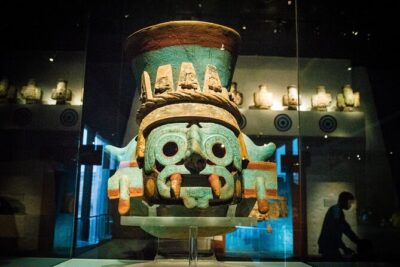
That’s why a private archaeologist tour works so well. You get the museum’s big picture first, then the individual masterpieces start making sense. You’re not just looking at stone, ceramics, costumes, and carved figures. You’re learning what they might have meant—how people used them, what values they reflected, and how styles changed over time across Mesoamerica.
This tour is led by Pakalito (David Huesca), an archaeologist-style guide who frames the museum through the eyes of a “young archaeologist.” The approach matters. You don’t just get facts. You get the reasoning behind them—religion, politics, economy, architecture, traditions—connected to what you’re standing in front of.
And the format is comfortable for real travel days. It’s private, it runs about 3 hours, and it’s offered in English. You also start and end at the same meeting point, which helps if you’re pairing the museum with other Mexico City plans.
You can also read our reviews of more private tours in Mexico City



Inside the Main Halls: How You Get a Coherent Route Through the Museum
A lot of people visit the museum and end up doing a highlight sprint. That’s fun for photos, but it rarely produces understanding. The trick here is that your guide doesn’t treat the museum like a random walk. He takes you through the main exhibition halls with a route designed to build connections.
You’ll spend time where the museum’s collection naturally gives you the “master story” of Mesoamerica’s cultures. Your guide introduces each culture’s key themes, then steers your eyes to what to notice: the design choices, the recurring motifs, and the context that explains why certain objects belong together.
That route is especially valuable because many visitors find the museum overwhelming. Even if you’re motivated, there’s no way to read and compare everything at museum speed. With a guide, you don’t try to absorb it all. You learn how to look—so you can keep learning during your visit instead of trying to cram everything into a single pass.
The tour includes the entrance fee, so once you’re inside, you can stay in “museum mode” without stopping to handle tickets. And because the guide uses digital support material during the walk, you’re less dependent on labels alone. If you’ve ever stood in front of an artifact and thought, I know I’m supposed to understand this, the visual explanations and prepared materials make a real difference.
Timing matters
The museum is open Tuesday through Saturday, 9:00 AM to 3:00 PM. Plan your day around those hours so you don’t feel rushed. Since this is about 3 hours, I recommend treating it like a main event, not a quick stop between meals. You’ll get more out of it that way.
Reading Artifacts Like an Archaeologist: Religion, Politics, Economy, and Architecture
Here’s what makes this tour feel different from a normal gallery walk: the guide connects objects to systems. In other words, you’re not only learning what people made. You’re learning what shaped why they made it.
Expect discussion that touches the major pillars of society:
- Religion and belief, and how images and ritual objects might have functioned
- Politics, including how power could show up in art and public display
- Economy, and how materials and production reflect daily reality
- Architecture, where built space becomes a message
- Traditions, meaning the everyday practices that keep culture going
The result is that the museum becomes a set of cause-and-effect stories. You begin to recognize patterns rather than collecting isolated impressions.
One of the most praised parts is how the guide explains symbolism clearly. That’s not a small promise. Museum labels can be confusing or too brief. When symbolism is explained in plain language—what to look for and why—it gives you a mental map. Then, when you see related objects later in the museum, your brain actually connects the dots.
The tour also emphasizes how different cultures evolved across time. That matters because it changes the way you interpret art styles. Instead of treating each hall as a separate world, you start understanding transitions—how traditions persist, how they change, and how cultural influence can travel.
Visual aids make the ideas stick
Multiple accounts highlight the guide’s use of images and activities on an iPad during the tour. Even if you’re not a “museum person,” those visuals help you move from abstract concepts to what’s right in front of you. You’re basically getting a guided translation of the museum’s visual language.
You can also read our reviews of more museum experiences in Mexico City



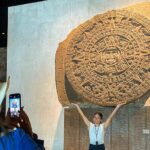


Mesoamerica Beyond Maya and Aztec Names You Already Know
Let’s be honest: a lot of first-time visitors arrive thinking Mesoamerica equals Maya and Aztecs. Those civilizations are essential, but they’re not the whole picture. This tour directly targets that gap.
The guide’s goal is to show you that pre-Hispanic history in Mexico goes beyond the biggest name brands. You’ll focus on the range of cultures and regions represented in the collection—and you’ll learn how each one contributed to what came later. By the end, you should feel you understand the variety, not just the highlights.
That “beyond the headlines” approach is a big value-add. It turns the museum from a place you admire into a place you can place in context. You’ll be better prepared to connect what you see with other sites across Mexico City and beyond.
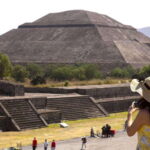
If you’re visiting other archaeological stops soon after—especially places like Teotihuacán—you’ll likely notice recurring themes and design elements. The museum tour gives you a set of lenses for interpreting what you see next. In practice, that can make your overall itinerary feel more coherent.
Why the museum matters to an archaeologist
Another subtle but important point: the guide isn’t treating this as a job he performs and forgets. The tour frames the museum as something he knows deeply, which shows in how confidently he talks about what you’re seeing. You can feel the difference between someone who recites and someone who understands.
That also explains the “fun and professionalism” vibe people mention. It’s not stiff. The pacing stays human. The content stays rigorous.
Planning Your 3 Hours: What Fits Best and What to Expect
This is a private tour, so it’s only your group. That matters because the guide can adapt the pace and focus for your interests and your comfort level. That flexibility is especially useful for families and mixed-age groups.
You should also know this tour has a moderate physical fitness level requirement. The museum involves walking and standing. If you’re dealing with mobility limits, it’s worth planning breaks and moving at a comfortable pace during the tour.
Who this tour is for
You’ll likely get the most from it if you:
- Want to understand more than what labels can provide
- Like history that connects politics, belief, and everyday life
- Are visiting for the first time and feel the museum is too big to self-navigate
- Want your kids (or your traveling group) to stay engaged without “dumbing it down”
If you’re the kind of person who loves reading slowly and making long circles through every room, you might still enjoy the tour—but you’ll probably feel a tension between guided structure and free wandering.
Price and value
At $98 per person for about 3 hours, the price makes sense because you’re not just buying a ticket. You’re buying the archaeologist guide’s time, the route through a massive museum, and the entrance fee plus digital support material. If you were planning to go on your own, you’d still face the same challenge: how to connect what you see.
This kind of guided focus can be especially good value if you’re trying to make museum time count during a short Mexico City stay.
A practical tip
If there’s a specific area or culture you care about most, it can help to tell the guide ahead of time. The guide is known for using prepared visuals and adjusting the experience, so sharing your interests can steer the attention during the walk.
Should You Book This Private Archaeologist Tour?
I’d book it if your goal is understanding, not just checking off a famous museum. The biggest strength is how the guide turns a huge collection into a structured, readable story of Mesoamerica—while still pointing out what matters visually in the galleries.
You should probably skip it—or at least consider a different style—if you want a fully self-paced museum visit with maximum freedom to roam. At 3 hours, you’ll see important highlights, but you won’t finish the museum like a marathon.
My quick decision rule
Book this tour if you’re asking yourself: How do I make sense of all this quickly?
Pass or adjust plans if your priority is: I want to move room-by-room with no structure.
If your timing fits (Tuesday–Saturday, 9:00 AM–3:00 PM) and you want an English-speaking archaeologist guide, this is one of the most efficient ways to get real meaning from the Museo Nacional de Antropología.
FAQ
What is the duration of the tour?
The tour runs for about 3 hours.
Where does the tour start and end?
It starts at Museo Nacional de Antropología on Av. P.º de la Reforma s/n, Polanco, Bosque de Chapultepec I Secc, Miguel Hidalgo, 11560 Ciudad de México, CDMX, Mexico, and ends back at the meeting point.
What is included in the price?
The tour includes a professional archaeologist guide, a private tour, the entrance fee, and digital support materials.
What is not included?
Foods and drinks are not included.
Is the tour offered in English?
Yes, the tour is offered in English.
Can I get a full refund if I cancel?
Yes. You can cancel up to 24 hours in advance for a full refund. Cancellation within 24 hours of the experience start time is not refundable.