REVIEW · MEXICO CITY
Must-see Buildings & Palaces of Mexico City
Book on Viator →Operated by Amigo Tours · Bookable on Viator
Mexico City’s center is packed with eye candy, and this tour hits the best parts fast. What I like most is the chance to focus on Palacio de Bellas Artes murals (including Diego Rivera) and to admire the Palacio Postal interiors without getting lost in the details on your own. It’s also a practical way to see several major buildings in one morning without juggling multiple ticket lines.
There is one drawback to plan around: the pace can feel marathon-fast, and if you’re hoping for extra time inside every room, you might feel a bit rushed—especially at Bellas Artes.
In This Review
- Key points to know before you go
- Four palaces, one walkable feel in Mexico City
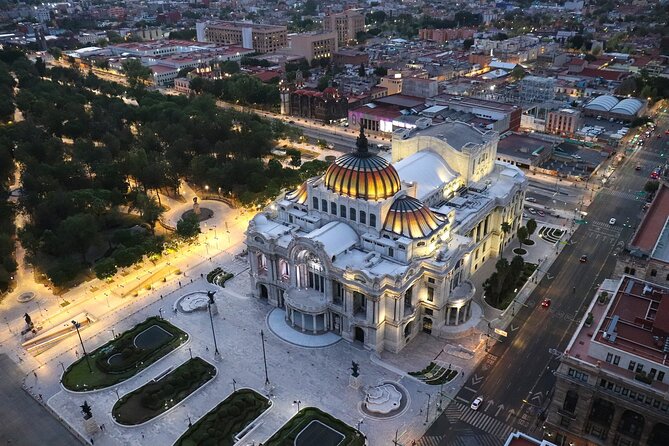
- Starting at Palacio de Bellas Artes: bronze, marble, and mural storytelling
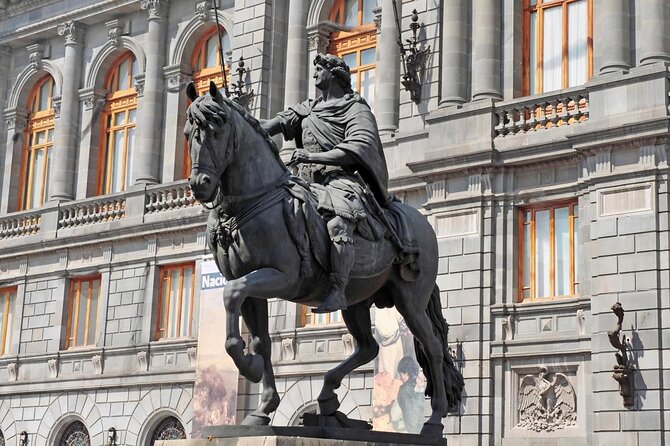
- Museo Nacional de Artes (MUNAL): a former Spanish palace with 500 years of art
- Banco de México museum: where the peso story starts
- Palacio Postal (Correo Mayor): gold interiors and design that feels regal
- The Alameda Central pass-by: end with a classic stroll
- Price and value: why $49 can work (or not)
- Who will love this tour most
- Guides make the difference: what you can learn from past groups
- Timing and logistics: the parts you should not ignore
- Should you book Must-see Buildings & Palaces of Mexico City?
- FAQ
- How long is the tour?
- What does it cost?
- Is admission included?
- What language is the tour in?
- What is the group size?
- Where does the tour start?
- Where does the tour end?
- Is there a mobile ticket?
- Does the itinerary include Alameda Central?
- What if MUNAL is inaccessible?
- Is free cancellation available?
Key points to know before you go
- Bellas Artes murals first: the stop is designed around the artwork and what it means.
- Old Post Office glamour: Palacio Postal is treated like a main event, with ornate interiors and multiple architectural styles.
- Peso and money history: the Banco de México museum puts the story of currency in a striking historic space.
- Admissions are included: each major museum/palace stop comes with an entry ticket.
- Small group size: up to 15 people means you can actually hear your guide.
- Route can adjust: there’s a real-world chance of access changes at specific sites.
Four palaces, one walkable feel in Mexico City
This is the kind of tour that helps you understand Mexico City’s “power blocks” at street level. You’ll start in the Centro Histórico area and move between four major stops, each tied to art, design, or national identity.
The tour runs about 4 hours and keeps things structured with roughly one hour at each museum or palace. That time box is good value if you want guided context, but it can feel short if you love slow museum wandering.
You can also read our reviews of more city tours in Mexico City


Starting at Palacio de Bellas Artes: bronze, marble, and mural storytelling
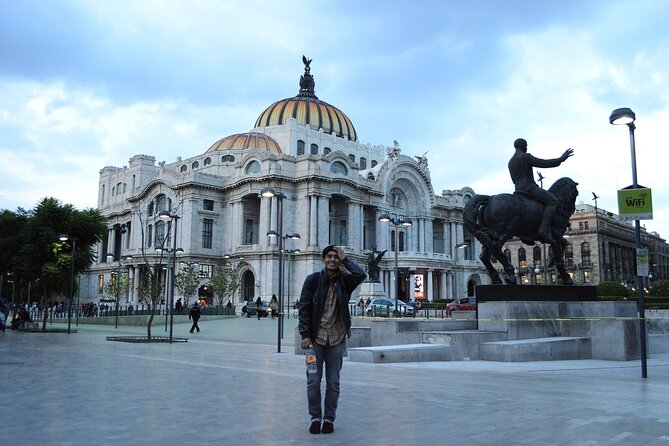
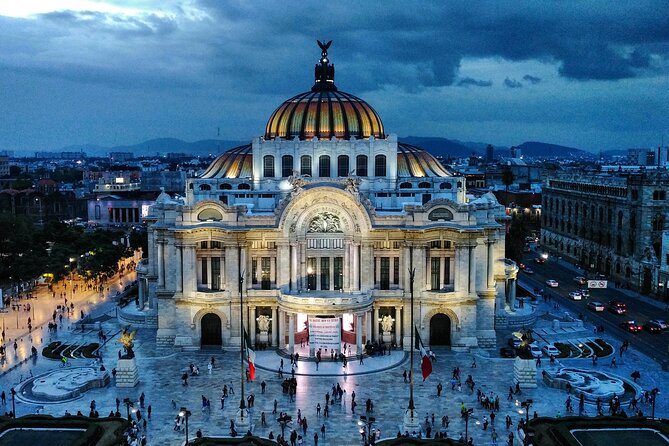
Your meeting point is right by Palacio de Bellas Artes, on Av. Juárez in the Centro Histórico. From there, the tour’s emotional high point is usually this stop, because the guide’s explanations help you read the building as more than just architecture.
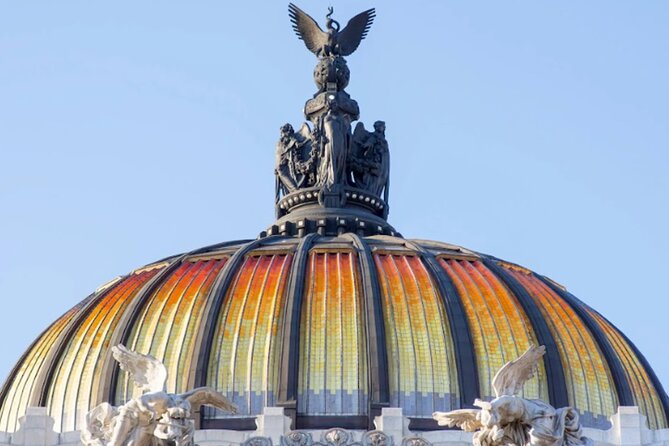
Outside, you get that recognizable mix of stone and detail that makes people pause for photos. Inside, the focus shifts to the murals, including major works by Diego Rivera, plus other artists’ murals you may not expect to see in this setting.
One thing to know: on some days, you might not have full access to every interior space. For example, the Bellas Artes theatre area may be off-limits even if you can see the murals. Plan on the tour’s main value being the murals and the architectural context, not a whole-building free-for-all.
Museo Nacional de Artes (MUNAL): a former Spanish palace with 500 years of art
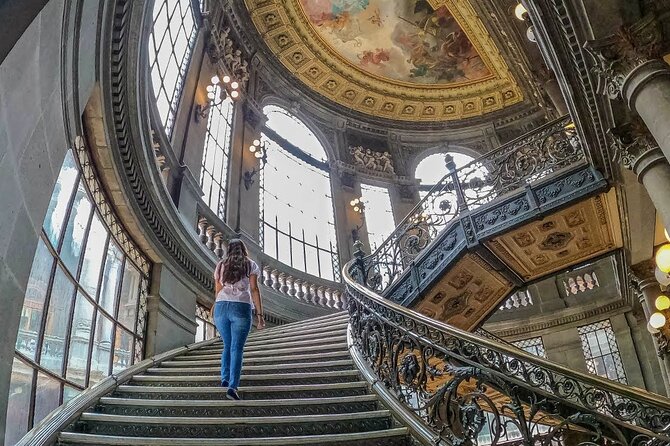
After Bellas Artes, you’ll head to the Museo Nacional de Artes, housed in a building with a Spanish-era palace background. That matters because the museum isn’t just showing you paintings—it’s showing you a layered space where different eras left their fingerprints.
The museum’s collection covers art history from the 16th to the 20th century. That range is a big reason this stop works well in a group tour: a good guide can point you toward the pieces that connect the timeline instead of treating everything like random rooms of art.
A practical caution: the tour notes that MUNAL may be inaccessible for reasons of force majeure. If that happens, you’ll want flexibility in your expectations for how the route plays out.
Banco de México museum: where the peso story starts
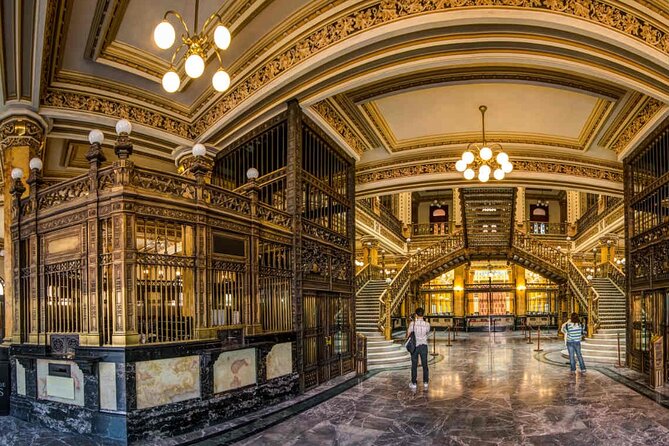
Next up is the Banco de México museum, tied to the birthplace of the Mexican peso story. The setting has a unique atmosphere, and the building helps you feel like you’re standing near the machinery of national life—not just viewing exhibits behind glass.
This stop is also a nice change of pace. After art and architecture, you get a focused, guided explanation of the country’s economic story. Even if you’re not a finance person, the “how money got here” angle tends to click because it’s specific and visual.
You’ll have about an hour, which is enough time to grasp the basic narrative without turning it into a full day of studying. Just don’t expect a textbook visit—this is more about the meaning of the space and the significance of the currency.
Palacio Postal (Correo Mayor): gold interiors and design that feels regal
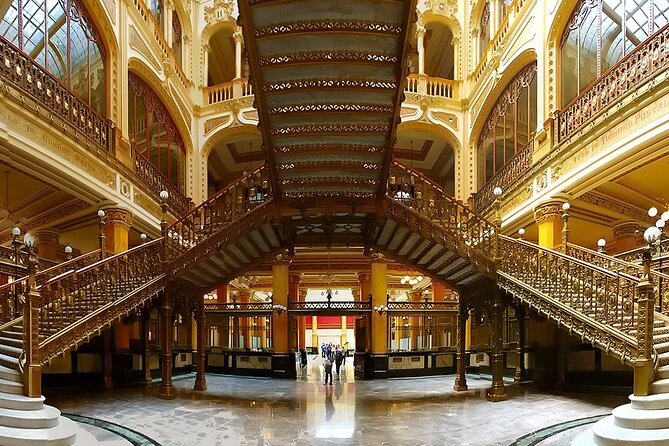
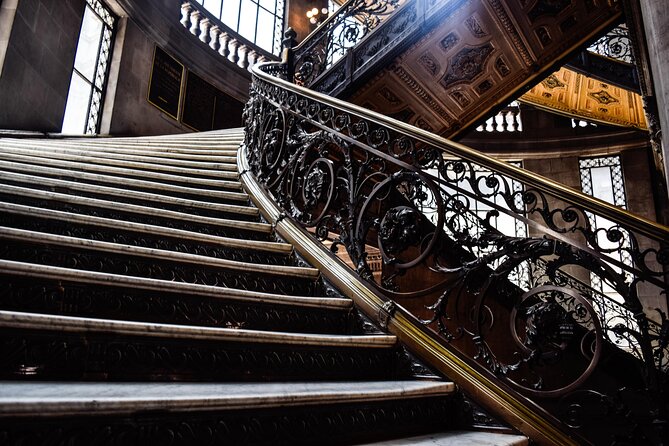
Then comes Palacio Postal, the main post office of Mexico City. This stop is the architectural show-off in the best way: you get an imperial-feeling building with different architectural styles, plus the kind of interior details that make you look around even if you came for the murals at Bellas Artes.
The tour emphasizes the nickname Correo Mayor and the gold-plated interior look. That’s one of those moments where you think, okay, this wasn’t built for efficiency alone. It was built to project power and pride.
One consideration: depending on access rules on the day, you might not be allowed into every interior area. If you’re the type who wants every room, this is where you may want to plan one extra hour later on your own—so the tour still feels like a highlight, not a limitation.




The Alameda Central pass-by: end with a classic stroll
At the end of the main route, you’ll pass by Alameda Central. The tour description frames it as the oldest park in Mexico and all of America, inspired by Seville’s Alameda de Hércules.
You won’t be sitting in a long guided lecture here. Instead, you’ll get a chance to walk through this green break in the middle of the city once the tour ends.
If you have the energy, this is a smart way to “cool down” after museums. It also helps you connect Centro Histórico streets to the bigger urban picture.
Price and value: why $49 can work (or not)
At $49 per person for about four hours, the value mostly comes from two things: included entry tickets and guided context. Admission tickets are listed as included for each of the major stops (MUNAL, Banco de México museum, Palacio Postal, and Bellas Artes).
If you were to visit those places separately, you’d be paying admission anyway, then adding time figuring out which route makes sense. The tour trades a bit of flexibility for structure, which is great if you like your sights with explanations.
Where the value can slip is if your expectations are very “museum slow.” A full hour can go quickly when the guide is explaining key themes, especially at Bellas Artes. If you want lots of quiet time, you may end up feeling like you’re watching the highlights instead of experiencing everything.
Who will love this tour most
This tour is a strong fit if you like:
- art and architecture that connects to national identity
- buildings with design you can’t easily “read” without help
- a compact route that keeps you from crisscrossing the city
It’s also a good choice for first-time visitors to the Centro Histórico area. You’ll get a sense of the district’s layout and why these palaces matter.
If you prefer a more casual pace, or you plan to spend time later at every site, you may want to pair this with your own add-on visits. The tour sets you up with context so your follow-up visits feel smarter.
Guides make the difference: what you can learn from past groups
A big theme in the tour experience is how much the guide’s explanations shape the outcome. Several guides have been praised for being friendly and approachable, with strong command of architecture and art themes.
Names that have come up include Adhara, who helped visitors understand key murals and their meanings; Leonardo, who made Palacio de Bellas Artes feel digestible with clear history; and Yair, noted for thorough, approachable explanations.
If you spot your guide, it’s usually easy to ask questions. Some guides also take time to point out what to look for in the murals so you’re not just staring at the images without a guide map.
Timing and logistics: the parts you should not ignore
This is the section that keeps your day smooth.
First, the route is structured but the real world can change. The tour already warns that MUNAL may be inaccessible for reasons outside the operator’s control. On top of that, the Centro Histórico area can face occasional disruptions, so don’t be shocked if you see a different version of the plan on a specific day.
Second, allow extra time for meeting point clarity. Several people found it hard to locate the guide outside Palacio de Bellas Artes because the meeting area can feel huge with other groups. A practical tip: watch for a navy-blue shirt and any company logo details your guide might be wearing.
Finally, pacing is a mixed bag. Some people love that Bellas Artes murals get real attention. Others felt the tour moved too quickly overall, or that Bellas Artes consumed more time than expected. If you’re sensitive to rushing, show up early, take photos quickly, and consider doing one of the stops again later at your own pace.
Should you book Must-see Buildings & Palaces of Mexico City?
Book it if you want a smart, time-efficient way to see Mexico City’s big visual hits—especially Palacio de Bellas Artes with its mural focus and the ornate drama of Palacio Postal. The included admissions and small group size make it a practical choice for a first pass through the Centro Histórico palace scene.
Skip it or plan carefully if you need a slow museum pace, want full access to every interior space, or get stressed by meeting point confusion. In that case, you’ll still get value, but you may feel the hour-per-stop structure more than you expect.
If your goal is to leave with a clearer sense of how Mexico City tells its art and national story through buildings, this tour is the kind of shortcut that helps you explore better afterward.
FAQ
How long is the tour?
It lasts about 4 hours.
What does it cost?
The price is $49.00 per person.
Is admission included?
Yes. Admission tickets are included for Museo Nacional de Artes, Museo Banco de Mexico, Palacio Postal, and Palacio de Bellas Artes.
What language is the tour in?
The tour is offered in English.
What is the group size?
The tour has a maximum of 15 travelers.
Where does the tour start?
It starts at Palacio de Bellas Artes, Av. Juarez S/N, Centro Histórico de la Cdad. de México, Centro, Cuauhtémoc, 06050 Ciudad de México, CDMX, Mexico.
Where does the tour end?
It ends at Banco De México Fabrica De Billetes, Avenida 5 de Mayo 2 Centro, Centro Histórico de la Cdad. de México, Cuauhtémoc, Código postal 06000, Alcaldía Ciudad de México, CDMX, Mexico.
Is there a mobile ticket?
Yes, the tour includes a mobile ticket.
Does the itinerary include Alameda Central?
You will pass by Alameda Central, and you can visit it once the tour ends.
What if MUNAL is inaccessible?
The tour notes that Museo Nacional de Artes (MUNAL) may be inaccessible for reasons of force majeure.
Is free cancellation available?
Yes, you can cancel up to 24 hours in advance for a full refund.