REVIEW · MEXICO CITY
Museo Nacional de Antropología – Small Groups
Book on Viator →Bookable on Viator
Three hours, and ancient Mexico clicks. The small-group pace and English guidance help you see what the National Anthropology Museum is really doing with its collections, not just what’s on the walls. You’ll move through a focused set of archaeology rooms while the story of Mesoamerica runs from major earlier cultures toward the moment Tenochtitlan falls in August 1521.
I love two things right away. First, the route hits six archaeology rooms, so you get meaning and context fast instead of wandering for days. Second, the guide puts the museum itself into the picture, explaining the project behind the museum’s design and interpretation, not just naming artifacts.
One possible drawback: with only about 3 hours and a limited number of rooms, you won’t see everything. If you’re the type who wants to linger for ages, plan a second museum visit later—or accept you’re doing the “best story in limited time” version.
In This Review
- Key things to look forward to
- Why the National Anthropology Museum feels overwhelming on your own
- Getting started in Polanco, then getting moving inside
- The core idea: six rooms, not the whole building
- Olmeca, Zapoteca, Teotihuacan, Mexica: how the tour builds a timeline
- The museum design story—and why it’s part of the lesson
- The 1985 theft detail: a story with weight
- Guide quality in practice: English flow, calm pacing, and room to ask
- Admission fee and the real cost: what you pay for
- Best fit: who this tour suits (and who should reconsider)
- Should you book the Museo Nacional de Antropología small-group tour?
- FAQ
- Is admission to the museum included?
- How long is the tour?
- Is the tour offered in English?
- How many people are in the group?
- Which part of the museum do we visit?
- What cultures are highlighted during the visit?
- Where is the meeting point?
- Is the tour difficult to do on foot?
- When do I receive confirmation after booking?
- Can I cancel and get a refund?
Key things to look forward to
- Small group of up to 6 means more questions and less rushing
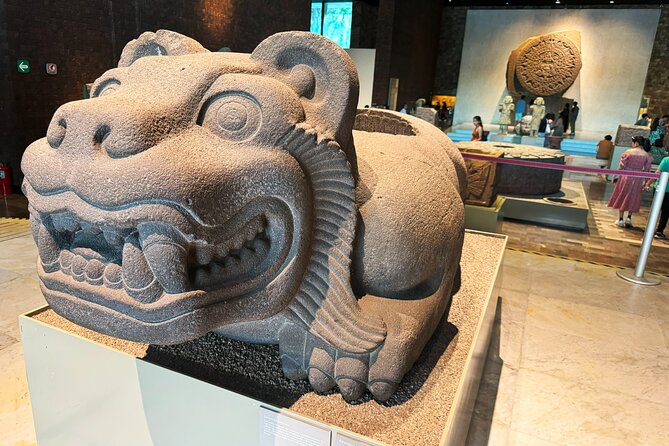
- Six of eleven archaeology rooms keeps the focus tight and useful
- Cultures you’ll connect: Olmeca, Zapoteca, Teotihuacan, and Mexica
- Museum design explained so the building’s message makes sense
- A high-impact artifact story tied to a major 1985 theft case
Why the National Anthropology Museum feels overwhelming on your own
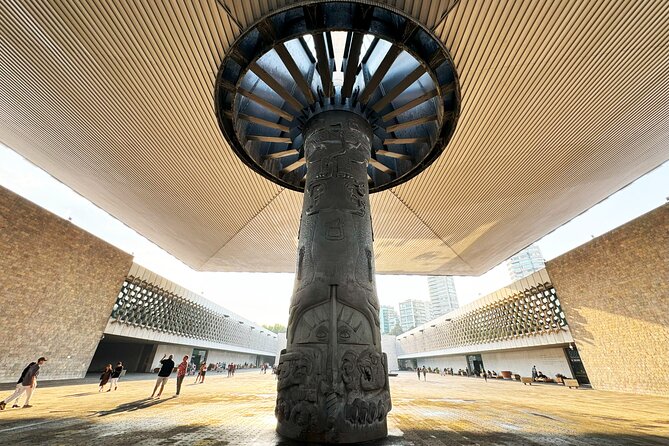
The Museo Nacional de Antropología is huge. That’s great. It also means you can easily end up doing the museum version of speed-walking through unfamiliar rooms, reading labels that don’t add up into a clear story.
This tour is built to solve that. In a single session, you get a guided path through the museum’s archaeology spaces, with an explanation of what each culture contributed and how the museum presents that progression. Instead of treating the collection as isolated objects, you start seeing themes: power, religion, craftsmanship, trade, and how societies organized themselves over time.
And because you’re not in a big crowd, the guide can adjust. That matters in Mexico City museums, where queues, group bottlenecks, and cross-traffic can turn a plan into chaos fast.
You can also read our reviews of more tours and experiences in Mexico City.


Getting started in Polanco, then getting moving inside
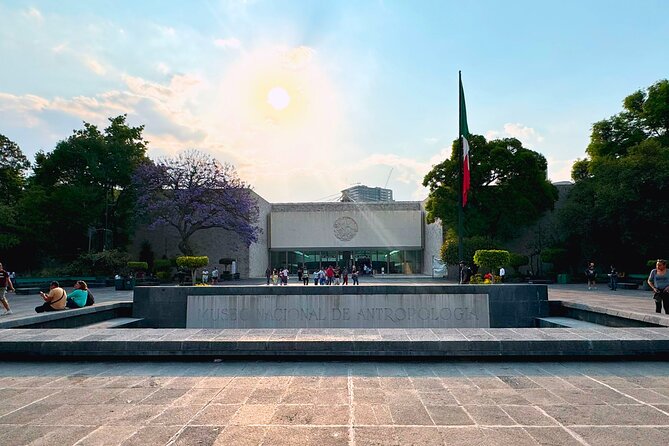
Your meeting point is at Museo Nacional de Antropología, Av. P.º de la Reforma s/n, Polanco (Bosque de Chapultepec I Secc, Miguel Hidalgo). This area is a solid base because it’s well connected to public transportation, so you’re not forced into taxis for every step.
One more small but useful detail: you get a mobile ticket. That helps you keep things simple at the start, especially on a day when you’re also dealing with museum ticket lines you’ll probably need later (more on that soon).
Once the group assembles, you’ll step into the museum and start working your way through selected archaeology rooms. The goal isn’t to tick off the maximum number of rooms; it’s to leave with a mental map of Mesoamerica that you can actually use when you visit other sites.
The core idea: six rooms, not the whole building
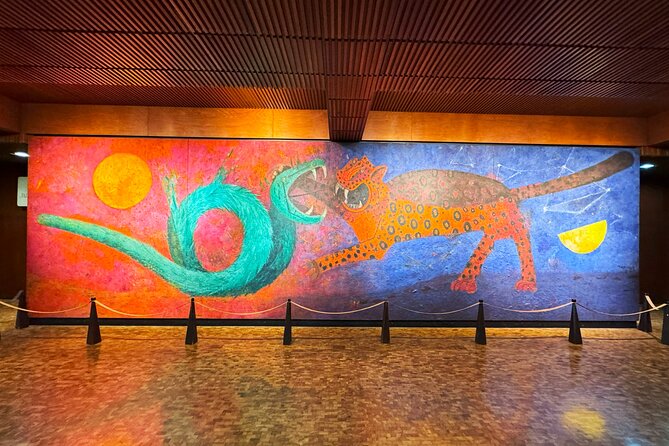
The museum has 11 archaeology rooms, and this tour focuses on six. That’s a smart choice. If you try to do all eleven on your own, you usually end up with half-read text and tired feet. If you try to do only one or two rooms, you miss the bigger progression.
Here, you get a guided route that balances coverage and comprehension. You’ll see multiple archaeology rooms, but the explanation ties them together into a storyline—so you don’t just remember objects. You remember relationships between cultures and what changed over time.
Duration is about 3 hours. In practice, that often means the guide can slow down at moments that need extra context and move quickly past areas that are less critical to your “from earlier civilizations to Mexica” storyline. It’s the kind of pacing that makes a short museum visit feel longer, because your brain is doing more meaningful work.
Olmeca, Zapoteca, Teotihuacan, Mexica: how the tour builds a timeline
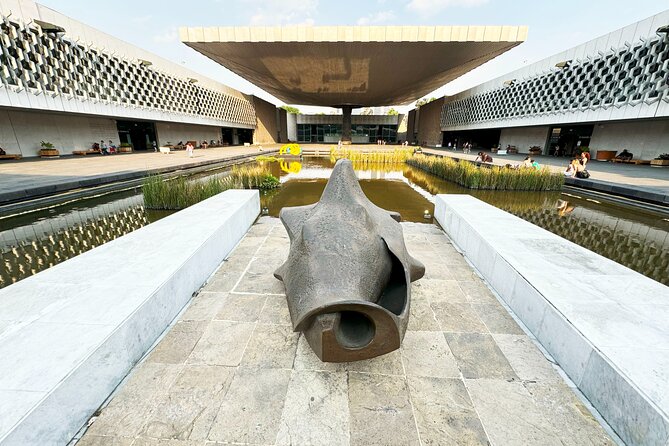
The tour centers on Mesoamerica before the fall of Mexico Tenochtitlan in August 1521. That end point matters, because it gives you a clear “before and after” anchor. When you hear the cultures described as part of a longer sequence, the shifts start to make sense.
You’ll spend time with major cultures including:
- Olmeca
- Zapoteca
- Teotihuacan
- Mexica
Even if you’ve heard names before, a guided explanation changes how those names feel. You start to understand that these societies weren’t just “earlier civilizations.” They were complex political and religious systems with distinct styles of art, monumental architecture, and technologies.
A big value here is that the guide uses representative pieces from different cultures as vehicles for moving through time. That means you’re not only learning facts; you’re learning how to read the museum. You begin to notice patterns: what the museum highlights for each culture, how objects communicate status or belief, and what kinds of craftsmanship carried social meaning.
If you’re planning to visit other archaeological places in the future, this is the kind of preparation that makes the outdoor ruins feel less random. You’ll be able to connect what you see in the museum to what you’ll spot later.
The museum design story—and why it’s part of the lesson
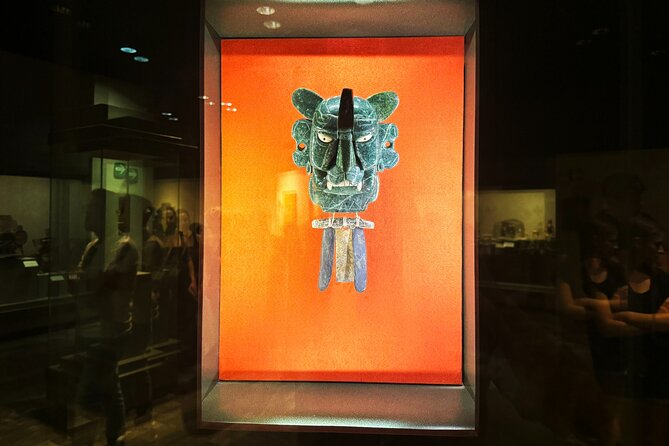
One unique angle of this tour is that it doesn’t treat the museum as a neutral box. You’ll learn about the project behind the design of the National Anthropology Museum. That matters, because museums aren’t just storage—they’re storytelling.
When you understand the design intent, the architecture and room layout start working for you. You stop thinking, I’m looking at objects, and start thinking, I’m reading an argument. Why are these items placed together? What does the museum want you to understand first? How does the layout support the bigger message about Mesoamerican cultures?
This approach is especially helpful if you’re visiting the museum for the first time. Without that context, you can miss why certain objects get center attention, or why some themes get repeated across different rooms.
In a short tour, this is a big deal. It’s the difference between collecting names and actually walking out with a clearer framework.


The 1985 theft detail: a story with weight
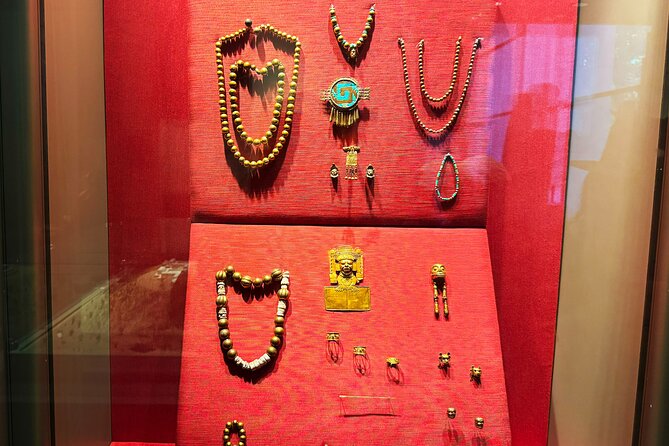
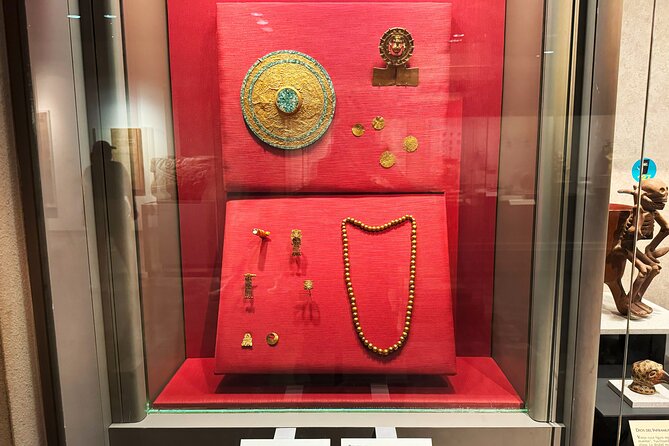
One of the most memorable moments in this tour involves a real-world event tied to museum objects. You’ll hear that some pieces made of gold, jade, and obsidian were stolen on December 25, 1985.
Even if you don’t know the details going in, this kind of story changes how you look at objects. It moves the conversation beyond ancient artistry and into the modern history of cultural heritage—how valuable collections are, why they’re protected, and how museums function in the present day, not only the past.
For me, that’s the power of good museum guiding: it turns static display into a living timeline that includes the museum itself. You leave thinking about what objects mean across centuries, and what it costs to preserve that meaning.
Guide quality in practice: English flow, calm pacing, and room to ask
This is a small-group tour with a maximum of 6 travelers, and that number matters more than it sounds. When your group is tiny, you get fewer interruptions and more time for your questions. The guide can also adjust pace if someone needs extra explanation or a slower path.
The English offering is a real strength. One clear theme from strong past experiences is that the guide’s English is described as very effective, especially when the museum signage is in Spanish. You don’t have to play label-decoding detective for every object, and you don’t lose the thread while you translate.
Names that come up in past runs include Raul and Rahul, with praise for presentation and staying power. One person also highlighted that the guide has an academic background in archaeology and history. That kind of foundation usually shows up as clearer explanations and better connections between pieces.
There’s also a practical kindness angle. One run noted the guide worked with a mother who couldn’t stand for long, using seated breaks without turning the visit into a stop-and-go mess. If you have any limitations that require breaks, this tour’s format is more forgiving than a fast-moving big-group walk.
Admission fee and the real cost: what you pay for
The listed price is $83.63 per person, and the tour includes guide service. Admission is not included.
Museum tickets are MX$210.00 per person, and you’re told to buy them only through the museum’s official site. Don’t cut corners here. With museums, ticketing and timed entry rules can change, and the official route avoids headaches.
So is it good value? For me, yes—if you care about getting the story straight. You’re paying for two things you can’t easily replicate alone: (1) a guided path through the rooms you’re likely to skip or misread, and (2) context like the museum design project and the deeper connections between cultures and the 1521 endpoint.
If you’re the type who loves slow reading and prefers to wander without guidance, then you might get less out of this format. But if you want “best payoff in limited time,” the math tends to work.
Best fit: who this tour suits (and who should reconsider)
You’ll probably enjoy this most if:
- You’re visiting the museum as a key stop in Mexico City and want a strong plan
- You want an English explanation of what you’re seeing, not just labels
- You plan to visit other archaeology sites afterward and want context first
- You like asking questions and moving at a calm pace
You might reconsider if:
- You’re planning to spend the entire day in the museum and want to see all 11 archaeology rooms
- You’re someone who wants maximum physical interaction with every display and text block
- You hate guided tours in general and prefer a full self-guided day
This tour isn’t trying to replace a full museum visit. It’s trying to give you a high-quality “core story” in about 3 hours.
Should you book the Museo Nacional de Antropología small-group tour?
If you only have a limited window in Mexico City, I’d book it. Six archaeology rooms with an English guide, tied to a clear timeline toward August 1521, is a smart way to avoid the most common museum mistake: leaving with fragments instead of understanding.
I’d also book it if you care about heritage stories that go beyond ancient artifacts—like the 1985 theft detail—because it adds human stakes to what you’re seeing.
Just go in with the right expectation: you’re choosing focus over completeness. If that’s your style, this is a strong, practical way to get value out of the National Anthropology Museum without getting lost in its scale.
FAQ
Is admission to the museum included?
No. Admission is not included in the tour price. Museum tickets cost MX$210.00 per person and are available on the museum’s official site.
How long is the tour?
The tour lasts about 3 hours.
Is the tour offered in English?
Yes, the tour is offered in English.
How many people are in the group?
This experience has a maximum of 6 travelers.
Which part of the museum do we visit?
The tour focuses on 6 of the 11 archaeology rooms in the building.
What cultures are highlighted during the visit?
You’ll learn about representative cultures including Olmeca, Zapoteca, Teotihuacan, and Mexica.
Where is the meeting point?
You meet at Museo Nacional de Antropología, Av. P.º de la Reforma s/n, Polanco, Bosque de Chapultepec I Secc, Miguel Hidalgo, 11560 Ciudad de México, CDMX, Mexico.
Is the tour difficult to do on foot?
The activity is listed for travelers with a moderate physical fitness level.
When do I receive confirmation after booking?
Confirmation is received at the time of booking.
Can I cancel and get a refund?
Yes. You can cancel for a full refund if you cancel up to 24 hours in advance of the experience start time.