REVIEW · MEXICO CITY
Azcapotzalco: Mexico City’s Culinary Kaleidoscope
Book on Viator →Operated by Culinary Backstreets Walks · Bookable on Viator
Mexico City has a quieter food route. This 6-hour walk in Azcapotzalco mixes big flavors with local context, from a landmark meeting point to family-run backstreet stops. I like how it turns lunch into a map of the city’s layered past, not just a string of bites.
My other favorite part is the amount of food you get for the price, especially the breakfast-style lineup: café de olla, sweet bread, huevos dishes, enchiladas, and freshly-made juices. One drawback to plan for: if you’re sensitive, go slow. The day includes lots of tasting, and it can sit heavy if you eat too fast, even if you don’t usually have stomach issues.
In This Review
- Quick hits before you go
- Azcapotzalco food tour value: $140 buys context and a lot of eating
- Stop 1 at Arbol de la Noche Triste: the history anchor for the whole day
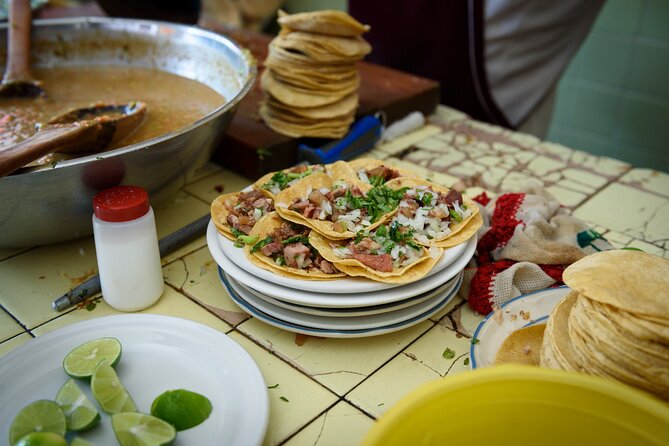
- Stop 2 in Azcapotzalco: cafe de olla, huevos, enchiladas, and the offal-taco reality check
- Tortilleria stop and Aztec-root drinks: small breaks that matter
- The cantina finale: a 110-year-old Italian family’s house cocktail and small dishes
- Walking, pacing, and the stomach-smart approach
- Group size, English guidance, and near-public-transport simplicity
- Who this tour suits best—and who should think twice
- Should you book Culinary Backstreets Walks in Azcapotzalco?
- FAQ
- How long is the Azcapotzalco culinary tour?
- What time does the tour start, and where does it begin?
- Is the tour offered in English?
- What’s the maximum group size?
- What types of food stops are included?
- Is it walking-heavy?
- Do I get a mobile ticket?
- What if the weather is bad?
- What’s the cancellation window for a full refund?
Quick hits before you go
- Small group (max 7) keeps the pace friendly and makes it easier to ask questions.
- Breakfast-to-cantina flow means you’ll eat more than you expect in one outing.
- Aztec-root drinks and tortilleria stops add a cultural layer beyond tacos.
- Arbol de la Noche Triste meeting point anchors the tour in place and time.
- Plan for walking and a lot of samples, not just a couple of snacks.
Azcapotzalco food tour value: $140 buys context and a lot of eating
This is a $140 per person walking tour in Mexico City that runs about 6 hours and starts at 10:00 am. With a maximum group size of 7, you’re not stuck in a big herd, and you’re less likely to feel rushed between stops. Also, it’s offered in English, with a mobile ticket you can use on the day.
What makes the price feel more fair is the structure. You’re not paying just for food; you’re paying for someone to connect what you’re tasting to what you’re seeing in the neighborhood. That matters in Mexico City, where the best meals often come with a story, a tradition, and a reason a certain dish belongs to that street.
You’ll also want to know the tour ends where it starts—back at the meeting point—so you’re not left figuring out your own exit plan. And because it’s near public transportation, getting to Popotla for a 10:00 am start is usually manageable.
You can also read our reviews of more city tours in Mexico City
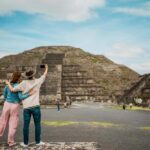


Stop 1 at Arbol de la Noche Triste: the history anchor for the whole day
You begin at Plaza de el Arbol de la Noche Triste, Popotla (11400 Ciudad de México, CDMX, Mexico). This first stop sets the tone: you’re in an unexplored district, and the tour frames what’s coming next as a journey through time and space.
You’ll spend about 1 hour here, and the core idea is to get your bearings before you start eating heavily. The description calls out monumental and hidden reminders of layered city history. Translation: you’ll learn to look at the neighborhood as more than scenery. It helps later when you taste dishes that reflect older roots.
It’s also an easy start because the first segment includes an admission ticket free entry element. In practical terms, you can focus on the route and the intro story without worrying about ticket lines or extra fees.
Stop 2 in Azcapotzalco: cafe de olla, huevos, enchiladas, and the offal-taco reality check
The heart of the day is in Azcapotzalco, where the tour leans hard into “real local eating.” You start with something you can recognize even if you’re new to Mexico City breakfasts: café de olla (spiced coffee) and sweet bread. That’s a smart opener because it warms you up and gets you used to the pacing.
Next comes a more substantial breakfast at a family-run backstreets restaurant that’s described as one of the area’s best. Expect huevos encamisados, enchiladas, freshly-made juices, and other treats. This part is why the tour feels like value: you’re not sampling just one thing. You’re getting a mini feast that covers multiple styles and textures.
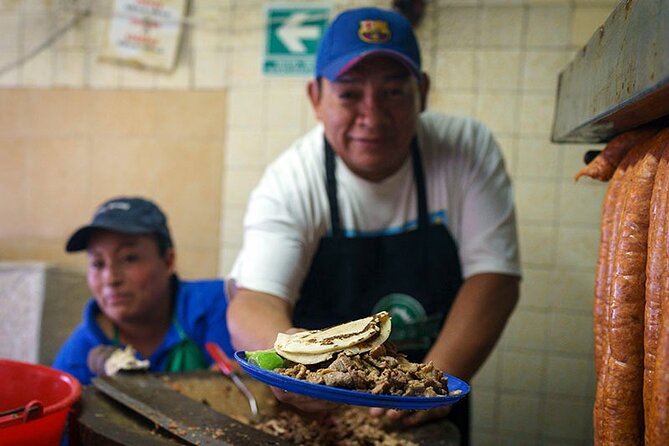
Then the tour shifts to a dish category that often surprises first-timers: offal tacos. This isn’t random shock food. The tour frames them as a reminder of slaughterhouses that were once located here, tying what you eat to what used to happen in the area.
That context is worth your attention. If you already like food, you’ll appreciate how the guide makes the connection between industry, tradition, and what ends up on a taco menu today. If you’re squeamish about offal, you can still go, but go in knowing the tour includes it and decide how much you want to try.
Tortilleria stop and Aztec-root drinks: small breaks that matter
Between heavier tastings, the tour includes a stop into an artisanal tortilleria. Tortillas sound simple until you see the care behind them. Even if you don’t love a lecture, this stop gives you a useful baseline for why tacos taste different from place to place.
From there, you’ll sample drinks at a 3rd-generation street stand that trace their roots to Aztec times. The key here is the “trace their roots” angle. The tour isn’t claiming you’re drinking something unchanged from centuries ago; it’s highlighting how current traditions keep lineage through flavor and craft.
Practically, this segment gives your stomach a chance to reset a bit. You’ll still be eating and drinking, but the tour’s rhythm is designed to keep you moving without turning the whole day into nonstop chewing.
The cantina finale: a 110-year-old Italian family’s house cocktail and small dishes
You’ll end with a cantina that’s been open for about 110 years, started by a family from Italy. That setup is a big reason this tour doesn’t feel like copy-paste taco tourism. Mexico City has tons of cantinas, but the Italian origin story makes the final stop feel specific to this neighborhood.
You’ll try the house cocktail plus small dishes that reflect both classic Mexican traditions and the founders’ European roots. This is the moment where your earlier tastings pay off. If you’ve been sampling breakfast classics, street-style tacos, and regional drinks, the final stop helps you see how traditions mix and evolve over time.
The tour also makes the ending clean: you return back to the meeting point area, so you can keep your night plans simple—another drink nearby, dinner after, or a relaxed walk back without stress.





Walking, pacing, and the stomach-smart approach
This is a walking tour, and the route is described as covering new areas of Mexico City. The upside is that you’re not stuck staring at the same block for hours. The downside is you should plan for sustained movement while you’re eating.
Most importantly: pace your food. One person flagged that the mix of lots of samples can cause stomach trouble even if they were fine for the first week in Mexico City. Their main advice was to take small bites and small sips of everything, even if you feel hungry.
They also noted there are many bathroom stops along the way. That’s useful to know, but it doesn’t change the best strategy: control how fast you eat, and don’t treat the tour like a race. If you’re planning this early in your trip, it’s safer than scheduling it right before a big dinner reservation. You want your stomach working like normal.
Bring a water habit too. The tour includes juices, coffee, and cocktails, so your system gets plenty of liquids. Still, you’ll likely feel better if you sip water periodically between stops.
Group size, English guidance, and near-public-transport simplicity
With a maximum of 7 travelers, this is the kind of tour where you actually get interaction. You can ask questions about what you’re tasting, and the guide can redirect the group quickly if someone needs a moment.
It’s offered in English, which helps if you want more than a food checklist. The guide experience is part of the value. One review specifically praised Liz for being extremely informative, including both history of the area and history of the food. You can expect that kind of storytelling style in general—connecting dishes to place, not just naming them.
Because the tour is near public transportation, you can likely reach the starting area without a long taxi ride. And since the tour ends where it begins, it’s easy to line up your next move after you finish.
Who this tour suits best—and who should think twice
This tour is a strong fit if you like:
- Neighborhood meals over fancy sit-down-only dining
- A mix of breakfast, street food, and cantina culture
- Food that comes with place-based explanations
- Traveling with a small group and real conversation
It’s less ideal if you:
- Get stomach issues easily when you eat a lot at once
- Prefer tasting menus where you choose exactly what to try
- Want a slow, low-walking experience
If you fall into the “sensitive stomach” group, don’t assume you can’t do it. Use the strategy one guest recommended: take smaller portions, sip slowly, and listen to your body. The frequent bathroom options help, but prevention is still the best plan.
Should you book Culinary Backstreets Walks in Azcapotzalco?
If you’re looking for a Mexico City food tour that feels grounded in a real neighborhood and not just a greatest-hits list, I think this one makes sense. You get a broad spread: café de olla and sweet bread, huevos encamisados, enchiladas, fresh juices, offal tacos, tortilleria expertise, Aztec-root drinks, and a 110-year-old Italian-founded cantina with a house cocktail.
It’s also a good value if you hate wasting time guessing where to eat. This format does the work for you: it sequences foods in a way that builds from morning to night, and it adds the kind of context that makes the day stick.
Just go in with the right mindset. This is not a light snack stroll. It’s a full, sample-heavy walk. If that’s your style, you’ll probably love how much you learn and how much you eat—without feeling stuck in a giant group.
FAQ
How long is the Azcapotzalco culinary tour?
It runs for about 6 hours.
What time does the tour start, and where does it begin?
It starts at 10:00 am at Plaza de el Arbol de la Noche Triste, Popotla, 11400 Ciudad de México, CDMX, Mexico.
Is the tour offered in English?
Yes. The tour is offered in English.
What’s the maximum group size?
The tour has a maximum of 7 travelers.
What types of food stops are included?
You’ll try café de olla and sweet bread, huevos encamisados, enchiladas, freshly-made juices, offal tacos, a tortilleria stop, drinks connected to Aztec times, and a final stop at a cantina for a house cocktail and small dishes.
Is it walking-heavy?
It’s a walking tour, and it includes lots of time moving through the neighborhood.
Do I get a mobile ticket?
Yes, it’s a mobile ticket.
What if the weather is bad?
The experience requires good weather. If it’s canceled due to poor weather, you’ll be offered a different date or a full refund.
What’s the cancellation window for a full refund?
You can cancel up to 24 hours in advance for a full refund. If you cancel less than 24 hours before the start time, the amount paid is not refunded.