REVIEW · MEXICO CITY
Jewish History Mexico City Private Guided Walking Tour
Book on Viator →Operated by Rosotravel - Ghent City Tours · Bookable on Viator
Jewish Mexico City reads like a street map. I really like how this tour turns famous landmarks into a story about Jewish life under Spanish rule and the long shadow of the Holocaust, with a guide who keeps the pacing human and clear. I also like that it’s a walk through the real Centro Histórico streets, not a slide show. One drawback to keep in mind: one group reported a guide no-show, so it’s smart to confirm details the day before and be ready at the meeting spot on time.
This is a private walking tour that runs about two hours, and it’s designed for you to hear the context as you go. Synagogue entry and attraction tickets aren’t included, so you’ll rely on the guide’s storytelling and any admission-free viewing points rather than expecting to freely walk into every site.
In This Review
- Key highlights you’ll actually notice
- Start at a landmark: finding the meeting point fast
- Templo Mayor Museum area to the Metropolitan Cathedral: colonial rules in plain sight
- Plaza de Santo Domingo: where persecution and resilience get personal
- UNAM School of Medicine Museum and San Ildefonso: Jewish influence in academia and health
- Sinagoga Justo Sierra: seeing the architecture and hearing survival stories
- Santa Teresa la Nueva to Mixcalco Market: from historical pressure to daily life
- Price and value: what $116.54 buys you in 2 hours
- The guide experience: when it shines, and what to protect against
- Practical tips for a smooth walk in Centro Histórico
- Should you book this Jewish History Mexico City tour?
- FAQ
- How long is the Jewish History Mexico City Private Guided Walking Tour?
- Where does the tour start and where does it end?
- Is this tour private?
- What’s included in the price?
- Are synagogue entries included?
- Are attraction tickets included?
- Is the tour offered in English?
- Do I need a printed ticket?
- Can I cancel for free?
Key highlights you’ll actually notice

- Easy orientation at Gran Hotel Ciudad de México (16 de Septiembre 82) as your clear meeting landmark
- Jewish history tied to specific street stops, from Spanish colonial pressures to 20th-century flight and safety
- Sinagoga Justo Sierra as a major stop, with stories of community, faith, and survival (entry not included)
- UNAM School of Medicine Museum and San Ildefonso connections, including Jewish figures linked to academia and public health
- Plaza de Santo Domingo and Santa Teresa la Nueva for themes of persecution, resilience, and cultural rebirth
- End at Mixcalco Market so you finish with a living snapshot of Mexico City’s mix of cultures (no food included)
Start at a landmark: finding the meeting point fast
Your tour begins at Gran Hotel Ciudad de México, at 16 de Septiembre 82 in the Centro Histórico area. The big practical win here is that it’s a recognizable point you can Google, photograph, and use as a handrail if you’re meeting a group.
Important detail: your guide meets you in front of the hotel, but you should not go inside. Staff aren’t informed, and nobody wants you standing at the wrong desk while time ticks away. Aim to arrive a bit early so you can settle and spot your guide before the official start.
The tour is near public transportation, which helps if you’re doing a busy day in Mexico City. And since it’s a walking tour, you’ll want comfortable shoes—this is not the kind of “light stroll” that forgives bad footwear.
You can also read our reviews of more walking tours in Mexico City


Templo Mayor Museum area to the Metropolitan Cathedral: colonial rules in plain sight
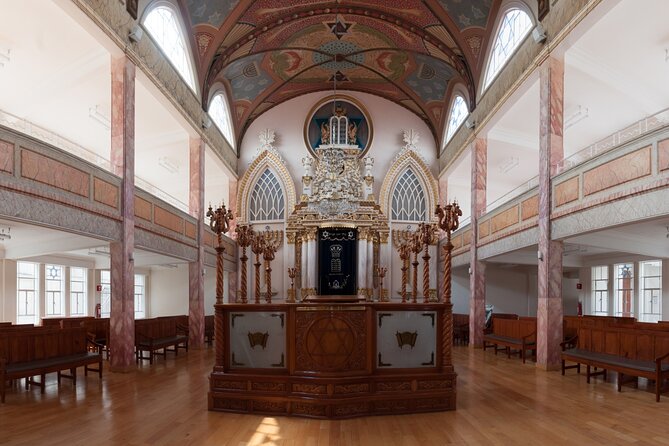
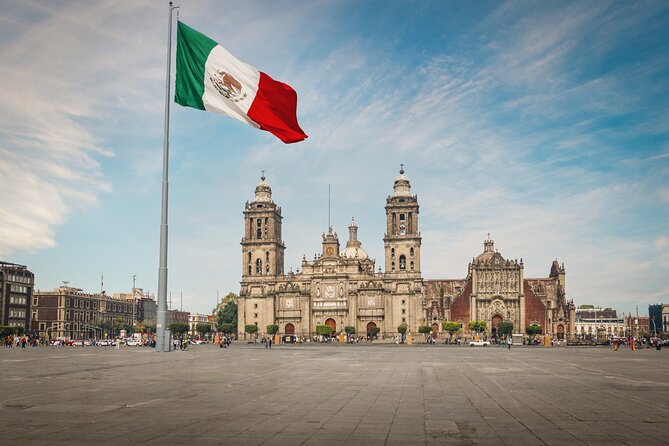
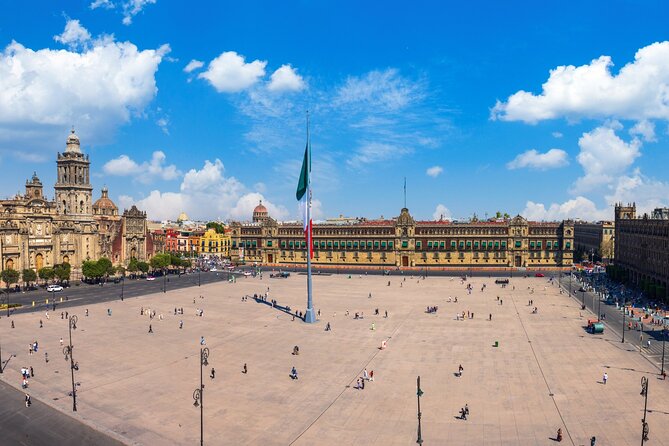
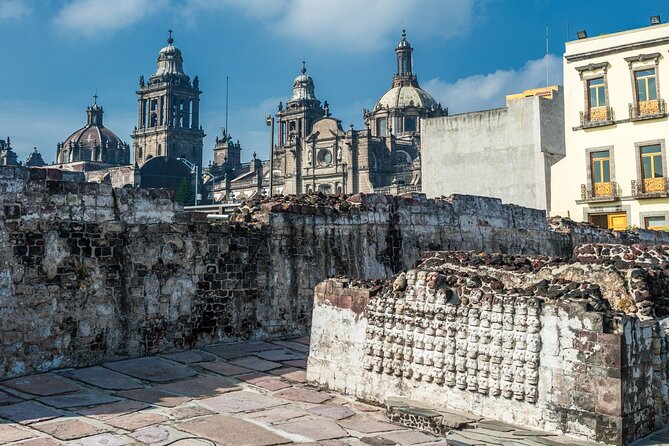
One of the most effective parts of this tour is how it links place to policy. You start near Templo Mayor Museum, then walk toward the Mexico City Metropolitan Cathedral area. The guide uses this stretch to explain how Mexico City became shaped by a mix of cultures—and how Jewish life was affected under Spanish colonial rule.
Even if you’ve seen these buildings before, the value here is the framing. Instead of treating the area like generic sightseeing, you’re learning how colonial structures changed daily life, where people could live, and how faith communities navigated power. The story is tied to the street you’re standing on, which makes it easier to remember than a list of facts.
Also, the tour includes short stop time here (about 30 minutes). That means you’re not stuck in one place too long, but you still get enough orientation to make the next stops land.
Plaza de Santo Domingo: where persecution and resilience get personal
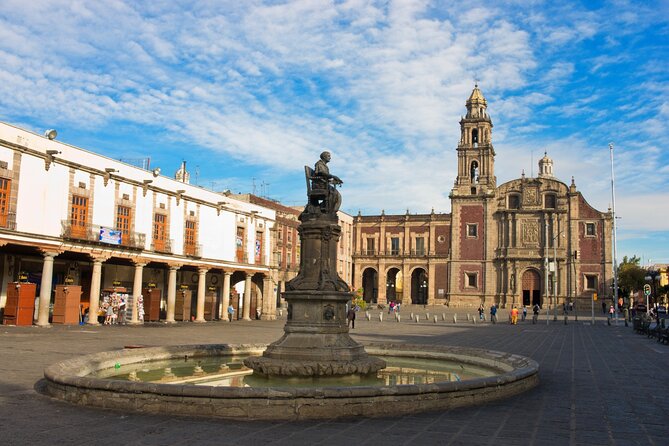
Next up is Plaza de Santo Domingo, with time set aside (around 20 minutes) to understand why this area matters to the Jewish story in Mexico City. You’ll connect this space to themes like persecution, resilience, and the rebirth of Jewish culture.
This stop is especially good for you if you like historical interpretation that isn’t just dates and names. The guide’s job is to point out what the setting suggests—why people sought safety, what community life meant, and how cultural identity persisted even when it faced pressure.
A practical note: plazas can get hot and bright. You’ll be walking in the open, so plan for sun and bring what you need. The tour operator notes that the tour takes place as planned in sun or rain, so dress for the weather rather than hoping for an indoor rewrite of the itinerary.
UNAM School of Medicine Museum and San Ildefonso: Jewish influence in academia and health
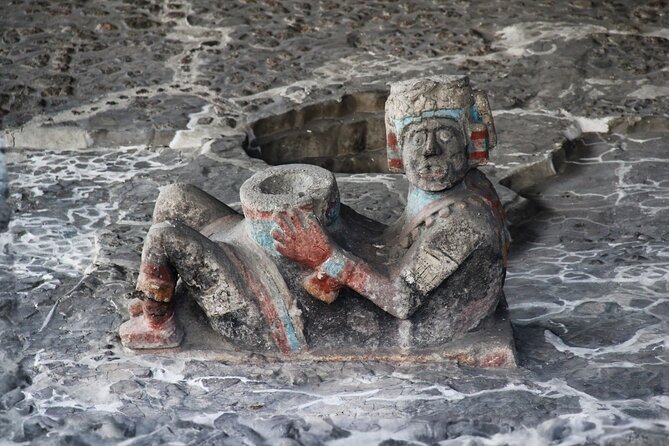
After the Santo Domingo area, the route passes the UNAM School of Medicine Museum and the Former College of San Ildefonso. This is one of those itinerary choices that often makes people say, okay, I didn’t expect to hear this angle.
You’ll get stories about influential Jewish figures in Mexico’s history, including contributions tied to academia and public health. That matters because it moves the conversation beyond survival alone. It highlights what communities built and influenced after arriving and becoming part of Mexico’s intellectual and civic life.
You’ll also see architectural heritage here, and the guide uses that visual context to help you understand how education and institutions shaped people’s options. This is a great section for curious travelers who like seeing how immigration and culture connect to long-term professional life—not only to hardship.
Sinagoga Justo Sierra: seeing the architecture and hearing survival stories

One of the main moments on the walk is the stop for Sinagoga Justo Sierra, described as one of the oldest synagogues in Mexico City. You’ll spend about 30 minutes total in this stretch that includes the surrounding sites, and you’ll get moving stories about community, faith, and survival.
Here’s the key expectation-setting point: synagogue entry isn’t included. So you should plan for viewing and guided commentary rather than assuming you’ll go inside. If you specifically want to attend services or get interior access, you may need a separate plan.
Still, this is a powerful stop because the guide connects the building’s presence to a much bigger narrative. You’re not just admiring architecture; you’re learning why a synagogue matters when the rest of the world is changing fast around it.
This is also where a positive highlight from a past experience fits well: people have found the restored synagogue visit meaningful and felt it added emotional weight to the history being discussed.
You can also read our reviews of more guided tours in Mexico City



Santa Teresa la Nueva to Mixcalco Market: from historical pressure to daily life
As the walk continues, you’ll pass Santa Teresa la Nueva, another reminder of how Mexico’s Jewish communities showed resilience over the centuries. This part of the route keeps the storyline moving forward, rather than getting stuck only in early colonial events.
Then you end at Mixcalco Market, a lively finish designed to show history in today’s Mexico City. The tour frames it as a place where you can witness the impact of Jewish influence in everyday culture and traditions, right alongside everything else happening in the market.
Two practical things to know:
- The tour ends back at the meeting point area, so you’re not wondering where your guide disappears to.
- Food and drinks are not included. But your guide can still offer insider ideas for where to eat afterward, which is a big reason why a guided walk can be worth the extra cost versus wandering on your own.
Mixcalco is a good place to recharge your legs and decide what you want for the next hour—especially if your brain is full of history and you want something sensory to reset it.
Price and value: what $116.54 buys you in 2 hours
At $116.54 per person for about two hours, this tour sits in the “worth it if you’ll use the guide” zone. You’re not paying for big-ticket entries, because the scheduled stops are listed as admission-free in the tour flow. You are paying for interpretation, local knowledge, and a licensed guide who can connect the dots between sites.
You also get private guiding for your group. The operator limits group size to 1–25 guests per guide, which matters for question time and hearing commentary clearly. If you travel with a small group, that’s where this kind of private format often feels like a sweet spot: you can ask follow-ups and get answers that fit your interests.
Language is English, and you also get a mobile ticket. You’ll confirm at booking, and you should check your email the day before the tour for important info from Rosotravel (the operator behind Ghent City Tours). That day-before message can be the difference between a smooth meeting and a frustrated scramble.
The guide experience: when it shines, and what to protect against
The strongest feedback pattern here is education delivered clearly. One guide named Karina has been described as exceptional, giving people a strong understanding of Mexico City Jewish history. That kind of guide impact is exactly what you want from a walking tour: not just facts, but a narrative you can carry with you after the last stop.
Still, one serious downside did appear: a reported no-show. That’s not something you can predict from itinerary details, but it is something you should handle proactively. The best defense is simple:
- Confirm the meeting point details in your pre-tour email.
- Arrive early and be visibly ready at the stated location.
- If something seems off, you’ll want to contact the operator quickly so you don’t waste the core tour time waiting.
If you’ve ever traveled where language barriers or communication delays can hit hard, this is the same lesson: do your small homework the night before, and you reduce risk.
Practical tips for a smooth walk in Centro Histórico
This is a straightforward walking format, but Mexico City rewards good prep. A few things that help you get the most out of the two hours:
- Wear comfortable shoes. You’ll be on foot through busy streets and historic blocks.
- Dress for sun or rain. The tour takes place as planned in weather changes, so check the forecast and bring a light layer if needed.
- Don’t plan synagogue entry as included. The itinerary includes seeing Sinagoga Justo Sierra, but entry isn’t part of the price.
- Bring curiosity, not just a phone. The value is in the guide’s connections between buildings and Jewish life under colonial rule, through persecution and resilience, and into the Holocaust-era impact on migration.
- Ask for local food ideas at the end. Food isn’t included, but the guide provides recommendations of local restaurants, cafes, and pubs.
One more subtle point: because the group size is capped per guide and this is private, the tour tends to work best when you actively engage. If you’re the kind of traveler who asks questions (even simple ones), you’ll likely leave with much more than the basic storyline.
Should you book this Jewish History Mexico City tour?
I’d book it if you want a structured way to understand Jewish history in Mexico City without turning it into a museum-only day. The stops are chosen for interpretation value—Centro Histórico landmarks tied to Spanish colonial context, community resilience, and later historical pressures that shaped where people could live and thrive.
I’d think twice if you’re expecting full attraction admissions or synagogue interior access, because those aren’t included. And if you’re the type who gets rattled by last-minute logistics, pay extra attention to the day-before email and meeting point.
For many travelers, this tour hits a real sweet spot: it’s short enough to fit into a busy itinerary, focused enough to feel coherent, and guided enough to make the streets feel meaningful instead of just photogenic.
FAQ
How long is the Jewish History Mexico City Private Guided Walking Tour?
It lasts about 2 hours.
Where does the tour start and where does it end?
It starts at Gran Hotel Ciudad de México, 16 de Septiembre 82, Centro Histórico de la Cdad. de México, Centro, Cuauhtémoc, 06000 Ciudad de México. It ends back at the meeting point.
Is this tour private?
Yes. It’s a private walking tour, and only your group participates.
What’s included in the price?
You get a private walking tour of Mexico City’s Old Jewish Quarter with a licensed guide fluent in your chosen language, interesting facts about Jewish history and culture, insider tips, and restaurant and cafe recommendations.
Are synagogue entries included?
No. Entry to synagogues isn’t included in the tour price.
Are attraction tickets included?
No. Tickets to attractions are not included.
Is the tour offered in English?
Yes, the tour is offered in English.
Do I need a printed ticket?
You’ll receive a mobile ticket.
Can I cancel for free?
Yes. You can cancel for a full refund up to 24 hours before the experience starts. Cancellation within 24 hours isn’t refundable.