REVIEW · MEXICO CITY
Iztapalapa: Cable Car Tour and Urban Art From the Heights
Book on GetYourGuide →Operated by KactusMX · Bookable on GetYourGuide
Fly over Iztapalapa without leaving the city. This Cablebús tour gives you an aerial way to understand Iztapalapa’s layout, community life, and big public art, plus a few story stops that make the neighborhood click. You start in the Bellas Artes area and move as locals do, with guides pointing out what you’d miss from street level, including the cultural importance of music like cumbia, sonidero, and urban rock.
I love two things most. First, the views: you get a real sense of the city’s sprawl, the mountains and volcano sightlines, and the murals showing their stories from above. Second, I love the human factor: guides like Eduardo and Benjamin help you navigate the metro so the ride feels less intimidating and your photos come out better.
The main drawback is simple: if you’re sensitive to motion, the long ride in the air can be rough. Also, the meeting point is specific—arrive early at the Parisian entrance of Bellas Artes metro and look for the guide in a green shirt with an umbrella.
In This Review
- Key things you’ll notice on this Iztapalapa cable car tour
- Price and 4-hour format: what you actually get for $24
- Where to meet near Bellas Artes and how to avoid the usual confusion
- The first metro ride: learning the system before you ride the air
- Cablebús over Iztapalapa: the no-walk view of real neighborhoods
- Murals, music rhythms, and stories you can spot from above
- The local park stop: volcano sightlines and the Iztapalapa growth story
- Tortilla making and snack culture: where the tour turns from view to taste
- Group size, pacing, and why your guide matters
- What to pack and what not to wear (this matters on the cable car)
- Who should book this Iztapalapa tour, and who should skip it
- Should you book this Cablebús and urban art tour?
- FAQ
- Where do I meet the guide for this tour?
- How long is the experience?
- How much does the tour cost?
- What is included in the price?
- What food and drink is included?
- What languages is the tour offered in?
- Is it a small group?
- Who should not book this tour?
- What should I bring?
Key things you’ll notice on this Iztapalapa cable car tour
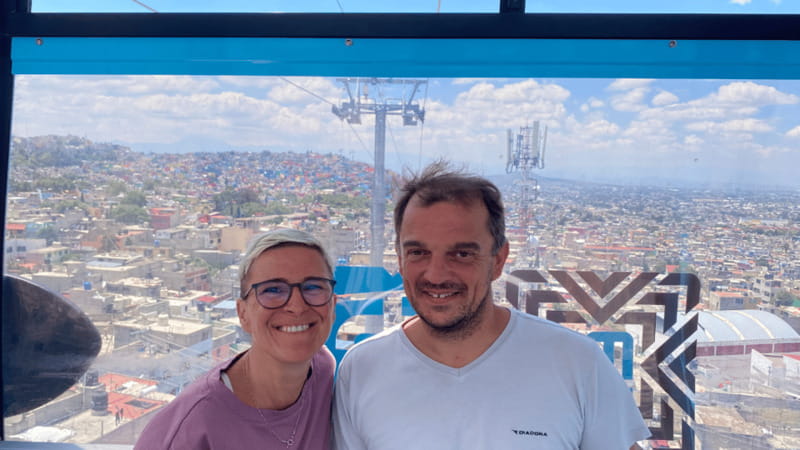
- The Cablebús angle: rooflines, rooftops, and murals look totally different from the cabins
- Metro confidence: you learn how to use the system with a guide, not guess and stress
- Street art with context: murals come with stories about community meaning, not just pretty walls
- A park with volcano sightlines: you’re shown where to look for distant mountains and the city below
- Food culture in the middle: you get tortillas (and you can add snacks if you bring cash)
Price and 4-hour format: what you actually get for $24
For $24 per person, this is one of those deals that feels better the moment you realize what’s included. You’re paying for a guided experience that rolls together public transport, the cable car ride, and a hands-on food moment (tortillas), not just a photo stop.
This matters because public transit in Mexico City can feel huge if it’s your first time. Multiple guides on the route (including Eduardo and Benjamin) focus on helping you understand the metro before you’re dropped into unfamiliar stations. If you want to see a neighborhood that most visitors skip, paying for that “how to get there” piece is part of the value.
The tour runs about 4 hours. Most of that time is spent on the metro and the cable car, which keeps the “walking” low, but still expect short guided stops for photos and explanations.
You can also read our reviews of more tours and experiences in Mexico City.


Where to meet near Bellas Artes and how to avoid the usual confusion
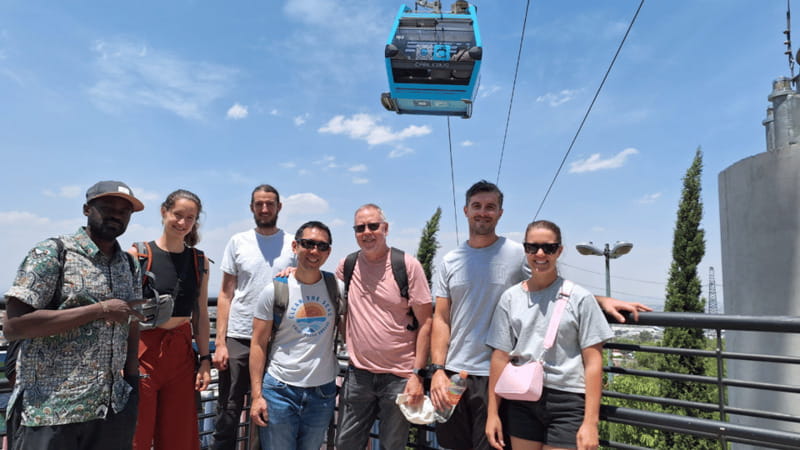
You meet at the Parisian entrance of the Bellas Artes subway, on the left side of the palace. The guide will be wearing a green shirt and carrying a green umbrella.
Here’s my practical advice: show up 10 minutes early, not right on time. One of the most common issues people described was not finding the guide quickly at this specific entrance, even though the location is clearly set. If you’re prone to missing meeting points, take a quick screenshot of the entrance you’re looking for, then compare it when you’re standing there.
Once you connect with the group, you’ll head to the metro segment, where the guide’s role becomes very real: you’ll learn what station moves to make and how to stay together.
The first metro ride: learning the system before you ride the air

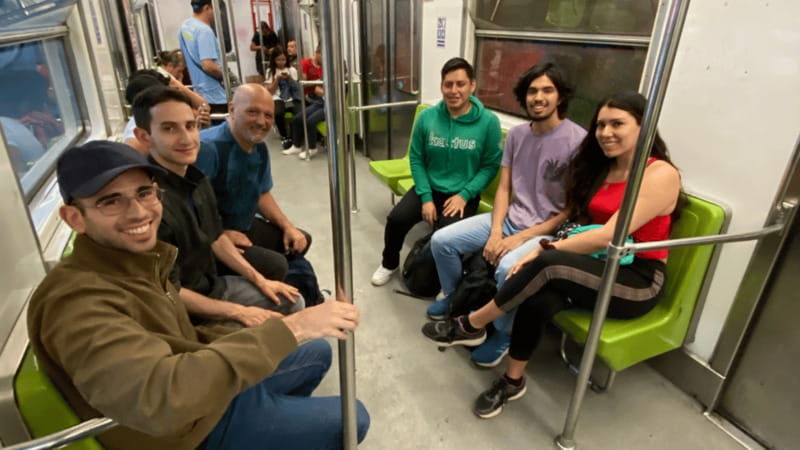
You start with about 45 minutes on the metro. This isn’t random transit time. It’s where the guide teaches you enough structure to avoid that panicky feeling of wandering around under fluorescent lights with a map that doesn’t match what you see.
Guides like Benjamin and Oscar are especially good at this part. In many cases, people walk away saying they feel confident using the metro later in the city, because they didn’t just watch a route on paper—they learned the logic of it in motion.
Why this is worth it: if you only see the cable car, you miss the point that this system is part of everyday mobility. The metro segment is the bridge that turns the cable car from a thrill ride into a practical look at how the city works.
Cablebús over Iztapalapa: the no-walk view of real neighborhoods
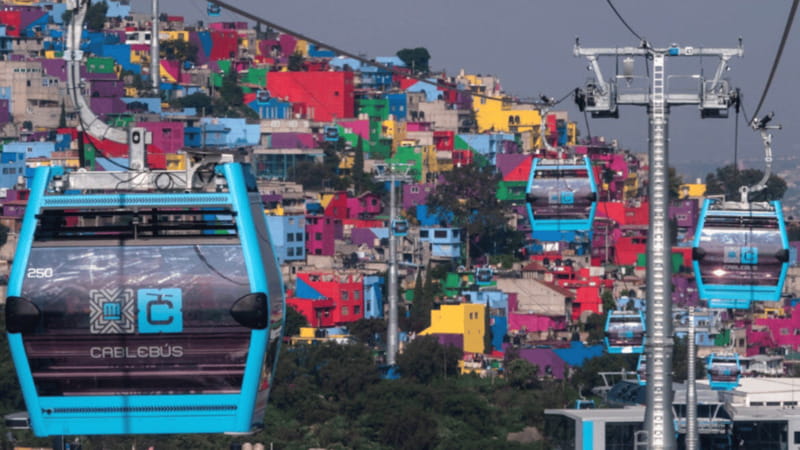
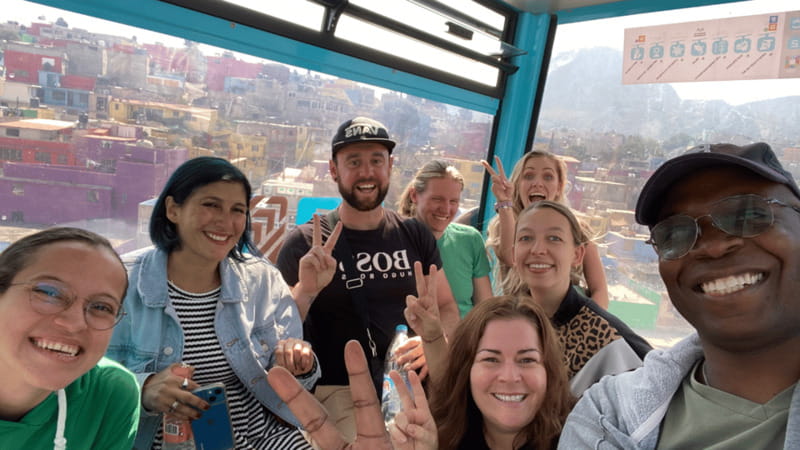
The heart of the tour is the cable car ride on Cablebús, billed as the longest in the world. Expect around 40 minutes during the main crossing, plus an additional cable car segment later on.
From the cabins, the neighborhood becomes readable. You see architecture patterns, the labyrinth-like street layout, and how the mountains frame the area. You also get that rare perspective where rooftops and high walls stop feeling like background and start looking like part of the story—especially when the guide points out mural locations and what they represent.
This is also where your “photo strategy” matters. If you want pictures that don’t blur, hold your camera/phone ready before the cabin moves over the densest areas. The ride is steady, modern, and quiet compared to the chaos you might expect from a city viewpoint. Most people find it easier than they thought—unless motion sensitivity is already an issue for you.
Murals, music rhythms, and stories you can spot from above
On the way, you’ll see impressive murals and you’ll hear the meaning behind them. This is one of the most praised parts of the tour because the art isn’t treated like decoration—it’s treated like communication.
Your guide connects what you’re seeing to local cultural rhythms. You’ll hear about cumbia, sonidero, and urban rock as part of the neighborhood identity. It sounds like a history lecture at first, but it lands differently from the air: you’re looking at real spaces where culture is made and displayed, not just described.
Guides such as Gabrielle, Eduardo, and Gaby (from different groups across time) are repeatedly praised for explaining murals and the city’s development in a way that keeps moving. You’re not stuck waiting for a speech. The guide’s job is to keep you linking the view to the story, stop by stop.


The local park stop: volcano sightlines and the Iztapalapa growth story
After the main cable car segment and a bit of guided time on the ground, you’ll visit a local park with views that include volcanoes and the city in the distance.
This stop does two things well. One, it gives your eyes a break from the dense urban view and lets you zoom out. Two, it’s where the guide talks about how Iztapalapa grew, how it handled challenges over time, and why this area developed the way it did.
Why parks matter on a tour like this: when you’re high up on a cable car, everything looks like geometry. The park view helps you translate that geometry into geography—where mountains sit, where the city spreads, and how distance shapes what people experience day to day.
You’ll also get more chances for photos here and at later scenic viewpoints on the route, with a guide keeping the group moving at a pace that works for different comfort levels.
Tortilla making and snack culture: where the tour turns from view to taste
The tour includes tortillas, and you’ll have a chance to join a tortilla-making activity. This is one of those food experiences that feels practical, not staged. You learn why tortillas matter so much in Mexican daily life, and you see the food culture from the inside of the neighborhood routine.
It also ties into the way the tour is designed: you spend a lot of time looking down at a community, then you step closer to what people actually eat and value.
You’ll want cash. The tour specifically recommends it for typical snacks, and people also mention picking up street food while you’re out. There’s also a note that gorditas cost around 15 pesos if you want to buy them as an extra.
If you’re the type who usually skips food stops because you fear tourist pricing, this is worth paying attention to. The tortillas portion is included, and the snack options are there if you want them—so you control your spending.
Group size, pacing, and why your guide matters
This is a small group capped at 9 people. That number isn’t just a comfort detail. It affects how well you get answers.
On routes like this, you need the guide to do three jobs at once: keep you together through transit, explain what you see quickly enough that it stays interesting, and help with practical timing for photos and viewpoints. Many people specifically praised guides such as Thomas, Tomas, Oscar, and Alexia for taking care of the group and keeping everyone on track.
Pacing is also important. The tour includes a guided segment (short), a photo stop, then more scenic viewpoints while you move back toward the cable car and metro. You’re not rushing, but you also don’t feel stuck in one place too long.
What to pack and what not to wear (this matters on the cable car)
Plan for a strict-but-clear dress code. The tour recommends discreet clothing and warns against sunglasses, hats, shorts, dresses, skirts, and sandals. From the rules, high heels, flip-flops, and certain clothing items aren’t allowed in the vehicle.
Also think about comfort. Wear comfortable shoes because you’ll still do some short transfers and stops even if the tour is mostly transit and viewpoints.
Bring:
- Comfortable shoes
- Cash for snacks
- Motion sickness prevention if you’re even a little sensitive
Skip:
- Anything restrictive or fragile (like large bags or oversize luggage)
- Drones
- Anything that would make noise or create issues on public transit
If you have motion sensitivity, take the warning seriously. The activity is not suitable for people with vertigo or those prone to motion sickness.
Who should book this Iztapalapa tour, and who should skip it
This tour fits best if you want a different view of Mexico City—one that moves beyond the usual sights and shows a neighborhood through its actual transportation system and public art.
It’s also a great choice if you like:
- Urban art with context
- Public transport experiences
- Panoramic views without long walking days
Skip it if you:
- Have vertigo, altitude sickness concerns, or respiratory issues
- Get motion sickness easily
- Need a mobility scooter (not allowed)
- Travel with very young kids (not suitable under 5)
Weight limits are also mentioned (over 220 lbs / 100 kg isn’t suitable), so check that early.
If you’re looking for a chill, mostly-on-rails day with real neighborhood insight, this is a strong match.
Should you book this Cablebús and urban art tour?
If you want the easiest way to see Iztapalapa from above, learn the metro basics in real time, and get a cultural food moment without turning it into a long walking grind, I think this is worth booking.
I’d especially recommend it as a first-day or early-trip option if you’re the type who likes confidence. After riding with a guide, you’ll understand how the system works well enough to explore on your own later.
Just be honest about motion sensitivity and dress requirements. If you’re comfortable with those trade-offs, this tour gives you a rare combo: views from the air plus community stories you can actually connect to what you see below.
FAQ
Where do I meet the guide for this tour?
Meet at the Parisian entrance of the Bellas Artes subway, on the left side of the palace. The guide will wear a green shirt and carry a green umbrella.
How long is the experience?
It lasts about 4 hours.
How much does the tour cost?
The price is $24 per person.
What is included in the price?
A public transport card, the cable car and metro ride, tortillas, an expert guide, and educational resources are included.
What food and drink is included?
Tortillas are included, but meals and drinks are not included.
What languages is the tour offered in?
The live guide speaks English and Spanish.
Is it a small group?
Yes. The group is limited to 9 participants.
Who should not book this tour?
It is not suitable for people under 5, people with vertigo, people with respiratory issues, people with altitude sickness, and people prone to motion sickness. A weight limit of 220 lbs / 100 kg is also noted.
What should I bring?
Bring comfortable shoes, cash for typical snacks, and motion sickness prevention if you need it.