REVIEW · MEXICO CITY
In the Footsteps of Frida Kahlo and Diego: Coyoacan and San Angel
Book on Viator →Operated by URBAN TOURS · Bookable on Viator
Frida and Diego in the streets of Mexico City. This 4-hour walk turns the legend around Casa Azul into real neighborhoods you can actually feel, starting with a calm nature break at Viveros de Coyoacán and ending with a focused look at Frida and Diego-related sites. I liked the way the guide ties art and politics to the streets you’re standing on, and I also loved the coffee, tea, and snacks that keep the pace human. One thing to consider: museum entry fees aren’t included, so you’ll mostly see the key Frida/Diego places from the outside.
I’m especially grateful that guides like Adrianna can make the whole route feel personal, with smart, friendly storytelling and a warm vibe. You’ll also get a real neighborhood rhythm: plazas, churches, and the Mercado de Coyoacán taste-and-smell experience. The trade-off is timing—if your group wants lots of extra photo stops, the later Frida-and-Diego portions may feel rushed, since there’s no indoor museum time built in.
In This Review
- Key Highlights You’ll Feel on This Walk
- Price and What You’re Really Buying (Mostly Time, Stories, and Neighborhood Access)
- Where the Tour Starts and Why That Matters for Your Shoes
- Viveros de Coyoacán: Your Quiet Reset Before the Art Talk
- Plaza de Santa Catarina and St. Catherine’s Church: Small Square, Big Mood
- Avenida Francisco Sosa: Old-Mexico Street Photography in Motion
- Jardin Centenario: People-Watching at the Social Center
- San Juan Bautista Church: Baroque Detail Without the Rush
- Mercado de Coyoacán: Where You Go to Taste the City
- Frida and Diego Sites: What You See (and What You Don’t)
- Leon Trotsky House: The Exile Story in a Real Building
- Diego Rivera and Frida’s Studio Complex: Modernist Architecture With a Story
- Tour Pace and Group Dynamics: The One Thing You Can Control
- What It Felt Like With Guides Like Adrianna (and Carlos)
- Who This Tour Fits Best
- Should You Book This Coyoacán and San Ángel Walk?
- FAQ
- How long is the tour?
- What time does it start?
- What’s the price per person?
- Is it private or shared?
- Is the tour in English?
- Are museum tickets included for Frida and Trotsky?
- What should I wear for the walk?
Key Highlights You’ll Feel on This Walk
- Viveros de Coyoacán: a city forest and plant nursery that resets your brain before the art talk starts
- Coyoacán plazas like Jardin Centenario, where you watch local life happen around fountains and performances
- Photo-and-history street time along Avenida Francisco Sosa, with colonial-era houses and jacarandas
- Church stops that add real architectural texture, not just sightseeing checkmarks
- Frida and Diego context tied to Leon Trotsky House and Diego Rivera/Frida’s studio complex (mostly from the outside)
- Built-in breaks with coffee/tea and snacks, helpful when the day is already warm
Price and What You’re Really Buying (Mostly Time, Stories, and Neighborhood Access)
At $95 per person for about 4 hours, you’re paying for a guided route that stitches together Coyoacán and San Ángel through art, architecture, and everyday life. The value is strongest if you want interpretation—why these buildings matter, who lived where, and how the political and artistic world connected to these streets.
A key detail: the Frida Blue House (Casa Azul) and the Leon Trotsky House Museum ticketed experiences aren’t included. That means you should treat this tour as a great pre-game and context builder, not as the full museum day.
If you’re the type who wants to walk out of a museum with a checklist done, you might feel a bit “outside-only.” If you’d rather understand the neighborhood first, then decide if you want to add ticketed time later, this format usually lands well.
You can also read our reviews of more tours and experiences in Mexico City.


Where the Tour Starts and Why That Matters for Your Shoes
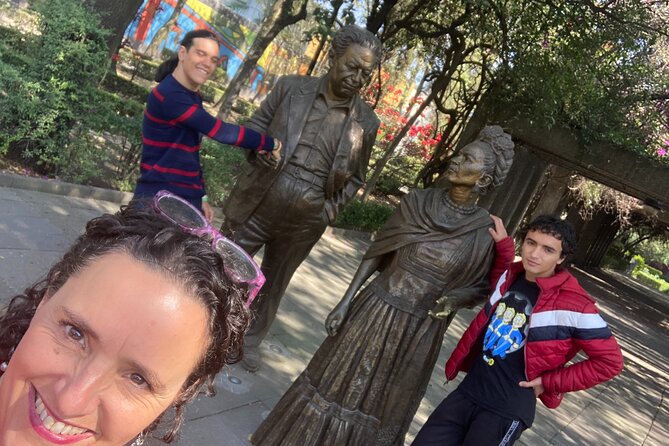
The tour meets at Puerta 5, Viveros de Coyoacán, at G. Pérez Valenzuela 58BIS, Santa Catarina, Coyoacán, 04010 CDMX. Starting at 9:00 am helps you get through the day’s heat while you’re still fresh, and it also means you’re starting with a peaceful park before things get busy.
You’ll be walking in Coyoacán’s older streets, where sidewalks can be uneven due to cobblestones. Wear shoes you can handle for real walking, not just pretty footwear.
Viveros de Coyoacán: Your Quiet Reset Before the Art Talk
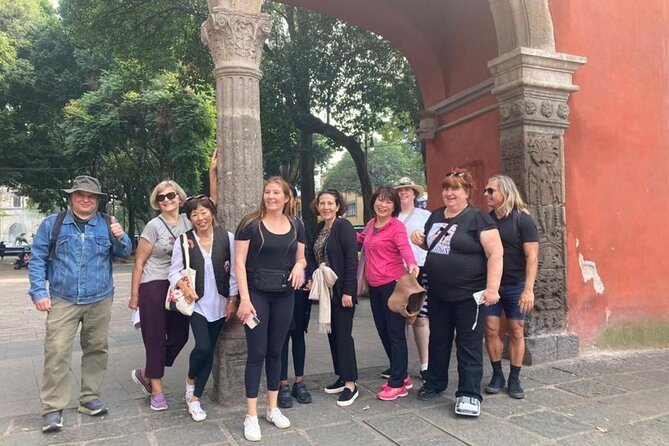
The first stop is a city green space that locals use like a backyard—jogging, meditating, and just slowing down. You’ll walk paths lined with tall trees, and you’ll get the sense that Mexico City’s “green lungs” are not a slogan; they’re a daily routine for people nearby.
This part isn’t just scenery. It’s a smart start because it gives you a calm baseline for everything that follows: you’re learning about Frida and Diego in a neighborhood shaped by nature, community, and conservation.
If you tend to feel rushed in big cities, this park moment is a practical win.
Plaza de Santa Catarina and St. Catherine’s Church: Small Square, Big Mood
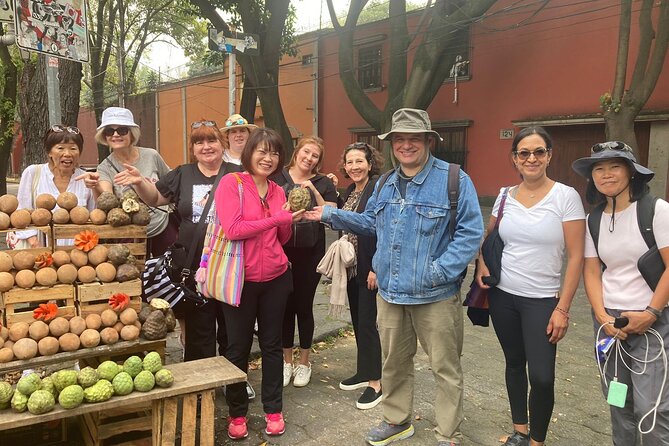
Next comes the Church of St. Catherine area, centered on Plaza de Santa Catarina. Think cobblestone calm, bougainvillea, and a peaceful square surrounded by historic homes and art studios.
The area feels like a time-shift compared with faster streets. You’ll get a short visit window (about 20 minutes at this stop), so it’s best to treat it as a focused look: notice the architecture around the edges of the plaza, and don’t spend the whole time trying to photograph everything at once.
If you like moments that feel quiet even in a major city, you’ll enjoy this pause.
Avenida Francisco Sosa: Old-Mexico Street Photography in Motion
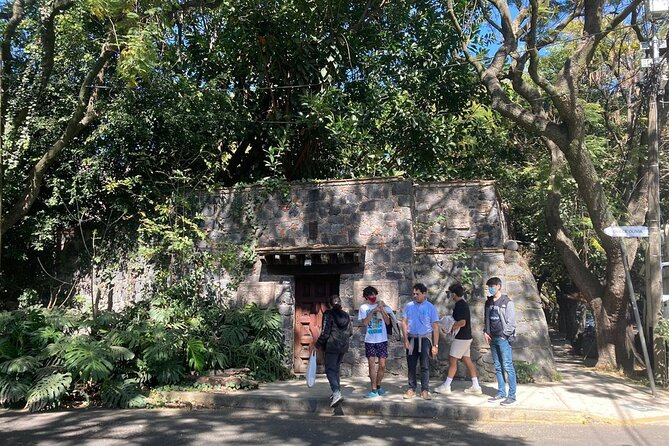
Walking down Avenida Francisco Sosa feels like you’re stepping into a postcard. The route is known for colonial-era homes, hidden courtyards, and jacaranda trees, and you’ll see charming cafés and artisan shops along the way.
This street also carries older meaning—its earlier use by indigenous travelers connecting to sacred waters in Coyoacán. Even if you’re not a history fanatic, the guide’s explanation helps you read the street rather than just pass it.
Bring your phone (or camera), but keep an eye on your pace. Cobblestones slow everyone down, and the tour timeline stays tight.


Jardin Centenario: People-Watching at the Social Center
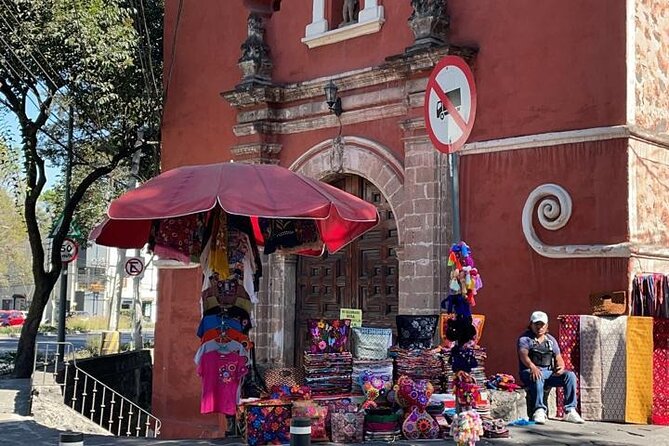
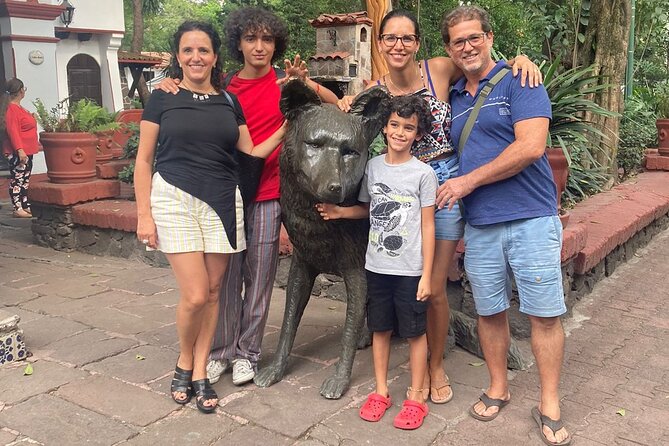
Then you reach Jardín Centenario, the social heart of Coyoacán. Here you’ll see fountains, an iconic coyote statue, and the kind of lively plaza energy where musicians, performers, and artisans tend to show up.
This is a great spot for a real pause. You can sit, grab coffee, and do plain old people-watching—one of the fastest ways to understand a neighborhood culture without needing a ticket.
It’s also where the tour tends to feel most fun and relaxed, especially if your guide keeps the stories light and conversational.
San Juan Bautista Church: Baroque Detail Without the Rush
The Parish of St. John the Baptist (San Juan Bautista Church) is one of the older, more beautiful churches in Mexico City. The baroque façade adds drama outside, then the interior offers a calmer, quieter contrast.
Your time here is short (about 10 minutes), and the ticket is listed as free for this stop. You won’t have a long, slow soak-through like you might at a museum, so I’d focus on one thing at a time: woodwork, paintings, or the general atmosphere.
This stop works well when you want culture that feels rooted in daily life rather than staged for visitors.
Mercado de Coyoacán: Where You Go to Taste the City

Next is the Mercado de Coyoacán, and this is one of the tour’s most practical moments. Markets teach you faster than any lecture—colors, smells, what people actually buy, and what’s worth trying if you only have a little time.
Expect snacks and iconic foods like tacos and tostadas, plus playful local favorites such as quesadillas sin queso. You’ll also see crafts and piñatas, which makes it a good place to buy small souvenirs without turning it into a “shopping trap.”
Admission here is free, and it’s a stop that naturally fits most diets and comfort levels because you can choose what to sample.
If you’re someone who likes to eat while you travel (not after), this market stop is a highlight.
Frida and Diego Sites: What You See (and What You Don’t)
The tour name promises Frida and Diego, and it delivers context with real place-based storytelling—but you need to know the limits.
You’ll pass by areas connected with:
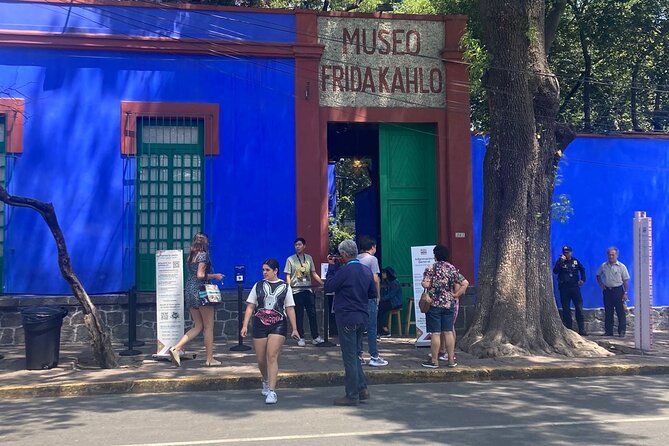
- Museo Frida Kahlo / Casa Azul, Frida Kahlo’s Blue House (ticketed entry not included)
- Leon Trotsky House Museum (ticketed entry not included)
- Museo Estudio Diego Rivera y Frida Kahlo with the modernist studio setup designed by Juan O’Gorman (ticketed entry not included)
So you’re getting the route and explanation, not the full museum interiors.
This approach has two big benefits. First, it lets you understand the relationships—how Frida, Diego, and Leon Trotsky intersect through exile and politics—without spending your whole day in lines or ticket timing. Second, it can help you decide what you really want to return to later.
A drawback shows up when you’re expecting the tour to function like a ticketed museum day. One person’s experience that fits this mismatch noted that the later Frida-and-Diego portion felt like more time was spent on waiting and less time on the specific museum experience they wanted. If you’re counting on indoor access to Casa Azul, plan to book that separately.
Leon Trotsky House: The Exile Story in a Real Building
Even without museum entry, the Leon Trotsky House stops matter. The key idea you’ll hear is that Trotsky sought refuge in Mexico in the late 1930s, and the preserved home connects you to his final period.
The house is described as being kept in the state from the day he was assassinated in 1940, which gives the stop a serious, intimate tone. You’ll learn how he was connected to Mexico, and how he related to Diego and Frida.
This isn’t light art chatter. It’s a reminder that these famous names lived inside political reality, not just galleries.
Diego Rivera and Frida’s Studio Complex: Modernist Architecture With a Story
The Diego Rivera and Frida Kahlo studio stop is a chance to see a design concept tied directly to their lives. This complex is attributed to architect Juan O’Gorman and is described as having two houses connected by a bridge.
Your guide will point out how Rivera’s studio remains much as he left it, with towering canvases and murals. Even if you don’t go inside, the explanation helps you understand why the architecture was designed to mirror two different styles of work and personality.
This is a strong match for you if you like buildings as much as art. It’s also the kind of stop that can turn “passing by” into meaningful context.
Tour Pace and Group Dynamics: The One Thing You Can Control
One real-world factor from experiences: group members who want frequent, long photo stops can stretch the timeline. Since ticketed interiors aren’t included, slowing down too much can make later parts feel shorter than you hoped.
Since this is a private tour for your group, ask yourself one question before booking: will your group keep a steady walking pace? If you’re traveling with friends who like constant picture breaks, consider setting expectations before you start.
If you prefer a smooth flow with fewer stops, this tour can feel great—especially with a guide who keeps the storytelling moving.
What It Felt Like With Guides Like Adrianna (and Carlos)
The best version of this tour seems to come from guide personality and pacing. One guide, Adrianna, stood out for being friendly, knowledgeable, and able to answer questions in a thoughtful, multi-perspective way. Her local context helped places feel personal rather than scripted.
Another guide, Carlos, was described as calm and insightful. That combination matters because the route covers different topics—art, architecture, politics, and markets. You want the explanations to keep connecting, not just adding facts.
If you’re an architecture fan, you might find that your guide is willing to adjust the walk with extra points of interest, if time allows—one experience included a short add-on car ride to see additional spots.
Who This Tour Fits Best
This tour is a great fit if you want:
- Neighborhood context for Frida Kahlo and Diego Rivera, not just museum time
- A mix of plazas, churches, markets, and streets in one organized walk
- A guide who makes history feel relevant to what you’re seeing right now
- A lighter, more social pacing with coffee and snacks included
It may be less ideal if you mainly want:
- Guaranteed indoor museum entry for Casa Azul or the Trotsky museum
- A long, uninterrupted focus on one major museum without walking between stops
Should You Book This Coyoacán and San Ángel Walk?
I think you should book this tour if your goal is to understand Frida and Diego as people connected to real places, and if you’re open to adding ticketed museum time separately later. The route gives you a strong “read” of Coyoacán’s plazas and streets, plus architecture and political context tied to Trotsky and the Rivera/Frida studios.
Skip it—or at least adjust your expectations—if you’re expecting it to replace Casa Azul entry. With admission not included for the key museums, you’ll likely leave wanting at least one follow-up visit based on what you enjoyed most.
If you like guided walking that feels grounded in everyday Mexico City, this one is an excellent start.
FAQ
How long is the tour?
The tour lasts about 4 hours.
What time does it start?
It starts at 9:00 am.
What’s the price per person?
The price is $95.00 per person.
Is it private or shared?
It’s a private tour/activity, meaning only your group participates.
Is the tour in English?
Yes, it’s offered in English.
Are museum tickets included for Frida and Trotsky?
No. Tickets for the Frida Kahlo Blue House and the Leon Trotsky House Museum are not included, and the tour is designed to visit them from the outside.
What should I wear for the walk?
Wear very comfortable shoes, because Coyoacán has uneven sidewalks from cobblestones.