REVIEW · MEXICO CITY
Historical Center of the CDMX on foot
Book on Viator →Operated by Corazon Historico · Bookable on Viator
Center-city Mexico City feels like an open-air classroom. I love that this walk hits the Zócalo and the National Palace area without wasting time, and I also like how each stop connects what you see on the street to the bigger story of how the city runs. One thing to consider: it’s a steady on-foot route for about 4–5 hours, so plan for real walking and comfy shoes.
Guides such as Leonardo and Alejandro have a reputation for keeping things organized and making the explanations match the sights you’re standing in front of. You’ll also get bottled water, a mobile ticket, and the tour is offered in English, which helps you stay focused instead of stuck figuring things out.
In This Review
- Key highlights
- Zócalo: the Constitution square that still sets the city’s rhythm
- Palacio Nacional and the Cathedral block: power, stacked eras, and a tight walking radius
- Centro Histórico streets near Tacuba: where the old road still shapes the walk
- Manuel Tolsá Square, Mining Palace, and the Postal Palace: styles you can actually see
- Palacio de Bellas Artes: what to look for before you buy a ticket
- Pace, meeting point, and how to run this tour smoothly
- Price and what’s actually included (and what costs extra)
- Who this Historic Center on-foot tour is best for
- Should you book this CDMX Historic Center walking tour?
- FAQ
- How long is the Historic Center walking tour?
- Where does the tour start and end?
- Is pickup available?
- Is the tour in English?
- What tickets are included?
- Is entry to Palacio de Bellas Artes included?
- Is this a private tour?
- What happens if the weather is bad?
- What is the cancellation window?
Key highlights
- Zócalo orientation: start at the Plaza de la Constitución and understand why this square matters
- National Palace + Cathedral area: learn how viceroyalty-era architecture shares space with Mexico’s executive power
- Tacuba Street texture: pass places like Café Tacuba and see why the old city streets feel so purposeful
- Manuel Tolsá Square stop: a short detour that’s all about architectural harmony
- Postal Palace contrast: an elegant building inspired by Venice-style ideas, right in the middle of CDMX
- Palacio de Bellas Artes (ticket extra): understand the Art Nouveau outside / Art Deco inside contrast before you buy
Zócalo: the Constitution square that still sets the city’s rhythm
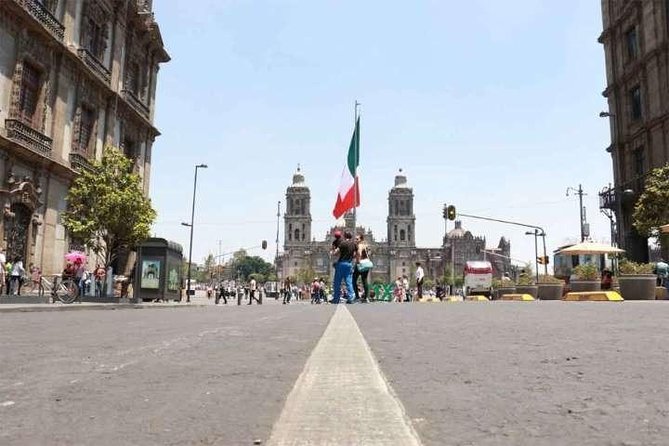
Your tour starts at the Plaza de la Constitución—better known as the Zócalo—and that’s smart. This is where you get your bearings fast, because everything around it has a reason to be here. The square is named for the Constitution of Cádiz promulgated in 1812, and it carries that political weight without feeling like a stuffy museum.
You’ll have about an hour at this first stop, and the timing matters. In a place this big, you don’t want to rush through the middle. Use the time to look up and around. You’ll notice how the square works as a meeting point for both everyday life and big public moments. It’s also described as the second largest square in the world and the first among Spanish-speaking countries, which tells you this isn’t just a pretty backdrop—it’s the city’s social stage.
Practical tip: take a minute to pick a landmark direction before you start walking. Once you start moving to the National Palace area and beyond, having a mental map helps a lot. If you’re prone to getting distracted by photos, set a simple goal: get wide shots at the start, then focus on details only after you’re oriented.
You can also read our reviews of more historical tours in Mexico City


Palacio Nacional and the Cathedral block: power, stacked eras, and a tight walking radius

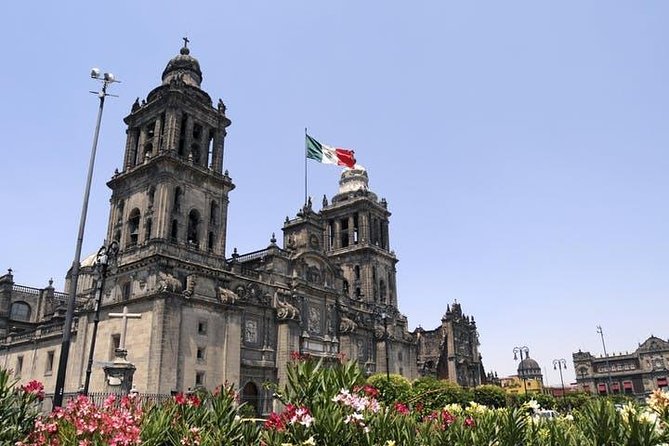
Next you head to the National Palace area, where Mexico’s executive power sits next to layers of older architecture. The guide’s job here is to help you read what you’re seeing, because this corner of the Historic Center is like a stack of time periods. Even the descriptions point out the Metropolitan Cathedral of Mexico City and the way it shares the broader complex around the National Palace.
You’ll spend around two hours here, which gives you enough time to slow down without feeling you’re losing the rest of the day. The key idea is that you’re not just looking at one building. You’re in a cluster that includes the National Palace, the old City Hall Palace, and government buildings tied to the current Mexico City government. That matters because it shows you how the city’s authority evolved—first through the colonial era’s physical footprint, then through modern governance using the same powerful geography.
What I like about this stop is how it anchors the rest of the tour. After this, when you walk the streets of the Centro Histórico, you’re not just collecting sights—you’re connecting why these blocks matter.
One consideration: because the area includes major landmarks like the cathedral and the National Palace zone, crowds can happen. You’ll want to keep your phone ready but not out every second. Use pauses to listen, then move.
Centro Histórico streets near Tacuba: where the old road still shapes the walk
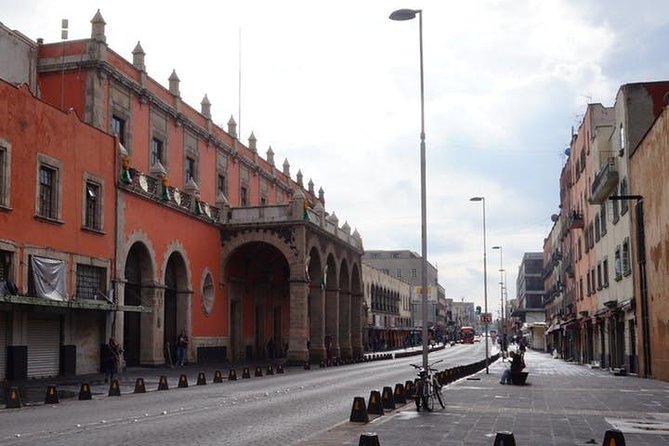
After the official buildings, the tour pivots to the city’s street-level personality—starting with the Historic Center. One highlighted stretch is Tacuba Street, described as the former Mexico-Tacuba Road. That’s a useful detail. It helps you understand that you’re walking routes that once linked major destinations, not random lanes that grew by accident.
You’ll have about two hours across this whole Historic Center segment, and this part is where the tour can feel extra fun. You pass through recognizable traditional spaces, including Café Tacuba. Even if you don’t stop for a meal, it’s the kind of place that signals how local tastes and history mix in the same neighborhood. It’s also a reminder that the Historic Center isn’t frozen in time—it’s still working.
The walking route also sets you up for quick architectural wins. You’ll reach Manuel Tolsá Square, called out for its architectural harmony. Even if you’re not a full-time architecture person, that phrase is a clue: this is a spot where buildings feel balanced instead of chaotic, and that makes it easier for your brain to take it in.
Important note: some of the areas you’ll hear about are tied to museums and cultural buildings, but entry rules can vary by building. So treat the walking portion as the main experience, and think of museum tickets as optional add-ons.
Manuel Tolsá Square, Mining Palace, and the Postal Palace: styles you can actually see

This segment is built around a satisfying pattern: pause in squares, then move to standout buildings that show a clear contrast in design. Manuel Tolsá Square is right in the middle of that. From there, you’re pointed toward the National Museum of Art (MUNAL) area and the Mining Palace (Palacio de la Minería), described as austere and neoclassical in tone.
Then comes a great contrast: the Postal Palace (Palacio Postal), described as a refined building inspired by architecture from Venice. That’s the kind of detail that makes this tour more than a checklist. You start seeing how Mexico City imported, adapted, and reinterpreted design ideas over time—and how those ideas appear in everyday urban landmarks.
Here’s how to get the most from this part: when you stop at each building, take one minute to name what stands out. For example:
- Do you notice shape and symmetry first (neoclassical vibes)?
- Or do you notice ornament and a more “theatrical” look (the Venice-inspired comparison)?
- Are the materials and façade details doing the storytelling?
That simple habit keeps you from drifting into photo-mode only.
Also, since the tour description explicitly notes the Mining Palace Book Fair is one of the busiest events in the city, you can think of this area as a cultural hub. Even outside event times, it feels like a place where people come for ideas, not just sightseeing.
Palacio de Bellas Artes: what to look for before you buy a ticket
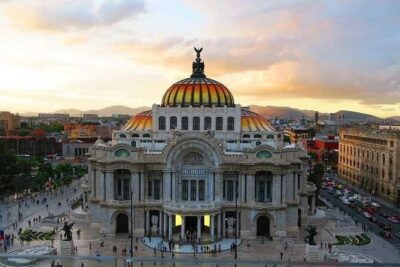
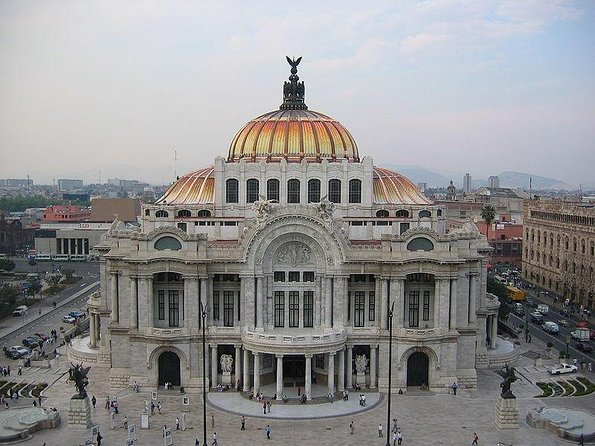
Your final major stop is Palacio de Bellas Artes, and you’ll spend about an hour here. This is one of Mexico City’s most recognizable cultural buildings, and the contrast is the whole point.
The exterior is described with Art Nouveau sculpture work, while the interior is Art Deco, decorated with geometric motifs and pre-Hispanic designs. That mix makes Bellas Artes feel like it’s speaking two visual languages at once. If you arrive knowing what to look for, the building can feel much more meaningful.
Now, tickets here are not included. You’ll likely see the exterior and some areas without paying, but entry for specific areas depends on what ticket you choose. Since the tour doesn’t include Palacio de Bellas Artes admission, decide ahead of time if you want to spend your limited time and budget on interior access—or if you prefer to focus on the building’s exterior impact and the walk itself.
My advice: if you’re a first-timer and you have limited energy at the end of a 4–5 hour walk, it’s totally reasonable to treat Bellas Artes as your grand visual finish and skip the interior ticket. You’ll still leave with a strong sense of why the place matters.




Pace, meeting point, and how to run this tour smoothly
This is designed as a focused half-day walk—about 4 to 5 hours—with a simple start and finish. You meet at the Plaza de la Constitución in the Centro Histórico area, and the activity ends back at the meeting point. That loop structure is great because you’re not constantly reorienting to a new drop-off.
Pickup is offered, too. The operator’s guide carries a sign with the reservation name and meets you in the hotel lobby. That’s especially handy if you’re staying in or near the Centro area and don’t want to fight with transit or street navigation at the start of your day.
You’ll also be near public transportation, which helps if you arrive a bit early or if your timing goes off. Just don’t assume you’ll be able to hop off and rejoin easily mid-walk—this tour is private, meaning it’s built around one group’s flow.
From the reviews you provided, there’s a clear pattern: guides keep things organized, and when the schedule changes, communication matters. One person even mentioned a small key chain gift as a thank-you, which is a nice touch if you like that personal, human feeling at the end.
Price and what’s actually included (and what costs extra)
Even without a stated total price, you can judge value by how the inclusions work here. Bottled water is included, and all fees and taxes are included—but museum or performance entries are not automatically covered.
Here’s the practical breakdown of what’s effectively “easy mode”:
- Zócalo: admission is listed as free
- National Palace area: admission is listed as free
- Historic Center streets and the key outdoor stops: admission is free
- Palacio de Bellas Artes: admission is not included
- MUNAL: tickets are not included
That’s meaningful because most of what you experience on this tour is built around walking, street views, architecture, and guided interpretation. You get the core CDMX feeling without being forced into multiple paid entrances. The one extra-ticket decision is Bellas Artes, and if you’re also interested in MUNAL, that’s another add-on to consider separately.
So the best value strategy is simple: decide what you personally want to pay for at the end—Bellas Artes only, MUNAL only, or both. Everything else is handled by the walking and the guide’s storytelling.
Who this Historic Center on-foot tour is best for
This tour works best if you want a structured downtown introduction without spending your whole time on transit. You’ll get a tight connection between major civic landmarks and the Centro Histórico’s architectural highlights.
It’s also a good pick if you’re traveling with a small group and want the attention to stay on your interests. The guide role seems to land best when you share what you care about—architecture, political landmarks, or visual design contrasts—so the walk feels less like a script and more like a guided route built for you.
Two moments in the reviews you shared stand out as strengths: the organized approach and the way guides keep the information moving from topic to topic. That’s a big deal in Mexico City, where you can easily lose time if a tour turns into slow wandering.
If you hate walking for hours or you need frequent long breaks, you might want a shorter, more targeted option. Otherwise, if you can handle a steady urban stroll, this is a very solid way to see the center in one go.
Should you book this CDMX Historic Center walking tour?
I’d book it if you want a first-pass map of the Historic Center that’s actually explained. The strongest reason is the combination: free access to the major anchors (Zócalo and the National Palace area), plus a guided route that leads you through streets, squares, and architecturally distinct buildings without leaving you guessing.
Book it especially if:
- you like architecture and want help noticing what matters
- you want a clear 4–5 hour plan with a return to the meeting point
- you prefer a private group with a guide who can keep the flow
Skip it or reconsider if:
- you’re not comfortable with steady walking
- you only care about one interior museum and don’t want the walking emphasis
If you’re flexible about where you spend ticket money at the end, this tour is a smart value way to get your bearings and leave with the center of Mexico City making sense.
FAQ
How long is the Historic Center walking tour?
It lasts about 4 to 5 hours.
Where does the tour start and end?
It starts at Plaza de la Constitución (Constitution Plaza) in the Centro Histórico and ends back at the same meeting point.
Is pickup available?
Yes. Pickup is offered, and the guide will have a sign with the reservation name and meet you in the hotel lobby.
Is the tour in English?
Yes, it is offered in English.
What tickets are included?
Bottled water and all fees and taxes are included. Admission for the Zócalo and the Palacio Nacional area is listed as free, and the Historic Center street stops are free.
Is entry to Palacio de Bellas Artes included?
No. Tickets for Palacio de Bellas Artes and MUNAL are not included.
Is this a private tour?
Yes. It’s a private tour/activity, so only your group participates.
What happens if the weather is bad?
This experience requires good weather. If it’s canceled due to poor weather, you’ll be offered a different date or a full refund.
What is the cancellation window?
You can cancel up to 24 hours in advance for a full refund. If you cancel less than 24 hours before the start time, the amount you paid won’t be refunded.