Map guilt disappears fast in Mexico City.
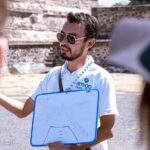
This walking tour gives you an organized way to see the Centro Histórico without feeling lost, and it’s led in English with a small group capped at 12 (so questions don’t get swallowed). The guide, Ricardo, ties famous landmarks to stories you usually won’t get from a quick guidebook skim, including great photo stops and viewpoint moments.
I especially love the repeated opportunities to pause above street level. From rooftop breaks to a longer sunset hang on Terraza Catedral, you get layered views that help the whole city make sense—old churches, grand buildings, and Aztec-era context in the same day.
One thing to consider: this is a real walking day. With a 5.5-hour schedule and lots of stops, wear comfortable shoes and expect to work for your views.
In This Review
- Key things to know before you go
- Price and logistics: what $69 gets you (and why it’s fair)
- Starting at Barrio Alameda: your first dose of context
- Alameda Central to Bellas Artes: reading architecture at street level
- House of Tiles, then Palacio Postal: two dramatic buildings, different stories
- Museo Nacional de Arte (outside), then Madero Avenue: turning big streets into meaning
- Iturbide building, Estanquillo rooftop, and Shops at Downtown: breaks you’ll actually enjoy
- Gran Hotel Ciudad de México: stained glass you’ll remember
- Zócalo and Catedral Metropolitana: the heart of Centro Histórico
- Plaza de Santo Domingo and the Diego Rivera murals: art tied to place
- Templo Mayor viewpoint and Sor Juana’s area: shifting gears from empire to everyday streets
- Terraza Catedral sunset break: how to make the day feel complete
- The guide experience: why Ricardo’s approach drives the reviews
- Who should book this walking tour (and who might want a different plan)
- Should you book Epic Centro Histórico Walking Tour?
- FAQ
- FAQ
- What’s the duration and start time?
- How many people are in a group?
- Is the tour offered in English, and do I get a ticket on my phone?
- Do you go inside major sites, or is it mostly from outside?
- Is alcohol included, and is mezcal tasting available?
- Can I cancel and get a full refund?
Key things to know before you go
- Small group, big attention: Max 12 people means Ricardo can slow down when you have questions.
- Rooftops and viewpoints are built in: You’re not just moving—there are intentional breaks to look.
- A mix of inside-and-outside stops: You’ll enter some major sites, but you’ll also appreciate key architecture from smart vantage points.
- You’ll learn the present, not only the past: The tour connects landmarks to modern-day Mexico City culture and context.
- A flexible day when things change: The route can adapt if certain places are closed due to street activity.
- Good value for a first week day: It’s a fast way to understand the layout before you tackle museums on your own.
Price and logistics: what $69 gets you (and why it’s fair)
At $69 per person for about 5 hours 30 minutes, this tour sits in the “serious sightseeing” category, not the “quick highlights” category. The value comes from three things you feel immediately: you cover a lot of ground, you get a guide who actually explains what you’re seeing, and the pace includes multiple short breaks so the day stays enjoyable instead of exhausting.
It’s also structured to be low-friction. You receive a mobile ticket, and the tour includes all fees and taxes plus the guide. Alcoholic drinks are not included. If you’re thinking of doing a guided day in Centro Histórico, this is one of the more straightforward ways to spend your time well—especially if you book about a month in advance (on average it’s booked around 23 days ahead).
The tour starts at 12:00 pm at Barrio Alameda, Calle Dr Mora 9, Colonia Centro. It ends near Regina Coeli parish, Simón Bolívar 92, Centro Histórico.
You can also read our reviews of more walking tours in Mexico City


Starting at Barrio Alameda: your first dose of context
You meet at Barrio Alameda (Calle Dr Mora 9), and the first minutes are an introductory talk. That matters more than it sounds. Centro Histórico can feel like one endless cluster of churches, plazas, and grand façades. Starting with orientation helps you know what to watch for as you walk: architecture cues, street layout, and why certain buildings are where they are.
Then you ease into the first landmark area with Alameda Central. Even if you’ve seen photos of Mexico City’s classic parks, a guided walk changes how you notice details—statues, sightlines, and the park’s role in the city’s story.
Tip: If you’re arriving by transit, plan to be at the meeting point a few minutes early. Centro streets can be busy, and you want to start calm rather than sprinting.
Alameda Central to Bellas Artes: reading architecture at street level
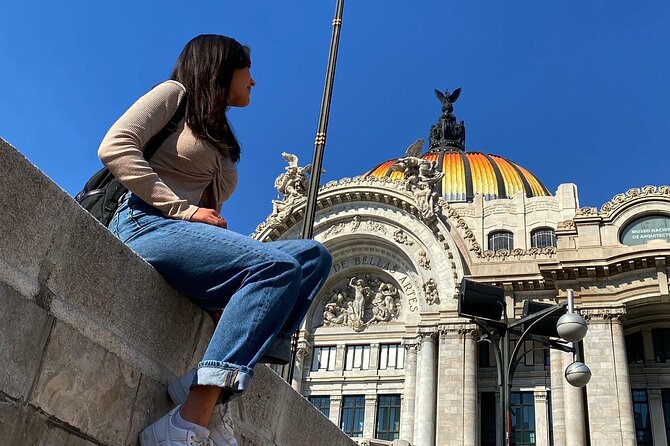
The route quickly shifts from park vibes to major culture stops. You’ll walk through Alameda Central and then head to Palacio de Bellas Artes.
You won’t go inside the museum here. Instead, you get time to appreciate Bellas Artes from a viewpoint. That’s a smart choice when you’re on foot. The exterior design gives you plenty to talk about—especially if you’re learning what architectural styles are signaling and how the building fits into the city’s cultural identity.
This is also where you’ll start noticing the tour’s style: you’re not just collecting names of places. Ricardo’s explanations focus on how to see, not just what to see.
House of Tiles, then Palacio Postal: two dramatic buildings, different stories
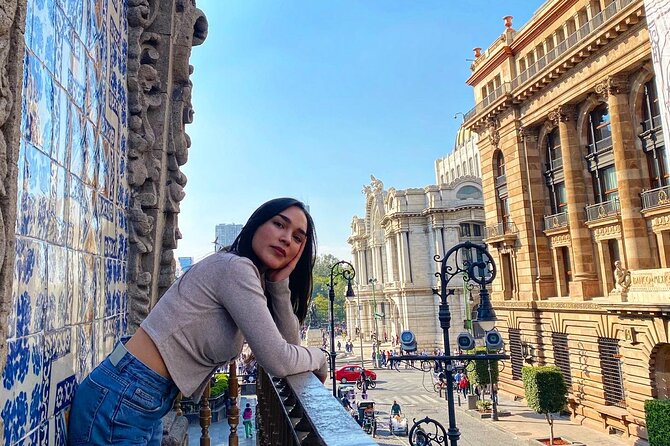
Next up is the House of Tiles (Casa de los Azulejos). You explore key points of the colonial building and get time for “why it looks like that” explanations. Places like this can be easy to walk past as a pretty façade. With a guide, it turns into a story about who built it, why it matters, and what details give it away.
Then you move to Palacio Postal. Here, you do enter. The payoff is that you get to admire the gorgeous architecture up close rather than only from the curb. The interior space is the kind of stop that makes you pause without needing a museum ticket.
This pairing works well for first-time visitors because it shows two different ways Centro Histórico makes beauty: one through a private historical building with distinctive tilework, and the other through a grand public-facing interior you can experience directly.
Museo Nacional de Arte (outside), then Madero Avenue: turning big streets into meaning
You’ll stop at Museo Nacional de Arte and appreciate the building from the outside. That might sound like a “skip,” but it’s often useful on a packed walking day. You still get architectural context without losing time on a longer museum visit.
Then comes Francisco I. Madero Avenue, one of the city’s signature downtown streets. You walk it with multiple stops, and those stops are where the tour earns its keep. A main street is easy to treat like a corridor for shopping. With Ricardo’s guidance, it becomes a timeline you can walk.
Expect a mix of present-day culture and historical context. That’s the difference between “seeing streets” and understanding the street grid and landmark placement.




Iturbide building, Estanquillo rooftop, and Shops at Downtown: breaks you’ll actually enjoy
You enter Museo Antiguo Palacio de Iturbide, which gives you a change of pace from open-air sidewalks. It’s a historical colonial building now used as a museum, and you get story time inside.
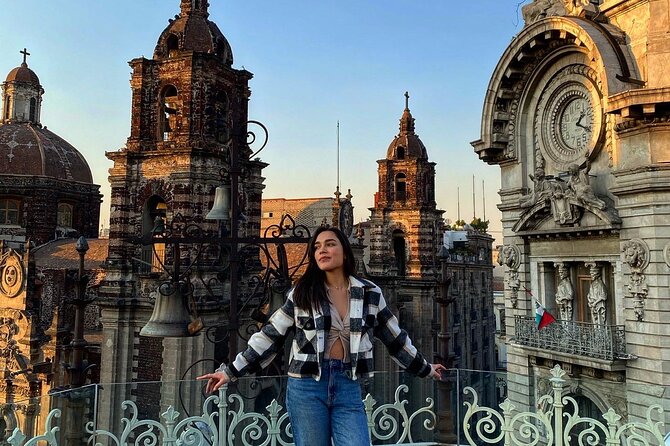
After that, you’ll visit Museo del Estanquillo for a rooftop stop. The schedule includes a 10-minute break while you admire the views. Rooftops in Centro Histórico are a cheat code: they let you see how plazas, domes, and streets relate to each other in a single glance.
Then you explore The Shops at Downtown, a historical colonial building converted into a space with a boutique hotel, hostel, shops, and restaurants. It’s a practical detour if you want a low-effort souvenir browse, plus you get the chance to see Mexican crafts in a setting that feels connected to the neighborhood rather than like a random tourist market.
For those who want it, there’s also the option of a small mezcal tasting here. Alcoholic beverages are not included overall, but this is a listed optional moment—so you can choose without feeling like you missed something.
Gran Hotel Ciudad de México: stained glass you’ll remember
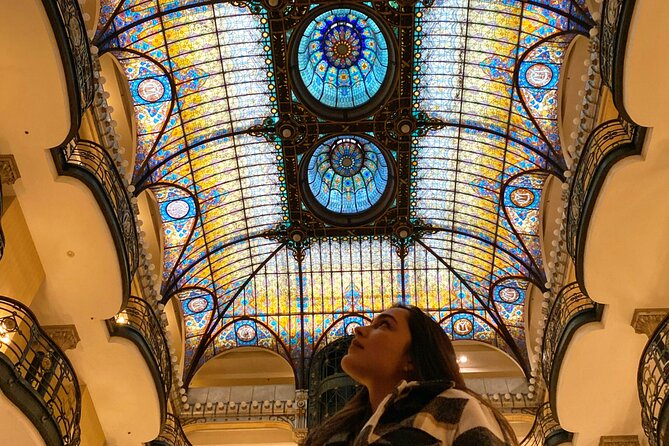
Next comes Gran Hotel Ciudad de México. You enter the building to admire its Art Nouveau architecture and, most notably, its stained-glass ceiling.
This is the kind of stop that helps a tour like this feel more than educational. It’s a sensory break in the middle of the day. After hours of walking and plaza stops, stepping into a space full of light and design resets your eyes.
If you like architecture, this is one of the spots to slow down and take photos (and Ricardo is the type to help with good angles).
Zócalo and Catedral Metropolitana: the heart of Centro Histórico
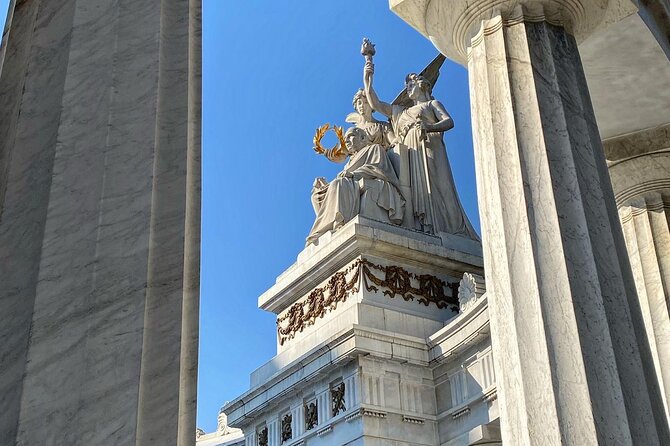
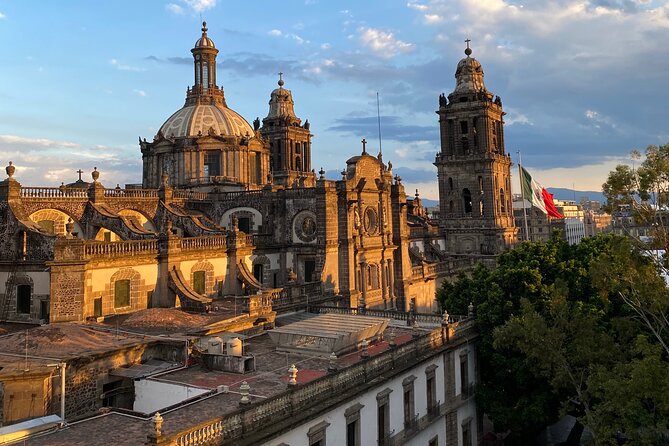
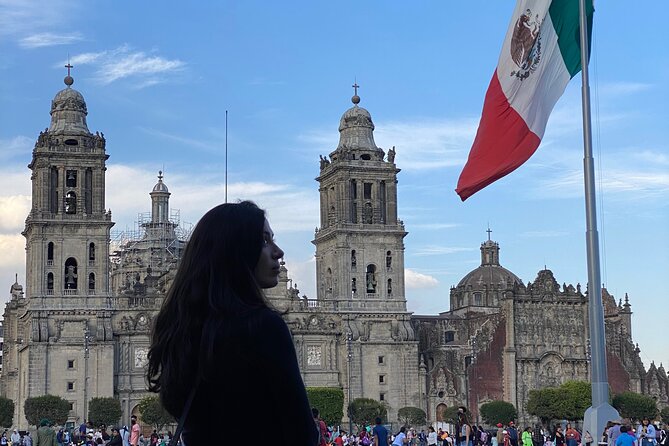
You’ll reach the Zócalo, Mexico City’s iconic main square. You don’t just stroll it—you walk around and learn interesting facts about the square and the surrounding buildings. Zócalo is famous, but it’s also easy to see it as a big empty stage. Guided context turns it into a living central node of Mexican history and civic life.
Then you enter Catedral Metropolitana de la Ciudad de México. Again, the tour focuses on architecture and history in a way that keeps the time efficient. You get to appreciate the scale and design without turning the stop into an all-day commitment.
Plaza de Santo Domingo and the Diego Rivera murals: art tied to place
Next is Plaza de Santo Domingo. You stop at the square and learn about the history and stories connected to the surrounding buildings. Squares can feel interchangeable if you only look at them visually. The guided explanation is what makes you realize each one has a distinct role.
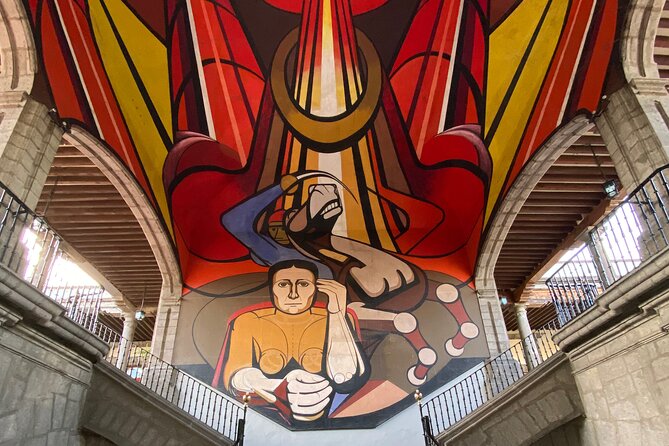
Then you move to the Diego Rivera and David Alfaro Siqueiros murals at the Secretaría de Educación Pública. You enter to admire the murals. This is one of those cultural moments where the tour’s pace feels correct: long enough to take in the artwork and absorb the themes, but not so long that you fall behind.
If you’re interested in how Mexican art speaks about identity and social ideas, this is a high-impact stop in a day that already covers a lot.
Templo Mayor viewpoint and Sor Juana’s area: shifting gears from empire to everyday streets
You’ll make a stop at Museo del Templo Mayor. You won’t enter the museum, but you’ll have the opportunity to look at the ruins of Templo Mayor from a great viewpoint.
That design choice is smart. It gives you the Aztec context without adding extra museum time. Even a viewpoint stop can change your understanding of the city—because suddenly Centro Histórico isn’t only colonial churches and government buildings. It’s built on layers.
After that, you head toward Museo de Sitio del Claustro de Sor Juana and walk a street area known for street art and bars. This part gives the day a more human, everyday feel—less postcard, more neighborhood.
And yes, it’s still part of the same story. The tour keeps linking what you see to how Mexico City lives now.
Terraza Catedral sunset break: how to make the day feel complete
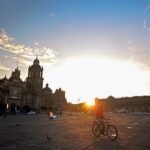
Near the end, the schedule brings you to Terraza Catedral for a longer 30-minute break. You’ll have a drink as you enjoy some of the best Centro Histórico views during sunset.
This is a key moment because it acts like a reset button. All morning and early afternoon, you’ve been collecting landmarks. Now you can stand back, look, and mentally connect the dots: where each major building sits relative to the plazas and streets, and how the city’s layers line up.
Even if sunset clouds aren’t cooperating, the viewpoint time is still worth it. In a walking tour, a well-timed pause can be the difference between “I saw a lot” and “I understood a lot.”
The guide experience: why Ricardo’s approach drives the reviews
This is a tour where the guide is the main event—and that shows in the feedback. Ricardo’s style comes through as practical and personal.
You’ll feel it in moments like these:
- He explains why buildings look the way they do, not only what they’re called.
- He adapts the day if some places are closed due to street activity.
- He gives restaurant and activity suggestions after the tour, which helps you keep momentum.
- He’s relaxed and patient, so the day doesn’t feel like a race.
- He’s also known for taking good photos, which can save you from awkward selfies at the worst angles.
The small group size helps all of this. With up to 12 people, you’re less likely to get lost in the shuffle, and you can ask follow-up questions when something clicks.
Who should book this walking tour (and who might want a different plan)
This tour is a great fit if you:
- Want a first-day orientation in Mexico City’s Centro Histórico
- Love architecture and art, including major mural work
- Prefer a guide who explains both the landmark and the context around it
- Like rooftop views and photo breaks built into the route
You might want to choose a different option if:
- You don’t like long walking days or you need frequent seating/rest stops
- You want only one or two major sites and zero “in-between” walking
The tour lists a moderate physical fitness level requirement, and the day does add up. On this route, expect real sidewalk time.
Should you book Epic Centro Histórico Walking Tour?
Yes, if you’re coming to Mexico City with limited time and you want to understand what you’re looking at. The mix of entered buildings (like Palacio Postal, Gran Hotel Ciudad de México, and Catedral Metropolitana) plus viewpoint moments (like Bellas Artes and Templo Mayor) creates a balanced day. And the rooftop and sunset stop helps you feel like the day has an ending, not just a sequence of stamps.
If you already plan to spend most of your time in museums and want deeper ticketed experiences at each site, you might pick a museum-focused day instead. But for a first pass through Centro Histórico—with context, pacing, and photos—this one is a strong choice.
FAQ
FAQ
What’s the duration and start time?
The tour runs about 5 hours 30 minutes and starts at 12:00 pm.
How many people are in a group?
The group is limited to a maximum of 12 travelers.
Is the tour offered in English, and do I get a ticket on my phone?
Yes, it’s offered in English, and you’ll receive a mobile ticket.
Do you go inside major sites, or is it mostly from outside?
You’ll enter several stops, including Palacio Postal, Museo Antiguo Palacio de Iturbide, Gran Hotel Ciudad de México, and Catedral Metropolitana. Some others are outside or viewpoint-focused, such as Palacio de Bellas Artes and Museo del Templo Mayor (you look at ruins from a viewpoint rather than entering the museum).
Is alcohol included, and is mezcal tasting available?
Alcoholic beverages are not included. There’s an option for a small mezcal tasting at The Shops at Downtown.
Can I cancel and get a full refund?
Yes—free cancellation is available. You can cancel up to 24 hours in advance for a full refund.