REVIEW · MEXICO CITY
Ciudad de Mexico: Historia y vida moderna en la capital
Book on GetYourGuide →Operated by Camina la ciudad · Bookable on GetYourGuide
Mexico City makes sense fast on this walk. You’ll connect Templo Mayor ruins and the Metropolitan Cathedral with major downtown landmarks, plus the everyday life of the barrio as the story moves from pre-Hispanic times to modern Mexico. I love the way the guide turns architecture and street history into something you can actually picture, and I love the included juice/snack break that keeps the pacing realistic. One drawback: it’s still a 3.5-hour walking tour, so plan on comfortable shoes and staying hydrated.
At about $37 per person for 3.5 hours, you get an expert, English/Spanish guide and access to multiple churches and historic buildings, with plenty of photo time. You’ll start in the square in front of the Museo de la Ciudad de México, and the group is limited to 10 people, which makes questions easy and the tour feel personal.
In This Review
- Key points worth caring about
- How This Tour Helps You Understand Mexico City on Day One
- Starting Near Museo de la Ciudad de México and Pino Suárez
- Hospital de Jesús Nazareno: A Short Stop That Adds Depth
- The Zócalo Area: Photo Stop Energy With Guided Context
- Metropolitan Cathedral and Santo Domingo Plaza: Big Architecture, Clear Explanations
- Templo Mayor de México–Tenochtitlan: Where the City’s Layers Become Real
- Plaza Manuel Tolsá Break: Food Tasting and a Short Reset
- Casa de los Azulejos and Jugos Canada: Pretty Facades Plus Real Stops
- Palacio de Correos and Palacio de Bellas Artes: Finishing With Style
- Price and Pace: Is $37 Good Value for This 3.5-Hour Tour?
- Who Should Book This Tour (And Who Might Prefer Another Option)
- Should You Book Ciudad de México: Historia y vida moderna en la capital?
- FAQ
- How long is the tour?
- What is the price per person?
- Where do I meet the guide?
- Is this a small group tour?
- What languages are offered?
- Is the tour wheelchair accessible?
- What does the tour include?
- Are all museum entrances included?
- What should I bring?
- Is alcohol allowed during the tour?
Key points worth caring about
- Aztec + colonial highlights in the same route: Templo Mayor and the Catedral Metropolitana sit on your path.
- Downtown landmarks plus quieter stops: Hospital de Jesús Nazareno and the Museo de la Ciudad de México add depth.
- Architecture-focused wandering: Bellas Artes / Palacio de Bellas Artes, Casa de los Azulejos, and the Palacio de Correos area give you variety.
- Food and drink built into the timing: a tasting break and an included fresh juice or typical Mexican snack keep it from feeling like a pure museum slog.
- A guide who actually studies the city: the tour’s expert background runs across art, history, and anthropology, and past guides like Martín (and sometimes Regina) have been praised for clear explanations.
How This Tour Helps You Understand Mexico City on Day One
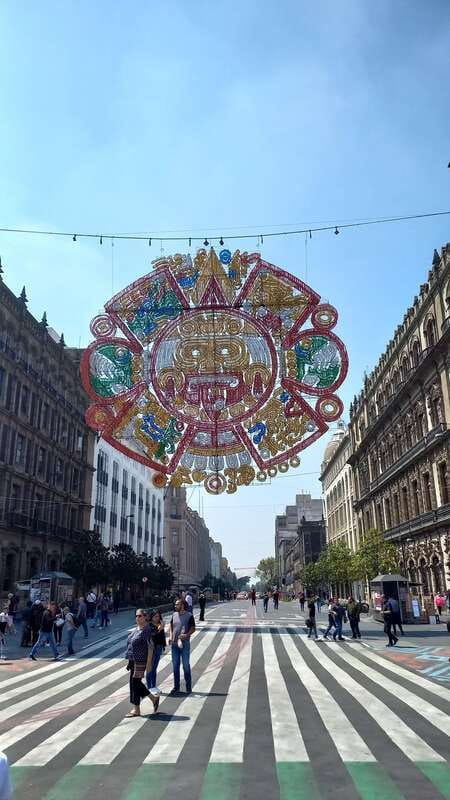
If your first day in Mexico City feels like information overload, this tour is a good antidote. Instead of sending you from one random landmark to another, you get a guided route through Centro histórico that explains how different eras overlap in the same neighborhoods.
What I like most is the balance. You’ll see big, famous names like the cathedral and the Palace of Fine Arts area, but the tour also makes room for the smaller, more human details—like historic buildings you wouldn’t always think to chase on your own. It’s also not just stone-and-statues. The tour talks about architecture, food, and daily life, so when you later wander the city solo, you’re not starting from zero.
Because the group is limited to 10, you’re not lost in a crowd of strangers. You can ask direct questions, and the guide can adjust the pace if someone needs an extra moment to understand a building or get a photo.
One practical note: you are moving. This is designed as a short walking circuit, not a sit-down lecture. Bring water and comfortable shoes, and you’ll feel grateful for the built-in refreshment break later on.
You can also read our reviews of more tours and experiences in Mexico City.


Starting Near Museo de la Ciudad de México and Pino Suárez
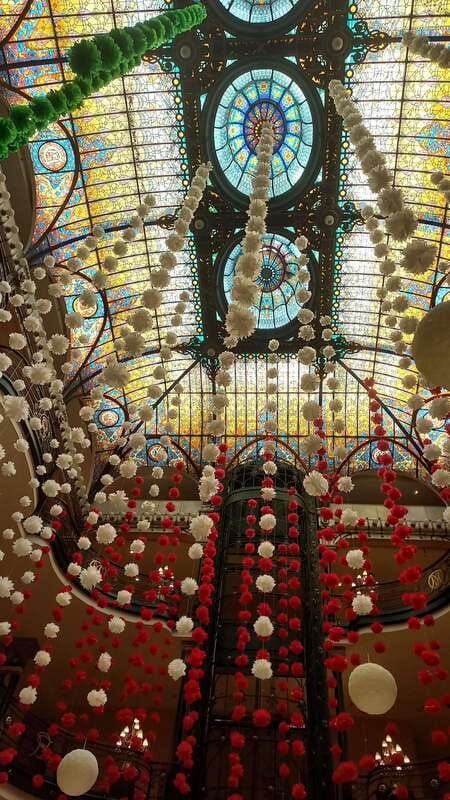
You meet in the square in front of the Museo de la Ciudad de México, near Rcda. de Jesús 548. That matters because it puts you right in the center of the action. Within minutes, the tour starts threading the city’s story through the oldest-feeling streets, including stops connected to the historic area around Pino Suárez.
Even if you don’t love museums, beginning here works. You’re primed to notice things: old facades, street layouts, and the way downtown keeps changing shape. This is where the tour’s theme clicks. You’re not just collecting photos; you’re learning how the city layers its past into the present.
You’ll also get a short guided look at the Museo de la Ciudad de México, and that quick orientation helps you place what you’ll see next—especially when the route shifts toward the Zócalo area and major historic religious spaces.
Hospital de Jesús Nazareno: A Short Stop That Adds Depth
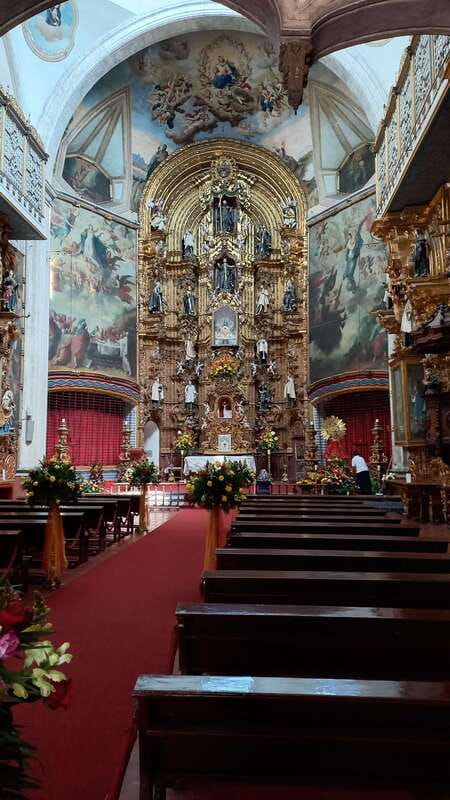
A key early moment is the Hospital de Jesús Nazareno. The visit is brief (about 20 minutes), but that short window is enough to show you why the stop is on this kind of first-day route. Historic hospitals aren’t just medical buildings; they’re part of the local story and built into how the neighborhood developed.
This is also a nice contrast to the more monumental stops later. Big squares and cathedrals can be impressive, but they can also blur together. A place with its own history gives you a different texture—something more grounded than pure spectacle.
Because your time is limited, don’t worry about trying to absorb everything like a textbook. Use the guide for direction: what you should notice on the exterior, what to connect to later stops, and how this building fits into the broader timeline the tour follows.
The Zócalo Area: Photo Stop Energy With Guided Context
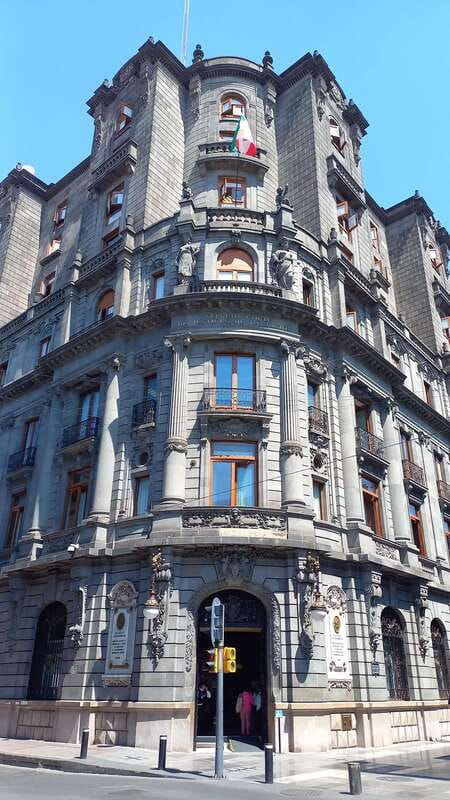
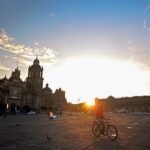
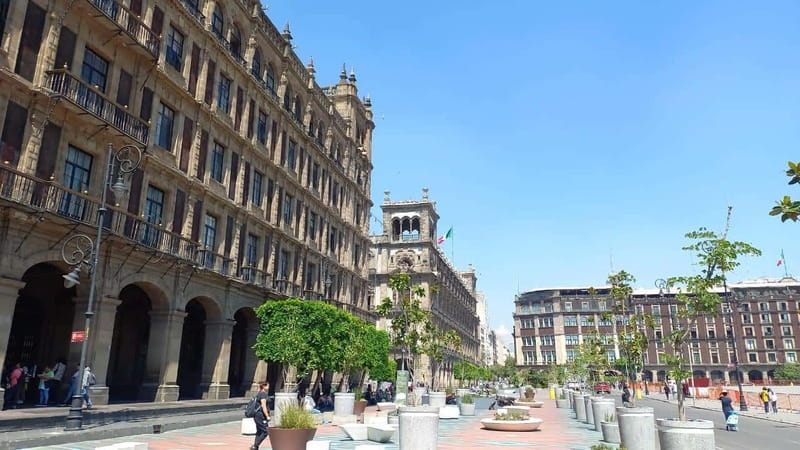
Next you’ll spend time around the Zócalo for photos and a guided explanation. This is a classic Mexico City setting: you’ll recognize it instantly from pictures, and seeing it in person helps you understand why it’s such a central reference point for meeting up, watching the city, and building your bearings.
The guide’s job here is important. A square can feel generic if you’re just snapping photos. With direction, the same view becomes a lesson: why this part of town matters, and how it connects backward and forward through time.
Also, this is a good moment to reset your expectations. If you’re thinking this will be only Aztec ruins and cathedrals, the Zócalo stop helps you see the city as an active place—an area where modern life is happening in the same visual frame as older layers.
Metropolitan Cathedral and Santo Domingo Plaza: Big Architecture, Clear Explanations
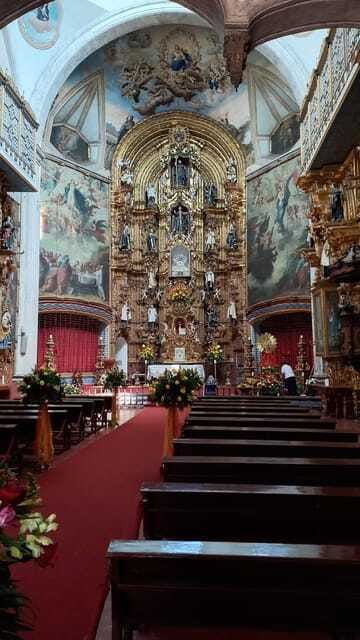
Then the tour turns toward two major “you’ll know it when you see it” stops: the Catedral Metropolitana de México and the Plaza de Santo Domingo area.
At the cathedral, you get a photo stop plus a guided visit (about 30 minutes). This is the kind of stop where your reaction will probably be immediate: scale, detail, and the sheer presence of the building. But the real payoff comes from what the guide explains: how this space reflects the city’s changing influences and how it fits into the broader story the tour is telling.
A little later, you’ll pause at Plaza de Santo Domingo for another photo stop and guided time (around 20 minutes). This helps keep the tour from feeling repetitive. Instead of moving from one indoor stop to another, you get a slightly different mood—more open space, more street-level perspective.
If you like architecture, this section is a strong run. If you’re less into buildings, it still works because the tour is structured so you’re never staring at a facade without context.

Templo Mayor de México–Tenochtitlan: Where the City’s Layers Become Real
Now comes the emotional anchor: Templo Mayor de México–Tenochtitlan. You’ll have a photo stop and a guided visit (about 20 minutes). This is where the tour’s title stops being marketing and becomes a physical experience.
Standing near Aztec remains makes the city’s timeline feel less abstract. You’re not just hearing that Mexico City has layers—you can see them in front of you. And because the guide is also connecting neighborhood history from pre-Hispanic times to today, it’s easier to understand why people keep returning to this area.
This stop is also a good reality check. If you’ve been picturing ancient history as “somewhere else,” Templo Mayor shows you it’s part of the city you’re walking through right now. It’s one of the best reasons to choose a guided first-day overview: it helps you interpret what you might otherwise feel is only ruins and labels.
Tip: during your time here, ask your guide how this connects to what you saw at the cathedral and the Zócalo area. That contrast is where the tour’s logic really lands.
Plaza Manuel Tolsá Break: Food Tasting and a Short Reset
After several historic heavy-hitters, the tour slows down with a break at Plaza Manuel Tolsá. You’ll have time for a food tasting (about 30 minutes), plus a proper pause before the next set of stops.
This is more valuable than it sounds. Mexico City can move fast—noise, crowds, heat or wind depending on the day. A scheduled break keeps you from turning the rest of the tour into a survival march. You’ll be able to focus again for the final stretch.
The tasting also matches the tour’s theme. This isn’t only about buildings. You’re learning how to experience the city through everyday flavors, not just museum signage.
If you have dietary restrictions, plan ahead. The tour includes a fresh juice or a typical snack as part of the experience, but extras and anything beyond the tasting are at your own expense.
Casa de los Azulejos and Jugos Canada: Pretty Facades Plus Real Stops
As you continue, you’ll pass through a sequence that mixes photo-worthy architecture with practical, everyday breaks.
First up is Casa de los Azulejos, with a photo stop and a short visit (about 10 minutes). It’s one of those places where the design grabs you before your brain catches up. With guidance, it becomes more than a pretty building. You’ll understand why it belongs in a route like this and what visual clues to look for.
Next, the tour includes a walk to Jugos Canada. This is a small but smart addition. It keeps your energy up and gives you a drink-focused moment in the middle of sightseeing. Even if you’re not a juice person, it’s the kind of practical stop that makes the tour feel built for real humans, not just a timed checklist.
You’ll then continue toward two more landmark zones: the Palacio de Correos de México and the Palacio de Bellas Artes area.
Palacio de Correos and Palacio de Bellas Artes: Finishing With Style
The later part of the tour leans into impressive architecture, and it’s a good way to end.
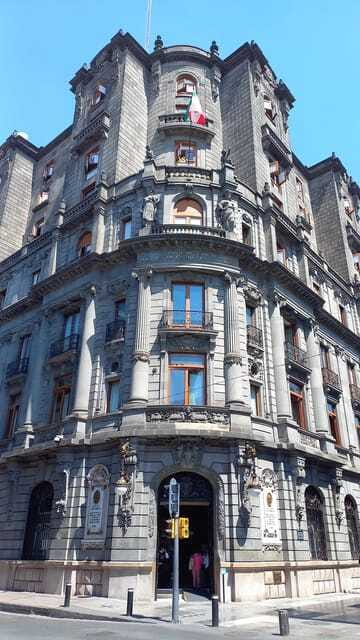
At the Palacio de Correos de México, you’ll have a photo stop and a guided visit (about 15 minutes). This stop works because it adds variety. You’ve already spent time with religious and ancient history; now you get a building with its own civic character.
Then you’ll reach the Palacio de Bellas Artes area for a photo stop and guided visit (about 15 minutes). This is the kind of final section that helps you remember the overall experience as something more cinematic—especially after earlier stops that felt more grounded and historical.
You’ll finish around downtown near the location listed as CVP4+9C Ciudad de México, CDMX, México. That finish point is convenient for continuing your day: you’ll already have a sense of where you are and what you want to see next.
Price and Pace: Is $37 Good Value for This 3.5-Hour Tour?
For $37, the value mostly comes down to three things: time, guidance quality, and included access.
You get a 3.5-hour experience with a small group limited to 10 people. You’re also not paying separately for every moment—your tour includes an expert guide with training across art, history, and anthropology, plus entrance to museums, churches, historical temples, and historical buildings. That said, some museum entrances aren’t included, and any additional food is on you.
So what you’re really buying is a guided route that compresses a lot into one coherent storyline: Aztec remains, major downtown architecture, and neighborhood history from pre-Hispanic eras to modern life, paired with food and drink breaks.
Is it a slow, luxurious day? No. It’s a focused introduction. If you want to linger for hours in each place, you may feel rushed. But if your goal is to get your bearings fast, learn what matters, and then explore afterward with clearer context, this price is hard to argue with.
In the feedback you can find strong praise for guides like Martín, especially for how clearly he explains Mexican art, history, and culture, and for connecting past and present influences. There’s also at least one story where the guide went the extra step with a coffee and enchiladas invite, and another where the tour was flexible enough to add a special location tied to a James Bond filming hotel. Those are examples of the kind of personal touch that can happen—just don’t expect every run to include extra treats.
Who Should Book This Tour (And Who Might Prefer Another Option)
This tour fits best if you want a first-day plan that makes you feel oriented. You’ll like it if you enjoy:
- Architecture and how buildings reflect cultural change
- A route that connects Aztec remains and colonial-era sites
- Guided context around squares and major landmarks
- A realistic pace that includes a food and drink break
You might choose something else if you hate walking, want deep museum time inside only one or two sites, or prefer fully independent travel where you control every stop. But even then, you could treat this as a “get the story first” day and then switch to a slower plan afterward.
As for practical rules: the tour is wheelchair accessible, and you’re asked to wear comfortable shoes. Alcohol and drugs aren’t allowed, and bare feet aren’t allowed.
Should You Book Ciudad de México: Historia y vida moderna en la capital?
I’d book it if you’re arriving and want the city to start making sense quickly. The mix of Templo Mayor, the cathedral area, and the palaces-and-plazas stretch gives you a broad overview without feeling like a random walking tour. The included drink/snack break helps the whole thing stay enjoyable, not exhausting.
I’d skip it only if you’re looking for a relaxed day with lots of free time, or if you already know you want to focus on one museum only. Otherwise, for a first introduction to Mexico City’s layers—past and modern—it’s a smart use of a half day.
FAQ
How long is the tour?
The tour lasts 3.5 hours.
What is the price per person?
The price is $37 per person.
Where do I meet the guide?
You meet in the square in front of the Museo de la Ciudad de México. The starting location is listed as Rcda. de Jesús 548.
Is this a small group tour?
Yes. The group is limited to 10 participants.
What languages are offered?
The live tour guide speaks English and Spanish.
Is the tour wheelchair accessible?
Yes, the tour is wheelchair accessible.
What does the tour include?
It includes an expert guide and entrance to several types of sites such as museums, churches, historical temples, and historical buildings. It also includes a traditional fresh juice or a taste of a typical Mexican snack.
Are all museum entrances included?
Not all museum entrances are included. If there is something extra you want to see, it will be at your own expense.
What should I bring?
Wear comfortable shoes and bring water.
Is alcohol allowed during the tour?
No. Alcohol and drugs are not allowed, and bare feet are not allowed.