
REVIEW · MEXICO CITY
Anthropology Museum Ticket with Digital Guide included
Book on Viator →Operated by Amigo Tours · Bookable on Viator
One museum ticket can save your whole morning. This one pairs skip-the-line entry with a digital guide so you can spend more time with Mexico’s Mayan and Toltec artwork and less time stuck in queues.
I like that it keeps things simple: you get admission plus a digital guide in English and Spanish, and your visit is flexible (about 1 to 4 hours). I also like the idea of entering through a separate route that’s designed to help you connect with the Mayan and Toltec collections early.
One possible drawback: the digital guide experience can be hit-or-miss. A few people reported trouble accessing it on their device and noted it may not function like a full audio guide, so bring patience and plan to use translation tools for signage.
In This Review
- Key things to know before you go
- Museum Ticket Basics: skip-the-line, private group, and the real time window
- Entering Museo Nacional de Antropología: Mayan and Toltec art right away
- How the digital guide works in practice (and what to plan for)
- What to see in your 1 to 4 hours: pre-Hispanic highlights without rushing
- Language reality check: English is limited on the walls
- Skip-the-line logistics: when it works and when you should stay alert
- Price and value: when $28 makes sense (and when you might want more)
- Best use case: who this ticket suits best
- Pairing the day: make the most of your Mexico City itinerary
- Should you book this anthropology museum ticket?
- FAQ
- How long does the experience take?
- What is included with the ticket?
- Is transportation included?
- What languages are available?
- What are the opening hours?
- Is this a private tour?
- How far in advance should I book?
- Can I cancel for a refund?
- What should I do about language at the museum?
Key things to know before you go

- Skip-the-line entry: designed to help you avoid the worst crowd bottlenecks.
- Digital guide in English and Spanish: helpful when you want context without committing to a live guide.
- Mayan + Toltec focus from the start: you’re guided toward pre-Hispanic themes right away.
- You control the pace (1 to 4 hours): great for browsing, not so great if you want a tightly scheduled tour.
- Museum is big and mostly not bilingual: plan time and translation help so you don’t miss meaning.
Museum Ticket Basics: skip-the-line, private group, and the real time window
This ticket is for the Museo Nacional de Antropología in Mexico City. It’s priced at $28 per person, and the visit window runs from about 1 to 4 hours depending on how deep you go. It’s also set up as a private activity, meaning it’s only your group, not a mixed crowd with strangers.
You’ll want to treat this as museum-entry with built-in interpretation, not as a traditional tour with a person walking beside you. The ticket includes the admission plus a digital guide available in English and Spanish. Transportation isn’t included, so you’ll handle getting there and getting back on your own.
Hours are Tuesday through Sunday, 10:00 AM to 5:00 PM. So if you’re planning around other Mexico City sights, anchor your day to that window. Also, this ticket is commonly booked about 15 days in advance, which is a polite hint to lock it in early during busy weeks.
You can also read our reviews of more tours and experiences in Mexico City



Entering Museo Nacional de Antropología: Mayan and Toltec art right away
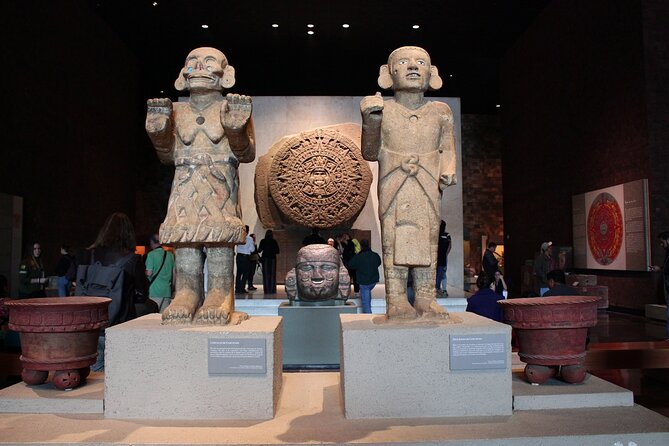
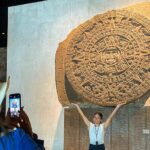
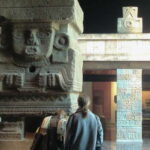
The museum experience here is built around how the collections are presented. You’re directed toward a historic collection and, importantly, you’re set up to connect with Mayan and Toltec art. The separate entrance approach matters because it can get you moving faster once you’re inside instead of wandering while you figure out where to start.
What I like about this approach is that it prevents the classic problem: arriving at a huge museum, then losing time to confusion. When you start with a clear cultural thread, you’ll understand what you’re seeing as you go. And because pre-Hispanic heritage is central to what you’ll encounter, the museum’s gallery design makes more sense when you have that starting point.
The trade-off is that you should still expect plenty of wandering. This museum is massive, and even with a digital guide, you’ll probably want time to slow down for sculpture, carved objects, and the big headline rooms. Many people end up using most of the 3 to 4 hour range, and some stretch longer if they’re enjoying themselves.
How the digital guide works in practice (and what to plan for)
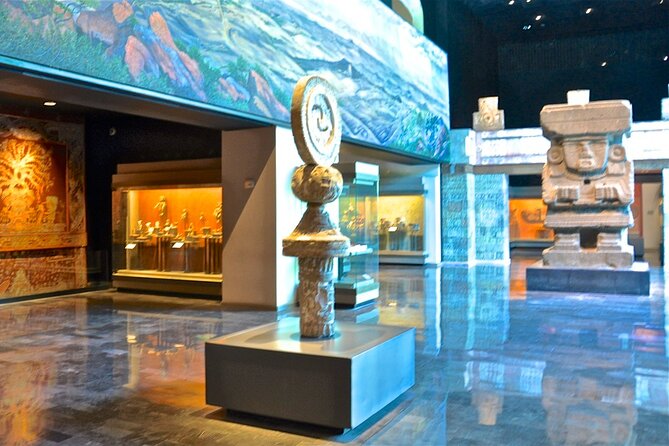
The digital component is the big selling point, so you’ll want to be realistic about it. The guide is included, in English and Spanish, and it’s meant to supplement what you see in the galleries. But don’t assume it behaves like a full professional audio tour.
Here’s what you should plan for based on common friction points:
- It may not be audio. Some people specifically noted it wasn’t an audio experience, and that it didn’t match how they expected the exhibits to be explained.
- Access can be a hassle. A few visitors reported difficulty downloading or getting the digital assistant to recognize their booking.
- You may still need translation help. Even with a guide, signage can be limited in English.
So my practical advice is simple: before you leave for the museum, test the link, confirm you can open the guide, and consider saving screenshots of your booking confirmation. If it’s offered as a PDF or a phone-based assistant, make sure you can access it offline or that you have workable data inside.
And remember: this is a digital helper, not a person. If you like talking your way through history with a guide, you may find this format less satisfying. If you prefer to roam at your own pace and read in short bursts, it can work well.
What to see in your 1 to 4 hours: pre-Hispanic highlights without rushing
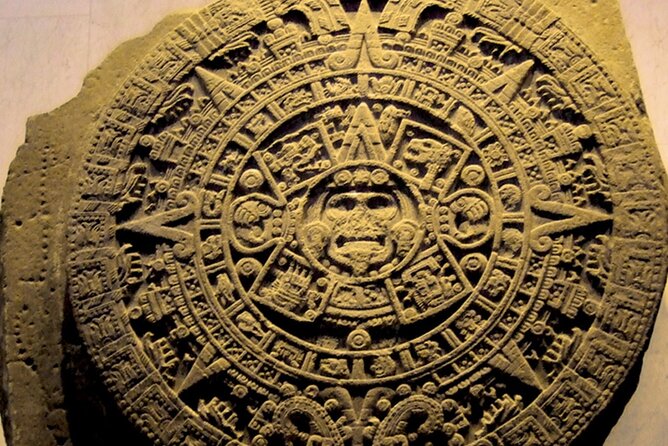
With a time window like 1 to 4 hours, the goal is not to see everything. The goal is to see the best parts in a way that feels coherent. The museum’s collection is arranged so that certain thematic areas become your anchors.
Based on the typical highlights visitors point to, here are smart ways to spend your time:
Start with your chosen theme (Mayan or Toltec)
That early focus is one of the reasons this ticket feels useful. If you begin with Mayan and Toltec material, the museum’s larger story starts to click. The collections are full of carved stone and carefully presented artifacts that reward slow looking.
Add one or two “big hall” stops
If you only have a few hours, choose halls that match your curiosity. People often mention the Teotihuacan and Mexica areas as strong priorities, especially if you want a broader view beyond Mayan and Toltec. If you love early civilizations, the Olmec section is another commonly recommended stop.
Plan for the courtyards, not just the galleries
One detail that’s easy to skip if you focus only on indoor rooms: the museum’s outdoor and courtyard spaces. People mention a fountain in an interior courtyard that makes the experience feel cooler and more pleasant. Those breaks also matter because the museum can wear you out if you don’t reset.
Build in time for the museum restaurant
There’s an on-site restaurant people describe as excellent, and it’s worth considering because it keeps your day efficient. If you’re hungry, leaving the museum to eat can eat up time and make the museum feel rushed. The restaurant is also handy if you’re traveling with family or want an easy reset during your visit.
For pacing, think like this:
- 1 to 2 hours: hit one major theme plus a quick walk through related rooms.
- 3 to 4 hours: do your theme deeply and still enjoy the key halls and courtyards.
- More than 4 hours: you’ll slow down and start appreciating the fine details more.
Language reality check: English is limited on the walls
Even if you have the digital guide, don’t expect the museum signage to carry the full language load for you. People mention that many signs don’t have English translation, and that there are few dual-language descriptions throughout the exhibits.
So bring a translation plan:
- Have Google Translate ready (some people specifically recommend it).
- Consider learning a few basic Spanish museum phrases like entrada, sala, and objeto so you can navigate more confidently.
- Use your digital guide as your “bridge,” not your only source of meaning.
If you’re comfortable reading Spanish at a basic level, you’ll get more value from the English/Spanish digital guide option. If you’re not, the digital guide still helps, but you might feel like you’re working harder than you expected.
You can also read our reviews of more guided tours in Mexico City



Skip-the-line logistics: when it works and when you should stay alert
In theory, this ticket should help you beat waiting in queues by giving you skip-the-line entry. That’s a genuine benefit in Mexico City, where lines can eat up your energy and time.
But here’s the consideration you should keep in mind: a small number of people reported situations where the “fast pass” didn’t work as expected at check-in, including being sent back to a regular line. Another issue mentioned is that a ticket might not be accepted if it’s tied to a tour-operator format rather than the museum’s own system.
You can’t control museum staff decisions, but you can protect yourself with a few habits:
- Arrive with enough buffer so you’re not stressed if lines still exist.
- Keep your confirmation email and digital ticket accessible (screenshots help).
- If possible, verify the ticket details before heading to the entrance so you know what to show.
Bottom line: treat skip-the-line as a strong advantage, not a guarantee that you’ll walk straight in with zero waiting.
Price and value: when $28 makes sense (and when you might want more)
At $28 per person, this is priced like a convenience ticket plus a digital guide. You’re not paying for a live guide, so you should evaluate value based on what you care about.
This is likely good value if:
- You want museum admission without dealing with the longest lines.
- You enjoy self-guided visiting, reading captions, and using a guide when you want context.
- You’re traveling with a group and a private, low-pressure experience suits you.
This may feel less worth it if:
- You expected an audio narrative or deep exhibit walkthrough.
- You really want a person to connect the dots with you step-by-step.
- You’re worried about potential digital access issues and don’t want to troubleshoot on your phone.
If you’re the type who loves a human guide, an in-person guide can be a better fit. Several people basically concluded that a live guide would have made the visit more satisfying, especially when the digital guide didn’t match expectations.
Best use case: who this ticket suits best
This ticket is a solid fit for:
- Couples who want a focused start at Mayan and Toltec collections and then freedom to roam.
- Solo visitors comfortable navigating large museums on their own.
- Families who want independence but still want built-in context in English and Spanish.
It’s less ideal for:
- Anyone who needs constant explanation from a guide in real time.
- Visitors who strongly prefer audio over reading.
- People who can’t use their phone reliably inside the museum.
If you’re a “go fast, see everything” visitor, plan carefully. This museum rewards time, and rushing often means you get less meaning from the galleries.
Pairing the day: make the most of your Mexico City itinerary
One of the best ways to maximize this museum day is to combine it with nearby major sights. People specifically suggest pairing it with Chapultepec Castle, since it’s a same-day option. The logic is simple: you can build a history-and-culture loop without adding extra cross-city travel.
Also consider your energy level. The museum is large, so you’ll be happier if you schedule just one major museum block and keep the rest of your day lighter. If you’re arriving early and then walking around afterward, the courtyard spaces and gardens can feel like part of the experience, not just a pause.
Should you book this anthropology museum ticket?
Yes, I’d book it if you want skip-the-line entry plus a digital guide and you’re comfortable doing some of the interpretation work yourself. The museum itself is widely seen as exceptional, and this ticket is a practical way to start strong without committing to a live guide.
I’d think twice if you strongly need a working, easy-to-use digital assistant and expect an audio-style experience. The common digital frustrations—access problems and format mismatch—are real enough that they can sour the visit if you were counting on a smooth tech experience.
If you book, go in prepared: have your translation tool ready, keep confirmation accessible, and give yourself a realistic chunk of time. For most people, the best outcome happens when you treat this as a self-guided museum visit with helpful context, not a full replacement for a human guide.
FAQ
How long does the experience take?
The visit is listed as about 1 to 4 hours.
What is included with the ticket?
You get skip-the-line entrance to the Museo Nacional de Antropología and a digital guide in English and Spanish.
Is transportation included?
No. Transportation is not included.
What languages are available?
The tour offering is in English, and the digital guide is available in English and Spanish.
What are the opening hours?
The museum is open Tuesday through Sunday, 10:00 AM to 5:00 PM.
Is this a private tour?
Yes. It’s described as a private activity, and only your group participates.
How far in advance should I book?
On average, this is booked about 15 days in advance.
Can I cancel for a refund?
Yes. You can cancel for a full refund if you cancel at least 24 hours before the experience start time.
What should I do about language at the museum?
Many exhibit signs have no English translation, so it helps to have Google Translate ready if you rely on English.