REVIEW · MEXICO CITY
Learn to Cook Mexican Salsas
Book on Viator →Operated by Mexican Salsas · Bookable on Viator
Salsa starts in a real neighborhood market. You’ll begin at Parroquia San Gabriel Arcangel in Tacuba, then head a few steps away to shop fresh ingredients at Tacuba Market before you cook. It’s a food-focused Mexico City experience that feels like local life, not a staged performance.
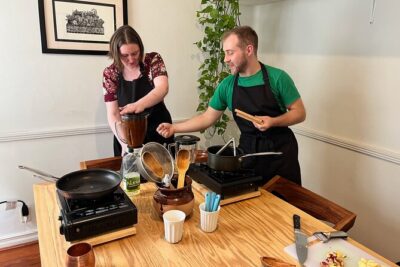
I love how hands-on it is: you learn four salsa styles—raw, fried, boiled and roasted—so you’re not just copying one recipe. I also like that the class doesn’t end when you finish cooking; you get to taste as you go, eat quesadillas with your salsas, and leave with a jar plus recipe cards.
One possible drawback: there’s no private transportation included, and the experience requires good weather. If your schedule is locked in, build in a little flexibility.
In This Review
- Key points to know before you cook salsa in Tacuba
- Why this salsa class feels more like a local routine than a show
- Getting oriented: Tacuba Market, the church start, and the quick walk
- Tacuba Market shopping: how to pick ingredients for salsa (and why it matters)
- The salsa making itself: four techniques that change heat and flavor
- 1) Raw salsa: bright, quick, and chile-forward
- 2) Fried salsa: deeper flavor and a rounder bite
- 3) Boiled salsa: softer, mellow, and easy to blend
- 4) Roasted salsa: smoky depth and a more complex aroma
- Eating while you learn: totopos, quesadillas, and hibiscus agua fresca
- Who teaches this, and what you should look for in your guide
- What you take home: jar of salsa plus recipe cards
- Price and value: is $96 really worth 2.5 hours?
- Practical planning tips before you book
- Should you book Learn to Cook Mexican Salsas in Mexico City?
- FAQ
- What is the duration of the salsa cooking experience?
- How many types of salsa will I learn to make?
- What food and drinks are included?
- Is there a vegan option?
- Where does the tour meet?
- Is transportation included?
Key points to know before you cook salsa in Tacuba
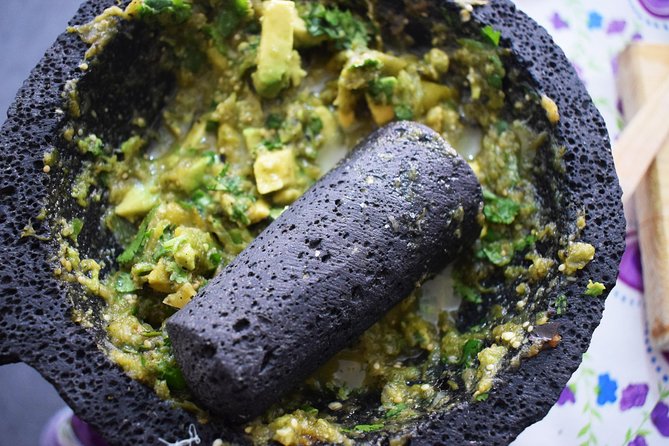
- Tacuba Market ingredients first: you shop for produce and chiles before you touch a cutting board
- Four salsa methods, different personalities: raw, fried, boiled, and roasted lead to noticeably different heat and flavor
- Eat during the class: totopos with salsa, quesadillas with Oaxaca cheese, and hibiscus agua fresca keep you going
- You take something home: a jar of salsa and recipe cards, so the trip doesn’t stop at dessert
- Home-kitchen format: the cooking happens in a place set up for classes (and it’s only your group)
Why this salsa class feels more like a local routine than a show
Mexico City has cooking classes. This one has a rhythm you can actually use later. You start near an ancient church in Tacuba, then you shop for ingredients at the nearby market. That simple order matters because it teaches you how Mexican salsa starts: with the choices you make before heat ever hits the pan.
What really makes it click for me is that you’re not learning one “perfect” salsa. You’re learning a set of techniques. Raw vs. fried vs. boiled vs. roasted changes the flavor in predictable ways—fresh and sharp, smoky and deep, mellow and round. Once you understand those patterns, you can adjust your own spice level later without starting from scratch.
Also, you’ll be in a small, private setting: only your group participates. That usually means more back-and-forth, more questions answered, and less time waiting your turn.
You can also read our reviews of more tours and experiences in Mexico City.



Getting oriented: Tacuba Market, the church start, and the quick walk
The meet-up point is Parroquia San Gabriel Arcangel (Calz México-Tacuba S/N, Tacuba, Miguel Hidalgo, 11490). From there, you’re steps from Tacuba Market. Expect the day to move quickly—this is not a slow “sit and watch” tour.
After the market, the cooking location is about a five-minute walk away. That’s a small detail, but it affects comfort. You’ll want to wear shoes that can handle uneven sidewalks and not plan on this if your mobility is limited.
You’ll also appreciate being near public transportation. If you’re using the metro or bus, you can usually get to Tacuba without a pricey private ride. And since private transportation isn’t included, being close to transit is a real value point.
Tacuba Market shopping: how to pick ingredients for salsa (and why it matters)
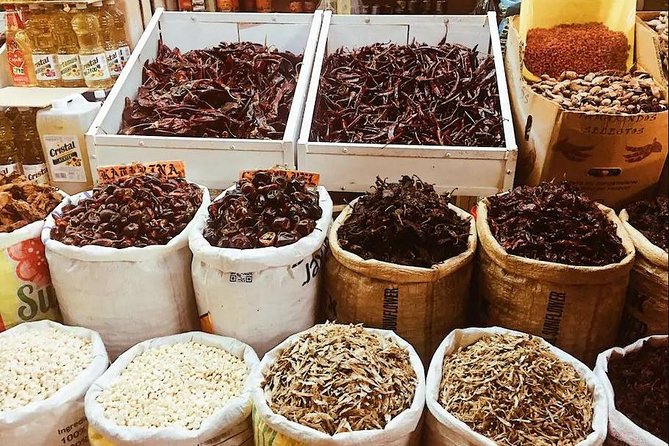
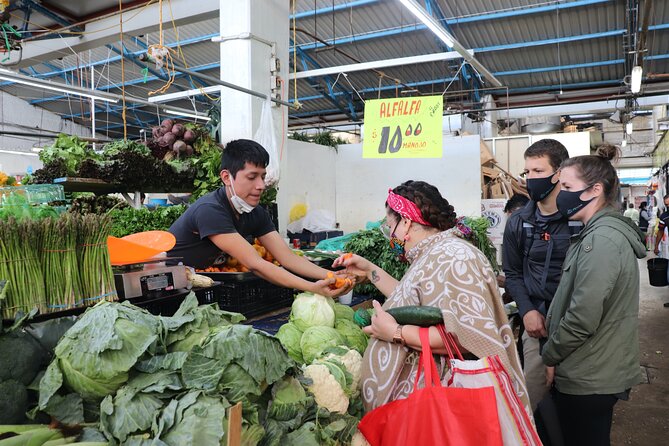
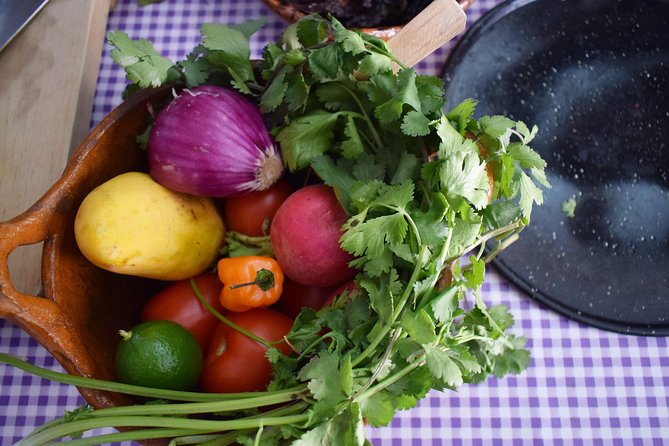
At Tacuba Market, you’ll buy the fresh ingredients for the four salsa recipes you’ll make. This is more than a souvenir-shopping detour. You learn what to look for when chiles, tomatoes, onion, garlic, and herbs are the “main characters.”
Here’s the practical payoff for you: when you cook at home later, you’ll know what ingredients should feel like. In salsa, small differences matter. A chile that’s too old tastes flat. Overripe tomatoes can turn watery. The goal is not fancy cooking—it’s better results with fewer surprises.
You’ll also taste along the way and notice how your instructor thinks. Many instructors focus on the cooking step. Here, the real lesson starts with the ingredient choices.
The salsa making itself: four techniques that change heat and flavor
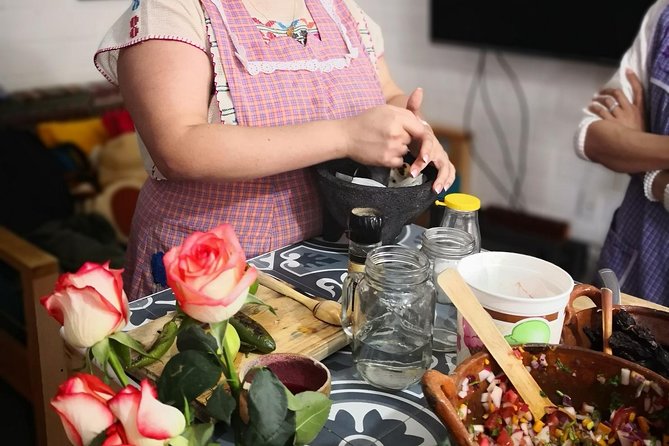
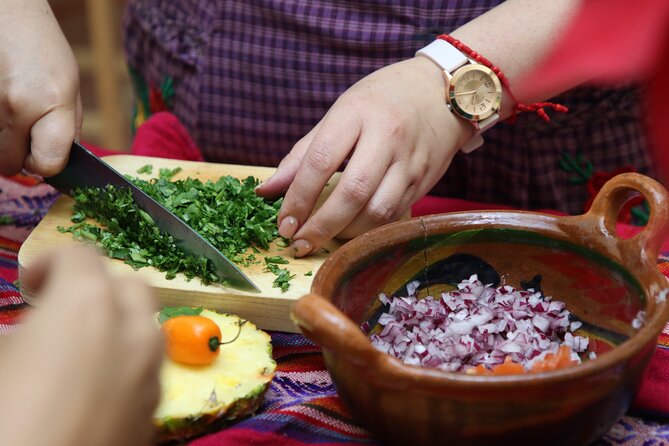
Back at the cooking space, you get right to business. The class is designed around four traditional salsa methods. Think of these as four ways to answer the same question: what do you want your salsa to taste like?
1) Raw salsa: bright, quick, and chile-forward
Raw salsa is about freshness. You’ll taste that immediate chile bite and the clean, tomato-y tang that comes from minimal cooking. This style is great if you want your salsa to taste lively with lots of edge.


2) Fried salsa: deeper flavor and a rounder bite
Frying changes the game. Heat helps mellow sharpness and builds a deeper, toastier flavor. You can expect a more rounded profile, often with a richer mouthfeel.
3) Boiled salsa: softer, mellow, and easy to blend
Boiled salsa tends to soften ingredients and make blending smoother. It’s often the style that feels most forgiving if your kitchen rhythm at home isn’t perfect. If you like a salsa that tastes “put together,” this is the one.
4) Roasted salsa: smoky depth and a more complex aroma
Roasting brings smoke and caramel-like notes. Even if you’re not chasing “spicy,” roast-style salsa can still hit hard on flavor. It’s also the one that makes your whole kitchen smell like Mexico City.
Across all four, you’ll be surprised how adjustable salsa is. The class aims to show you how easy it can be. You’re not just following steps—you’re learning how chile and cooking methods interact.
Eating while you learn: totopos, quesadillas, and hibiscus agua fresca
This is not a class where you cook and then wait for your meal. You eat during it.
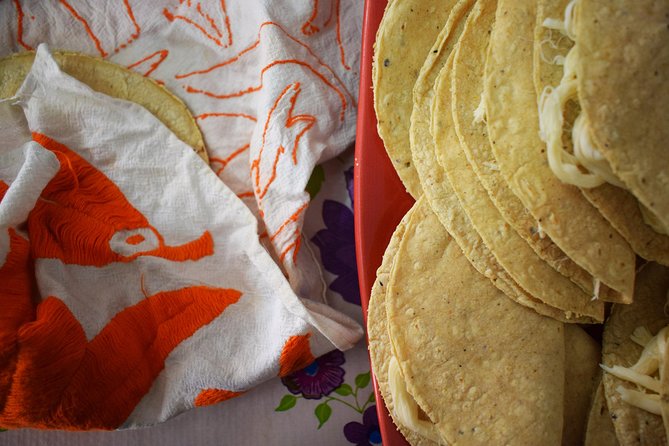
You’ll start with salsa and totopos (fried corn tortilla chips). Then comes quesadillas—hot tortillas with melted Oaxaca cheese. If you’re vegan, there’s a vegan option made with beans and nopales for the quesadillas.
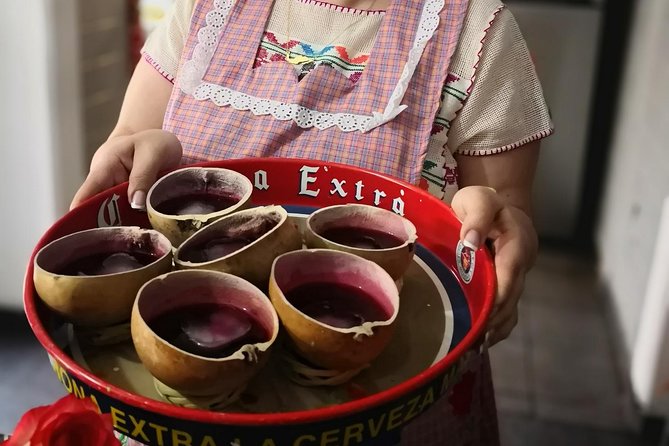
To drink, you’ll have unlimited jamaica water. It’s made as a classic agua fresca with hibiscus flower, ice, and a touch of sugar. Why you’ll care: it balances the heat and gives your palate a reset between tasting rounds.
A lot of cooking classes stop at the “lesson.” This one keeps food in the middle of the experience, which is exactly how salsa should be treated: practical, shared, and meant to be eaten.
Who teaches this, and what you should look for in your guide
The class is led by local instructors, and you’ll see a pattern in the teaching style. Guides like Luis, Jazz, Veronica, Yazmin, Natalia, and Quesse are repeatedly described as energetic and hands-on. The common thread is simple: they don’t just explain—they show you, then help you taste and adjust.
For you, that means you should come with questions:
- How should my salsa smell after cooking?
- What does “right” heat feel like?
- How do I fix something that’s too mild or too aggressive?
You can also adjust for your group’s spice tolerance. The setup is interactive, so it’s not just a scripted lecture.
What you take home: jar of salsa plus recipe cards
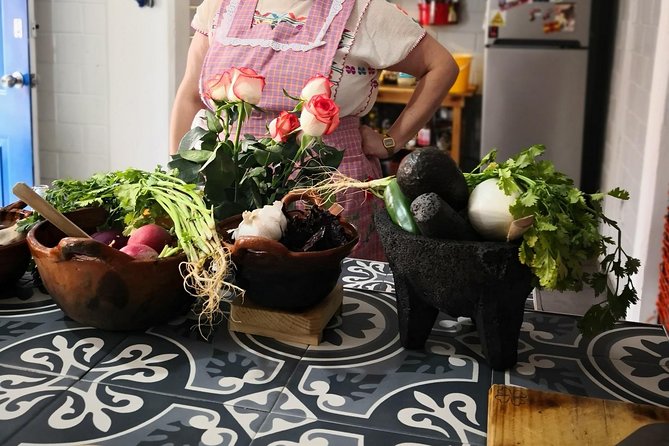
At the end, you leave with a jar of salsa and new recipe cards. That’s the best kind of souvenir: edible, useful, and easy to recreate.
Recipe cards matter because salsa is flexible. When you have the base idea written down—plus your tasting memory from the day—you’ll actually cook it again. Without that, most cooking class “recipes” become vague internet recipes you never quite nail.
If you like hosting, this is a great trip to return from. You can recreate the salsa flight at home: raw for brightness, fried for depth, boiled for mellow comfort, roasted for smoky flavor.
Price and value: is $96 really worth 2.5 hours?
$96 for about 2 hours 30 minutes sounds straightforward, but the value comes from what’s included.
You’re paying for:
- ingredient shopping at Tacuba Market
- equipment and guided cooking
- snacks (salsa and totopos)
- quesadillas
- agua fresca (unlimited jamaica)
- and take-home salsa plus recipe cards
The hidden value is learning technique, not just taste. If you’ve ever tried to recreate a restaurant salsa and ended up with something flat, you already get why this matters. Four methods in one class helps you understand what went wrong and how to correct it.
Also, it’s a private experience—only your group participates. That’s often better than crowded group tours where you spend half the time waiting.
As a planning note: it’s commonly booked about 20 days in advance on average, so booking earlier usually gives you more date options.
Practical planning tips before you book
You’ll enjoy this most if you plan for a few basics:
- Come hungry: you eat during the class, but you’ll still want a solid breakfast or lunch plan before you go.
- Wear comfortable shoes: there’s a short walk from the market to the kitchen.
- Bring a heat level mindset: spice tolerances vary, and your instructor can help you adjust as you go.
- Expect weather dependence: the experience requires good weather, so have a backup day if you can.
- Skip private transportation: it’s not included, so figure out how you’ll get there using transit.
If you’re traveling as a family, this is also a nice middle ground: kids get the market adventure, you get real cooking instruction, and everyone gets food.
Should you book Learn to Cook Mexican Salsas in Mexico City?
Yes, if you want hands-on salsa skills you can use at home. This isn’t only about eating Mexican food—it’s about learning four salsa approaches and understanding how chile, cooking, and technique change the final taste.
Book it especially if you enjoy markets and want more than a quick tasting. The Tacuba Market stop makes the class feel grounded, and the take-home jar and recipe cards turn the experience into something you’ll actually cook again.
Hold off or plan carefully if you can’t be flexible with good weather or you’d rather have a fully packaged ride service (since private transportation isn’t included). For most visitors, though, this class is a smart, flavorful use of a half day.
FAQ
What is the duration of the salsa cooking experience?
It lasts about 2 hours 30 minutes.
How many types of salsa will I learn to make?
You’ll cook four traditional styles: raw, fried, boiled, and roasted.
What food and drinks are included?
You’ll get snacks including salsa and totopos, quesadillas, and unlimited jamaica agua fresca.
Is there a vegan option?
Yes. A vegan option is available using beans and nopales for the quesadillas.
Where does the tour meet?
The start is at Parroquia San Gabriel Arcangel, Calz México-Tacuba S/N, Tacuba, Miguel Hidalgo, 11490 Ciudad de México, CDMX.
Is transportation included?
No. Private transportation is not included.