REVIEW · MEXICO CITY
Teotihuacan Pyramids Tour, small group in Van, from Mexico City
Book on Viator →Operated by Estación México · Bookable on Viator
If you love ancient cities, Teotihuacan delivers. This Mexico City day trip pairs UNESCO pyramids with a guide-led walk so you understand what you’re seeing, not just photographing it. I like that the tour is set up for an early start and a clear route through the key monuments.
I also like the mix of the big hitters and the “why it mattered” stops. You’ll hit the Sun Pyramid and Moon Pyramid for those classic skyline views, then continue to more specific ceremonial spaces like the Temple of Quetzalcóatl and the Palace of Quetzalpapálotl.
One thing to consider: it’s a lot of walking in open sun, and the schedule can stretch if traffic or group pacing runs long. If you have mobility limits or blood pressure concerns, this may not be your best match.
In This Review
- Key things to know before you go
- Bellas Artes first: the contrast that makes Teotihuacan land
- Private transport from Mexico City: fewer headaches, more daylight
- Stop-by-stop: what each Teotihuacan highlight is really for
- The archaeological zone orientation: get your bearings fast
- Temple of Quetzalcóatl: Feathered Serpent symbolism
- Edificios superpuestos: why overlapping buildings tell a timeline
- Sun Pyramid and the Avenue of the Dead: the views you came for
- Moon Pyramid and Moon Plaza: the end-of-the-avenue feeling
- Palacio de Quetzalpapálotl: the detailed “art in stone” stop
- Alameda Central finish: time for lunch right after
- How much walking is too much?
- The guide effect: the biggest variable on your day
- Price and value: $89.42 buys structure, not just access
- Who should book this Teotihuacan tour
- Should you book?
- FAQ
- How long is the Teotihuacan pyramids tour from Mexico City?
- What is included in the price?
- Where do I meet the tour, and where does it end?
- Are tickets included for Palacio de Bellas Artes?
- What time does the tour start?
- Is the tour offered in English?
- Is this tour suitable for people with blood pressure problems?
Key things to know before you go
- Small group cap (max 13 travelers): easier to hear your guide and stay together.
- Private minibus + entrance fees included: you avoid the hassle of figuring transfers and tickets on the fly.
- A tight route through Teotihuacan highlights: Sun Pyramid, Moon Plaza, and the most important temple complexes.
- Bellas Artes first: you get a 1-hour stop at a major Mexico City landmark before you go ancient.
- Early lunch timing: the tour ends around 1:00 PM near Alameda Central and the Hilton Hotel.
Bellas Artes first: the contrast that makes Teotihuacan land
You start at Palacio de Bellas Artes in Mexico City, with a full hour on-site. It’s not just a pretty building stop: it’s the big cultural landmark with marble architecture and murals by Diego Rivera, David Alfaro Siqueiros, and José Clemente Orozco. If you’re the type who likes context, this jump from modern Mexico City art to pre-Hispanic ceremony sets the mood fast.
Here’s the practical part: Bellas Artes admission is not included. So if you want to go inside, budget extra time and money for that ticket. If you only have time for photos outside and a quick look at the hall, you’re still in good shape because the main show is Teotihuacan.
You can also read our reviews of more city tours in Mexico City


Private transport from Mexico City: fewer headaches, more daylight
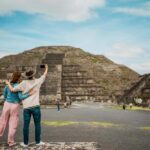
Teotihuacan is far enough from Mexico City that getting there the wrong way can eat half your day. This tour keeps things simple with private transportation via minibus, and entrance fees for the archaeological site are included. That combination is a real value win when you’re paying in both time and stress.
You meet at 8:00 AM at Av. Juárez by Palacio de Bellas Artes, then head out to the UNESCO World Heritage Site. Expect the day to be organized but not rushed. It’s built for a guided walk, not a sprint around the pyramids.
A small heads-up from real-world experience: pickups can occasionally run late due to logistics or traffic. If that would make you anxious, give yourself a buffer day or keep your afternoon flexible for dinner plans.
Stop-by-stop: what each Teotihuacan highlight is really for
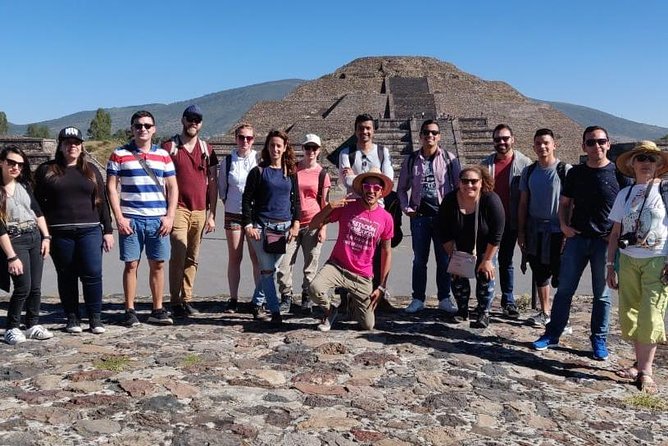
Teotihuacan is huge, and the details can blur if you’re walking without a plan. The tour’s routing fixes that by taking you through the site’s most recognizable monuments, with enough time at each to catch the meaning of the place.
The archaeological zone orientation: get your bearings fast
You enter the Teotihuacan archaeological area and quickly shift from street energy to ancient scale. This first phase is short—about 15 minutes—so think of it as your setup: how the major monuments relate to each other and where the classic views come from.
If you’re a first-timer, this stop helps you understand why people line up for the Avenue of the Dead. It’s one thing to see it in photos; it’s another to know what you’re standing in.
Temple of Quetzalcóatl: Feathered Serpent symbolism
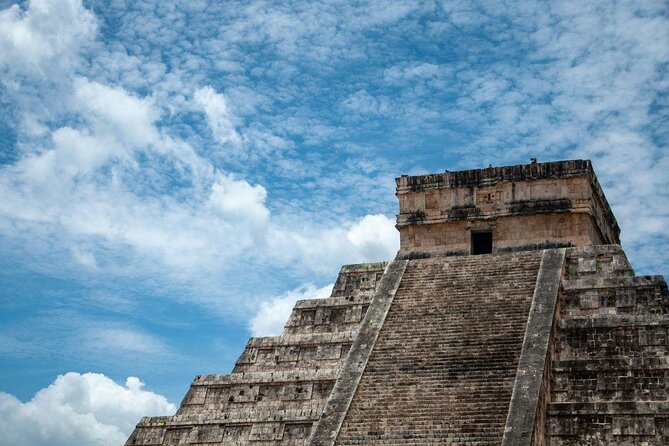
Next comes the Templo de Quetzalcóatl, a dramatic monument decorated with sculptures of the Feathered Serpent. You get around an hour here, which is just enough time to study the façade and listen to the story behind it.
This stop matters because it connects the pyramids to the spiritual ideas people brought into public life. You’ll also get a better sense of how Teotihuacan’s ceremonial architecture wasn’t random. It was structured, intentional, and meant to communicate power.
One practical tip: this is a high-photo area, so pause, frame your shot, then look up close at carvings and shapes. The guide’s explanations make the stone details click.



Edificios superpuestos: why overlapping buildings tell a timeline
The Edificios superpuestos stop is brief—about 15 minutes—but it’s one of the most interesting concepts of the whole day. This is where you see structures built over earlier ones, showing how later generations reused the sacred space.
It’s basically a physical timeline in layers. Instead of treating Teotihuacan as one moment in time, you see continuity and change—without needing a textbook.
Sun Pyramid and the Avenue of the Dead: the views you came for
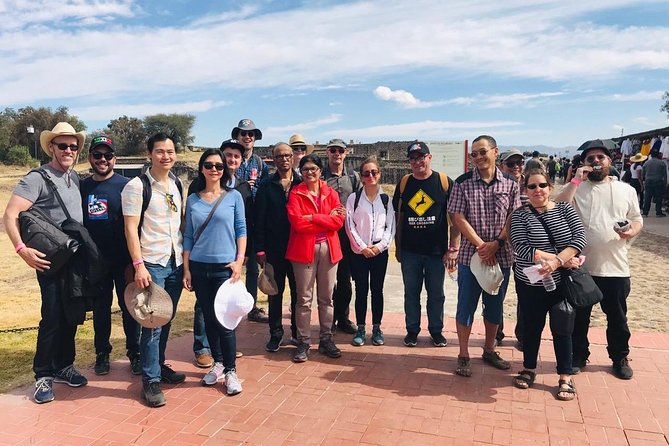
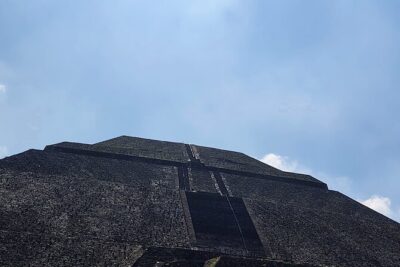
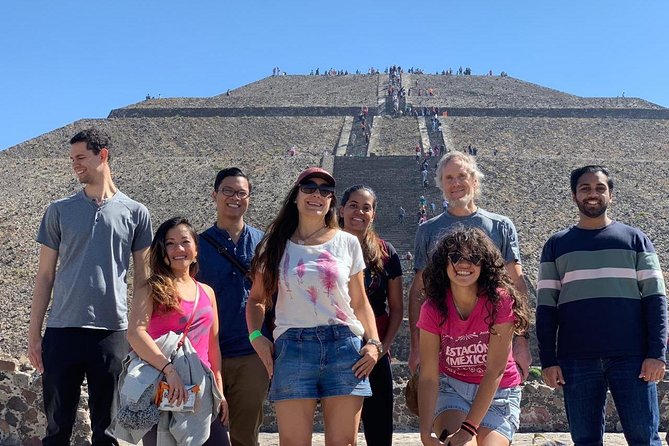
The Pirámide del Sol (Sun Pyramid) gets the longest chunk of time after the main temples, about an hour. This is the largest pyramid in Teotihuacán, and it dominates your sense of scale the moment you arrive.
If you only remember one feeling from the day, make it this: you stand in front of a structure so massive that it’s hard to “guesstimate” what you’re looking at. The guide helps by pointing out relationships between key points of the city so you can connect what’s in front of you.
The Avenue of the Dead is part of that story, too. Even when you don’t walk every meter of it, the big-picture orientation makes the site feel readable. And yes—this is where you’ll want sport footwear, a hat, and sunscreen. Shade is limited, and the sun can be relentless.
Moon Pyramid and Moon Plaza: the end-of-the-avenue feeling
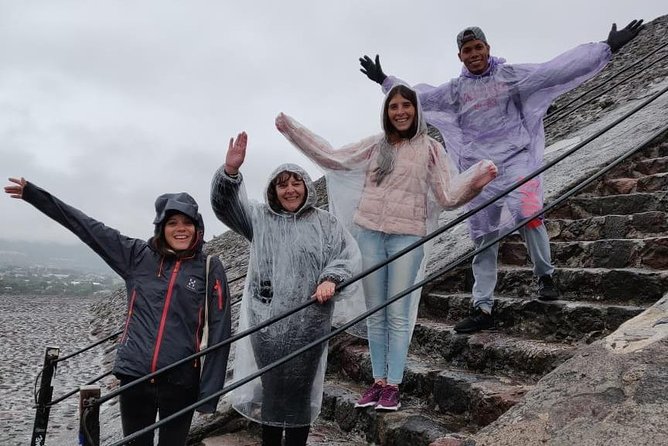
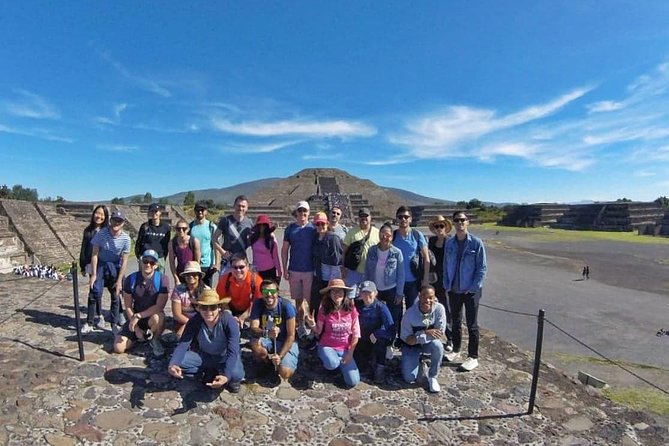
You’ll then head to Pirámide de la Luna (Moon Pyramid), with about 30 minutes. It sits at the end of the Avenue of the Dead and visually closes the loop of the route.
This is the stop where the valley views start to feel real. If the Sun Pyramid is the grand front stage, the Moon Pyramid is the dramatic finish—an architectural punctuation mark at the end of a processional way.
Take a moment here to slow down. The guide’s explanations help, but the real win is letting the site settle in your head: line, space, and ceremony.
Palacio de Quetzalpapálotl: the detailed “art in stone” stop
Near the Moon Pyramid, you visit the Palace of Quetzalpapálotl area, with about 10 minutes. Even though the time is shorter, it’s a very specific highlight: this ceremonial complex is known for its stone columns carved with feathered butterflies—the temple’s namesake.
You’ll also get a look at preserved murals with vivid pigments. That’s a big part of why this stop stands out: Teotihuacan wasn’t only about shape and size. It was also about visual storytelling using color and fine carving.
If you get a guide who uses examples (photos from the guide’s materials, color history, and how pigments were used), this stop can feel like the most “modern” in its communication. If not, still aim to look carefully at surfaces and patterns. Ten minutes goes fast in a place this photo-friendly.
Alameda Central finish: time for lunch right after
After Teotihuacan, you return by private transport and wrap up with a visit to Alameda Central. The tour ends at the Hilton Hotel area around 1:00 PM, which is a useful payoff.
Alameda Central is the oldest public park in Mexico City and a lively cultural hub. The guide usually shares ideas for where to eat and what to do next in the Historic Center area, so you’re not stuck guessing what’s nearby.
If you’re planning your afternoon, this is the sweet spot: you’ve seen the big ancient sites, and you still have enough daylight to enjoy a museum or a simple meal without rushing back out.
How much walking is too much?
This tour is a physical day. Wear comfortable clothes and bring water. The tour guidance also suggests bringing snacks or fruit, plus a bottle of water and a hat or cap.
Also, it’s not a “shade tour.” The site has open areas and sun exposure, and multiple people recommend sunscreen and water planning. If you’re traveling with someone who tires easily, go slow, take breaks during transitions, and don’t treat each stop as a photos-only stop.
The guide effect: the biggest variable on your day
Most of the best days hinge on the guide, and this experience is guide-led. The tour is in English, and guide names show up in real experiences like Ulysses Guerrero (often called Warrior), Laura, Luis, Juan, Sophia, Alejandro, and David.
When the guide pacing clicks, the site feels organized and you leave understanding more than the outlines. When it doesn’t, you can end up waiting at regroup points or missing details.
Here’s how to protect yourself: ask one question at the start of Teotihuacan, then listen for answers that connect the monuments. If something feels unclear, raise your hand. In an archaeological site with tons of stone detail, clarity is the difference between seeing and getting it.
Price and value: $89.42 buys structure, not just access
At $89.42 per person, you’re paying for a structured day: entry to the archaeological site, a local guide, and private minibus transport. That’s the key value.
If you tried to DIY it, you’d likely spend money and time juggling transit, timing, and ticket buying—plus you’d still be guessing what to pay attention to first. Here, the tour gives you a route that covers the heavyweights: Sun Pyramid, Moon Plaza, Temple of Quetzalcóatl, and Quetzalpapálotl.
The only real cost “gotchas” are extras you bring yourself: food (brunch isn’t included), and Bellas Artes admission if you want to go inside. Plan for a simple lunch after the tour ends near Alameda Central, and you’re set.
Who should book this Teotihuacan tour
Book it if you want:
- a guided route through Teotihuacan’s biggest monuments
- private transportation from Mexico City
- a schedule designed for a 5 to 6 hour day with an early afternoon finish
Consider skipping if you:
- need lots of shade and low walking
- have blood pressure problems
- hate the idea of a tightly grouped experience where you follow a meeting-and-regroup rhythm
It also fits best for people age 12+ (the tour suggests a minimum age of 12), and for anyone who likes learning while they walk.
Should you book?
I’d book this Teotihuacan tour if you’re on a first visit and you want your time to count. The private minibus plus included entrance fees are the backbone of the value, and the guided stops focus on both the iconic pyramids and the more specific ceremonial spaces people usually miss.
Still, go in with realistic expectations: it’s sunny, it’s a big site, and some days can run longer because of group pacing and traffic. If you’re flexible and prepared—water, hat, good shoes—you’ll get a very satisfying, structured introduction to one of Mexico’s most important archaeological places.
FAQ
How long is the Teotihuacan pyramids tour from Mexico City?
The tour runs about 5 to 6 hours.
What is included in the price?
It includes a local guide, the archaeological site ticket, private transportation by minibus, and all taxes/fees/handling charges.
Where do I meet the tour, and where does it end?
You start at Palacio de Bellas Artes (Av. Juárez S/N, Centro Histórico). You end at the Hilton Mexico City Reforma (Av. Juárez 70) near Alameda Central.
Are tickets included for Palacio de Bellas Artes?
No. Admission to Palacio de Bellas Artes is not included, even though it’s a stop on the tour.
What time does the tour start?
The start time is 8:00 AM.
Is the tour offered in English?
Yes, the tour is offered in English.
Is this tour suitable for people with blood pressure problems?
The tour is not recommended for people with blood pressure problems.