REVIEW · MEXICO CITY
Mexico City Tourist Bus Tour
Book on Viator →Operated by Vuela Viajero · Bookable on Viator
One bus ride can turn a scattered day into a plan. This Mexico City tourist bus tour uses Turibus plus an 8-language audio guide to help you hit major landmarks efficiently, then get off for focused time at places like the Frida Kahlo Museum and Basilica de Guadalupe. If you’re short on time, this is one of the easiest ways to get your bearings and see a lot without constantly re-navigating the city.
I especially like the practical onboard setup: air-conditioning, panoramic views from the second level, and Wi‑Fi, so the experience feels comfortable even when the city is moving slowly. I also appreciate the staff’s helpful, friendly approach and the overall feeling of a well-kept ride. One consideration: the trip is listed at about 3 hours, but heavy traffic can make your actual time on the bus longer, and audio can be inconsistent if headset jacks don’t work well.
In This Review
- Key things to know before you ride
- How Turibus helps you see Mexico City fast (without chaos)
- Price and value: what you’re really paying for at $35
- Meeting at Fiesta Americana Reforma: the practical start point
- Zócalo and Paseo de la Reforma: where the views start working
- Landmarks from the bus route: monuments you can name after
- Frida Kahlo Museum stop: plan for the extra ticket
- Basilica de Guadalupe: a powerful stop that benefits from context
- Audio guide and Wi‑Fi: when tech works, it’s great; when it doesn’t, have a backup
- The real schedule reality: 3 hours on paper vs. traffic on the ground
- Clean bus, friendly staff, and what those details change
- Who this tour is best for (and who should skip)
- Should you book this Mexico City Tourist Bus Tour?
- FAQ
- How long is the Mexico City tourist bus tour?
- How much does it cost?
- Is the tour offered in English?
- What’s included in the ticket?
- Do I need to pay extra for the Frida Kahlo Museum?
- Where is the meeting point?
- What is the cancellation policy?
Key things to know before you ride
- Start with a route plan: there are different route options (including color-coded areas like red/green/yellow/purple), so decide what you want to prioritize.
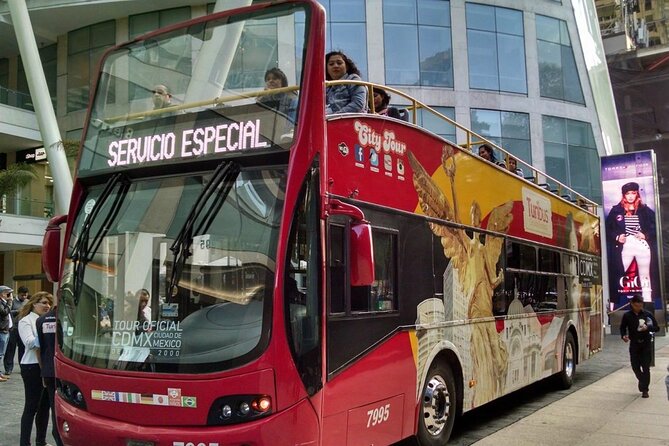
- Panoramic second-floor views make the “drive and see” part worth it, especially along Paseo de la Reforma.
- Audio guide in 8 languages + English offering helps you follow landmarks without needing constant phone research.
- Frida Kahlo Museum isn’t included (ticket is MX$320 per person), so budget extra time and money.
- Wi‑Fi onboard gives you a backup option if audio headphones are spotty.
- Traffic can stretch the day: you may spend more time on the road than the posted duration.
How Turibus helps you see Mexico City fast (without chaos)
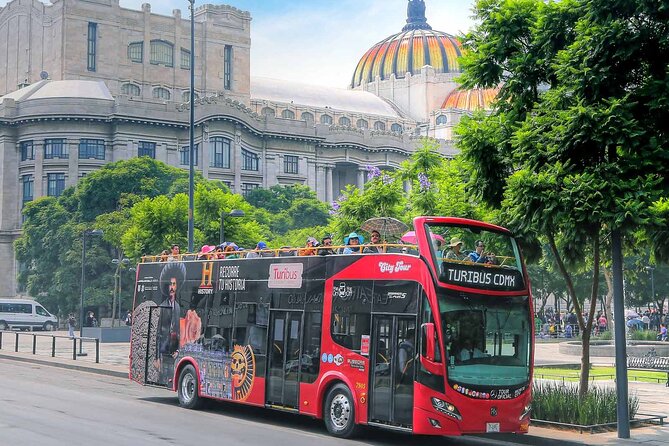
Mexico City is huge, and trying to connect major sights by yourself can turn into a time sink. This tour uses a hop-on style approach: you start at a set meeting point, ride the circuit to take in the skyline and landmarks, then disembark for specific stops.
The value here is the mix of “moving views” plus “targeted get-off time.” You don’t need to know the city map perfectly before you go, because the bus route is doing a lot of the positioning for you.
You can also read our reviews of more city tours in Mexico City


Price and value: what you’re really paying for at $35
At $35.00 per person, you’re mainly paying for Turibus entry plus the transport experience: air-conditioned riding, panoramic second-floor sightseeing, and the onboard audio system. You’re also getting onboard Wi‑Fi, which can matter if you use your phone as a backup for directions or extra background.
The cost does not cover the Frida Kahlo Museum ticket (MX$320 per person), and lunch is not included. That means your real “all-in” total depends on how long you plan to spend at Frida Kahlo and whether you add a meal. Still, if you’re trying to cover several top areas in one outing, the structure tends to be cost-effective compared with piecing together multiple separate activities.
Meeting at Fiesta Americana Reforma: the practical start point
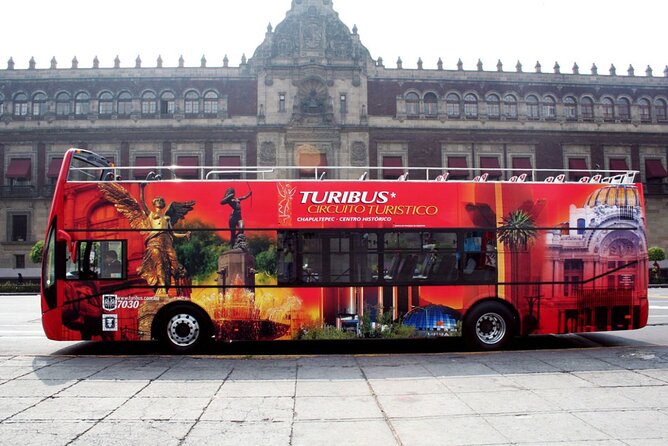
Your tour begins near Fiesta Americana Reforma, where you take the unit. The pickup area is described as near public transportation, which is useful if you’re arriving by metro or bus and don’t want a complicated taxi plan.
I’d treat the start time like it’s a deadline. Even if you’re heading straight to the first big photo stop, lining up early helps you settle in before the bus fills up and before you feel rushed about getting seats on the second level.
Zócalo and Paseo de la Reforma: where the views start working
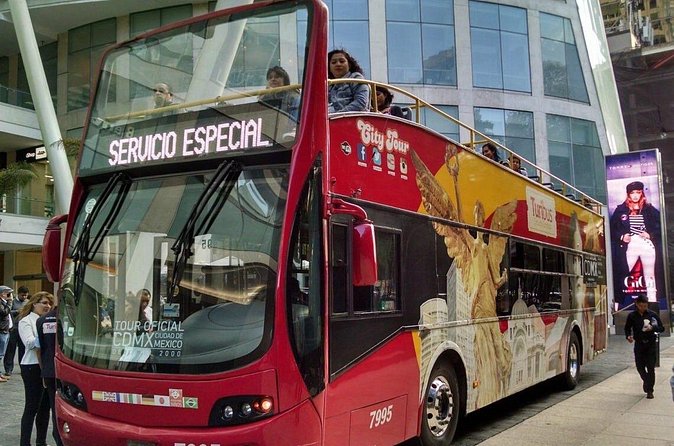
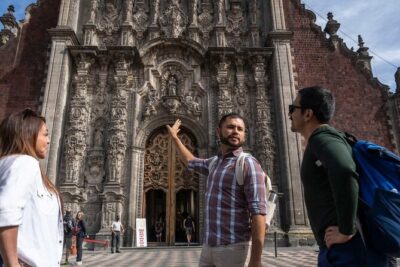
The first big experience is the Zócalo area—specifically the Plaza de Constitución—followed by a “drive and see” stretch toward Paseo de la Reforma. From the bus, you get a wide-angle look at how the city balances old and new, with monuments and major cultural buildings lining up along the route.
Paseo de la Reforma is where the sightseeing feels effortless. Skyscrapers pop into view, and you can watch the urban skyline change as the bus keeps moving. If you’re the type who likes to take photos while learning what you’re actually looking at, the panoramic second floor is a smart choice.
Landmarks from the bus route: monuments you can name after

One of the strengths of this tour is that the commentary helps you identify what you’re passing. On the circuit, you can expect to see and learn about major sites such as the Monument to the Revolution, the Palace of Fine Arts, the Chamber to Juárez, the Monument to Independence, and more along the way.
This matters because Mexico City’s streets can feel dense. Being able to quickly attach names to landmarks turns a long drive into something you can remember later, even if you don’t get off the bus.




Frida Kahlo Museum stop: plan for the extra ticket

The tour includes time to get off for the Frida Kahlo Museum, often the stop people are most excited about. The catch: admission is not included, and you should budget MX$320 per person for the ticket.
My advice is to treat this stop as its own mini-visit. Since you’ll be combining bus time with a museum, you’ll enjoy the experience more if you arrive with a clear sense of what you want to see (for example, the home/artist story elements you care about most). If you’re also short on time, don’t plan to do everything at a slow pace—pick your must-see zones and keep moving.
Basilica de Guadalupe: a powerful stop that benefits from context
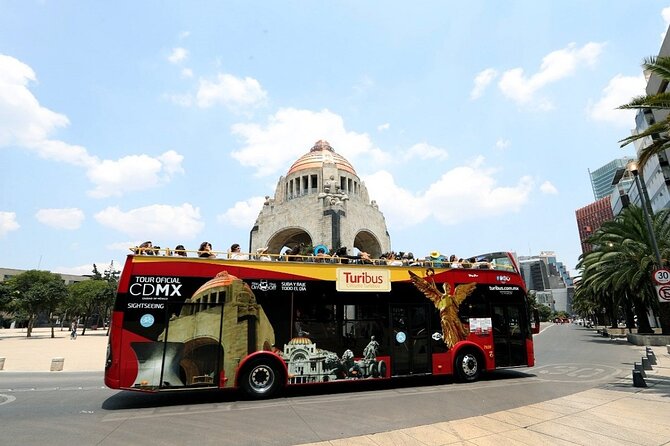
After the museum, the next major stop is Basilica de Guadalupe. Even if you’ve seen photos before, the place feels significant because it’s more than a monument—you’re arriving at a site with deep cultural and religious meaning for many visitors and locals.
This is also a good moment to use your audio guide and focus on learning what you’re seeing rather than trying to read everything in the moment. If your group is also doing photos, it helps to separate tasks: one person gets a quick orientation, then you switch roles so everyone still feels like they learned something.
Audio guide and Wi‑Fi: when tech works, it’s great; when it doesn’t, have a backup
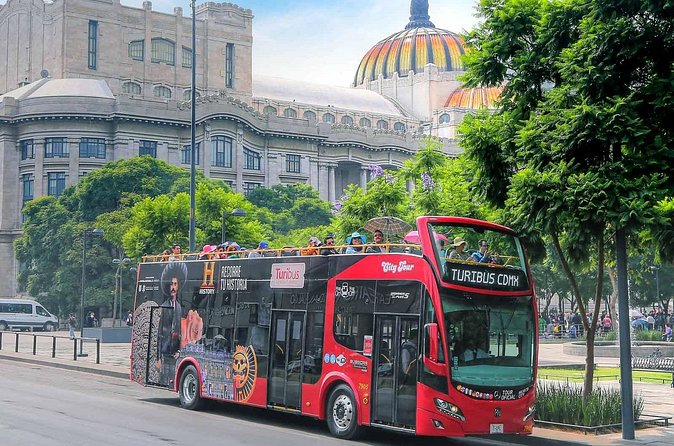
The tour includes an audio guide in 8 languages and Wi‑Fi onboard. That combo is ideal when the headset system is functioning well, because you can follow along street by street without draining your phone battery nonstop.
Here’s the practical caution: audio quality can be affected if headset jacks don’t work properly or if sound clarity is poor. I’d plan a simple backup for your device, since Wi‑Fi onboard gives you the option to use phone audio or look up key landmarks if the headset setup fails.
Also, bring a travel mindset. If one seat has problems, don’t assume the whole bus is unusable. I recommend checking quickly and, if needed, moving or switching to a different headset area early.
The real schedule reality: 3 hours on paper vs. traffic on the ground
The duration is listed at about 3 hours, and that can be accurate in lighter traffic. Mexico City traffic is often the variable, though, and your day may stretch if the route is slowed.
This is why the “route planning” advice is not just nice—it’s essential. When you know which route sections you want (and which color areas you’re aiming for), you can decide where to stay longer and where to hop off quickly. That keeps the day from turning into a long ride with no clear goal.
Clean bus, friendly staff, and what those details change
Service and cleanliness really do affect how you rate a sightseeing bus. When the bus is well maintained and the team is friendly and informative, you settle in faster and enjoy the views instead of worrying about the ride.
One underrated value here is flexibility when plans change. If you accidentally book the wrong date, the provider can reschedule efficiently. That kind of problem-solving matters because sightseeing plans often depend on weather, energy, and the rest of your itinerary.
Who this tour is best for (and who should skip)
This tour is a strong fit if you want to:
- Get your bearings quickly with major sights in one structured outing.
- Use an onboard audio guide so you’re not constantly reading your phone while walking.
- Combine “scenic transport” with planned off-bus stops like Frida Kahlo and the Basilica.
It’s less ideal if you hate spending extended time on the road. If your group is very sensitive to traffic delays, the best strategy is to be strict with your off-bus priorities so you feel like you got value even if the ride takes longer than expected.
Should you book this Mexico City Tourist Bus Tour?
Book it if you want an efficient, comfortable way to see big-name landmarks plus two major cultural stops, and if you’re willing to plan around the Frida Kahlo Museum ticket cost. The $35 price works best when you treat the bus portion as transport plus learning, and you use the get-off times intentionally.
Skip it or consider an alternative if you know you’ll struggle with long stretches on the bus during heavy traffic, or if you rely on the audio system as your only way to learn. With Wi‑Fi onboard and an easy phone backup plan, many issues become manageable—but if you need flawless headset audio, this is the part to plan for.
If you book, do one simple thing before you go: study the route options (including the color-coded areas) and decide what you want to accomplish during your time on and off the bus. That one step turns the ride from a generic tour into a real plan.
FAQ
How long is the Mexico City tourist bus tour?
It runs for about 3 hours (approx.).
How much does it cost?
The price is $35.00 per person.
Is the tour offered in English?
Yes. It is offered in English.
What’s included in the ticket?
You get entrance to Turibus, air-conditioned transport with a panoramic second floor, an audio guide in 8 languages, and Wi‑Fi onboard.
Do I need to pay extra for the Frida Kahlo Museum?
Yes. Admission to the Frida Kahlo Museum costs MX$320.00 per person and is not included.
Where is the meeting point?
The meeting point is at Fiesta Americana Reforma.
What is the cancellation policy?
You can cancel for free up to 24 hours before the experience starts for a full refund. If canceled less than 24 hours before start time, it isn’t refunded. Weather and minimum traveler conditions can also lead to a different date or a full refund.