REVIEW · MEXICO CITY
Mexico City: Historical walking tour of Tenochtitlan
Book on GetYourGuide →Operated by Mexploretenochtitlan · Bookable on GetYourGuide
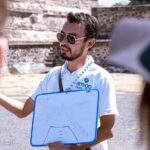
History here has layers. This walk connects Tenochtitlan and today’s Centro Histórico in one smooth morning route, with Prof. Cristina Ríos’s clear, story-driven explanations. What I love most is the way the tour turns major monuments into a single timeline you can actually follow on foot.
I also like the focus on architecture and art, not just dates. You’ll keep hearing how buildings, facades, and urban design reflect what came before, and the guide is set up to answer your questions in real time. The one caution: it is a solid 3 hours of walking, and it isn’t a sit-down museum day, so plan for sustained outdoor time and wear good shoes.
In This Review
- 5 key moments you will remember
- Starting smart at Centro Cultural España (Guatemala #18)
- Templo Mayor models: get your bearings before you look up
- Cathedral area: how the past hides in plain sight
- Cortés’s lodgings at the Old Axayacatl Palace: early colonization in a real address
- Banamex Cultural Center / Iturbide Palace: where power becomes architecture
- Church of San Francisco: a face-to-face architecture lesson
- Casa de los Azulejos and Orozco’s mural: tiles outside, meaning inside
- Palace of Fine Arts (Palacio de Bellas Artes): the finish with citywide context
- How much is it really worth? The $43 value for a 3-hour PhD-led walk
- Who this tour is best for (and who should skip it)
- Practical tips so you enjoy every stop
- Should you book Mexico City: Historical walking tour of Tenochtitlan?
- FAQ
- How long is the tour?
- Where does the tour start?
- Do we enter the Templo Mayor museum?
- What’s included in the price?
- What is not included?
- How big is the group?
- What languages are offered?
- Is the tour wheelchair accessible?
- Is this tour suitable for children?
5 key moments you will remember
- Templo Mayor models from the outside: you get the founding-scale context before you move on to the newer city.
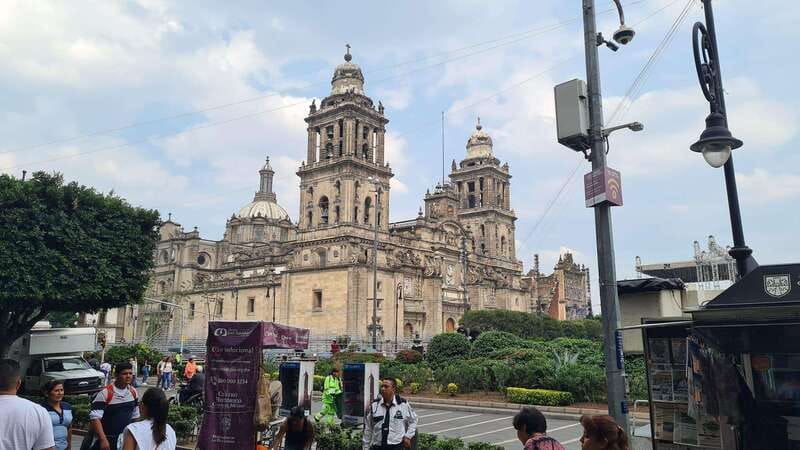
- Cathedral area + Animas del Purgatorio: you’ll learn how the old city’s footprint shaped what replaced it.
- Cortés’s lodgings at the Old Axayacatl Palace: history gets specific in a place tied to early colonization.
- Casa de los Azulejos and Orozco’s mural: you see famous tiles and then get the story behind a major interior artwork.
- A PhD guide who answers questions: the tour is paced for understanding, with time to follow up.
Starting smart at Centro Cultural España (Guatemala #18)
This tour begins at Centro Cultural España en México (Guatemala #18). It’s a practical place to start because you’re stepping into the historical core right away, and the route is designed so you spend your time looking at what matters rather than wandering.
Once you meet, you’re oriented to the “before and after” story of Mexico City. The guide frames the walk as 700+ years of change, starting with what Tenochtitlan laid down and ending with the city’s more modern cultural landmarks. That framing is what makes the stops click together.
Plan for the basics: comfortable shoes and sun protection. The tour is wheelchair accessible, and the group stays small (up to 10), which helps the pacing stay human.
You can also read our reviews of more walking tours in Mexico City


Templo Mayor models: get your bearings before you look up
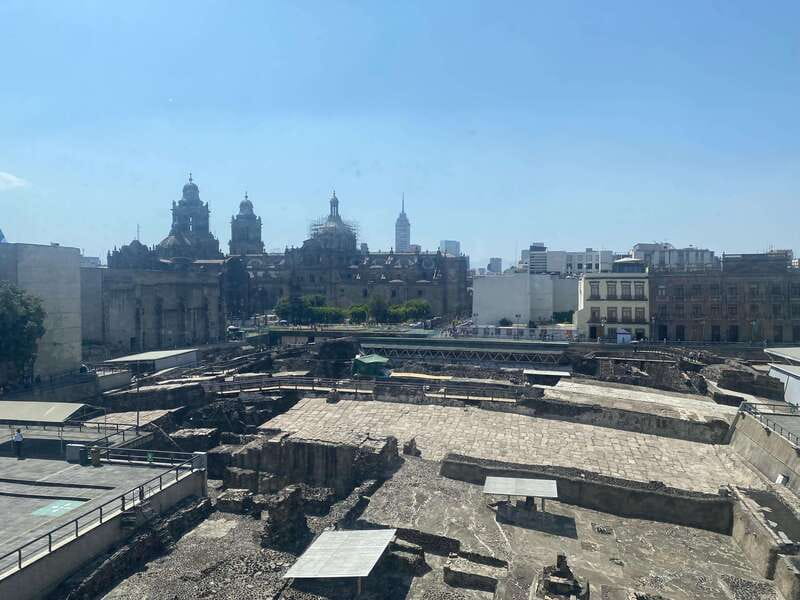
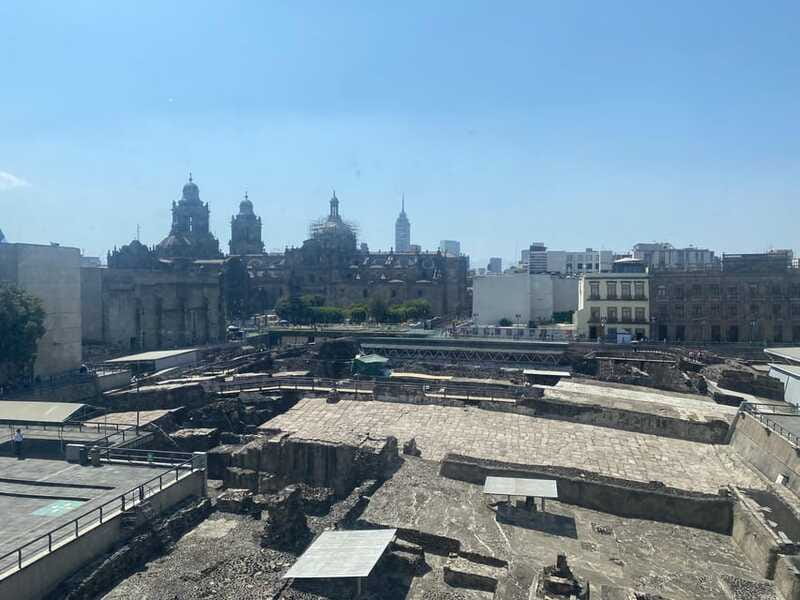
The walk starts with the Templo Mayor area. You won’t enter the museum, but you do get to view the models and the archaeological zone from the outside. That matters, because Mexico City’s skyline and street grid can be confusing until you understand what was here first.
From ground level, it’s easy to think of the Templo Mayor as just another landmark. This stop keeps it tied to the city’s founding story, so later sights (especially the cathedral zone) feel less like random “big buildings” and more like steps in the same transformation.
One practical plus: because you’re not stuck inside a ticketed attraction at the start, you keep momentum. The tour is built to hold attention for the full 3 hours without turning into a check-the-box museum sprint.
Cathedral area: how the past hides in plain sight
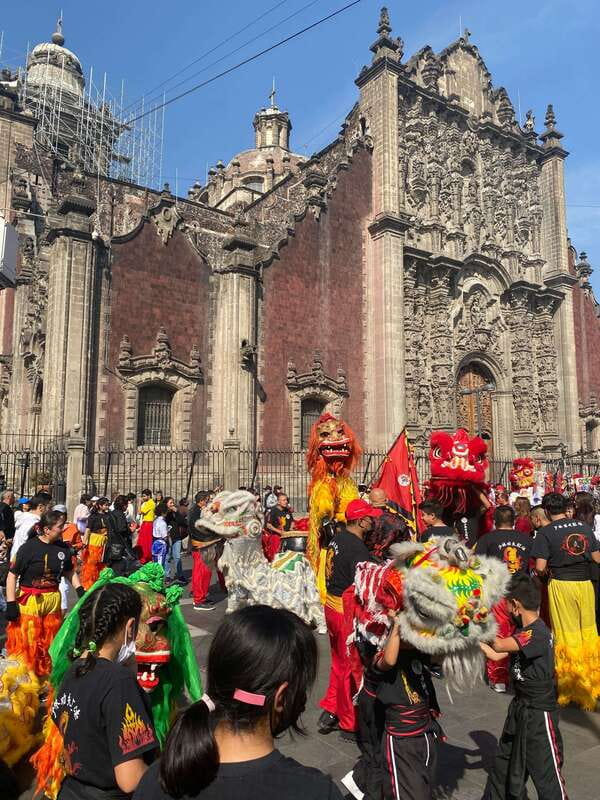
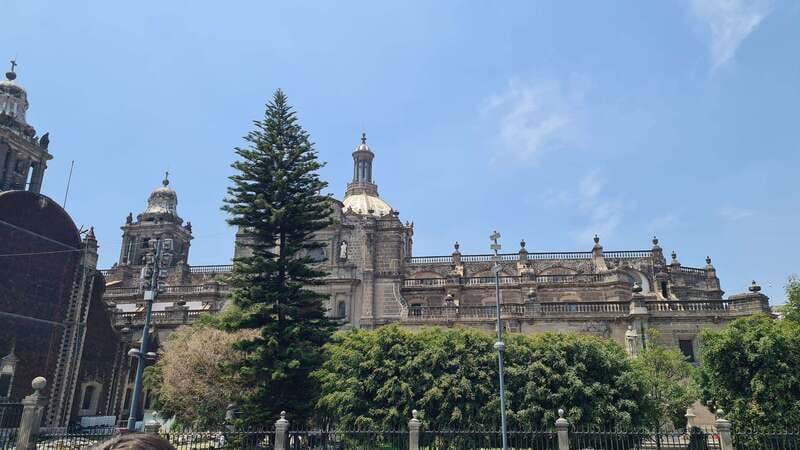
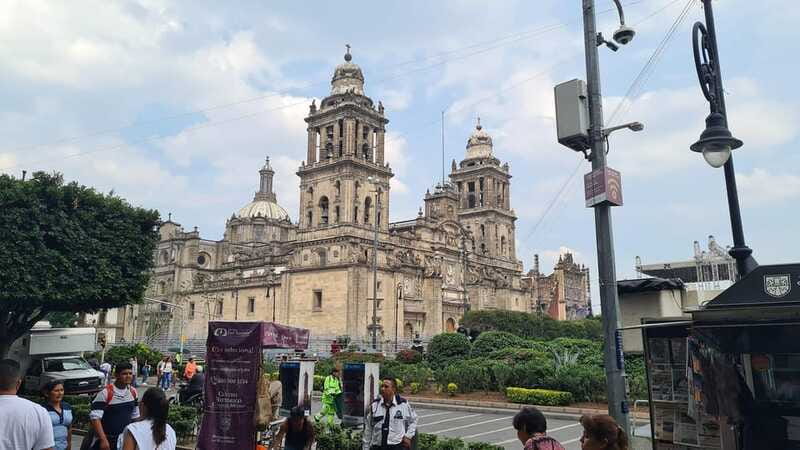
Next comes Catedral Metropolitana de México, where the tour includes a guided walkthrough timed for a quick but meaningful orientation (about 20 minutes). You’re not there to just admire the size. You’re there to understand how the old sacred geography and the Spanish-era layout coexist in the same neighborhood.
Then you move behind the cathedral area for two named elements: Animas del Purgatorio and the “Calmecac” site at the Centro Cultural España museum complex. Even if you only catch glimpses from the walking route, the guide uses the proximity to connect the setting to the bigger story of how Tenochtitlan’s urban fabric influenced later Mexico City.
This section is also where the tour’s small-group format helps. In a big crowd, cathedral-area history turns into noise. Here, the guide’s explanations stay readable, and you can ask follow-ups as you pass the next reference point.
Cortés’s lodgings at the Old Axayacatl Palace: early colonization in a real address
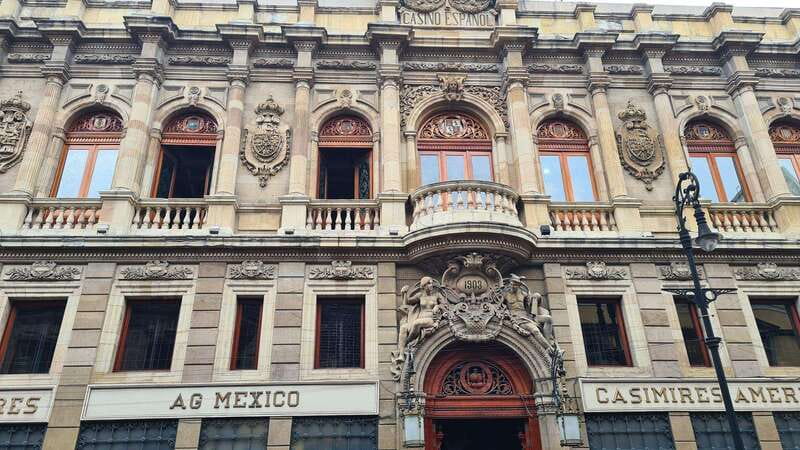
A standout stop on this route is the place linked to Cortés’s Lodgings at the Old Axayacatl Palace (also described as the Old Houses of Moctezuma). This is exactly the kind of location that feels ordinary if you just look at the exterior. With a guide, it turns into a concrete, location-specific chapter in the story.
The tour uses this site to connect Spanish colonization to the existing city structures rather than treating it like a clean break. That’s a key reason this walk feels different from generic city-center tours: you’re constantly seeing how one era reuses, repurposes, or overlays what came before.
If you enjoy history that has names, you’ll likely appreciate the way the guide keeps the chronology moving. Reviews consistently highlight how Prof. Cristina Ríos brings the Aztec-to-colonial-to-independence continuum into focus, and this stop is one of the places where that approach really shows.
Banamex Cultural Center / Iturbide Palace: where power becomes architecture
From there you head to Iturbide Palace, now associated with the Banamex Cultural Center. The timing (about 20 minutes) is just right for this part of downtown, where you need to keep moving while still getting enough context to notice details.
Palaces like this often look like grand backdrops until you learn how they fit into Mexico City’s political and cultural shifts. This stop helps you look beyond the postcard facade and interpret why these kinds of buildings show up where they do, and what they communicate about their era.
Even if you’re more of a practical traveler than a pure architecture nerd, you’ll likely find this section useful. It gives you a way to read the street scene instead of just photographing it.
You can also read our reviews of more city tours in Mexico City



Church of San Francisco: a face-to-face architecture lesson
Next is the Church of San Francisco, with a focus on the facade (guided time around 20 minutes). This is a nice pacing reset because the tour keeps the attention on visual elements you can actually see while walking—lines, surface, and the way the church anchors the surrounding streets.
In a longer tour, facades can feel like filler. Here, the guide uses them as part of a wider narrative about styles and the handoffs between eras. So by the time you reach the next interior-looking moment at Casa de los Azulejos, you’ll have a better sense of what to notice and why.
Casa de los Azulejos and Orozco’s mural: tiles outside, meaning inside
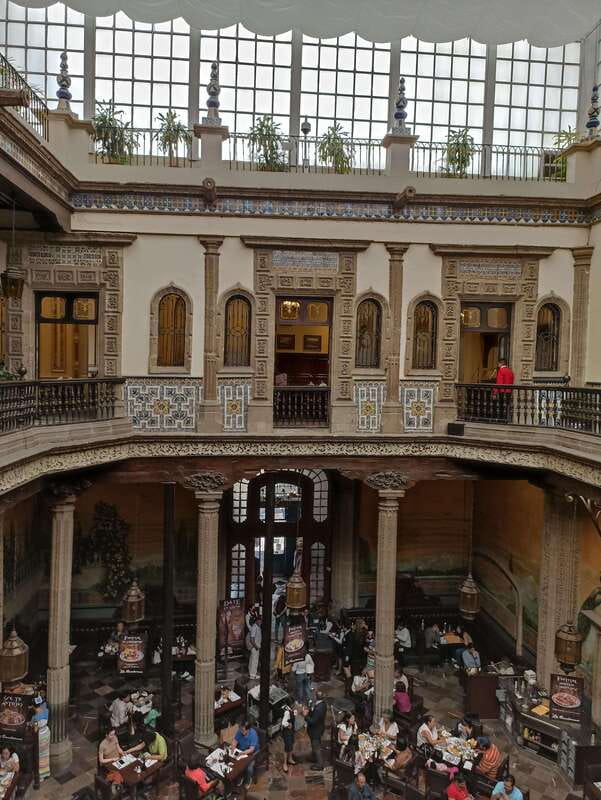
Then comes one of the most memorable contrasts on the route: Casa de los Azulejos. You’ll see it from the outside first, then step inside to experience the Jose Clemente Orozco mural with a detailed explanation (about 30 minutes total for this stop).
This is where the tour’s balance really works. You’re not only fed historic context; you also get art-historical context, tied to a specific work. If you like Mexican mural art, you’ll enjoy how the guide explains it in terms of place and message, not just name-dropping.
The Casa de los Azulejos setting also helps you slow down. The building is famous for a reason, but it’s easy to rush past it if you’re on your own. Here, you get a structured moment to actually absorb what you’re seeing, and then connect it to the broader city story the guide has been building since the Templo Mayor.
Palace of Fine Arts (Palacio de Bellas Artes): the finish with citywide context
The tour wraps at Palacio de Bellas Artes. The route includes a pass-by / guided look time (the schedule shows a 30-minute guided segment), and you end your morning in one of Mexico City’s most recognizable cultural landmarks.
This finish works because you’ve just walked through layers of older sacred, colonial, and civic settings. Bellas Artes gives you a modern anchor point so you don’t leave with only ancient monuments. It’s a visual reminder that Mexico City didn’t just preserve the past—it also built new cultural identities on top of it.
How much is it really worth? The $43 value for a 3-hour PhD-led walk
At $43 per person for about 3 hours, this tour is priced like a mid-range guided experience. The value comes from two things: (1) you’re getting a specialized guide, Prof. Cristina Ríos (PhD), and (2) the format is small-group, capped at 10, with headsets when the group gets larger than 7.
That headset detail is not just convenience. It changes how well you can hear explanations in crowded downtown spaces. If you’ve ever tried to follow a guide near the cathedral area, you know how quickly tours lose the plot when audio fails.
Also, the route is dense. You cover the Templo Mayor area, cathedral zone, Cortés-linked historic space, Iturbide/Banamex, San Francisco facade, Casa de los Azulejos with Orozco interior focus, and then Bellas Artes. You aren’t bouncing around with long transfers, so your time stays focused.
What’s not included: tickets (and you won’t be entering the Templo Mayor museum at the start) plus food and drinks. If you want the optional sweets stop at Dulcería Celaya, treat it as a bonus you add on with your own budget.
Who this tour is best for (and who should skip it)
This is a great match if you:
- want a history-and-architecture walkthrough in Centro Histórico
- enjoy asking questions and hearing answers as you move
- like routes that connect Tenochtitlan to later Mexico City, instead of treating them as separate trips
- prefer small groups so the guide can keep the pacing tight
It’s likely not the best fit if:
- you hate walking for 3 hours
- you’re traveling with children under 10 (the tour is noted as not suitable for that age group)
- you want a ticketed museum day with lots of indoor time
Practical tips so you enjoy every stop
Bring comfortable shoes and a hat/sunglasses. Sun + stone streets can be a bigger issue than you expect, especially during a morning walk. Sunscreen helps too.
Also, arrive with an open mind about details. This tour rewards attention. When you hear the guide connect one location to another across the eras, the whole route makes more sense than just collecting landmarks.
Finally, if you’re the type who likes to continue on after a tour, plan extra time at the end around Palacio de Bellas Artes so you can linger and reconnect what you learned to what you see.
Should you book Mexico City: Historical walking tour of Tenochtitlan?
I’d book it if you want your first Mexico City morning to do real work—helping you understand the founding story behind today’s streets. The small-group size, the PhD-led storytelling, and the mix of sacred-site context plus architecture and art explanations give this walk more depth than most “downtown highlights” tours.
Skip it if you want lots of museum time or you’re sensitive to prolonged walking. Otherwise, it’s a strong value way to start making sense of Mexico City beyond the obvious photos.
FAQ
How long is the tour?
The tour lasts 3 hours.
Where does the tour start?
You meet at the entrance of Centro Cultural España in México, located at Guatemala #18, to begin at the Templo Mayor models/view area.
Do we enter the Templo Mayor museum?
No. You view the Templo Mayor models and the archaeological zone from the outside.
What’s included in the price?
The price includes a specialized guide with detailed explanations, plus headsets/audio equipment when the group is larger than 7 people.
What is not included?
Tickets are not included, and food and drinks are not included.
How big is the group?
The tour is a small group with a maximum of 10 participants.
What languages are offered?
The live guide is available in English and Spanish.
Is the tour wheelchair accessible?
Yes, the tour is listed as wheelchair accessible.
Is this tour suitable for children?
It is noted as not suitable for children under 10.