REVIEW · MEXICO CITY
Mexico City: Historic Center Walking Tour and Bellas Artes
Book on GetYourGuide →Operated by Pies descalzos · Bookable on GetYourGuide
Mexico City’s Historic Center can feel like time travel. This walking tour packs Templo Mayor and the Metropolitan Cathedral into one smart route, then finishes with the Palacio de Bellas Artes and big-name murals. I love the way the guide connects Mexica ceremony with Spanish-era power, and I also love the art-focused stops, from Art Nouveau details to the architecture inside Bellas Artes. One thing to plan for: there’s a lot of walking, and weather can swing fast.
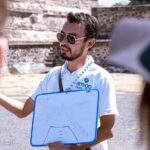
What really makes this worth the $75 price tag is the human factor. In past tours, guides like Laila (German), Jorge (English) and Francisco Sandoval (Italian effort) set a friendly pace and stick with you through real-world disruptions, like a massive protest. You’ll also get multiple languages (Spanish, English, French, German), plus skip-the-line access at key sites.
If you want a calm, efficient way to see the big landmarks without getting lost in the crowds, this is a strong choice. Just be ready for venue rules (like no flash in certain areas) and the fact that meals and drinks are not part of the tour.
In This Review
- Key Things You’ll Really Notice
- Why This Historic Center Walk Feels Like Two Centuries at Once
- Starting at the Metropolitan Cathedral: Where You Get Your Bearings Fast
- Templo Mayor: Mexica Ceremony Comes First
- The Cortes and Moctezuma Connection: A Story Told Through Specific Stops
- Inside the Metropolitan Cathedral: Scale, Ruins, and Real Time
- Art Nouveau in the Gran Hotel de Mexico: A Style Break from Big Stone
- Casa de los Azulejos (House of Tiles): Color, Craft, and Easy Photos
- Palace of Iturbide: Exhibitions and a Tile-Adjacent World
- Palacio de Bellas Artes: Where the Architecture and Murals Pay Off
- The Bakery Stop: A Small Included Treat That Makes the Timing Work
- Price and Logistics: Is $75 a Good Deal?
- Comfort, Weather, and Rules: How to Make the Walk Easier
- Who This Tour Is Best For (and Who Might Skip It)
- Should You Book This Mexico City Tour?
- FAQ
- FAQ
- Where does the tour meet?
- How long is the tour?
- What’s included in the tour price?
- Is the Templo Mayor ticket included?
- Which attractions can I enter?
- What languages are available for the live guide?
- Is this tour wheelchair accessible?
- What should I bring and wear?
- What photography rules should I know?
- Are meals and drinks included?
Key Things You’ll Really Notice
- Templo Mayor as the anchor: you start by understanding the Mexicas’ ceremonial center before moving to Spanish-built layers
- Largest Cathedral, built over older ruins: the Metropolitan Cathedral entry is where the “new over old” story becomes physical
- Art Nouveau moments in the center: the Gran Hotel de Mexico stop is more than a photo stop; it’s a style lesson
- Palacio de Bellas Artes with major murals: you’ll see large-scale works by Diego Rivera, David Alfaro Siqueiros, and Jose Clemente Orozco
- A themed Hernan Cortes/Moctezuma mural and local context: you’re shown specific connections, not vague facts
- One included bread at an old bakery: a small local break that fits the route
Why This Historic Center Walk Feels Like Two Centuries at Once
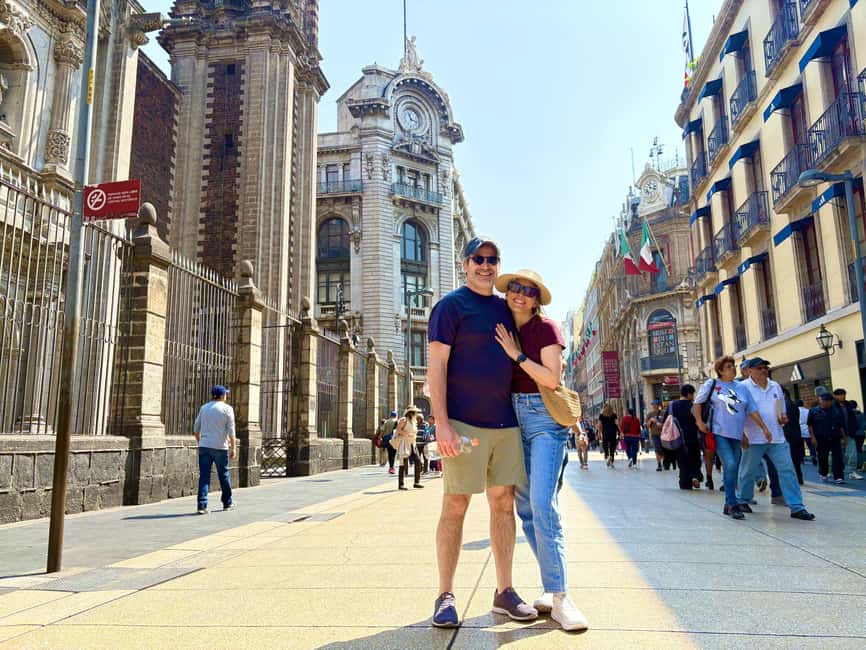
Mexico City’s Historic Center is big, busy, and full of history you can’t easily untangle alone. This tour helps you do that in 3.5 hours. You’re not just checking buildings off a list; you’re learning how different powers took over the same ground.
I like that the route is built around major transitions. You begin at the Metropolitan Cathedral area, move into Mexica origins at Templo Mayor, then shift into colonial and later Mexico City culture. The finish at Bellas Artes lands like a payoff: architecture outside, murals inside, and an end point that feels central to the city’s identity.
Also, the pacing is built for seeing inside multiple landmarks. There’s entry time at the Metropolitan Cathedral, stops at the Gran Hotel de Mexico and Casa de los Azulejos, and guided time inside Palacio de Iturbide and Bellas Artes.
You can also read our reviews of more walking tours in Mexico City


Starting at the Metropolitan Cathedral: Where You Get Your Bearings Fast
You meet at the entrance of the Catedral Metropolitana de la Ciudad de México. That’s a smart meeting point because it immediately puts you in the middle of the Historic Center’s “gravity.” Within minutes, you understand why this area became the city’s core.
From there, the tour guides you through what makes the Cathedral historically unusual: it’s built on pre-Hispanic ruins. That detail matters because it changes how you look at the building. Instead of seeing only stonework and chapels, you start noticing the layered story of the site.
You’ll also get to enter the Metropolitan Cathedral. That’s the difference between seeing a landmark and actually understanding it. From inside, you can take in scale, religious art, and the sense of permanence that makes this place feel like the city’s spine.
Templo Mayor: Mexica Ceremony Comes First
Your tour’s Mexica phase begins with Templo Mayor. This is one of the most important ceremonial and spiritual centers for the Mexicas. The best part is that you don’t treat it like a random stop. The guide explains the site in a way that helps you picture what it meant in its original context.
Even if you’re not an archaeology expert, you’ll feel the shift in your attention here. This stop gives you the “before” story for the city’s later layers. You also spend time at the Templo Mayor Museum, and you’ll likely be shown key objects and meanings connected to Mexica life and belief.
One particularly striking thread in the tour is the way the guide connects celestial and political ideas to where the empire was established. You’ll also learn about a sign associated with Huitzilopochtli, described as the solar god of war, and how that symbol relates to today’s flag imagery.
The Cortes and Moctezuma Connection: A Story Told Through Specific Stops
The tour doesn’t just name characters. It gives you locations tied to the story. You’ll see where the remains of Hernán Cortés are and also see a mural depicting his encounter with Moctezuma.
That approach is useful because it turns history into something you can map with your eyes. Instead of memorizing names, you’re linking them to spaces in the Historic Center. It also helps you understand why visitors sometimes feel like the city has legends embedded right into its walls.
This is also where a strong guide adds real value. In some past tours, guides handled changing conditions while still keeping the story on track. That means you’re less likely to feel like your time is wasted if crowds or disruptions make one area slower than expected.
Inside the Metropolitan Cathedral: Scale, Ruins, and Real Time
Entering the Metropolitan Cathedral is one of the most satisfying pieces of the tour because it’s not just exterior sightseeing. You get time inside, which makes the size and art more believable.
The tour’s key idea here is the Cathedral’s construction over older ruins. That detail isn’t just trivia. It’s a reminder that Mexico City grew by stacking eras on top of each other.
If you come in expecting a quick look, you might miss what makes this stop special. Instead, slow down once inside. Look at the space you’re in and try to mentally connect it to what was here before. The guide’s explanations help you do that without needing to read a textbook.
You can also read our reviews of more city tours in Mexico City



Art Nouveau in the Gran Hotel de Mexico: A Style Break from Big Stone
Then the tour pivots from religious and ancient sites into something more playful: Art Nouveau at one of the city’s most beautiful hotels, the Gran Hotel de México. This is a stop that works even if you don’t usually care about hotel architecture.
Art Nouveau details are easier to appreciate when you’re told what to look for. You’re not just walking through a pretty lobby; you’re seeing how design choices signal a time period and a kind of optimism.
This is also a nice pacing break. After intense historical layers, the Art Nouveau stop feels like a breath. You get photos, you get visual variety, and you still stay on the same theme of how Mexico City looks and evolves.
Casa de los Azulejos (House of Tiles): Color, Craft, and Easy Photos
Next comes Casa de los Azulejos, also known as the House of Tiles. The included entry is timed so you can see the building’s character without rushing.
The point of this stop is twofold. First, it gives your eyes something bright after churches and museum spaces. Second, it reinforces the idea that the city’s history isn’t only in museums. A lot of it sits in everyday architecture.
You’ll have time to observe the tilework and take photos. If you’re traveling with a camera, it helps to arrive ready to move—this is the kind of stop where the best angles are easy if you stand in the right spot early.
Palace of Iturbide: Exhibitions and a Tile-Adjacent World
At Palacio de Iturbide, you learn about the palace’s connection to Mexico’s first emperor. The stop also includes time to view exhibitions, which can make the visit feel more current than you’d expect from a historic site.
This place matters because it bridges categories. It’s part history lesson, part museum-like viewing. Even if you don’t care about every exhibit topic, it’s still valuable as a change of pace and a chance to see how royal-era spaces are used today.
If exhibitions are on display when you arrive, you’ll get extra variety in your tour experience. That’s a good reason to treat this as more than a photo stop.
Palacio de Bellas Artes: Where the Architecture and Murals Pay Off
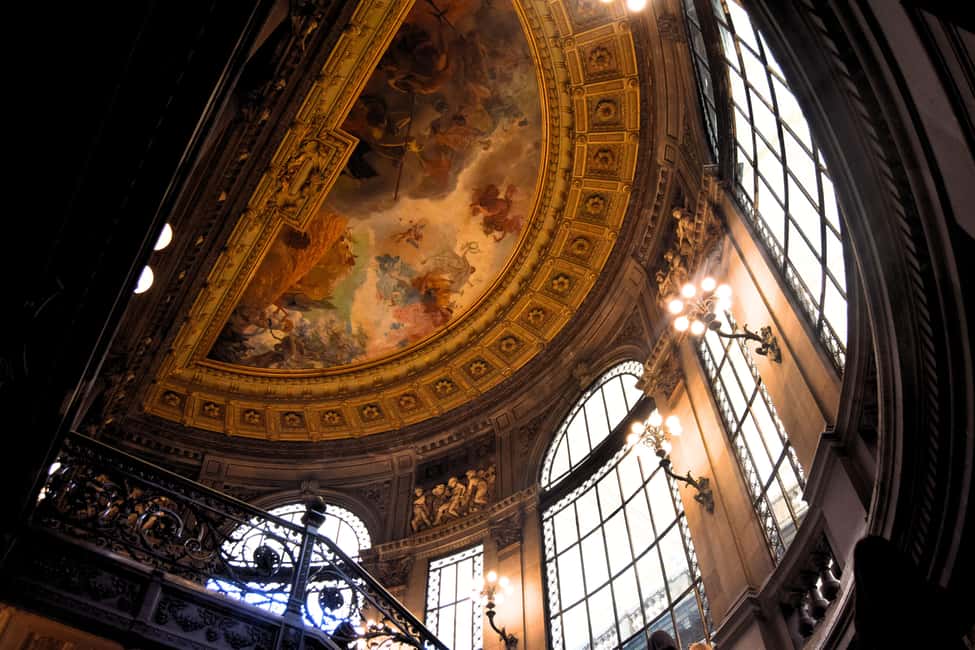
The tour ends at Palacio de Bellas Artes, and this is the moment you’ll feel the value of the entire route. Bellas Artes isn’t just a pretty exterior. You’ll enter and experience the scale inside, then see major murals.
The tour highlights the beauty of the architecture and the chance to see works by Diego Rivera, David Alfaro Siqueiros, and Jose Clemente Orozco. That’s a big deal. These are artists whose work shaped Mexico’s modern visual identity, and Bellas Artes is one of the places where those ideas become public and physical.
Before you get to the murals, take a moment to look around at the space. The building’s interior is designed to move your attention. When you then face the murals, the experience feels like it was meant to be seen together: architecture framing the storytelling on the walls.
The Bakery Stop: A Small Included Treat That Makes the Timing Work
Near the end, you’ll visit an old local bakery. You get one bread included. It’s not a meal, but it’s a smart “taste of the area” moment that fits the walking schedule.
I like these small inclusions because they reduce decision fatigue. Instead of hunting for a snack near your last stop, you get something simple and local that helps you finish the tour without running on empty.
Price and Logistics: Is $75 a Good Deal?
At $75 per person for about 3.5 hours, this tour is priced in the middle of what you’ll see for guided Historic Center access. The value comes from stacking entries and guided time in multiple key places.
What you get included (based on what’s listed) includes entry to the Metropolitan Cathedral, entry to Gran Hotel de México, entry to Casa de los Azulejos, visit to Palacio de Iturbide, entrance to Palacio de Bellas Artes, and the bakery bread. You also get guided context and key story beats, like the Hernán Cortés/Moctezuma mural and other specific historical links.
Two practical cautions affect value. First, the Templo Mayor ticket may be extra depending on the option you pick, even though the tour includes time tied to the Templo Mayor ruins/museum experience. Second, meals and drinks are not included, so you may want to plan for a snack or hydration on your own.
If you like guided structure—someone else handling the “where to go and why it matters”—this price makes sense. If you prefer total freedom and don’t want entrances timed, you might compare it against self-guided options. But for many people, the built-in pacing is what you’re paying for.
Comfort, Weather, and Rules: How to Make the Walk Easier
This is a walking tour with a significant amount of movement, so your biggest success factor is shoes. Comfortable footwear matters more than you think, especially in areas where the ground can be uneven and where you’ll be standing inside and outside multiple buildings.
You’ll also want a hat, sunscreen, and water. The tour requests you bring a flask of water instead of plastic bottles, which is an easy habit and a good fit for a city that can get hot.
A few rules to remember:
- No smoking during the tour
- No intoxication and no alcohol or drugs
- High-heeled shoes are not allowed
- Flash photography isn’t permitted in certain areas
If you’re the kind of traveler who likes to take photos, build in a few extra minutes mentally. You might have to switch from flash to natural light once you’re inside certain spaces.
Finally, Mexico City can throw curveballs. In one example, a guide named Jorge managed a tour during a massive protest by showing what sights were still available. That’s a reminder to stay flexible and let the guide adjust the flow if conditions shift.
Who This Tour Is Best For (and Who Might Skip It)
This tour is ideal if you want:
- a guided framework for the Historic Center’s layered story
- museum-and-architecture stops in a short timeframe
- big-name art at the finish, with murals you can actually see in person
It also helps if you’re visiting for the first time and want a route that makes sense.
You might consider skipping (or choosing something different) if you:
- hate guided groups and prefer fully independent exploring
- plan to spend lots of time in one museum rather than sampling multiple stops
- are very sensitive to walking time and weather
Should You Book This Mexico City Tour?
Yes—if your goal is a focused, high-impact day that connects Mexica roots to Spanish-era sites and then lands in modern Mexican art. The $75 price feels fair when you factor in the entries and the guided context, especially the Cathedral entry and the Bellas Artes mural experience.
Book it if you want an organized way to see the Historic Center without guessing your route. Skip it only if you strongly prefer DIY travel or can’t handle a lot of walking.
FAQ
FAQ
Where does the tour meet?
You meet at the entrance of the Catedral Metropolitana de la Ciudad de México.
How long is the tour?
It lasts about 3.5 hours.
What’s included in the tour price?
It includes a guided tour of the Historic Center, entry to the Metropolitan Cathedral, entry to the Gran Hotel de Mexico, visits to Palacio de Iturbide, Casa de los Azulejos, and Palacio de Bellas Artes, plus entry to the oldest local bakery stop that includes one bread.
Is the Templo Mayor ticket included?
The Templo Mayor ticket is not included unless you select an option that covers it. The tour includes Templo Mayor ruins time.
Which attractions can I enter?
You’re included for entry to the Metropolitan Cathedral, the Gran Hotel de Mexico, Palacio de Iturbide, Casa de los Azulejos, and Palacio de Bellas Artes.
What languages are available for the live guide?
Live guides are available in Spanish, English, French, and German.
Is this tour wheelchair accessible?
Yes. It’s listed as wheelchair accessible.
What should I bring and wear?
Wear comfortable shoes and bring a hat, camera, sunscreen, and water (the tour asks for a flask to reduce plastic bottles).
What photography rules should I know?
Photography is allowed, but flash photography is not permitted in certain areas.
Are meals and drinks included?
No. Meals and drinks are not included, and food and drinks are not allowed inside some venues.