REVIEW · MEXICO CITY
Mexico City: 19 City Highlights Bicycle Tour
Book on Viator →Operated by TourbikeandfoodCDMX · Bookable on Viator
Roll through Mexico City’s highlights by bike. This Mexico City bicycle tour strings together major sights from Chapultepec to the Historic Center, with an English-speaking team and a small group size that keeps things friendly and easy to follow. You’ll hop off for short looks, then get back on the saddle to link neighborhoods you’d otherwise bounce between by taxi.
I especially like how the hosts, including Yibran and Daniella, make the ride feel safe and well-paced. I also like the personal touch: they take photos during the tour and even put together a short video afterward, plus they share strong food and drink recommendations once you’re done.
One thing to consider: you’re on the bike for a long stretch, and the stops are mostly brief. That means you’ll want to bring water and be ready for some steady riding—great for most people, but it can feel tiring if you expect everything to be super slow or fully guided at every monument.
In This Review
- Key highlights worth planning around
- Why this 3–4 hour Mexico City bike tour is such a smart first move
- The route: how you link Chapultepec, Reforma, and the Historic Center
- Parque México: a beloved park stop that sets the tone
- Altar a la Patria and the Children Heroes story
- Chapultepec’s park space: large, symbolic, and easy to read
- Chapultepec Castle viewpoint: quick look, no full guided tour
- Museo Nacional de Antropología: a stop for first impressions
- Reforma Avenue monuments: El Ángel, Hemiciclo a Juárez, and more
- Palacio de Bellas Artes and the Historic Center’s rhythm
- Templo Mayor and Monument to the Revolution: big stops, not guided tours
- The Roma Norte finish: you end where it’s easy to eat
- Bikes, guides, and the personal touches that people rave about
- Sunday ride advice: use car-free streets when you can
- What to bring so the 3–4 hours feels easy
- Who this tour is best for (and who should rethink it)
- Should you book this Mexico City bicycle tour?
- FAQ
- How long is the Mexico City bicycle tour?
- Is the tour in English?
- How big is the group?
- Are there admission fees at every stop?
- Are the castle and museum stops guided?
- What happens if weather is bad?
Key highlights worth planning around
- Small group of up to 10 makes the ride more controlled and easier to ask questions.
- Photo and video follow-up so you can enjoy biking instead of constantly juggling your phone or camera.
- A route that ties together Roma neighborhoods, Chapultepec, Reforma, and the Historic Center so you learn where things are.
- Short, focused stops at major landmarks, with free admission at many of them.
- Sunday is a smart pick when many streets are closed to cars for recreation, making biking smoother.
- Two-guide setup for safety: one lead and another bike to help manage traffic and keep the group together.
Why this 3–4 hour Mexico City bike tour is such a smart first move
Mexico City is huge. A bike tour like this works because it gives you a fast “map in your head” for the trip ahead. In just a few hours, you’ll see a wide slice of the city’s most famous architecture, parks, and monuments, then you can decide what deserves a longer walk later.
The price—$71.53 per person—feels fair when you factor in the time saved and the guidance. You’re paying for more than sightseeing. You’re also paying for bike logistics, a tight group, and hosts who help you navigate roads and transitions between neighborhoods without you guessing at every turn.
This also makes a great “first or second day” plan. When you start early, you get orientation before the city’s sights get crowded. Several people highlight that doing it on Sunday is even better because the roads feel more bike-friendly.
You can also read our reviews of more city tours in Mexico City


The route: how you link Chapultepec, Reforma, and the Historic Center
The tour starts in Roma Sur at Jalapa 272 (near Centro Urbano Pdte. Juárez) and ends in Roma Norte at Coahuila & Calle Orizaba. That matters, because Roma is one of the easiest bases for visitors, and ending in Roma Norte is handy for post-ride meals.
You’ll move through a sequence of classic “photo-and-learn” stops. The timing is built around short visits—often 10 to 15 minutes—so you can see plenty without burning half your day standing in lines or waiting around for a long lecture.
One review even notes the tour felt like it covered about 10+ miles, yet the riding was described as not challenging. That’s a good signal: you’ll likely work up some sweat, but it shouldn’t feel like a training ride.
Parque México: a beloved park stop that sets the tone
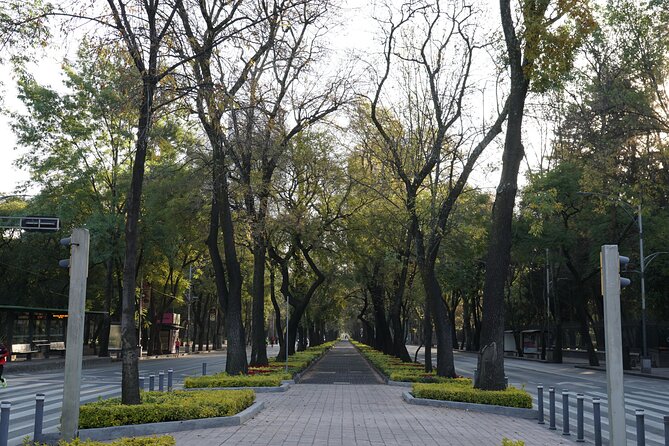
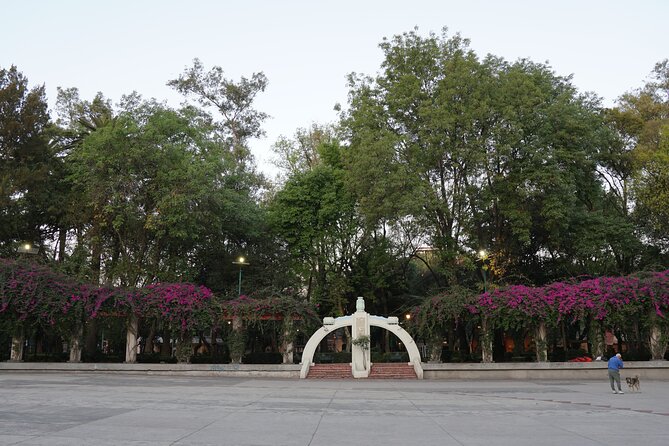
Your first stop is Parque México, one of the city’s favorite parks. You get about 10 minutes here, and admission is included.
Why this works: parks are a fast way to understand a neighborhood’s character. Parque México sits in a green, community-centered pocket, so it gives you a calm mental reset before you start moving toward heavier monument areas.
If you’re the type who likes to check out local life beyond the big-name landmarks, this opening stop helps. It’s also a gentle warm-up for your legs before the ride gets more active.
Altar a la Patria and the Children Heroes story
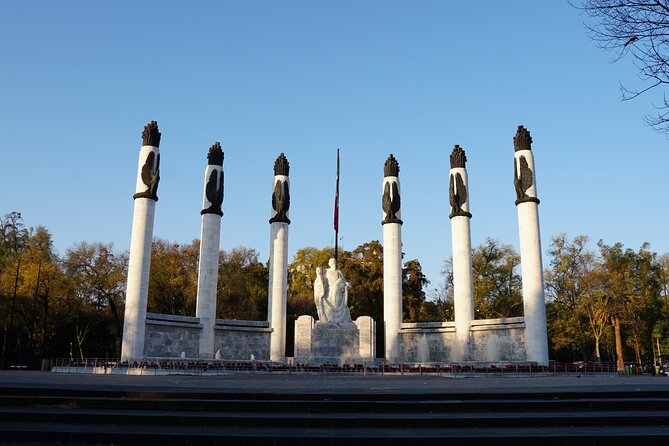
Next up is Altar a la Patria, also called the monument to the Children Heroes. You’ll have about 10 minutes, and admission is free.
This stop is brief, but the site is emotionally loaded, which is why it’s often included on orientation-style tours. It’s the kind of monument that helps you connect Mexico City’s public memory to the broader national story, not just treat history as background wallpaper.
If you’re short on time in the city, this is a good use of it. You’ll get the basics without turning your day into a full history class.
Chapultepec’s park space: large, symbolic, and easy to read
You then roll into Bosque de Chapultepec, with around 15 minutes and free admission. This is one of Mexico City’s most symbolic sites and also one of the world’s largest urban parks.
Even in a quick visit, you can “feel” Chapultepec. It’s not just an attraction; it’s the city’s giant green lung, wrapped around major institutions and monuments. That makes it a perfect bike-tour anchor point: you can see the importance of the area instantly.
If you’re planning your days after the tour, think of Chapultepec as a hub. You’ll likely want to return—either for more museum time or for the park itself once you know where everything sits.



Chapultepec Castle viewpoint: quick look, no full guided tour
The tour includes Chapultepec Castle for about 10 minutes, and admission is free. Importantly, the description notes it is not a guided tour.
So what should you expect? A stop that gives you the “why it matters” context plus a view-based moment. You’re there to take it in and understand its place in the skyline and the larger Chapultepec complex.
If you want more than a quick overview, you can always plan a separate visit later. But as part of an orientation ride, this stop does its job: it points you toward what to explore more deeply.
Museo Nacional de Antropología: a stop for first impressions
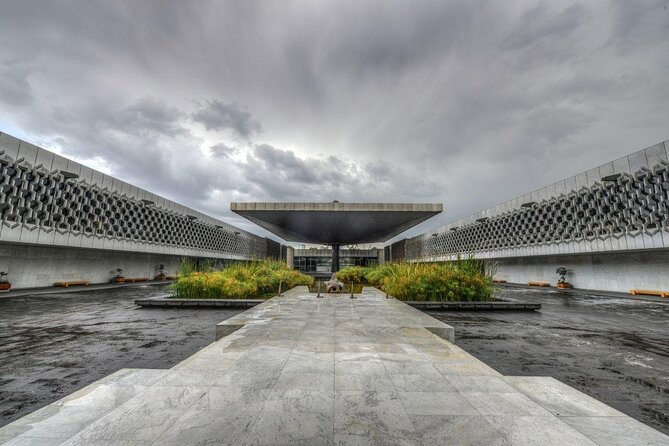
You’ll also pause at the Museo Nacional de Antropología for about 10 minutes, with free admission. Again, it’s not a guided tour.
This is the “taste, not the full meal” museum moment. The museum is so famous that a quick look can still help you decide if you want to come back with more time. You’re learning the geography and the significance, not trying to cover the collections in one bite.
If you’re the type who likes to build a plan based on priorities, this is helpful. After the ride, you’ll know whether you want to schedule a dedicated museum day.
Reforma Avenue monuments: El Ángel, Hemiciclo a Juárez, and more
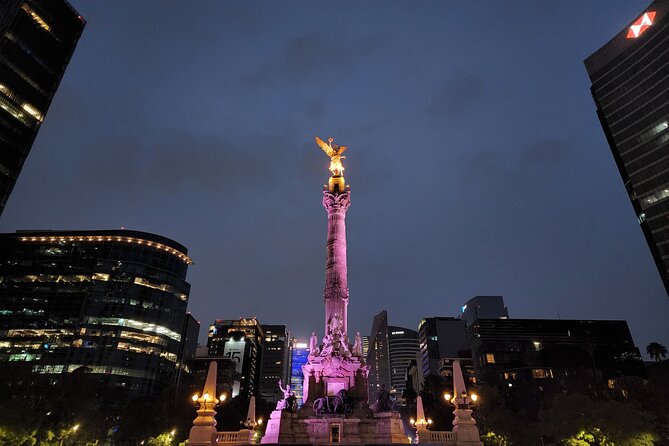
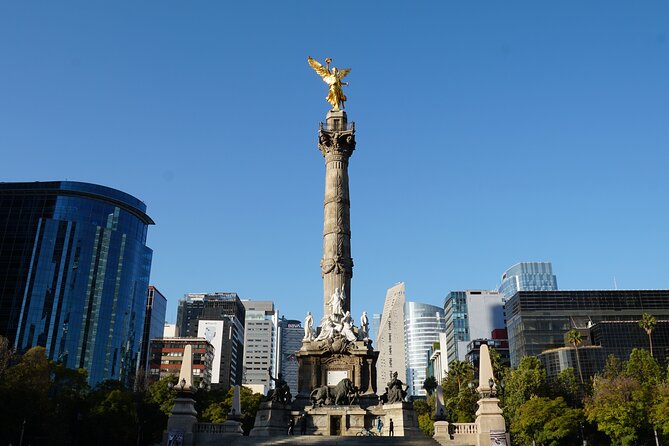
From the museum area, you move through emblematic stops that sit along major routes and viewpoints. One highlight is El Ángel de la Independencia, with about 10 minutes and free admission.
Then you’ll visit the Hemiciclo a Juárez for about 10 minutes, also free. The tour description also notes a monument viewpoint located on Reforma avenue, plus short pauses for additional emblematic buildings and park space in the center.
Why this section matters: Reforma and the monuments around it act like the city’s visual spine. Once you understand where these landmarks sit relative to each other, you can later navigate Mexico City much more confidently on foot or by rideshare.
It also helps with photo planning. You’ll get your bearings fast, instead of wandering later trying to find which side of a street gives the best angles.
Palacio de Bellas Artes and the Historic Center’s rhythm
Next is Palacio de Bellas Artes (about 10 minutes, free admission). This is one of those sights that many first-time visitors feel they should see, even if they only have a few days in town.
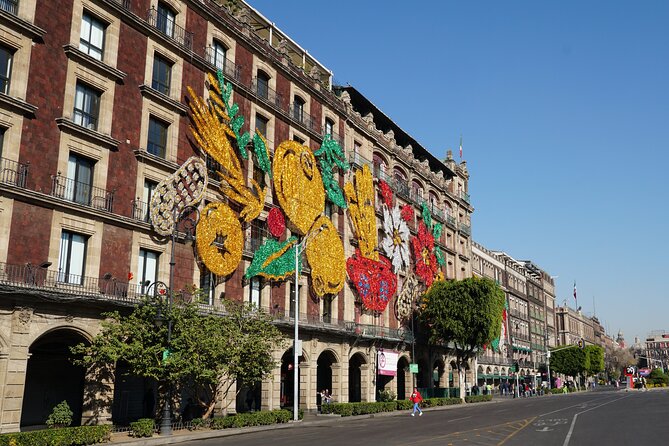
After that comes Zócalo, the central square of CDMX, also about 10 minutes and free admission. The tour description frames Zócalo as part of the Historic Center around Plaza de la Constitución.
This is where the city’s scale hits you. On a bike, you get movement. You see how the streets funnel toward major spaces. Then, with the clock still in your favor, you step off just long enough to register what’s around you.
One practical tip: plan to explore Zócalo on foot later, because 10 minutes is perfect for awareness but not enough for soaking in the details.
Templo Mayor and Monument to the Revolution: big stops, not guided tours
Later you’ll visit Museo del Templo Mayor for about 10 minutes, free admission. The description notes it does not include a guided tour.
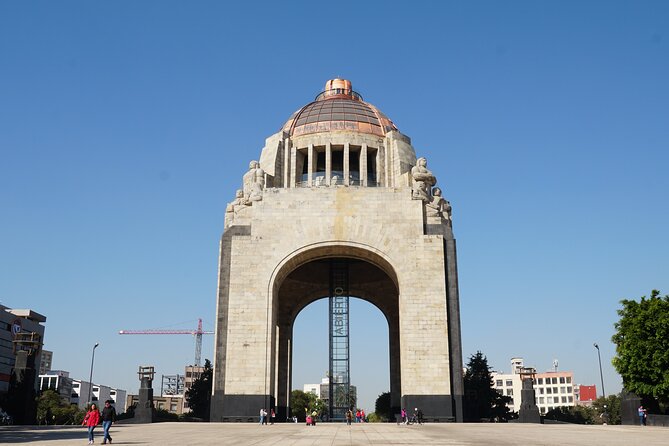
Then you’ll stop at the Monument to the Revolution for about 10 minutes, also free, and also not a guided tour.
These two stops work best if you treat them as “orientation to the next visit.” You’ll see why each site is important and what kind of experience you could have if you return with dedicated time. But you won’t get a deep guided walkthrough as part of this particular ride.
For many people, that’s exactly the point. A bike tour is a map with motion—then you choose the chapters you want to read longer.
The Roma Norte finish: you end where it’s easy to eat
The tour ends at Coahuila & Calle Orizaba in Roma Norte. Finishing in Roma is a convenience win: you’re not forced into a long transit afterward just to find dinner.
If you’ve been riding for a few hours, this is also a smart “wind-down” location. You can grab food, review photos, and use the rest of your day for lighter exploring.
Bikes, guides, and the personal touches that people rave about
This is where the tour earns its near-perfect scores. The guides aren’t just managing the route; they’re managing the experience.
Several reviews mention a husband-and-wife team feel, led by Yibran and guided by Daniella (spelled a few ways in notes, but clearly the same person). They’re described as warm, inclusive for solo travelers, and attentive about safety.
People also call out a two-guide approach: one person leads while the second follows to help stop traffic and keep everyone together. That reduces stress in the moments when you’re navigating intersections and busy roads.
Then there’s the “you don’t have to work” part. They take photos while you ride, and they put together a short video afterward. It’s a small thing that changes your whole mood: you can focus on the ride and the sights without constantly stopping to capture everything.
Sunday ride advice: use car-free streets when you can
If you have scheduling flexibility, choose a Sunday. Multiple reviews specifically recommend it because streets are closed to cars for recreation.
What that does for you is simple: less car pressure, more room to breathe, and a more social atmosphere where other cyclists and runners are out too. That makes the ride feel like an event rather than a chore.
Even if you’re not biking all that often at home, a Sunday route is easier to enjoy. If your trip has only one open day, don’t waste it—this is a good candidate.
What to bring so the 3–4 hours feels easy
The tour calls for moderate physical fitness. In plain terms: you should be comfortable riding a bike for long enough to see many stops.
Bring your own water. One review explicitly reminds people to do that, and it’s a smart move in a city where you might get caught outside longer than expected. Also consider a snack. Some reviews mention drinks and food, and it makes sense: you’ll appreciate a little fuel during a continuous ride.
If you’re traveling in mixed language comfort, you’ll be glad this tour is offered in English. Plus, multiple people mention the guides handle questions well even when one person in the group speaks Spanish and another doesn’t.
Who this tour is best for (and who should rethink it)
This tour fits best if you want a highlights circuit without building a complicated plan yourself. It’s ideal for:
- First-time visitors who want orientation across neighborhoods
- Couples and solo travelers who want a small group and local guidance
- Families with teens who can handle easy-to-moderate city biking (one review mentions teens around 13 and 15)
It might not be your best match if you hate riding through city streets or if you’re expecting a museum-style guided tour at every stop. Several listed monuments are not fully guided, and the pacing is designed for breadth.
Also, if your idea of sightseeing is only slow walking with lots of time at each site, you might feel short-changed by the frequent quick stops. In that case, pick a day for the specific places you care about most after the tour.
Should you book this Mexico City bicycle tour?
I think you should book it if you want a practical, fast way to understand Mexico City’s layout and major landmarks. The combination of a small group (up to 10), safety-focused guidance, and the photo/video follow-up makes it feel like more than a basic highlights run.
Choose a Sunday if you can, because car-free streets turn the ride into a calmer, more fun experience. And do it early in your trip so you can plan your next day(s) with confidence—especially around Chapultepec, Reforma, and the Historic Center.
If you’re the kind of traveler who needs deep guided context at every single monument, then treat this as your orientation day, not your only Mexico City “learning day.” Book it for the bearings, then come back with more time for the sights that pull you in most.
FAQ
How long is the Mexico City bicycle tour?
It lasts about 3 to 4 hours.
Is the tour in English?
Yes. The experience is offered in English.
How big is the group?
The tour has a maximum of 10 travelers.
Are there admission fees at every stop?
Not all stops cost extra. For example, admission is included for Parque México, while several other stops are listed as free. Some sites are also marked as not including a guided tour.
Are the castle and museum stops guided?
Some stops are specifically noted as not guided tours, including Chapultepec Castle, Museo Nacional de Antropología, Museo del Templo Mayor, and the Monument to the Revolution.
What happens if weather is bad?
This experience requires good weather. If it’s canceled due to poor weather, you’ll be offered a different date or a full refund.