REVIEW · MEXICO CITY
Hop-on Hop-off or Night Tour Tourist Bus in Mexico City
Book on Viator →Operated by Amigo Tours · Bookable on Viator
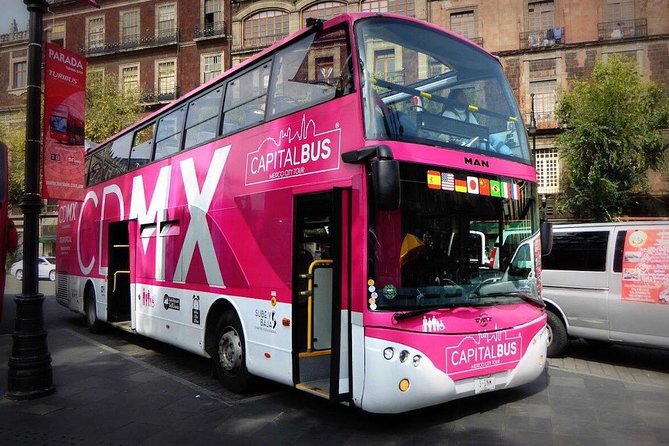
One ride can help you map the whole city. This hop-on hop-off bus gives you open-top, double-decker views and English audio commentary that make the big landmarks feel less like random dots on a map. I like that the tour is designed for check-off sightseeing, but still lets you slow down or detour on your own thanks to the 24-hour ticket.
The main thing to consider is timing: Mexico City traffic can be slow, so your hop-on window matters. The route is frequent and flexible, but you’ll still want a plan for where you hop off first, especially during peak daylight hours.
In This Review
- Key highlights to know before you ride
- Getting your bearings with an open-top double-decker loop
- The onboard audio in English actually helps
- 24-hour ticket freedom: use it as a flexible game plan
- Stop-by-stop: what’s worth your time (and what to skip)
- El Ángel (Monumento a la Independencia): the traffic-circle landmark you’ll spot all day
- Bosque de Chapultepec: big park energy and major museum access
- Plaza Carso (Nuevo Polanco): modern architecture plus museum options
- Around Avenida Molière: a quick window into the neighborhood streets
- Lincoln Park (Polanco): a calmer pause in a busy area
- Auditorio Nacional: a major performance venue worth seeing from the outside
- Paseo de la Reforma fountains: Diana the Huntress and Cibeles
- Where to eat and shop: Santa Fe and Paseo de la Reforma breaks
- Timing: how to avoid wasting your best daylight
- How good is this bus tour for different travel styles?
- Practical value: why this is a good use of limited time
- Should you book this hop-on hop-off bus?
- FAQ
- What locations does the bus tour cover?
- What language is the tour offered in?
- How long is the tour experience?
- Is the ticket valid for more than one day?
- Where does the tour start and end?
- Can I cancel for a full refund?
Key highlights to know before you ride
- 24-hour ticket freedom to hop on and off as many times as you want
- Open-top double-decker sightlines for clear views of major landmarks
- English onboard audio commentary to help you connect places to stories
- Frequent departures that make it easier to shape your day
- Smart stop mix: parks, museums, fountains, and high-activity areas for food and shopping
- Small group limit (45 travelers max) for a less chaotic feel
Getting your bearings with an open-top double-decker loop
Mexico City is huge. One of the hardest parts for first-timers is figuring out how the neighborhoods relate to the sights you want to see. This bus tour is built for that exact problem: you ride the main corridors and get big-picture context as you go, so you can actually use the rest of your time well.
From the upper deck, the views are the payoff. It’s open-top, and it’s double-decker, so you get a better angle on wide avenues, monuments, and skyline breaks than you would from a street-level bus. If you’ve ever stood in front of a landmark and then wondered how you’re supposed to fit everything else in the same day, this style of ride helps you answer that question fast.
You can also read our reviews of more city tours in Mexico City


The onboard audio in English actually helps
I like tours where the commentary isn’t just background noise. Here, you get audio commentary in English, timed to the major stops and route segments. That means you can follow along even if you’re not the type to read every sign at each attraction.
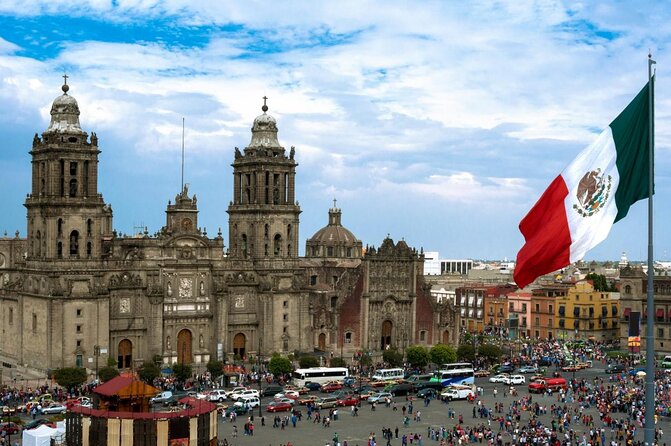
The value of the audio is how it links the sites to meaning. You’re not just seeing a monument; you’re hearing why it matters. When the bus reaches something like the Zócalo-area landmarks, the talk helps you understand what you’re looking at before you decide whether to hop off for photos, a museum, or a meal.
24-hour ticket freedom: use it as a flexible game plan

The ticket is valid for 24 hours, which is a big deal in a city where plans often shift. If you want museums plus parks plus shopping, you can split your day: ride in the morning, hop off for a museum or walk, then return later without starting over.
This flexibility also helps with weather and energy. If you’re moving slower than expected, you’re not trapped by a single fixed route for one short stretch. And if you finish a stop early, you can catch the next bus and keep momentum.
A practical tip: treat this as a framework. Pick your two or three must-sees first, then use the other stops as bonus options depending on how you feel.
Stop-by-stop: what’s worth your time (and what to skip)

Here’s how the route pieces fit together, and what each stop is best for.
El Ángel (Monumento a la Independencia): the traffic-circle landmark you’ll spot all day
The tour starts with the Monumento a la Independencia, known as El Ángel, a tall honorary column set in a major roundabout where Paseo de la Reforma meets other busy streets. It was inaugurated in 1910 to commemorate the Centennial of the Mexican War of Independence.
Why I think it’s a good early stop: it’s a quick orientation marker. From here, you start recognizing major arteries like Paseo de la Reforma, which keeps helping later when you’re out walking. If you’re short on time, this is a great one for photos and a quick look rather than a long pause.
You can also read our reviews of more evening experiences in Mexico City





Bosque de Chapultepec: big park energy and major museum access
Next you reach Bosque de Chapultepec, described as the largest urban park in the Western Hemisphere. It’s packed with major tourist sites, including the National Museum of Anthropology, which is why it draws both residents and visitors. The park also has archaeological importance, with nearly 4,000 archaeological objects reported as found in the area, and it’s been declared an archaeological zone.
The practical side: the stop time is about 15 minutes, and admission to the park is free (per the tour details). That’s not enough for a full museum day, but it is enough to orient yourself, take a breather, and decide whether you want to come back for longer. If you’re museum-inclined, use this stop to plan your next move rather than trying to do everything at once.
Plaza Carso (Nuevo Polanco): modern architecture plus museum options
Then you roll into the Nuevo Polanco area and stop at Plaza Carso, which is described as a large mixed-use complex and home to sites such as Museo Soumaya, Museo Jumex, and Teatro Telcel.
This stop is about pairing culture with a more polished, contemporary feel. You get a chance to see a different side of Mexico City than the historic core, and you’re near an area where it’s easier to find a café or light meal. Like others, you typically get around 15 minutes, and the tour notes it as free to access during the stop.
Drawback: if you’re trying to actually get into museums, 15 minutes won’t feel like enough. I’d treat Plaza Carso as either a quick view stop or a launchpad if you already know which museum you want.
Around Avenida Molière: a quick window into the neighborhood streets
You also cross Avenida Moliere, and the tour frames it as a place with important sites nearby. The key here isn’t a single attraction you’re guaranteed to finish; it’s the fact that the bus route is letting you look around Polanco and see how the city’s layout shifts neighborhood to neighborhood.
If you’re the type who loves street-level atmosphere, you’ll appreciate this segment. If not, don’t worry—you can stay on the bus and come back later with more time.
Lincoln Park (Polanco): a calmer pause in a busy area
The route then includes Lincoln Park, located in the southern part of Polanco. It’s noted as the first park designed for the colony, with a second park mentioned in front of San Agustín Parish on Horacio Avenue. Around it, the area includes some of the earlier mansions and apartments plus modern office and apartment buildings.
What you can do with a short stop like this is simple: stretch your legs, grab a quick photo, and reset. It’s also one of those stops that helps you understand Mexico City isn’t only monuments—there are neighborhood pockets where daily life happens.
If you’re sensitive to walking time, keep your expectations realistic. The stop is brief, so your “success” here is comfort and orientation, not long wandering.
Auditorio Nacional: a major performance venue worth seeing from the outside
Next is Auditorio Nacional, presented as Mexico’s main presentation venue and one of the most important in the world. The tour highlights its role based on the quality of artistic events, the volume of performances and attendees each year, ticket sales, and its impressive audiovisual infrastructure.
Even if you’re not catching a show, I’d still stop long enough to take in the scale. Big venues like this often sit along axes you’ll use for travel later, and the Auditorio works as a landmark you can recognize.
With a 15-minute window, it’s more about the immediate view than any ticketed experience.
Paseo de la Reforma fountains: Diana the Huntress and Cibeles
You get two fountain stops along the iconic Paseo de la Reforma corridor, and they’re both easy wins for photos and quick walks.
First, the Fountain of Diana the Huntress. The sculpture represents the Greek goddess Artemis (Roman equivalent Diana) and the tour notes the idea of arrowing the stars. It’s a striking visual break in what can otherwise be an all-monuments day.
Then you reach the Cibeles fountain, described as a replica of the one in Madrid, Spain. In Mexico City, it sits at the intersection of Oaxaca, Durango, Medellín, and El Oro streets, about two blocks from the Insurgentes roundabout, in the Cuauhtémoc mayor’s office. The tour says it was placed as a symbol of brotherhood between Spanish and Mexican communities in 1980 and remodeled in 2011.
Why these matter: fountains give you a pause and a different photo style than statues and buildings. They also help you visualize the city’s international influences without making you read a textbook.
Where to eat and shop: Santa Fe and Paseo de la Reforma breaks
You’re not locked into sightseeing nonstop. The tour points you toward practical hop-off options for meals and souvenirs, including Santa Fe shopping mall and Paseo de la Reforma Avenue.
This is smart because it reduces the decision fatigue. When you’re touring by hop-on hop-off, you’re often juggling transit time, crowds, and hunger. Having planned stop zones helps you eat without spending your whole day on logistics.
For food, I’d keep it flexible. Since the stops are relatively short, go for something you can handle quickly—then use the next bus cycle to continue.
Timing: how to avoid wasting your best daylight
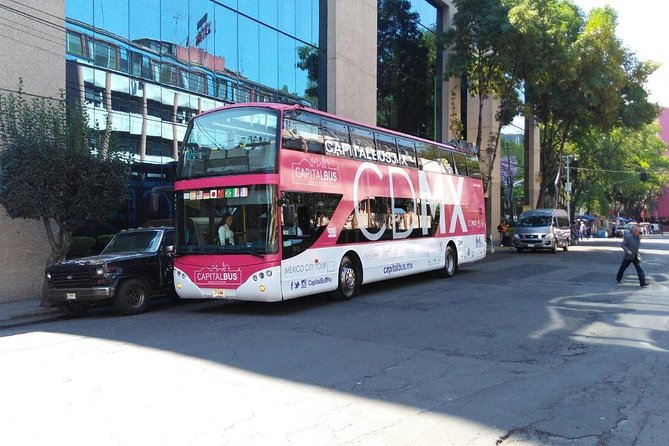
The bus runs from 9:15 AM to 8:00 PM, with service noted daily. That’s a wide window, but Mexico City can still slow you down with traffic. The bus frequency helps, yet your hop-on choices still affect how much you get done.
Here’s the approach I’d use:
- Choose one anchor area for your morning stop (Bosque de Chapultepec or Auditorio Nacional works well)
- Pick a second stop cluster for the afternoon (Polanco areas like Plaza Carso or Lincoln Park)
- Save one flexible window for food/shopping (Santa Fe or Paseo de la Reforma)
If you’re traveling at a hot time of day, plan shorter hops and add more breaks. Open-top buses are great for photos, but you’ll feel sun and breeze, so you’ll want to dress for both.
How good is this bus tour for different travel styles?
This works best if you fit one of these profiles:
- First-time visitors who want structure and context fast
- People who want to mix major sights with independent time for museums, photos, and shopping
- Travelers who prefer open-air views and guided orientation over navigating alone
It may be less ideal if your priority is deep, slow museum time at multiple major indoor attractions. The stop durations are short at key points, so you’ll likely spend less time inside than you would on a dedicated museum ticket day. In that case, use the bus as your map and then return separately.
Group size is capped at 45 travelers, which helps keep the experience manageable. You’ll still share space with other riders, but it’s not set up like a massive cattle-car situation.
Practical value: why this is a good use of limited time

I think the best value here is not a single stop—it’s the way the tour lets you build a personal itinerary without reinventing the city. With a 24-hour ticket and frequent departures, you can correct course as you learn what you like.
Also, the open-top format plus English audio means you’re getting two types of help at once: visual orientation and spoken context. That combo is ideal when you’re trying to understand Mexico City beyond the postcard level.
And you don’t need a perfect plan on day one. If you hop off at a park and decide you want more time, you can do that. If you realize a stop is more “photo and move on” than “walk for an hour,” you’re not stuck.
Should you book this hop-on hop-off bus?
If you’re the kind of traveler who wants to see a lot of Mexico City without spending hours figuring out routes and schedules, I’d say yes. The tour is made for getting your bearings and then turning that clarity into independent exploring.
Skip it only if you already have a detailed plan for each day and you don’t need guided orientation. In that case, you might do better with a smaller walking tour or targeted museum tickets where time isn’t split among many quick stops.
One final thought: treat this as your first draft of the city. Ride, learn, and then decide what deserves your next visit.
FAQ
What locations does the bus tour cover?
The route includes major Mexico City landmarks and areas such as the Zócalo core (meeting point area), Bosque de Chapultepec, Plaza Carso in Nuevo Polanco, Lincoln Park in Polanco, Auditorio Nacional, and fountain stops on Paseo de la Reforma like the Fountain of Diana and the Cibeles fountain.
What language is the tour offered in?
The tour includes English onboard audio commentary.
How long is the tour experience?
The duration is listed as approximately 1 to 11 hours, depending on how long you stay on and how many times you hop on and off.
Is the ticket valid for more than one day?
Yes. The ticket is valid for 24 hours, letting you hop on and off multiple times during that period.
Where does the tour start and end?
It starts at Parada Capital Bus Zócalo (in the Centro Histórico area) and ends back at the meeting point.
Can I cancel for a full refund?
Free cancellation is available up to 24 hours in advance for a full refund.