REVIEW · MEXICO CITY
Explore Chapultepec & Mexico City sights by Bike
Book on Viator →Operated by Poray · Bookable on Viator
Pedal past Mexico City’s legends, on bike lanes that make sense. This small-group Emperor Route ride links the big monuments along Paseo de la Reforma with the calm sprawl of Chapultepec Park.
What I like most is how the tour mixes two modes: fast city landmarks on the move, then slower park time where you can actually breathe. You’ll also get real “in-the-know” guiding—people mention guides like Pablo and Ivan for clear storytelling and smart pacing.
One thing to keep in mind: logistics can be a little fussy. A couple of participants reported trouble finding the exact spot, and one tour had a late guide plus some facts that didn’t line up. If you want smooth sailing, arrive a few minutes early at Paseo de la Reforma 24.
In This Review
- Key things to know before you ride
- Why the Emperor Route bike tour makes Mexico City easier
- Meeting at Av. Paseo de la Reforma 24: fast start, no hotel pickup
- Getting your bike and safety setup before the story starts
- Stop 2: El Ángel de la Independencia and the meaning of El Grito
- Stop 3: Monumento y Museo de la Revolución—what to notice up close
- Stop 4: Chapultepec Park—lakes, museums, and the castle claim
- Street food snacks on a bike tour: what’s included and why it works
- Bicycles, helmets, and how guides manage CDMX traffic
- Price and value: is $78.86 a good deal for this 4-hour ride?
- Who this bike tour suits best (and who may want a different plan)
- Should you book this Emperor Route, Chapultepec & Paseo de la Reforma bike tour?
- FAQ
- Where do you meet for the bike tour?
- How long is the tour?
- Is the tour offered in English?
- What’s included besides the bike?
- Do you pay admission at the stops?
- Can I cancel for free?
Key things to know before you ride
- Small group ride (max 10), built for a calmer pace and easier bike control
- Emperor Route focus: the narrative connects monuments, battles, and legends
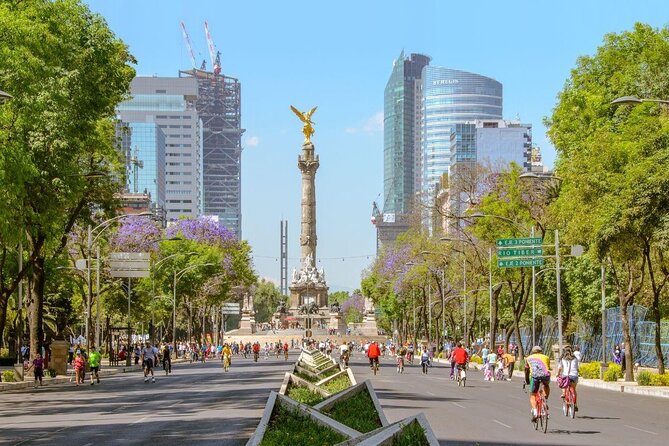
- Reforma Avenue by bike with bike lanes that keep you moving safely
- Chapultepec Park time in Mexico City’s top urban-park setting, with lakes and museums
- Included street-food snacks like tacos, chilaquiles, gorditas, tlacoyos, and more
- Helmet, water, and bicycle are included, so you travel light
Why the Emperor Route bike tour makes Mexico City easier
Mexico City can feel like a giant puzzle. The smart move is to start with a route that ties famous places to the stories behind them. This tour does that by riding an Emperor Route loop that runs from Reforma Avenue into Chapultepec Park, so you see how the city’s power centers and nature spaces connect.
Instead of hopping between far-flung stops, you get a single, guided flow. That matters because you’re in motion the whole time. You don’t waste half your day figuring out where to cross, where to park, or how to translate what you’re looking at.
The other big plus is the combination of city rhythm and park quiet. You’ll start with monuments and sculptures, then swap gears into greener air in Chapultepec. That contrast is why the tour works so well as a first orientation to CDMX.
You can also read our reviews of more cycling tours in Mexico City

Meeting at Av. Paseo de la Reforma 24: fast start, no hotel pickup
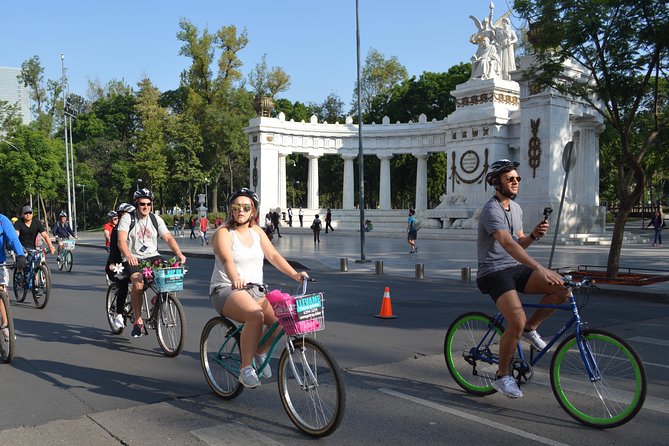
You meet at Av. P.º de la Reforma 24, Colonia Centro. The tour ends back at the meeting point, so you’re not dealing with a complicated drop-off.
There’s no hotel pickup or drop-off included, which is normal for a bike tour in a busy city. Bring your own plan for getting there. The activity is also listed as being near public transportation, which helps.
The most practical advice here is simple: arrive early and use the address. One traveler noted it can be hard to find the meeting location, so give yourself buffer time rather than trusting you’ll “spot it from the corner.”
Getting your bike and safety setup before the story starts
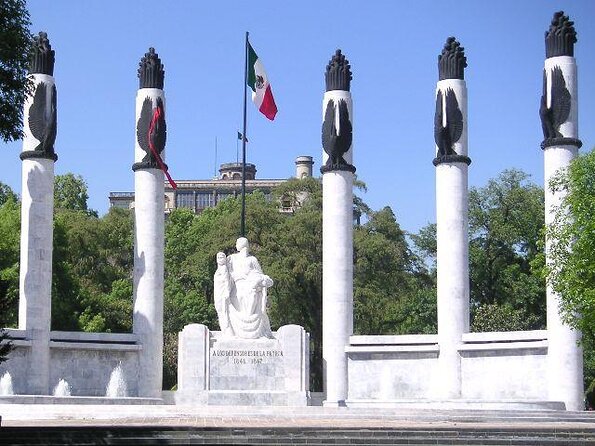
Right after you meet, the group helps you get comfortable in the saddle. You choose your bicycle, then get standard bike-tour basics like helmet use and safety guidance from the local guide.
That safety talk isn’t just formalities. Several participants praised the way guides handle bike-lane riding and crossings. In other words, you’re not thrown into city traffic with zero support. You ride as part of a small group, guided in tempo and positioning.
Once you’re rolling, the narration kicks in fast. The route is designed so you can connect what you see—monuments, sculptures, and major avenues—with the legends and epic battles behind them. It’s a great way to build context without pausing every five minutes.
Stop 2: El Ángel de la Independencia and the meaning of El Grito
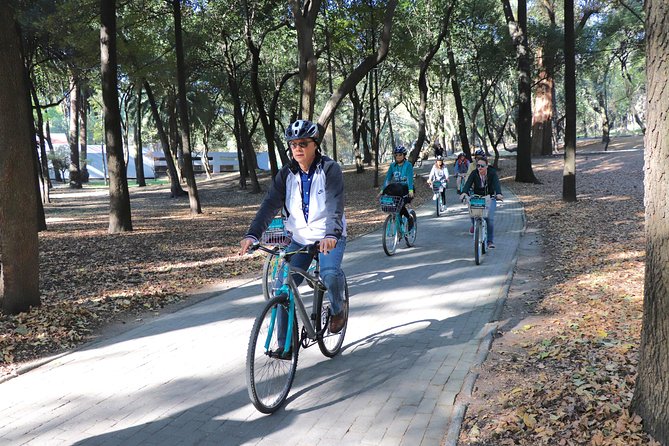
Next up is El Ángel de la Independencia, with about 20 minutes on site. This is where you’ll get the explanation behind the celebration of El Grito de Independencia.
The value here isn’t just checking a landmark off a list. It’s learning how this monument fits into Mexico’s independence story, while you’re already in the right historical frame from the ride. Your guide’s job is to make those connections feel logical, not random.
Time-wise, 20 minutes is enough for orientation: quick photos, a calm look at the structure, and time to hear the story without feeling rushed.
Stop 3: Monumento y Museo de la Revolución—what to notice up close
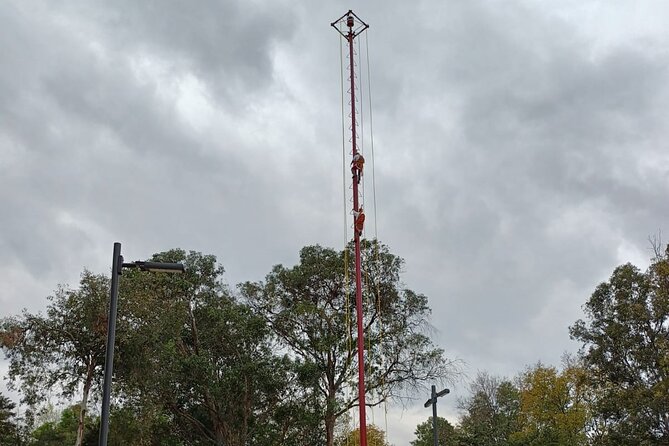
Then you head to Monumento y Museo de la Revolucion, with about 15 minutes planned. This stop includes a fun “pay attention to details” angle: you’ll learn about the original design for this iconic landmark.
That kind of inside detail helps you look differently. From a distance, these structures can look like generic “big statue” material. Up close, the design details become part of the story—especially when the guide is connecting visuals to historical meaning.
And because the time block is short, you’ll want to stay mentally “switched on.” Use the stop to ask one or two questions if something catches your eye. If you’re the type who likes architecture, you’ll probably get more out of this stop than just taking a quick picture.
You can also read our reviews of more city tours in Mexico City



Stop 4: Chapultepec Park—lakes, museums, and the castle claim
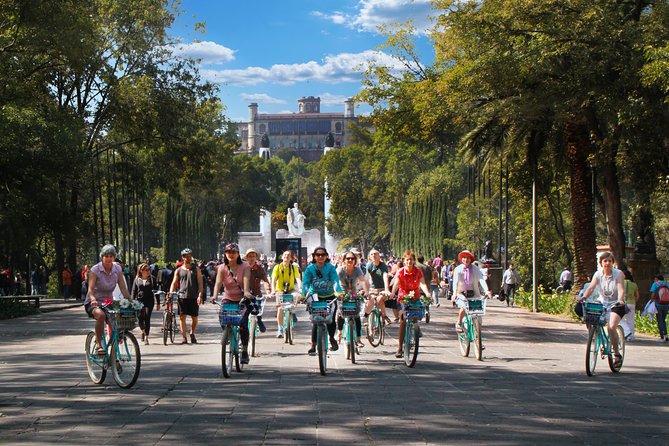
The ride finishes with Bosque de Chapultepec, about 20 minutes in the park. The tour frames Chapultepec as The Best Urban Park in the World and calls it the most visited place in Mexico, plus it credits it with nature, archeological sites, and the only true Castle in America.
Even if you don’t lean on awards or superlatives, the practical point is clear: Chapultepec is where Mexico City feels like itself, but calmer. The park is big enough to shift your mood quickly. You’re not just “passing through greenery.” You’re stepping into a different pace.
If you care about variety, Chapultepec covers it: outdoor scenery plus museums and a major castle complex. And you get to experience it as part of a bike route, so it doesn’t feel like a separate day trip.
One caution: 20 minutes is not enough for a full park visit. This stop is more about getting bearings, seeing highlights, and getting the context that helps you return later on foot if you want deeper exploration.
Street food snacks on a bike tour: what’s included and why it works
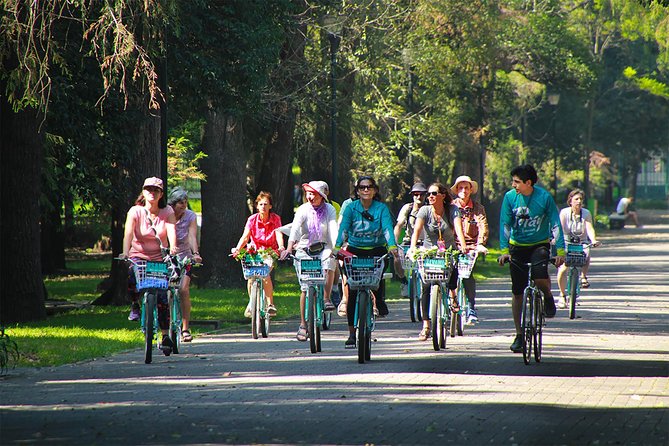
The tour includes bottled water and street food snacks. Options listed include tacos, que kas (spelling as listed), tlacoyos, gorditas, chilaquiles, and more. It also notes options for diet restrictions.
This is one of those “small detail, big impact” inclusions. On a bike tour, you’re using energy and standing up to take photos. Having food built into the plan means you don’t derail the ride by searching for lunch mid-route.
You’ll also get a more grounded side of Mexico City. A lot of the city’s personality shows up in what’s easy to eat on the go. Snacks included with a guide can make that safer and more comfortable than wandering without a plan.
Bicycles, helmets, and how guides manage CDMX traffic
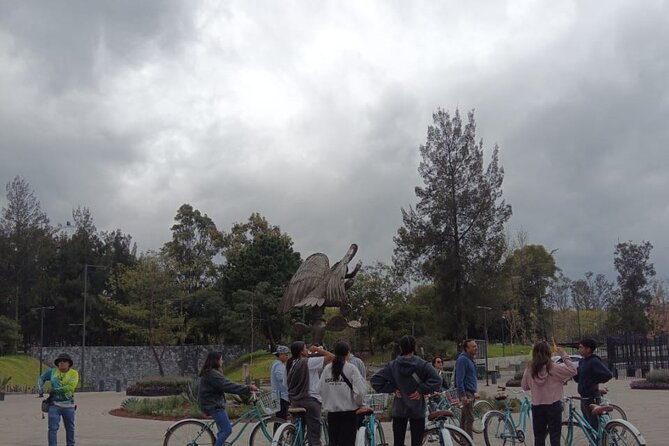
This is a practical bike tour, not a casual stroll. Your comfort depends on two things: the bike fit and the guide’s ability to keep the group together.
The tour includes a bicycle and a helmet, and the local guide gives safety advice before you start. In the feedback, people repeatedly highlight how bike lanes make riding easy, and how guides stay aware of pacing and spacing.
One review even mentions help after a minor bicycle mishap, including first-aid items like ice and neosporin. That’s not something you should expect every time, but it shows the guides are prepared to handle small problems quickly.
Also, the tour runs with a maximum group size of 10 travelers. That number matters. With smaller groups, you don’t spend the whole ride stuck waiting, and you don’t get the chaotic pack effect that can happen in larger bike tours.
Price and value: is $78.86 a good deal for this 4-hour ride?
At $78.86 per person for about 4 hours, you’re paying for more than “bike rental.” The value is in three layers:
- Guided structure: short stops with explanations at each landmark, so you don’t waste time guessing what you’re seeing.
- Convenience add-ons: helmet, bicycle, bottled water, and snacks are included. That can easily save you the kind of extra spending that adds up fast in Mexico City.
- Time efficiency: you cover major areas—Reforma monuments and Chapultepec—without the slow logistics of multiple transit changes.
If you’re the type who enjoys learning while moving, it’s a strong price for a first orientation day. If you prefer museum-level depth and long park exploration, you might want to treat this as a “setup visit” and plan longer follow-ups on your own later.
Who this bike tour suits best (and who may want a different plan)
This works best for you if:
- You want a first-day or first-full-day orientation to Mexico City’s big stories.
- You like bike lanes and guided pacing, and you want to see a lot without the stress.
- You want included street food as part of the experience, not as an afterthought.
It may be less ideal if:
- You want lots of time inside museums or for long independent wandering. The plan is short-stop focused.
- You strongly dislike any risk of minor operational hiccups. One participant experienced a late guide, and another reported meeting-point confusion.
- You require absolute certainty on exact historical details. One account noted some inaccuracies in shared facts, so if accuracy is your top priority, ask questions and stay curious.
Should you book this Emperor Route, Chapultepec & Paseo de la Reforma bike tour?
Yes, if you want an easy, guided way to connect Mexico City’s major monuments with Chapultepec Park in one morning or afternoon. The small-group limit, the bike-lane comfort, and the included snacks make it feel like a complete experience rather than “just a ride.”
Book it especially if you’re trying to get your bearings fast and you like learning through what you can see. If you do book, do two things: arrive early at Paseo de la Reforma 24 and come ready to move. This tour rewards the people who keep the momentum.
FAQ
Where do you meet for the bike tour?
You meet at Av. P.º de la Reforma 24, Colonia Centro, Cuauhtémoc, 06040 Ciudad de México, CDMX, Mexico. The tour ends back at the same meeting point.
How long is the tour?
The tour runs for about 4 hours.
Is the tour offered in English?
Yes. The tour is offered in English, and it may be operated by a multi-lingual guide.
What’s included besides the bike?
The tour includes a dedicated local guide, bicycle use, a helmet, bottled water, and street food snacks (with options listed such as tacos, chilaquiles, gorditas, and tlacoyos).
Do you pay admission at the stops?
The tour notes admission ticket free for the listed stops.
Can I cancel for free?
Yes. You can cancel for a full refund up to 24 hours in advance of the experience start time.