REVIEW · MEXICO CITY
2 Hours of Mexican Muralism with an Art Lover
Book on Viator →Operated by GM International Travel · Bookable on Viator
Mexico City’s walls are telling stories again and again. This 2.5-hour mural-focused tour strings together big art museums and the Centro Histórico landscape that muralists were reacting to. I love how it pairs famous names like Diego Rivera and Clemente Orozco with the places where those ideas landed in public life.
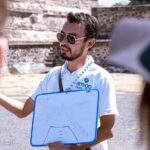
Two things I especially like are the guide depth and the way the route moves from national art history to what’s painted on real city surfaces. If you get a guide like José, expect passion and strong answers—art history, politics, anthropology, the whole combo.
One consideration: two museum entries are not included, so you’ll want to budget extra for Palacio de Bellas Artes and San Ildefonso. That cost doesn’t ruin the deal, but it does change the value of the ticket depending on whether you plan to enter those places anyway.
In This Review
- Key things that make this muralism tour worth it
- Mexican muralism in 2.5 hours: the point of this route
- Palacio de Bellas Artes: where muralists gain their national stage
- Avenida Juárez to the Zócalo: baroque facades and history underfoot
- Antiguo Colegio de San Ildefonso: the early muralist ignition
- Museo Vivo del Muralismo: Rivera’s 248 murals for free
- Price and ticket value: where the math gets real
- Timing, transportation, and pacing in Mexico City’s Centro Histórico
- Who should book this muralism tour (and who might skip it)
- Should you book this 2 Hours of Mexican Muralism tour?
- FAQ
- How long is the Mexican muralism tour?
- What museums and sites does the tour include?
- Is the tour price all-inclusive?
- What language is the tour offered in?
- Where do I meet the tour?
- Where does the tour end?
- What’s the cancellation policy?
Key things that make this muralism tour worth it
- A tight route (about 2.5 hours) through the most mural-relevant corners of the Centro Histórico
- Palacio de Bellas Artes for the muralist big names and the movement’s historical context
- Street-to-square contrast: Avenida Juárez vibes, then the Zócalo area with Mexico-Tenochtitlan archaeological windows
- San Ildefonso’s early story tied to Clemente Orozco and the muralist movement’s beginnings
- Museo Vivo del Muralismo is free and built around Diego Rivera’s work (248 murals)
- Small group size (max 15), which makes it easier to ask questions and keep the pacing sane
Mexican muralism in 2.5 hours: the point of this route
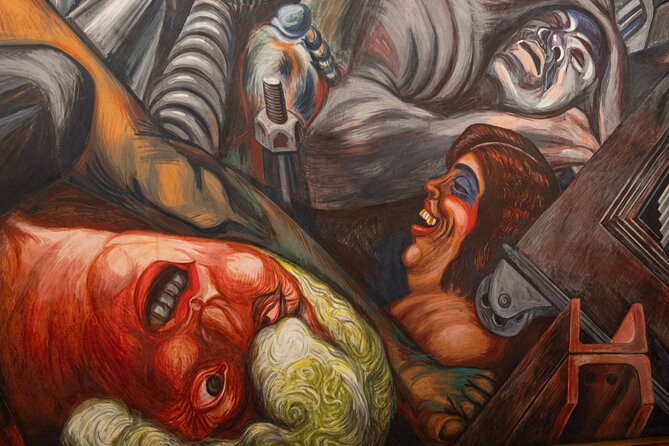
This tour is built for one job: helping you read Mexican muralism as both art and public messaging. You don’t just look at paintings behind glass. You also get the city setting—palaces, churches, and that heavy Centro Histórico feeling—so the muralist themes make more sense fast.
It’s also a practical length. About 2 hours 30 minutes means you can fit it into a museum day without losing your whole afternoon. I like that there’s a clear “start here, finish there” flow, ending at Museo Vivo del Muralismo, which is handy if you want to keep wandering after the tour.
The group is capped at 15, which usually means less waiting around and more actual conversation with your bilingual guide.
You can also read our reviews of more tours and experiences in Mexico City


Palacio de Bellas Artes: where muralists gain their national stage
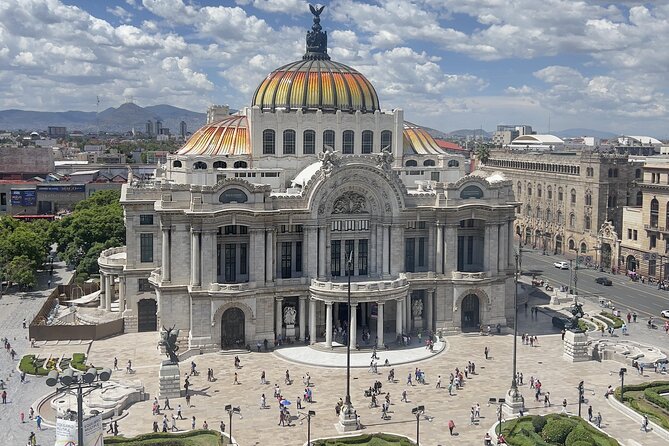
You start at the Museo del Palacio de Bellas Artes area on Avenida Juárez. This is a smart first stop because Palacio de Bellas Artes is one of the cultural landmarks where Mexican modern art history gets framed as a national story.
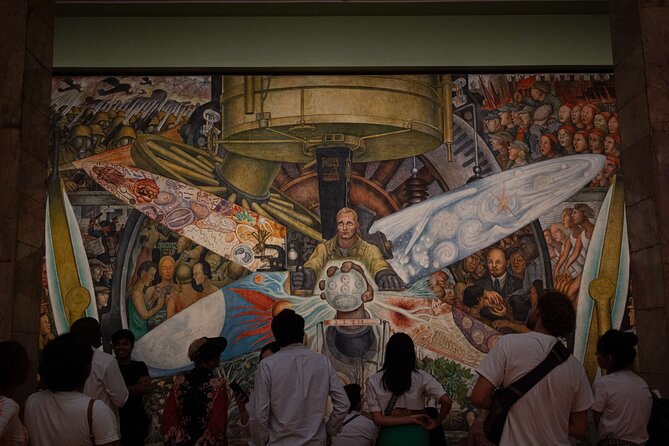
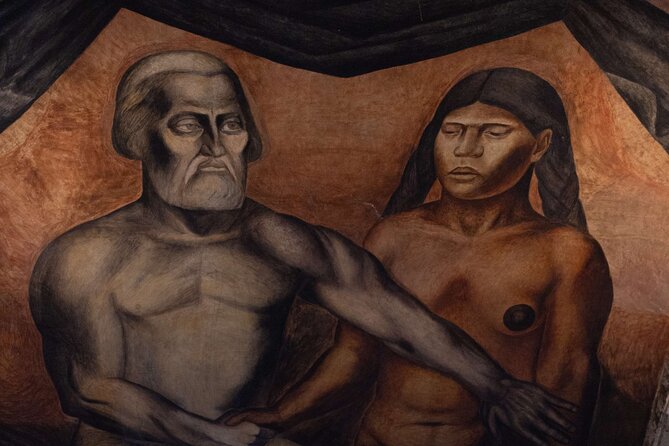
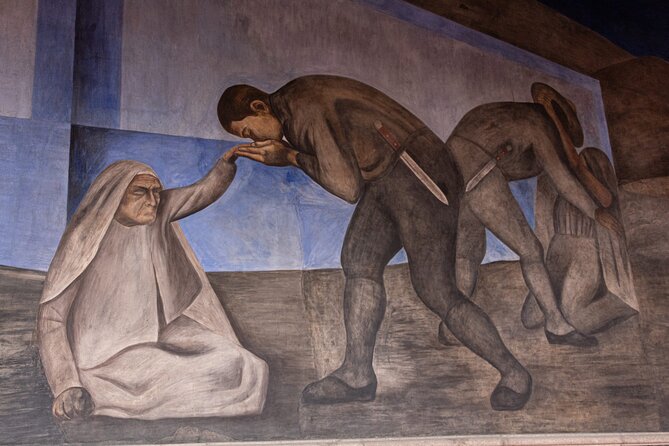
Inside, the tour focuses on major muralist names tied to Mexico’s 20th-century art movement—Rivera, Siqueiros, Orozco, plus Camarena and Tamayo. The key here isn’t only recognition of famous artists. It’s the way your guide connects muralism to historical change: why murals mattered, why public walls became a stage, and why these artists worked on a scale that traditional gallery art couldn’t match.
A mural lover’s bonus: Palacio de Bellas Artes gives you a “big picture” entrance. Even if you’ve seen posters or textbook images before, the museum setting helps you understand the style and ideas as part of a broader artistic shift.
Watch the ticket detail: the Palacio museum admission is not included. If you’re the type who would normally pay to get in, this part is a worthwhile opening act. If you’re trying to skip extra entries, you may feel the cost more here than at the final free mural stop.
Avenida Juárez to the Zócalo: baroque facades and history underfoot
After Palacio, you move outdoors and shift from museum art to city architecture. The route includes a look along an impressive avenue lined with the baroque style palaces of Mexico City and the facades of some churches.
This is where the tour starts teaching you how muralists were thinking. Muralism wasn’t floating in a vacuum. It was responding to the built environment—old empires, religious power, new national identity, and the modern city machine all rubbing shoulders.
Then you head to the central plaza area of Mexico City for a classic muralist context moment: the government palace, the cathedral, and the archaeological windows of ancient Mexico-Tenochtitlan.
That mix matters. You’re looking at layers—colonial authority, modern government, and visible traces of pre-Hispanic history—while muralists worked to build a national identity out of those layers. Standing in that space helps you connect the symbolism in murals to something real: this city keeps stacking eras on top of each other.
If you’re visiting during hot or windy weather, this street-and-square segment is the part where you’ll feel it most. The good news is the pacing stays part of a guided timeline rather than turning into an open-ended wander.
Antiguo Colegio de San Ildefonso: the early muralist ignition
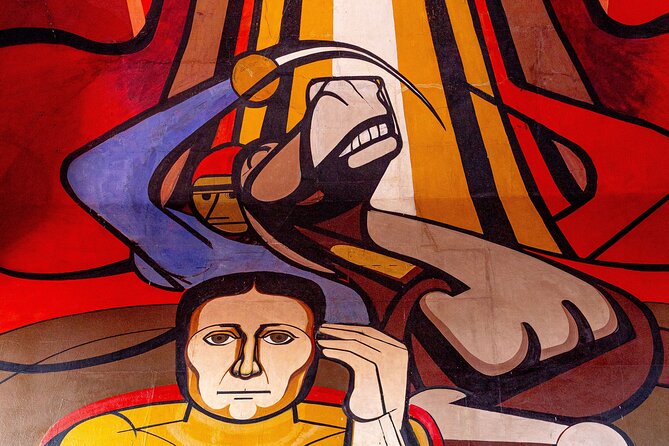
Next up is Antiguo Colegio de San Ildefonso, where the tour focuses on the early muralist movement and the work of Clemente Orozco.
This stop is valuable because it gives you a timeline feeling. Instead of treating muralism as one style that just appeared, you see the “birth” phase: the shift toward painting meant for public audiences and the early energies that helped define what muralism would become.
San Ildefonso also makes sense thematically after the Zócalo area. You’re moving from public symbols in the city center into a museum space that helps explain the movement’s beginnings. That before-and-after contrast is where the tour earns its keep for art lovers.
The same ticket reality applies here: admission to this museum is not included. But if you’re serious about muralism, this is one of the better places to spend extra money because it anchors the movement’s origin story rather than only showing the finished product.
Museo Vivo del Muralismo: Rivera’s 248 murals for free
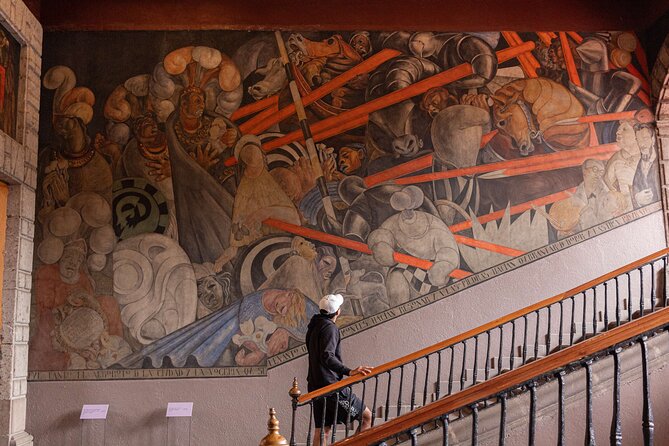
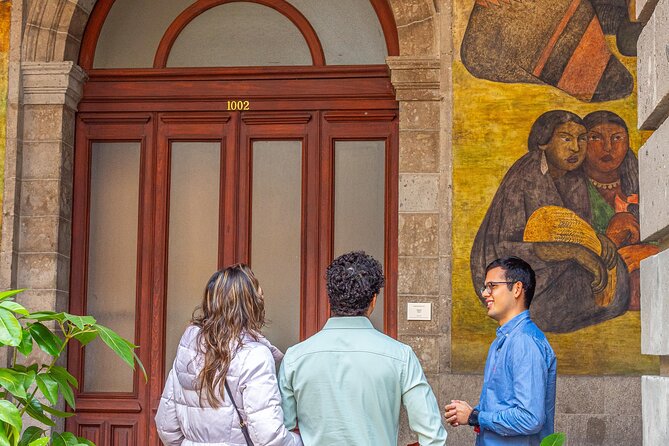
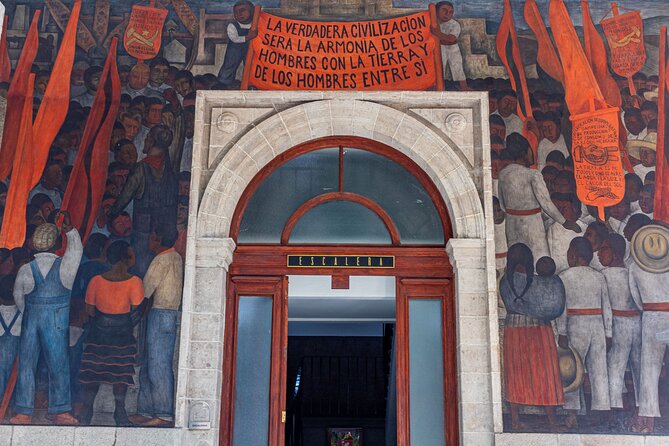
The final stop is Museo Vivo del Muralismo, at República de Argentina 28, in the Centro Histórico. The big headline: admission here is free, and the museum is structured around murals and art rooms that keep the theme tight.
Diego Rivera is the center of gravity. The complex contains 248 Rivera murals, and that’s exactly the kind of number that changes your perspective. It’s not just one masterwork you admire and move on from. You see repetition, variations, and how themes can evolve across walls and contexts.
The building also uses a multi-floor layout—3 floors—plus temporary rooms featuring easel art, murals, ceramics, and pre-Hispanic drawings. That’s more than decoration. It helps you see that Rivera and the broader muralist world weren’t just painting a “wall style.” They were working across mediums and drawing from deeper cultural references.
I like the way this stop acts like the tour’s reward. You’ve already set the historical stage at Palacio and added origin context at San Ildefonso. Then you finish where the painting experience becomes front and center—with less friction because entry is free.
If you want to keep going after the tour, ending here helps. You can linger through the rooms without feeling like you’re paying twice for the same idea.



Price and ticket value: where the math gets real
The tour price is $53.74 per person, and the duration is about 2 hours 30 minutes. There’s a bilingual guide included, and the itinerary is designed to cover multiple muralism-related stops without dragging.
Here’s where value depends on your museum plans. Two museums—Palacio de Bellas Artes and Antiguo Colegio de San Ildefonso—require an additional fine art admission fee of MX$150 per person. That means your all-in cost is higher than the headline price.
But you’re also getting something you can’t easily recreate on your own in the same way: a guided interpretation across art history, city context, and a final deep-dive into Rivera’s mural holdings at Museo Vivo del Muralismo, where entry is free.
So the deal is strongest if:
- you were going to enter at least one of the paid museums anyway, and
- you want help connecting what you’re seeing to why muralism became a public language.
If you’re the type who hates extra ticket purchases, you might feel the cost bump more than you expected—because the route includes both major museum stops that aren’t included.
Timing, transportation, and pacing in Mexico City’s Centro Histórico
The meeting point is at the Museo del Palacio de Bellas Artes area (Av. Juárez s/n esq., Eje Central Lázaro Cárdenas Col, Colonia Centro). The tour ends at the entrance of Museo Vivo del Muralismo.
It also says it’s near public transportation, which matters in Mexico City. You’ll save time and hassle if you’re using the metro and walking short connections instead of relying on rideshares for every leg.
The pacing is also built for groups of up to 15. That matters because street-and-square segments can stretch if people lag behind, stop for photos constantly, or need extra guidance. In this format, the guide can keep things moving while still pointing out what to watch for.
Bring water and wear shoes you trust. The Centro Histórico area is walkable, but you’ll still feel the cobblestones and time on your feet.
Who should book this muralism tour (and who might skip it)
This tour is a great fit if you:
- love art history but want it tied to real urban spaces
- want a focused introduction to Mexican muralism without building a self-made itinerary
- plan to see murals in multiple settings—museums plus the Centro Histórico environment
- enjoy asking questions and getting straight answers from a guide who connects art, history, and politics
You might consider skipping if:
- you only want one museum experience and don’t want extra admissions
- you prefer to move at your own pace with no structured stops
- you’re sensitive to outdoor time in the Centro Histórico during very hot or windy parts of the day
Should you book this 2 Hours of Mexican Muralism tour?
If you care about Mexican muralism beyond the famous names, I’d book it. The route makes sense: start with muralist giants at Palacio de Bellas Artes, add context through the Centro Histórico layers around the Zócalo area, then anchor the origin story at San Ildefonso, and finish with an easy win at Museo Vivo del Muralismo, where Rivera’s work takes center stage and admission is free.
The best decision point is simple: will you likely pay to enter Palacio and/or San Ildefonso on your own anyway? If yes, the guide’s connection between the art and the city turns the ticket into real value. If no, you’ll still get a lot from the free final stop, but the paid museum entries become the deciding factor.
FAQ
How long is the Mexican muralism tour?
It runs about 2 hours 30 minutes.
What museums and sites does the tour include?
The tour includes Palacio de Bellas Artes, the Centro Histórico central plaza area (government palace, cathedral, and archaeological windows of Mexico-Tenochtitlan), Antiguo Colegio de San Ildefonso, and ends at Museo Vivo del Muralismo.
Is the tour price all-inclusive?
No. Entrance tickets for Palacio de Bellas Artes and San Ildefonso are not included, and the additional fine art admission fee is listed as MX$150 per person. Museo Vivo del Muralismo is free.
What language is the tour offered in?
It’s offered in English, and the guide is described as bilingual.
Where do I meet the tour?
You start at Museo del Palacio de Bellas Artes, Av. Juárez s/n esq, Eje Central Lázaro Cárdenas Col, Colonia Centro, Centro, Cuauhtémoc, 06050 Ciudad de México.
Where does the tour end?
You finish at the entrance of Museo Vivo del Muralismo, República de Argentina 28, Centro Histórico de la Cdad. de México.
What’s the cancellation policy?
Free cancellation is available if you cancel up to 24 hours before the experience’s start time. If you cancel less than 24 hours before, the amount paid is not refunded.