REVIEW · MEXICO CITY
Tourist Bus in Mexico City Night Tour or Hop-On Hop-Off Service
Book on Viator →Operated by Amigo Tours · Bookable on Viator
Mexico City looks different after dark. This 1 hour 15 minute night loop strings together major sights around Centro Histórico and beyond, with English narration to help you decode what you’re seeing.
I like that it’s a small group setup (max 30), so you’re not packed shoulder-to-shoulder. I also like the simple value of a single route that covers big hitters like the Zócalo, Palacio de Bellas Artes, and the Angel of Independence. The main drawback to weigh is that the experience is a closed bus tour with English audio that can be uneven in quality and timing.
In This Review
- Key things to know before you go
- What This Night Bus Tour Really Is (and Isn’t)
- Meeting at Parada Capital Bus Zócalo: Simple Ways to Prevent Headaches
- The 1 hour 15 minute Route: How the Bus Tour Flows
- Centro Histórico after Dark: Zócalo, Cathedral, and MUNAL From the Road
- A practical note on viewing
- Plaza Garibaldi and the Mariachi Scene You’ll Hear in Your Head
- Tlatelolco’s Three Cultures: Where Pre-Hispanic, Colonial, and Modern Collide
- Monument to the Revolution and Reforma: Modern Mexico’s Big Symbols
- The Angel of Independence: Best Seen When You Can Actually Hear the Context
- Palacio de Bellas Artes and Alameda Central: When the Night Gets Cultural
- English Audio and Translation: What to Watch For
- Duration, Timing, and Group Size: How to Set Expectations
- Value for Money: When This Bus Tour Makes Sense
- Who Should Book, and Who Should Skip This Night Loop
- Should You Book This Night Bus Tour?
- FAQ
- How long is the Mexico City night bus tour?
- Is this a hop-on hop-off tour?
- Where is the meeting point?
- Is the tour available in English?
- How many people are in the group?
- Can I get a full refund if I cancel?
Key things to know before you go
- Open-air night feeling: the roof is open, but you still often look through windows.
- A tight one-loop itinerary: Centro Histórico, Tlatelolco, Monument to the Revolution, Reforma, and more—without hunting for transit.
- English narration is part of the package: but it can be spotty, repetitive, or technical glitches can happen.
- Not hop-on hop-off: you stay on the bus; it returns to the meeting point.
- Timing may run short: some departures end in under the advertised window.
- Keep a Plan B for translation: some people rely on an app/QR code or headphones that didn’t always work smoothly.
What This Night Bus Tour Really Is (and Isn’t)
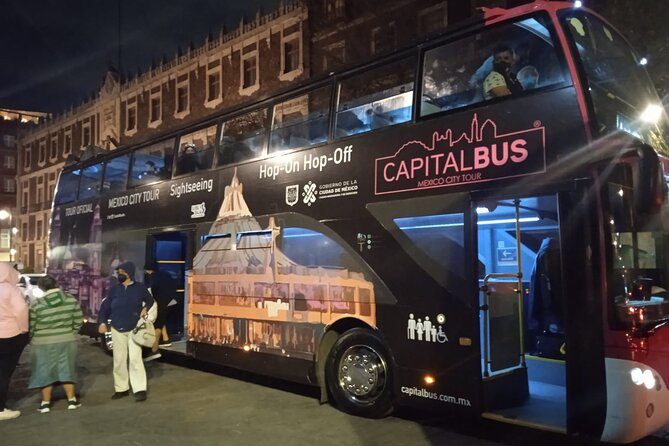
Think of this as a guided “lights on, sights moving” bus ride rather than a classic hop-on hop-off format. You’ll follow a pre-set route at night, with stops described along the way, and you’ll end back where you started.
It’s also designed for practical sightseeing: you get an overview of Mexico City’s key landmarks in a short window, which is great on a first trip or on a night when you don’t want to navigate traffic or station hopping.
You can also read our reviews of more city tours in Mexico City


Meeting at Parada Capital Bus Zócalo: Simple Ways to Prevent Headaches
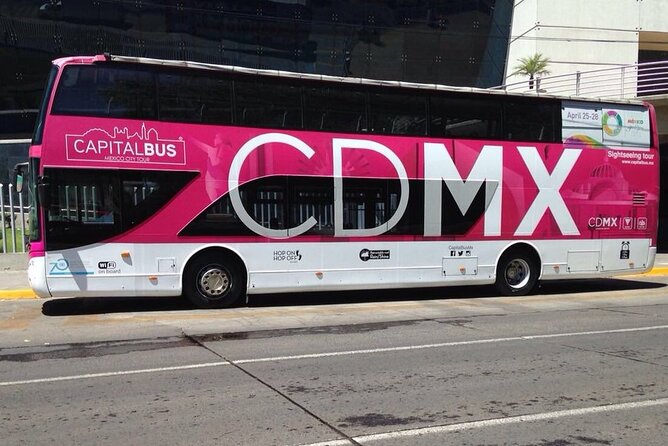
Your meeting point is Parada Capital Bus Zócalo, C. de Monte de Piedad, Centro Histórico de la Cdad. de México, Centro, Cuauhtémoc, 06000 Ciudad de México, CDMX, Mexico. The activity ends back at the same meeting point.
Go in expecting a check-in moment where staff confirm your reservation and give you access (wristbands were mentioned as part of the process). Arriving a bit early is your best move, because a missed boarding can mean the bus leaves without you.
One more real-world caution: some travelers described needing their reservation details re-checked, and in at least one case staff asked for passport information for verification. You can’t predict how strict it will be that night, so have your booking info handy and keep a calm, cooperative mindset if they ask.
The 1 hour 15 minute Route: How the Bus Tour Flows
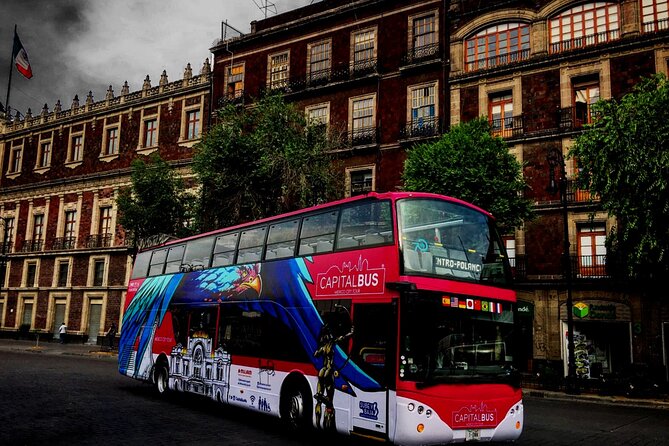
This tour is described as about 1 hour 15 minutes, and the bus circles through a sequence of well-known neighborhoods and monuments. The idea is to watch the city by night and get guided context without having to walk between far-flung sights.
The pace matters here. Even though the ad says roughly 1 hour 15 minutes, some people found they were done in under an hour, so you may not get long viewing windows at each landmark. On the plus side, it means you can still keep your evening for dinner or a second activity afterward.
Centro Histórico after Dark: Zócalo, Cathedral, and MUNAL From the Road
The tour kicks off in the historic heart of Mexico City, starting with the Zócalo / Plaza de la Constitución. This vast square has been a stage for everything from Aztec-era ceremonies to modern political demonstrations, so even from a bus window it’s easy to see why it’s still the city’s gravitational center.
From there you’ll pass by the Metropolitan Cathedral of Mexico City, a major landmark built between the 16th and 19th centuries. It mixes Gothic, Baroque, and Neoclassical styles, and at night the façade can look especially dramatic against street lighting.
Next is the National Museum of Art (MUNAL) area. MUNAL opened in 1982 and is known both for its Mexican art collection and for its architecture that blends neoclassical and art nouveau elements. From the bus, what you’ll notice most is not the museum visit itself, but the setting—this is the kind of route that helps you place buildings in a wider map of the city’s cultural institutions.
A practical note on viewing
Because this isn’t a long walking tour, your best results come from positioning yourself well on the bus. If your bus has an open roof, you still may be looking through windows for views. So I’d treat it as a ride with viewpoints, not a “get close and take perfect photos from the sidewalk” plan.
You can also read our reviews of more evening experiences in Mexico City





Plaza Garibaldi and the Mariachi Scene You’ll Hear in Your Head
One stop on the path is Plaza Garibaldi, famous as a mariachi music hub in the historic center. Even if you don’t linger in the square, the area’s identity is strong, and it helps connect the architecture-heavy parts of the route to Mexico City’s living, street-level culture.
This is a good reminder that “historic center” isn’t only about old stones. It’s also about sound, performance, and social life—things that feel very different at night.
Tlatelolco’s Three Cultures: Where Pre-Hispanic, Colonial, and Modern Collide
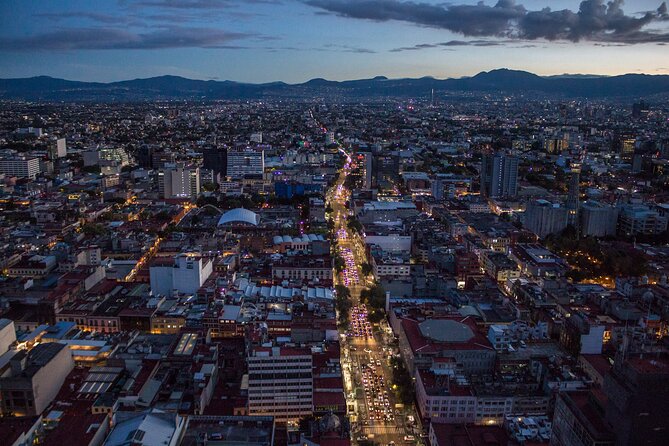
The tour also includes Tlatelolco, known for the Plaza de las Tres Culturas. This is where pre-Hispanic remains, the colonial church of Santiago, and modern buildings all share the same ground.
That mix is why Tlatelolco is such a meaningful stop: you’re not just seeing one era. You’re seeing how layers of Mexico City overlap, sometimes just meters apart.
There’s also a heavier historical note tied to this location: Tlatelolco is infamous for the 1968 massacre, an important event in modern Mexican history. From a bus ride, you won’t have time for a full lesson, but it’s one of those moments where the narration can help you understand why this neighborhood carries extra weight.
Monument to the Revolution and Reforma: Modern Mexico’s Big Symbols
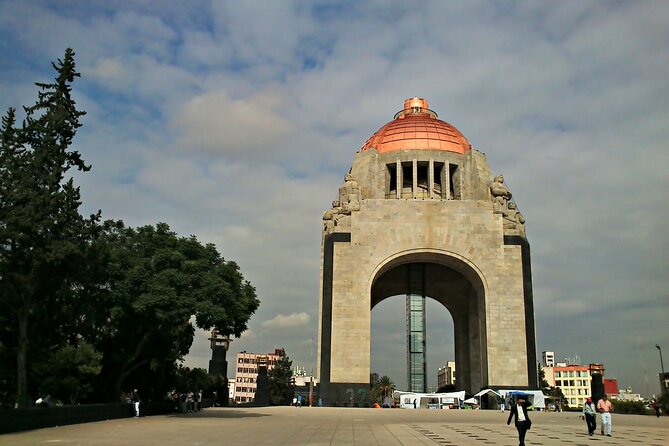
After Tlatelolco, the route moves toward the Monument to the Revolution, inaugurated in 1938. It’s one of the most recognizable symbols of modern Mexican history and commemorates the Mexican Revolution and its main figures.
Then you’re guided along Paseo de la Reforma, one of Mexico City’s most emblematic avenues. It was designed to connect Chapultepec Castle with the city center, and it’s described as a cultural, historical, and financial corridor—so you’ll see how the city’s center of gravity shifts from old plazas to major thoroughfares.
If you like architecture and street layout, Reforma is where you start to see Mexico City as a city of planned axes, not just individual landmarks.
The Angel of Independence: Best Seen When You Can Actually Hear the Context
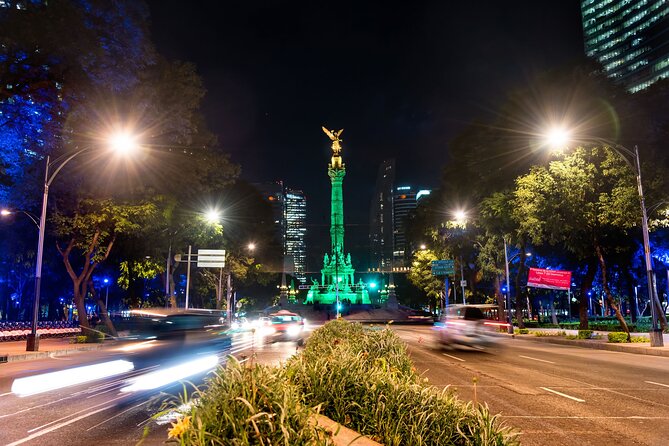
Next is the Angel of Independence, inaugurated in 1910 to commemorate Mexico’s centennial of independence. The central column is topped with the golden Winged Victory statue, a symbol of freedom and independence.
This is a high-demand photo stop, even if you’re not getting a long amount of time outdoors. One practical thing: because this is a closed bus tour (not hop-on hop-off), you can’t count on being able to jump off exactly where you want for extra photos. If you’re the type who needs to stand and shoot for 20 minutes, you’ll have a better time if you’re comfortable working with what you get from the bus window.
Palacio de Bellas Artes and Alameda Central: When the Night Gets Cultural
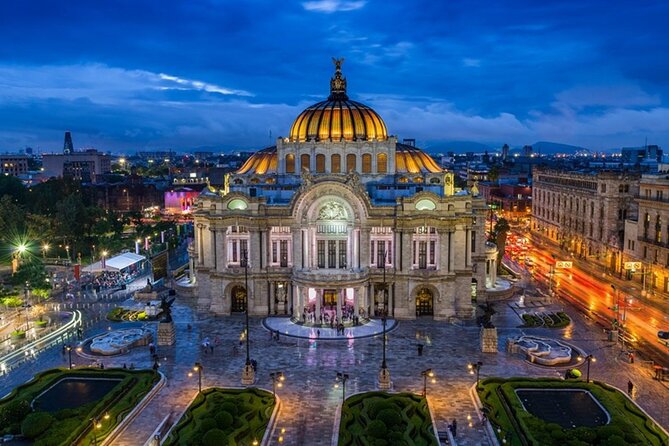
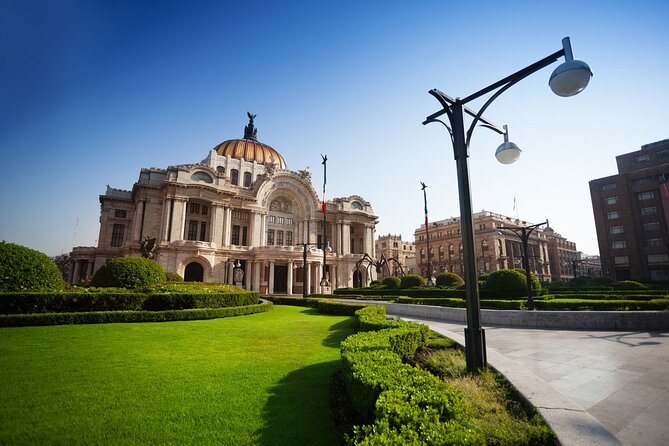
The route takes you past Palacio de Bellas Artes, a major arts venue opened in 1934. The building is known for neoclassical and art nouveau styling with lots of ornamental detail, and it hosts performances like opera, ballet, classical music, and theater. It’s also famous for murals by Diego Rivera, which adds a deeper cultural layer to what you’re seeing from the street.
Finally, the tour includes Alameda Central, described as the oldest park in Mexico City. Founded in the 16th century, it’s a rare green pause amid urban density, with fountains and sculptures that can make the end of the route feel more restful.
If you’re planning a second stop after the tour, Alameda Central is a good reference point. Even if you don’t go inside, it helps you orient yourself for where to roam next.
English Audio and Translation: What to Watch For
English narration is offered on this experience, but the way it’s delivered can make a huge difference in how much you actually learn. Some people reported English audio being spotty, repetitive, or affected by technical issues.
Headphones also weren’t guaranteed in every situation. In one described experience, a guest asked for headphones and was pointed to a QR code, implying translation may be available through an app-based method rather than traditional earphones. Another account said the translation app worked only for part of the route and then stopped, leaving the rider with visuals but little narration.
Here’s the practical takeaway for your planning:
- Bring earbuds you trust. Even if the system offers audio, your own backup earbuds reduce stress.
- If the tour uses a QR code/app setup, have your phone charged and ready before you board.
- Sit where you can hear clearly. If the bus audio source is spotty, your position can matter more than you think.
Also remember: because this is a short bus ride, an audio failure early can cut your value fast. This is the biggest reason I’d set expectations realistically. You may get plenty of context—or you may get a sightseeing ride with less explanation than you hoped.
Duration, Timing, and Group Size: How to Set Expectations
The tour runs about 1 hour 15 minutes, and you stay on the bus. A smaller group limit (max 30) can help with boarding flow and keeping the ride orderly, but it doesn’t remove schedule risk.
In the real world, timing can vary. Some reports described finishing sooner than the advertised range, while others mentioned delays or missed departure when confirmations didn’t sync smoothly between operators. That’s why being early and ready matters more than you’d expect for what looks like a simple night bus.
As for the route itself, you’re not touring one museum at a time. You’re getting a moving introduction to many of the city’s headline buildings, squares, and monuments. That can be great value if you want an orientation sweep, not so great if you expected deep explanations at each landmark.
Value for Money: When This Bus Tour Makes Sense
This tour tends to be a solid choice if you want:
- a quick, low-effort overview of iconic Mexico City sights at night
- a plan that doesn’t rely on you figuring out transit after dark
- an easy start point for later exploring, since many of the stops are major hubs
It’s less convincing if your priority is:
- high-quality English narration you can fully count on
- guaranteed headphones or an app that works start-to-finish
- lots of time at each landmark (this is not a hop-on service)
A useful way to think about the value: you’re paying for transportation plus a guided framework. If the framework shows up with audio issues, the ride still gets you the city’s key images, but you lose the “why” behind them—which is what makes a guided tour worth it.
Who Should Book, and Who Should Skip This Night Loop
Book it if you’re a first-timer or returning traveler who wants a practical snapshot. It also works well if your Spanish is limited and you’d like English narration—just don’t assume it’s flawless.
Skip it if you need a tour that’s guaranteed to deliver clear, continuous English throughout. If you’re very photo-focused and want time to get off repeatedly, a hop-on hop-off option will suit you better. And if you’ve had bad luck with tech-based translations in the past, treat this as a sightseeing ride that may not always provide narration you can fully rely on.
Also, because this is a night bus experience, keep your comfort needs in mind. Service animals are allowed, and it’s near public transportation, but you’ll still want to dress for nighttime temps and plan for time spent seated on the vehicle.
Should You Book This Night Bus Tour?
I’d book this only if you’re okay with the tradeoff: you’re buying a short, guided overview, not a flexible walking tour. If your main goal is to get your bearings fast around Centro and major monuments, the route makes sense.
If you want the highest odds of a smooth experience, arrive early with your booking details ready and bring your own earbuds as a backup. And if English narration is essential to your enjoyment, consider having a second plan for learning—because the audio system can be imperfect.
When it works, you’ll get a satisfying night sweep of Mexico City’s most recognizable landmarks. When it doesn’t, you’ll still see the sights, but you may feel like you paid for more guidance than you actually received.
FAQ
How long is the Mexico City night bus tour?
It’s listed as about 1 hour 15 minutes.
Is this a hop-on hop-off tour?
No. This is a closed bus tour, and the activity ends back at the meeting point.
Where is the meeting point?
The meeting point is Parada Capital Bus Zócalo, C. de Monte de Piedad, Centro Histórico de la Cdad. de México, Centro, Cuauhtémoc, 06000 Ciudad de México, CDMX, Mexico.
Is the tour available in English?
Yes. The experience is offered in English.
How many people are in the group?
The tour has a maximum of 30 travelers.
Can I get a full refund if I cancel?
Yes. You can cancel up to 24 hours in advance for a full refund. Within 24 hours, refunds are not provided.