REVIEW · MEXICO CITY
Teotihuacan & Anthropology Museum, Templo Mayor & City Tour
Book on Viator →Operated by Amigo Tours · Bookable on Viator
Sunrise ruins are a special kind of quiet. This two-day combo pairs early access at Teotihuacan with major Mexico City culture stops: the National Museum of Anthropology and the Templo Mayor archaeological museum.
Two parts I really like are the calm, nearly empty visit at Teotihuacan before tour groups arrive, and the way day two connects big-picture Mexican history (Anthropology Museum) to a specific place in the Mexica story (Templo Mayor).
One possible drawback: the second half of the itinerary can feel more “walking explanations” than a tight, sit-down guided museum flow, and a few real-world issues show up when guides are stretched or language grouping gets messy.
In This Review
- Key things to know before you go
- Sunrise at Teotihuacan: why this early start matters
- The obsidian workshop and tequila tasting stop that actually feels local
- Rancho Azteca lunch: included only in the sense of a chance to eat
- Day two at the National Museum of Anthropology: context that makes Teotihuacan click
- Downtown Mexico City outside stops: quick orientation, not a full deep-dive
- Templo Mayor Museum: the Mexica story with a sense of place
- Price and logistics: where $137 makes sense (and where it can snag)
- What to pack and how to time your day
- Who this tour fits best
- Should you book this Teotihuacan and museum combo?
- FAQ
- How long is the Teotihuacan & Anthropology Museum, Templo Mayor & City Tour?
- What does the tour cost?
- Is lunch included?
- What are the main stops on day one?
- What are the main stops on day two?
- Is the tour offered in English?
- How much walking is involved?
- What’s included in the price?
- Is there a refund if I cancel?
Key things to know before you go
- Early gates at Teotihuacan means better photos, cooler light, and fewer people on the avenue
- El Quetzal Artesanías adds hands-on obsidian craft context plus a tequila tasting
- Templo Mayor Museum ties the Mexica temple complex to what you’ll see outside in the streets
- Smaller group promise (max 30) helps keep the pacing manageable when everything runs on time
- Food isn’t included in the price, so lunch decisions can affect your day
Sunrise at Teotihuacan: why this early start matters
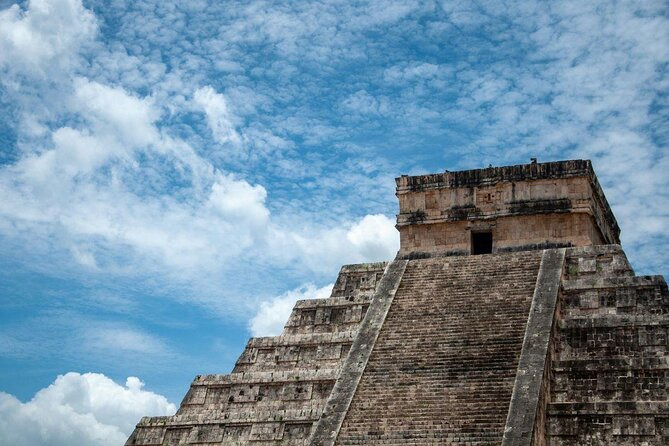
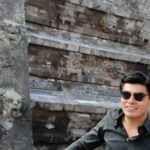
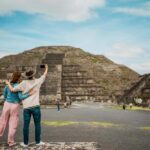
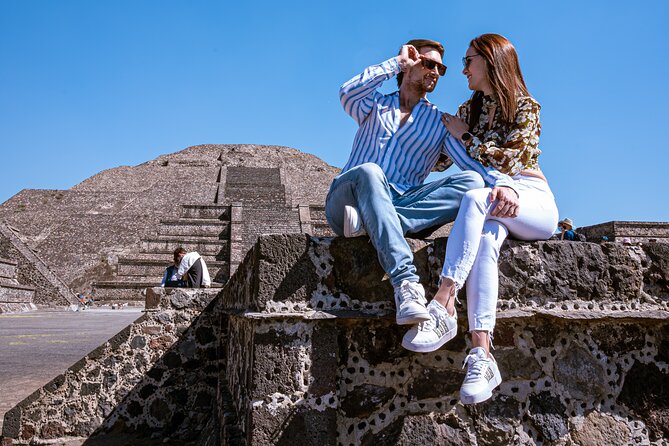
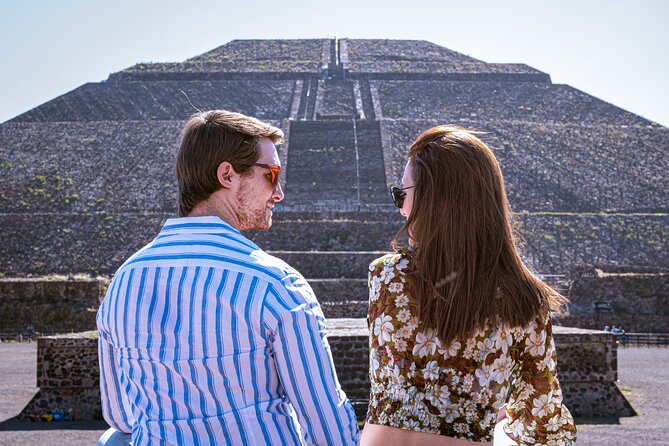
Teotihuacan is famous for a reason. Even if you’ve seen photos, standing in front of the pyramids in person hits differently. The big advantage here is timing: your day begins by heading north and arriving as soon as the site opens, when the light is sharp and the crowd density is low.
That early window changes everything about how you experience the place. You get more space to look closely at the structures, plazas, and murals without constantly weaving around groups. It also makes the place feel less like a checklist and more like a world you can actually walk through at human speed.
The core sites on the route are the Sun and Moon pyramids, plus stops tied to major ceremonial and architectural areas such as the Avenue of the Dead, the Palace of Quetzalpapalotl, and the Temple of Quetzalcoatl. You won’t just be “near” these spots. Your guide walks you through the main areas and keeps the story moving so the layout makes sense.
Practical note: Teotihuacan involves walking, and you may want to take the steps toward higher viewpoints. People do it at their own pace, but it’s wise to wear shoes you trust on uneven stone.
You can also read our reviews of more city tours in Mexico City


The obsidian workshop and tequila tasting stop that actually feels local
Between ancient pyramids and big-city museums, you get a cultural detour that’s refreshingly hands-on. At El Quetzal Artesanías, you visit a family-run obsidian workshop and watch artisans craft objects from volcanic glass.
Obsidian mattered in pre-Hispanic life for practical and symbolic reasons, so the workshop isn’t just “shopping.” It helps you understand why people cared about this stone long before modern cut-glass. You also learn how obsidian was worked with ancient techniques, which gives you a better lens for what you’ll later see in museum galleries.
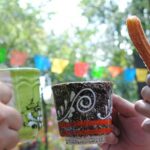
Then there’s the tequila tasting, included. It’s not a big party. Think of it as a short, friendly add-on that fits the “food and drink are part of culture” idea, without dragging on for hours.
Tip for getting value: if you’re the type who likes quality souvenirs, go in with a mental budget. The stop includes handmade pieces, and like most craft workshops, you may get prompted to buy. Decide what you love, not what’s easiest.
Rancho Azteca lunch: included only in the sense of a chance to eat
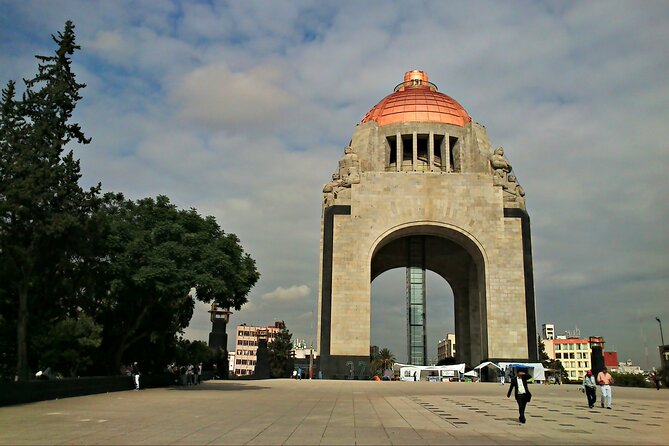
After the main pyramid time, you’ll head to Rancho Azteca for a buffet lunch. Here’s the catch: the tour summary says lunch is not included in the tour price.
So you have two choices:
- Eat there and use the break to reset your legs and head.
- Skip the buffet and make your own plan later.
This matters because timing can feel tight if you’re hungry and the group is moving on a schedule. One reason lunch stops show up as a common friction point is that they tend to turn into a long “hangout” if the pace isn’t smooth. Some people also report that the lunch experience felt more commercial than authentic, so go in expecting a practical meal rather than a culinary highlight.
If you’re trying to keep costs down, consider bringing snacks. The tour does not list drinks or food as included, and your energy matters on a day that starts early and keeps you walking.
Day two at the National Museum of Anthropology: context that makes Teotihuacan click
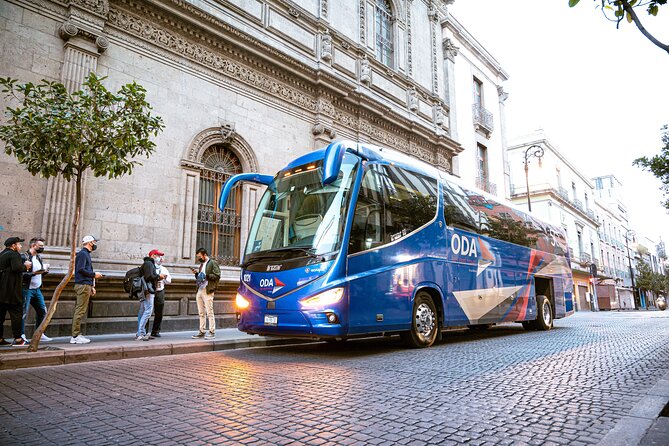
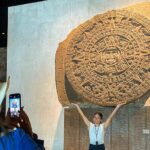
Day two begins at the National Museum of Anthropology, and it’s a smart pairing. Teotihuacan is awe-inspiring, but it can also feel like a standalone “greatest hits” site if you haven’t seen how archaeologists explain cultures, timelines, and artifacts in general.
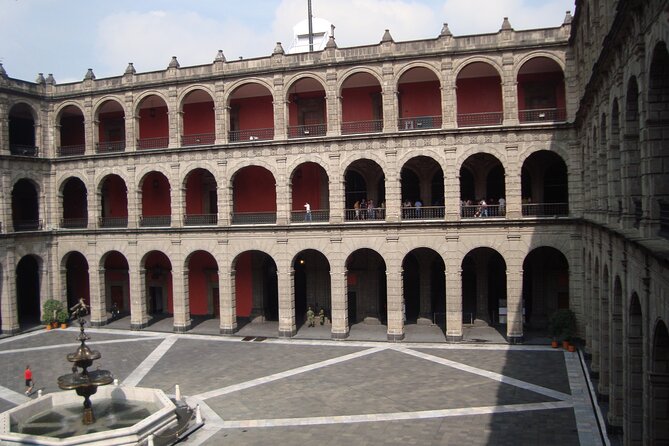
Here, the guide shows you the main sections with the most relevant material. You get about two hours, so it’s not a full museum marathon. Still, you’ll walk away with a stronger sense of how ancient Mexico is organized as a set of cultures, not one static past.
This is where the tour can become more than sightseeing. When you connect big themes from the museum to what you saw at Teotihuacan the day before, the pyramids stop being just impressive shapes and start feeling like parts of a broader cultural system.
One more reason I like this approach: you don’t have to make museum choices. With a smaller group and a guide directing your time, you’re less likely to miss the “most important rooms” and more likely to leave with real clarity.
Downtown Mexico City outside stops: quick orientation, not a full deep-dive
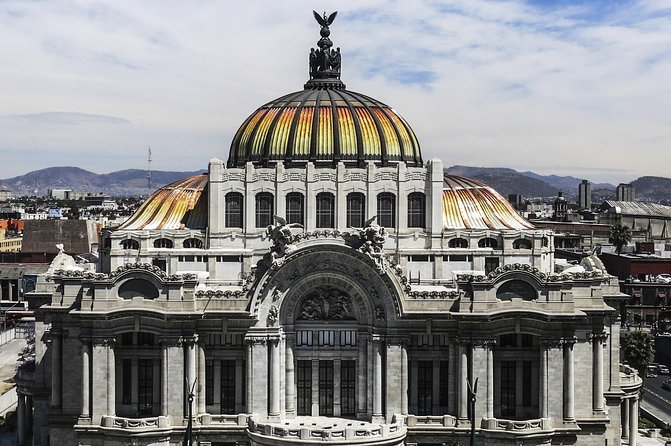
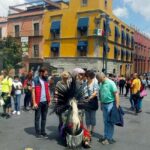
After the museum, the itinerary shifts into city-center walking and viewpoints. You’ll walk through the oldest park in America, pass in front of a beautiful palace, and get outside explanations at several stops. Then you head to Avenida Francisco I. Madero for a brief outside look.
What this section is good for:
- Getting your bearings fast in the historic center
- Picking up visual anchors you can later revisit on your own
- Learning a few specific storylines without spending half a day indoors
What to watch for: outside-city tours can feel “recap-ish” if you’re hoping for a museum-like pace. It’s also the portion most likely to be impacted by group management and timing, because you’re moving in streets instead of staying in one controlled space.
If you’re sensitive to slow group flow, bring patience. A couple of guides have been praised for keeping things moving, while others were criticized for distracted moments or pacing that didn’t match what people expected. In other words: this part can be strong, but it’s the part where variability shows up most.
You can also read our reviews of more museum experiences in Mexico City



Templo Mayor Museum: the Mexica story with a sense of place
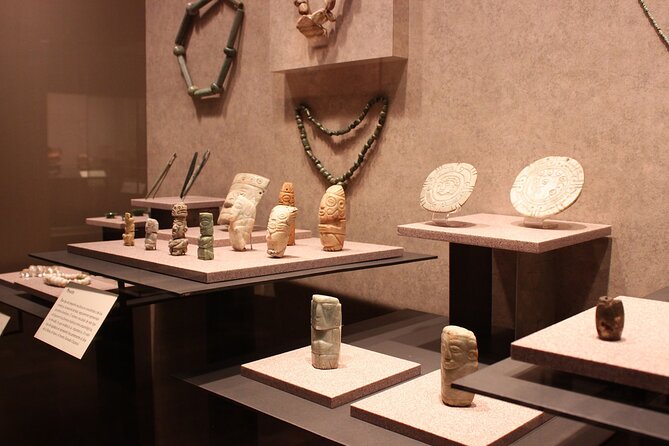
The grand finale is Museo del Templo Mayor. This is not just a museum you walk through and forget. The Templo Mayor complex sits in the center of the Mexica capital story tied to Tenochtitlan, and the museum helps translate that archaeological setting into understandable context.
You’ll spend about 1.5 hours here, with the tour culminating at the windows of history located in the streets surrounding the site. That street-level finale is a nice touch. It keeps the experience from staying stuck behind museum walls.
If Teotihuacan gave you an ancient “why does the architecture look like that?” experience, Templo Mayor is more like “now I can connect the artifacts to a living city.” You’ll come away with a clearer idea of what the Mexica temple site represented and how archaeologists interpret it.
Practical tip: museum time is easier on the body than pyramid time. Still, wear comfortable shoes. You’ll be on your feet at multiple stops and then doing the walk-around at the end.
Price and logistics: where $137 makes sense (and where it can snag)
At $137 per person for a two-day plan, this combo earns its value in two main ways:
- Teotihuacan early access (getting in before the heavy crowd) is the “special sauce.” That alone is often what justifies choosing a guided option over a DIY scramble.
- Day two includes admission to the National Museum of Anthropology and Museo del Templo Mayor, both of which are major anchors in Mexico City’s history scene.
What isn’t included is food and drinks. Lunch is offered at Rancho Azteca, but it’s explicitly not part of the tour price, and that can surprise people who assume a “full day” means a full meal.
Other logistics you should factor in:
- Group size is capped at 30 travelers, which usually helps.
- Transport is by air-conditioned minivan, round-trip.
- There’s a moderate amount of walking listed (about 1.8 miles / 3 km), though pyramid areas can be more tiring depending on how much you climb.
- The tour is offered in English, with a professional guide, and you’ll get a mobile ticket.
A note on real-world pacing: one major complaint that appears is timing slipping in the city portion when the group is large or language coverage isn’t clean. In the best-case scenario, this day flows. In the worst case, you lose museum time or end up waiting for the group. You can’t control other guests, but you can control your expectations: the Teotihuacan morning is usually the most reliable highlight, so treat the city segment as a bonus rather than the main event.
What to pack and how to time your day
Because the tour starts early, you’ll feel it more than you think. One reason people recommend planning ahead is the early-morning cold: even in winter months, mornings near sunrise can feel chilly.
Bring:
- Comfortable walking shoes (pyramid stone is not forgiving)
- Sun protection (daylight gets strong quickly once you’re out)
- Something for cooler weather in the morning (even a light layer helps)
- If you’re traveling in rainy seasons or shoulder months, consider rain gear; one person specifically suggested a rain coat or umbrella
Also, breakfast matters. If the pre-pyramid food setup is limited or not your taste, you’ll be happier having eaten before you start the morning.
Who this tour fits best
This tour is ideal if you:
- Want Teotihuacan early access without the stress of coordinating transport and entry timing
- Like history that connects sites to each other, not just isolated monuments
- Prefer a guided plan that points you to the “most important rooms” at major museums
You might skip or adjust the plan if you:
- Care most about a tight, fully scripted city-center walking tour. That portion can be more variable.
- Have low tolerance for waits. If your group runs larger than expected or language grouping gets mixed, the city part can drag.
If you’re the type who wants control, a smart strategy is to treat this combo as your Teotihuacan “must-do,” then plan your own follow-up time around the historic center and museums afterward.
Should you book this Teotihuacan and museum combo?
Yes—if sunrise Teotihuacan is your priority. The early gates, the structured route through the key pyramid areas, and the museum-to-archaeology storyline on day two make it a strong value at this price point.
I’d book with eyes open about the city-center portion. Expect it to be more about outside orientation and storytelling than a museum-style sit-down deep guide. If you want the smoothest experience possible, aim to bring good walking shoes, dress for early-morning weather, and plan to handle lunch as an extra choice rather than an included meal.
Overall, this is the kind of trip that works best when you treat the first day as the highlight and use day two to build context.
FAQ
How long is the Teotihuacan & Anthropology Museum, Templo Mayor & City Tour?
It’s listed as approximately 2 days.
What does the tour cost?
The price is $137.00 per person.
Is lunch included?
No. Food and drinks are not included in the tour price, and the lunch stop at Rancho Azteca is noted as not included.
What are the main stops on day one?
Day one includes Teotihuacan (about 3 hours), El Quetzal Artesanías for an obsidian workshop plus tequila tasting (about 45 minutes), and Rancho Azteca for a buffet lunch stop (about 1 hour, lunch not included).
What are the main stops on day two?
Day two starts at the National Museum of Anthropology (about 2 hours), includes a walk through the oldest park in America and several outside explanations, includes a short stop on Avenida Francisco I. Madero (about 5 minutes), and finishes at Museo del Templo Mayor (about 1 hour 30 minutes).
Is the tour offered in English?
Yes, it’s offered in English.
How much walking is involved?
It lists a moderate amount of walking, about 1.8 miles (3 km).
What’s included in the price?
Included items are a professional guide, round-trip transport by air-conditioned minivan, entrance to Teotihuacan (if the 2-day combo option is selected), entrance to the Anthropology Museum, entrance to the Templo Mayor Museum, and tequila tasting.
Is there a refund if I cancel?
You can cancel for a full refund up to 24 hours before the experience’s start time.