REVIEW · MEXICO CITY
Mexico City: 19 City Highlights Bicycle Tour
Book on GetYourGuide →Operated by TourbikeandfoodCDMX · Bookable on GetYourGuide
Four hours, nineteen icons, and a bike under you. This tour is fun because it’s a locals-style route through Mexico City’s big sights, with guided stops that make the history click, not just the photos. You’ll finish in Roma Norte, feeling like you’ve already mapped the city.
I love the mix of riding and short story stops—it keeps the pace light while you still learn why each place matters. I also like the extra credit the guides add: they take photos and videos along the way and share them after, plus they’ll point you to what to eat next.
One drawback to plan for: you need to show up early so the bikes still have the right fit. And since it runs rain or shine, bring sunscreen and be ready to ride in whatever the weather decides.
In This Review
- Key moments that make this tour worth your time
- Why biking the CDMX highlights works better than hopping in and out
- $70 value: what you’re paying for in real-world terms
- Route and timing: from Jalapa 272 to Roma Norte without feeling rushed
- Mexico Park: your first curbside story and a photo-ready start
- Estela de Luz: a modern monument that frames Mexico City’s story
- Altar a la Patria: a national memorial you’ll read differently after the story
- Chapultepec Park and Chapultepec Castle: riding up to the city’s big historic hill
- Museo Nacional de Antropología: why the stop matters even if you don’t go inside
- Angel de la Independencia and Alameda Central: monuments and everyday city life
- Hemiciclo a Juárez and Torre Latinoamericana: the city’s power look, explained fast
- Palace of Fine Arts and Zócalo: when the classic postcard becomes a real place
- Templo Mayor Museum: the ancient city under your feet
- Monumento a la Revolución and Plaza Río de Janeiro: finishing with momentum
- The guides: why the ride feels safe and the city feels personal
- What to bring, what to wear, and how to avoid the common bike-tour mistakes
- Sunday street closures: the day the city turns friendlier
- Who this tour fits best, and who should skip it
- Should you book this Mexico City bike highlights tour?
- FAQ
- How long is the Mexico City bike tour?
- What is included in the price?
- Is food and drinks included?
- What language is the tour guide?
- How many people are in the group?
- Where does the tour start and finish?
- Is the tour suitable for children?
- What should I bring?
- Does the tour run in rain?
Key moments that make this tour worth your time
- Small group (max 10) means easier pacing and safer street crossings
- English guide plus a second guide for photos/videos and group care
- 19 must-see stops across major parts of the city in just four hours
- Instagram-worthy photo stops, timed for quick curbside viewing
- Sunday tip: road closures often make central cycling calmer and smoother
- Photo/video bonus and restaurant recommendations at the end
Why biking the CDMX highlights works better than hopping in and out
Mexico City is great, but “great” can also mean overwhelming. Traffic is complicated, distances are deceptive, and the city’s layers of history can blur together if you’re just rushing from one postcard to the next. This bike tour solves that with a simple rhythm: pedal, stop, learn a bit, take photos, and roll again.
What makes it especially useful on day one is that you’re not only seeing monuments. You’re getting the logic of where they sit in the city—how the modern capital grew around older symbols, plazas, and hills. And you’re doing it at a pace that feels like travel, not a checklist.
You also get an actual workout without turning it into a punishment. The riding is easy enough for most adults, with frequent guided breaks that let you reset. If you want to get your bearings fast and still enjoy the ride, this format fits.
You can also read our reviews of more city tours in Mexico City


$70 value: what you’re paying for in real-world terms
At $70 per person for about four hours, this isn’t a bare-minimum sightseeing ticket. You’re buying four things you’d otherwise piece together yourself: a bike, a helmet, an English-speaking guide, and a structured route that hits major landmarks plus photo stops.
Here’s the value math that matters: the bike + helmet alone saves you from renting and figuring out the “how do I not get in the way of traffic” part. The guide reduces wasted time because you’re not hunting for the best angle, the best curb spot, or the quick history that makes the next stop meaningful.
On top of that, the guides often take photos and video during the tour and share them afterward. You’re paying for convenience and momentum. And convenience is expensive in CDMX if you do it without a plan.
Finally, it’s limited to a small group, which keeps the stops from turning into a crowded stampede. That alone makes the $70 feel more fair than many longer, more chaotic tours.
Route and timing: from Jalapa 272 to Roma Norte without feeling rushed
The tour begins at Jalapa 272. You’ll meet your guide to get your bike and helmet, then you’ll roll into the city with a mix of short guided explanations and short “look here” moments for photos.
The stop pattern is built for flow. Many locations are about 10 minutes of guided time, with a few spots closer to 15 minutes—long enough to understand what you’re seeing, short enough that you’re not stuck listening while the city moves around you.
You’ll also end in Roma Norte at Cerrada Orizaba & Coahuila. That’s a smart finishing move because Roma is a great neighborhood base for food and a stroll afterward. In other words: the tour doesn’t just end. It drops you into a place where you can keep enjoying the city.
One practical note: bikes are assigned based on fit, so arrive early. One review mentioned needing to choose from what’s still available if you’re late.
Mexico Park: your first curbside story and a photo-ready start
Mexico Park is a perfect first stop because it shifts you into “CDMX sightseeing mode” fast. You get a quick orientation right away, then you’re rolling again. It’s the kind of stop that helps you stop thinking in logistics and start thinking in landmarks.
Look for the setting: this isn’t just about taking a picture. It’s about spotting how neighborhood life and public space shape the city. A good guide turns a park into a lesson about how Mexicans use outdoor areas for everyday culture.
Also, this early timing helps you relax into the rhythm of the tour. You learn the pace, how crossings work with your group, and how the guides signal what’s next. That matters later when the route moves into busier monument zones.
If you’re worried about bike comfort, this is also where you feel it right away. Any “this isn’t fitting quite right” issue shows up early, so you can adjust before the longer rides.
Estela de Luz: a modern monument that frames Mexico City’s story
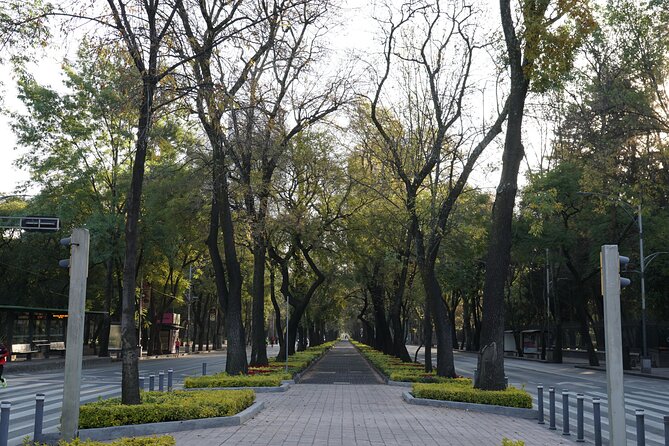
The Estela de Luz stop is short, but it works because it’s a modern symbol in a city that’s famous for ancient layers. Seeing it by bike gives you a sense of scale that you don’t always get from street-level photos.
The guide’s job here is key: they connect the monument to the broader narrative of Mexico City as a living capital, not a museum outside your window. You get to understand it as part of a timeline, not just a structure.
Photo-wise, the Estela area is often one of those “turn your phone to the right angle and it pops” places. But don’t race through. A one-minute pause to reposition makes a big difference, and your guide will usually tell you what to look for.
The biking time between stops also helps. You’re not stuck trying to interpret everything from a single viewpoint. You see the monument while moving through the corridor that links major parts of the city.



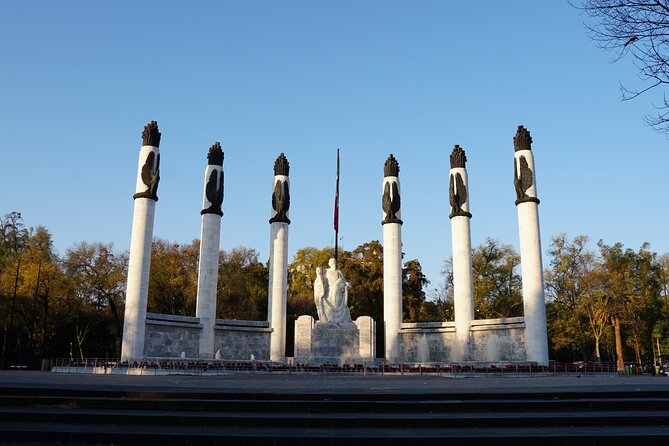
Altar a la Patria: a national memorial you’ll read differently after the story
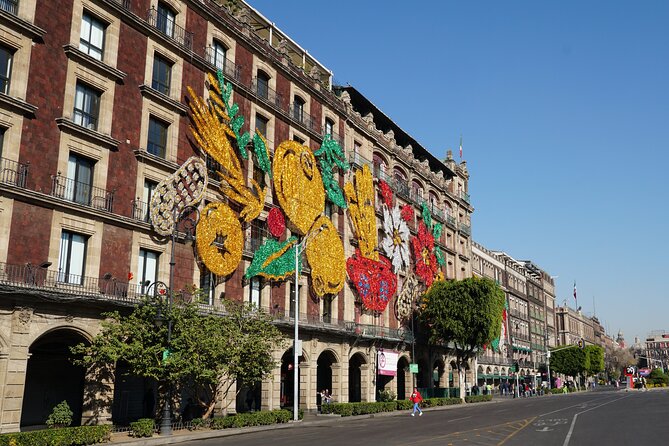
At Altar a la Patria, the experience is mostly about meaning. You’re at a memorial tied to national identity, so the guide’s explanation transforms what could be a quick photo into something you actually remember.
This stop is also a good example of why the tour structure works. You don’t have to do a deep research project. You get the key context in a short guided window, then you move on—so the city stays fun instead of feeling like homework.
The possible drawback here is attention fatigue. If you’re treating every stop like a tourist selfie moment, you’ll miss the best part: how the guide connects each monument to Mexico City’s cultural story. Give it just a little mental space and it pays off.
Chapultepec Park and Chapultepec Castle: riding up to the city’s big historic hill
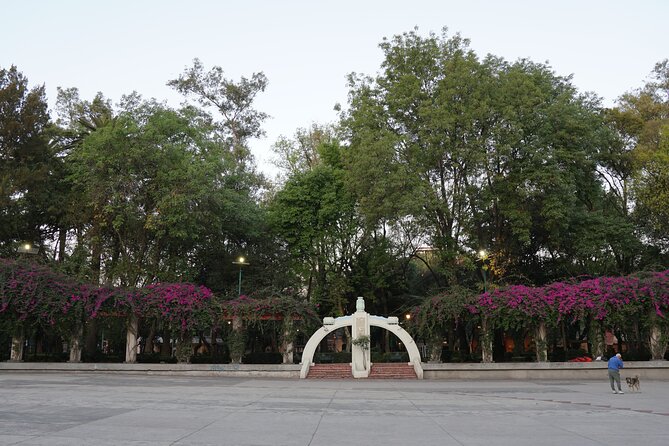
Chapultepec is where the tour’s “history heavyweight” energy kicks in. Chapultepec Park feels like the city’s pause button—green space and big-site atmosphere, with enough room to regroup before you continue.
Then you roll toward Chapultepec Castle. Even if you only spend a short time there, you’ll understand the importance of the hill. This is one of Mexico City’s most famous historical zones, and being here on a bike adds a nice sense of momentum: you arrive like you’re actually part of the city’s landscape, not just driving past it.
Guides tend to make this area click by connecting it to the broader national story. That’s the recurring theme of the tour: you’re not only collecting photos—you’re building a mental map of what Mexico City values, preserved and evolving.
One practical consideration: some portions of the route and views can be sunny, so you want sunscreen handy and water-minded. A few reviews hinted at full-sun exposure mixed with leafy stretches.
Museo Nacional de Antropología: why the stop matters even if you don’t go inside
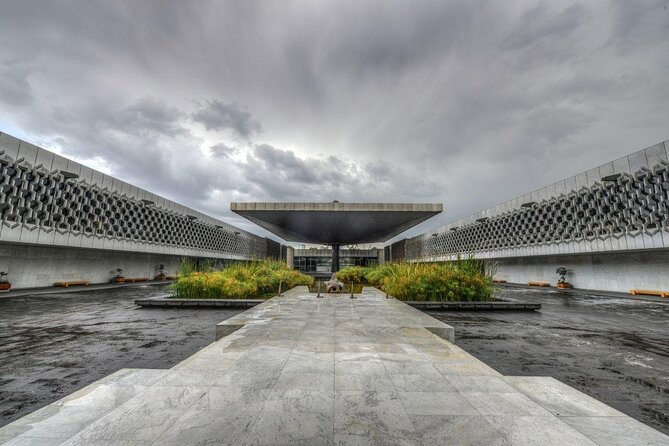
The Museo Nacional de Antropología stop is typically brief, but it can still be a smart choice for your first days in CDMX. The museum is a magnet because it helps you anchor ancient Mexico City in something tangible.
On a bike tour, you’re not doing a full museum visit. Instead, you’re getting a “why it exists” frame, so if you come back later for a longer visit, your questions are sharper. You’ll recognize the museum as more than a big building. It becomes a key to understanding the city’s roots.
This is where guides who use simple visuals (like an occasional laptop presentation) can really help. Even a quick visual explanation can make the next stops feel less random.
Angel de la Independencia and Alameda Central: monuments and everyday city life
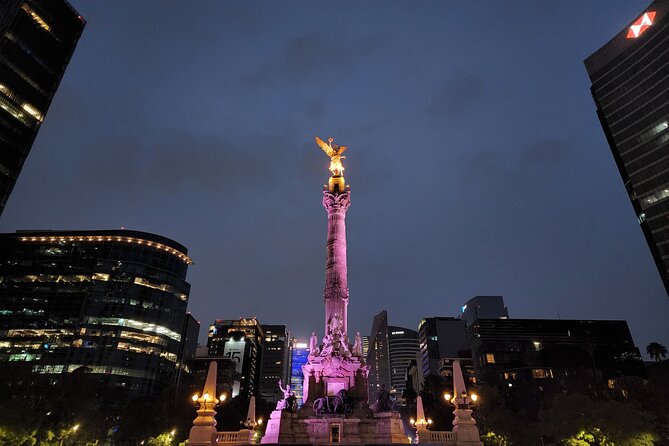
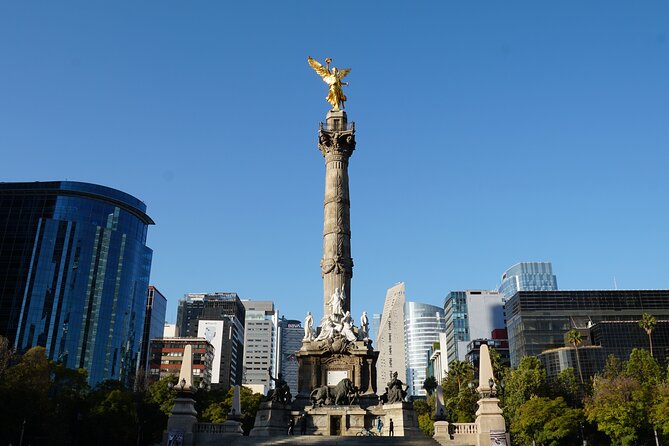
The stop at Angel de la Independencia is the kind of landmark that instantly reads as iconic. But the tour value is that the guide won’t just let you admire it. They’ll connect it to what it represents and how it fits into Mexico City’s identity.
Then comes Alameda Central, which is a different kind of scene: a grand public space where you feel the city living around you. That contrast is one of the best things about the tour. You move from big symbolic architecture to a plaza-style neighborhood center where people actually hang out.
On a bike, you get angles and sightlines you can’t easily recreate on foot in a short time. You also avoid the “walk 20 minutes just to see one monument” problem.
The main drawback to watch for here is heat and crowds in the general area. Even on calmer days, public spaces draw people. Your guide’s job is keeping the group safe while you take your photos.
Hemiciclo a Juárez and Torre Latinoamericana: the city’s power look, explained fast
Next up, Hemiciclo a Juárez and Torre Latinoamericana bring you into the modern capital vibe. The hemicycle is about political symbolism, while the tower is about the skyline side of Mexico City’s growth.
This combo works because it compresses two different stories: the idea of leadership and the physical presence of a changing city. You learn just enough to connect the dots, then you keep moving.
If you’re the kind of traveler who likes structure, this is a good run. The guide keeps explaining in small chunks, and you’re never stuck in one spot long enough to get restless.
Palace of Fine Arts and Zócalo: when the classic postcard becomes a real place
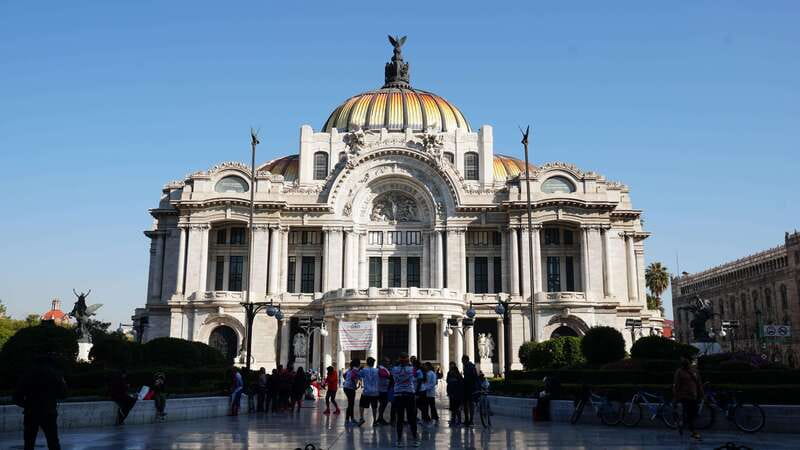
Palace of Fine Arts is one of those “everyone knows it” landmarks, but the tour makes it more useful. Instead of treating it like a background for a photo, you get a quick lesson on why it looks the way it does and how it fits into Mexican cultural life.
Then you roll into the Zócalo, the center that anchors the capital. This is the heart-of-the-heart moment. If you’re doing this early in your trip, it’s where you’ll mentally orient the rest of your days.
The Zócalo area is also where cycling can feel most intimidating if you assume bikes and traffic belong in separate worlds. This tour’s safety focus is what lets you relax. Your guide guides your lane position, handles crossing timing, and keeps the group together so you can focus on learning and photos instead of stress.
Templo Mayor Museum: the ancient city under your feet
At Templo Mayor Museum, you get a stop that ties the whole city together. Templo Mayor is about Aztec history, and even a short guided moment can give you a stronger sense of how Mexico City’s past isn’t gone—it’s literally part of the ground-level story.
This stop is also a reminder that the tour isn’t just monuments for Instagram. It’s about understanding how different eras overlap in CDMX. That’s why the history lessons feel worth it: they help you connect the hill, the plaza, the monuments, and the museum into one timeline in your head.
If you want to go deeper afterward, this is the stop that usually makes people add a museum hour to their schedule. Even without a long visit, you’re set up to appreciate what you’d otherwise miss.
Monumento a la Revolución and Plaza Río de Janeiro: finishing with momentum
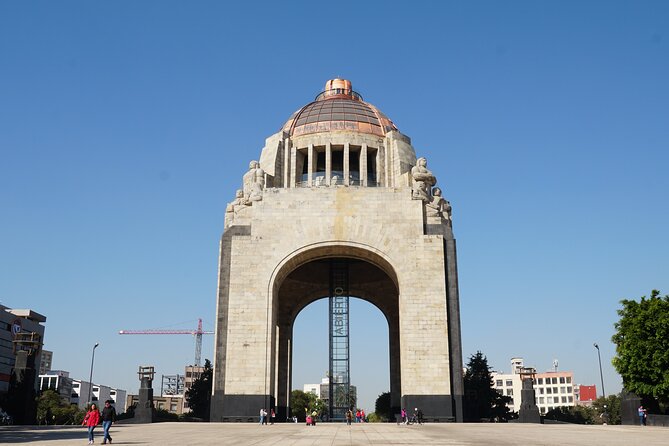
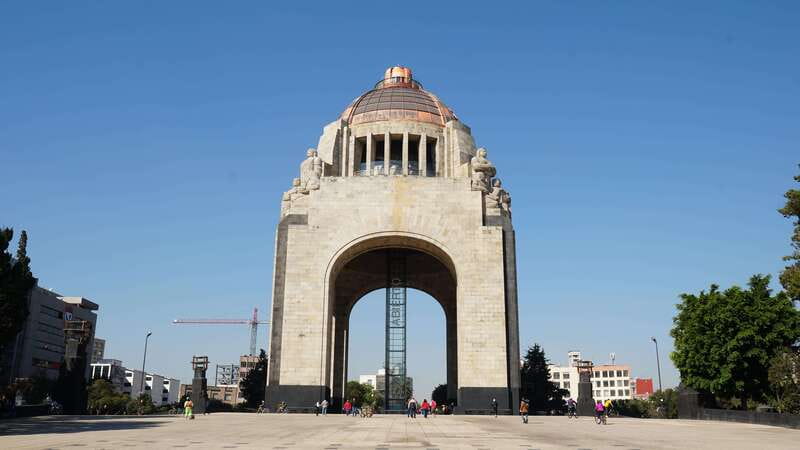
The Monumento a la Revolución stop wraps the national themes with a sense of dramatic architecture. It’s another symbol that’s easier to understand once you’ve already been talking about Mexico City’s identity through the earlier monuments.
Then you reach Plaza Río de Janeiro. This is a smart final “neighborhood-feel” stop because it helps you transition from the big-central-sight energy into the more local hangout mood where Roma Norte sits.
By the time you’re done, you’re not just tired from riding. You’re tired in the good way—like you actually covered ground and learned what to chase later.
And the end point in Roma Norte gives you options immediately: food, coffee, an easy walk, and the chance to keep exploring with your new mental map.
The guides: why the ride feels safe and the city feels personal
This tour is run by TourbikeandfoodCDMX, and the guiding team makes a big difference. In particular, Yibran and Daniella show up as a duo: one drives the explanations and the flow, and the other helps keep the group organized while taking photos and videos during the ride.
What stands out is the balance. The history doesn’t feel like a lecture. It’s short, placed at the right time, and delivered with humor and quick storytelling. One review even mentioned small audio-visual support using a laptop, which can help when you’re staring at stone that looks the same to everyone.
Safety is handled actively, not magically. The guides look out for traffic, manage crossings, and keep the group together. Reviews also mention practical help like handling restroom access (including putting coins in meters in some cases). That kind of real-world assistance is why the tour feels smooth instead of improvisational.
And yes, there’s often a photo/video bonus. If you care about getting good shots without stopping every 30 seconds, that perk is worth paying attention to.
What to bring, what to wear, and how to avoid the common bike-tour mistakes
For a tour like this, the basics matter more than fancy travel gear. Bring a passport or ID (a copy is accepted), comfortable clothes, comfortable shoes, and sunscreen.
Your biggest practical win is timing. Arrive 20+ minutes early when you can. One review noted bike sizing became a problem if someone arrived late. Early arrival gives the team time to match you with a bike that fits.
Also, CDMX traffic is unpredictable. Plan your ride to the meeting point with buffer time. If you get stuck in traffic on the way there, you’re the one who feels it when it’s time to pick a bike.
Finally, remember it runs rain or shine. If it’s wet out, you’ll still ride and still stop. Wear layers you can handle and don’t assume the city will slow down just because the sky changes.
Sunday street closures: the day the city turns friendlier
If you want the smoothest ride, consider booking a Sunday. Reviews note that main avenues often close to cars, which makes cycling and walking safer and calmer in central areas.
Even if you’re not a hardcore cyclist, that matters. Less car traffic means fewer stressful moments at crossings and more time for the guide’s stories.
If your schedule allows, Sundays are a strong pick for this tour. If they don’t, still book—just remember the guides are built for handling busier conditions too.
Who this tour fits best, and who should skip it
This is a great fit if you’re:
- In CDMX for the first few days and want a fast city orientation
- Interested in history, but you don’t want it in a slow, museum-only format
- Looking for light exercise and a route that covers major sights
- Prefer a small group experience (max 10) with direct guide attention
It’s not the best fit if you’re bringing children under 10, since the tour isn’t suitable for them.
Also, because food and drinks are not included, you’ll want to plan your own water and snacks. The tour ends with restaurant recommendations, but you’ll still be out on your own for meals.
Should you book this Mexico City bike highlights tour?
If you want the quickest path to seeing the big icons and understanding what they represent, I think this tour is an easy yes. It’s good value for the time you spend, the bike-and-helmet setup, and the small-group attention. The photo/video bonus and the restaurant tips add real usefulness, not just entertainment.
Book it especially early in your trip. You’ll use the route as a map for the rest of your stay. If you can, choose a Sunday for calmer cycling.
If you hate any ride where traffic crossings happen, or you’re late to meetings and struggle with getting the right bike fit, then reconsider. Otherwise, show up early, bring sunscreen, and let Yibran and Daniella do the planning work while you enjoy the ride.
FAQ
How long is the Mexico City bike tour?
The tour lasts about 4 hours.
What is included in the price?
The price includes a bike, a guide, and helmets.
Is food and drinks included?
No. Food and drinks are not included.
What language is the tour guide?
The live tour guide speaks English.
How many people are in the group?
The group is limited to 10 participants.
Where does the tour start and finish?
It starts at Jalapa 272, and it finishes at Cerrada Orizaba & Coahuila, Roma Nte., 06700 Ciudad de México, CDMX.
Is the tour suitable for children?
It is not suitable for children under 10 years old.
What should I bring?
Bring a passport or ID card (copy accepted), comfortable clothes, comfortable shoes, and sunscreen.
Does the tour run in rain?
Yes, it runs rain or shine.