REVIEW · MEXICO CITY
Arrivals & Survival of Jews in Mexico from 1519
Book on Viator →Operated by Mex at Max · Bookable on Viator
Jewish history hides in plain sight. In Mexico City’s Centro Histórico, this small-group tour links synagogues, church power, and Spanish Inquisition fear—right down to where Diego Rivera and Frida Kahlo’s lives brushed past each other. You’ll also see how Mexico’s religious story keeps mixing old faiths and new coexistence.
I love the way the tour turns street corners into a timeline you can follow, with specific places tied to Sephardic and Ashkenazi arrivals. I also love the pace: it moves at walking-speed, with time to ask questions and absorb context instead of just rushing to a photo stop with a nod.
One possible drawback: if you came for only Jewish history, you’ll spend a good chunk on the wider religious and political backdrop that shaped what happened to Jews in Mexico City.
In This Review
- The Highlights You’ll Remember
- Centro Histórico as a Classroom for Jewish Mexico
- Starting at Librería Porrúa and Getting the Timeline in Your Head
- Behind the Metropolitan Cathedral: Heresy, Control, and Architecture Designed to Exclude
- Santo Domingo Plaza: Trading Under Watch and the Meaning of Hidden Messages
- The Inquisition Palace and Perpetual Prison: When the Stakes Become Real
- Antiguo Colegio de San Ildefonso: Rivera Meets Kahlo, and Politics Changes Lives
- Plaza Loreto: Mount Sinai, Nidjei Israel, and the Two-Branch Story of Jewish Mexico
- Visiting Justo Sierra Synagogue: The Ending Stop That Lands the Whole Story
- Price, Group Size, and Pace: What You’re Paying For
- Who Should Book This Tour (and Who Might Want Something Different)
- Final Call: Should You Book It
- FAQ
- How long is the tour?
- How much does it cost?
- Is the tour offered in English?
- What size is the group?
- Where do I meet, and where does it end?
- What are the main sights included?
- Is admission included?
- Is it okay for people with moderate physical fitness?
- What is the cancellation policy?
The Highlights You’ll Remember
- First Sephardic temple + first Ashkenazi synagogue stops that frame the story early
- Spanish Inquisition power in stone, shown around the Metropolitan Cathedral and nearby chapels
- Santo Domingo market-era trade under watch, including anti-Semitic coded messaging themes
- Perpetual Prison and torture site pass-by, a heavy moment that clarifies the stakes
- Diego Rivera meets Frida Kahlo connection, tied into Mexico’s political history
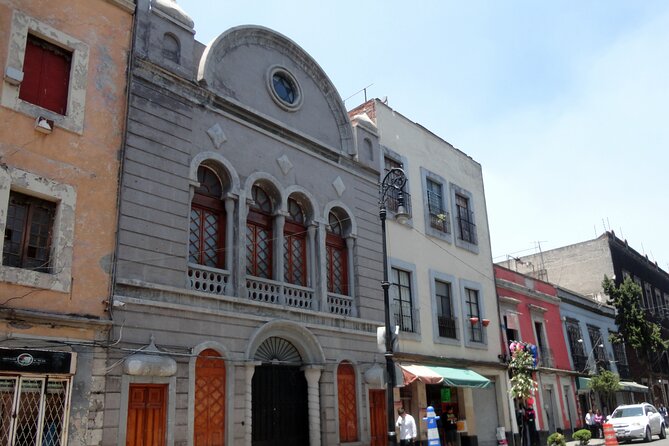
- Ending inside the decommissioned Justo Sierra Synagogue, one of the key Ashkenazi sites in Mexico
Centro Histórico as a Classroom for Jewish Mexico
This is a history walk, but it’s not dry. You start in a part of Mexico City where layers of empires and religions overlap so tightly that you almost feel the city thinking out loud. The tour’s core idea is simple: if you want to understand Jewish life in Mexico, you have to understand what the powerful institutions around it were doing at the same time.
The route also does something smart with the emotional arc. It begins with the present-day calm coexistence you can see around the ruins and major religious buildings, then pulls you backward into the Inquisition-era logic—where being different could mean danger. By the time you reach the synagogue end point, the story doesn’t feel like an isolated chapter. It feels like part of Mexico City’s everyday streets.
And yes, there’s a human side. Names like Diego Rivera, Frida Kahlo, and Lev Davidovich Bronstein (Trotsky) show up because history here didn’t happen in a vacuum. It happened through art, politics, and migration.
You can also read our reviews of more tours and experiences in Mexico City.


Starting at Librería Porrúa and Getting the Timeline in Your Head
You begin at Librería Porrúa in the Centro Histórico, with an intro chat from a terrace that looks out toward the ruins of the Great Aztec Temple area. That view matters. It tells you right away that this story is layered: pre-Columbian Mexico, then Spanish rule, then the Inquisition, then the long reshaping of public life.
From there, you start building a timeline. The focus is on the arrival and survival of Jews in Mexico City after the early Spanish period—especially the Sephardic and Ashkenazi experiences. A good guide won’t just say names and dates. They’ll help you connect the “where” to the “why.” That’s what you get here: the city becomes the map for the story.
Practical note: this is one of the easiest ways to start because the meeting area is central. You’re already in the right neighborhood for the next few walking stops.
Behind the Metropolitan Cathedral: Heresy, Control, and Architecture Designed to Exclude
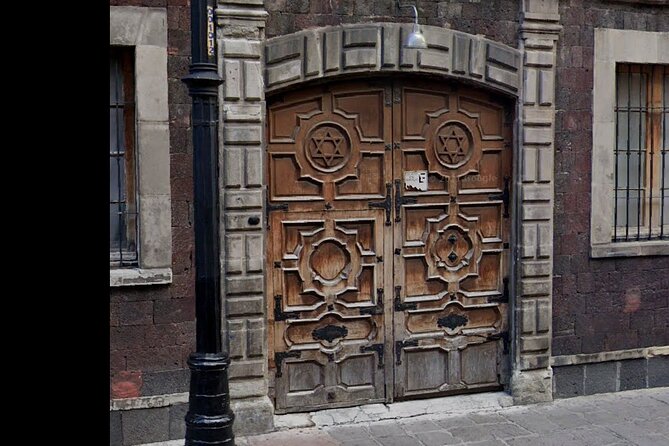
Next you head to the Metropolitan Cathedral area, but the tour doesn’t focus on the front postcard view. You walk behind it to get to the Chapel of the Souls. The theme is displayed teachings against heresy—other religions—and you’re positioned where you can appreciate the colonial architecture that was meant to keep Jews away.
This stop hits differently because you’re seeing power in built form. It’s not an abstract history lesson. It’s the physical space that supported separation and suspicion. When the guide explains how the Inquisition mindset worked, the cathedral area stops being just a landmark and turns into a clue.
It’s also a “mental gear shift” point in the tour. After a terrace intro with peaceful religious coexistence, you quickly move into the logic of forced conformity. If you like your history with cause-and-effect, you’ll enjoy how clearly the contrast is staged.
Santo Domingo Plaza: Trading Under Watch and the Meaning of Hidden Messages
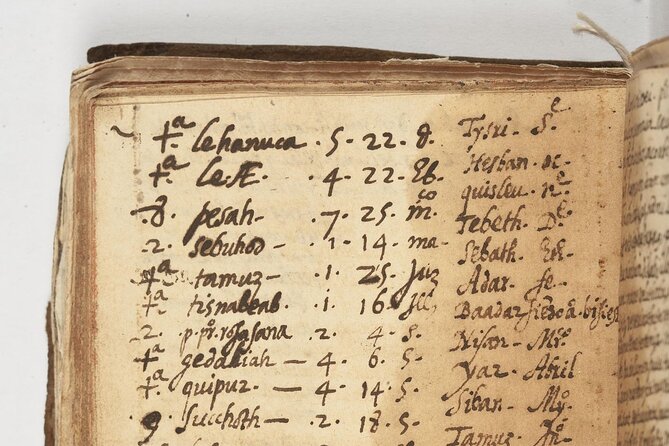
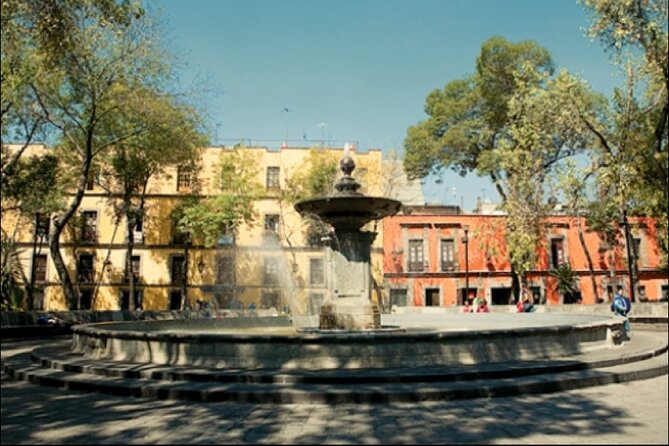
At Plaza de Santo Domingo, you get the commercial side of the story. This was the main trading marketplace from the 16th to the 19th centuries, and the tour centers on how Jews-in-hiding had to trade their merchandise while being watched from the nearby Palace of the Inquisition.
The most memorable parts here are the details you’re taught to look for—especially themes around anti-Semitic hidden messages connected to the palace and the Santo Domingo church. The tour frames this as a system: surveillance plus propaganda. In other words, it wasn’t just who had power; it was how that power taught people what to fear.
You also hear how El Camino Real functioned for Jewish traveling traders as a kind of safer path within a dangerous system. That adds realism. People weren’t simply hiding in place. They adapted, moved, and tried to keep life going through trade networks.
This stop is short, but it’s one of the most meaningful ones because it reminds you that survival often looked like logistics: paperwork, routes, timing, and finding ways to earn a living.
The Inquisition Palace and Perpetual Prison: When the Stakes Become Real
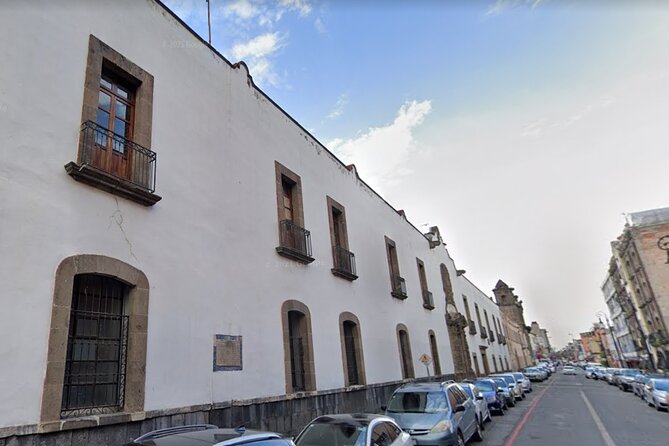
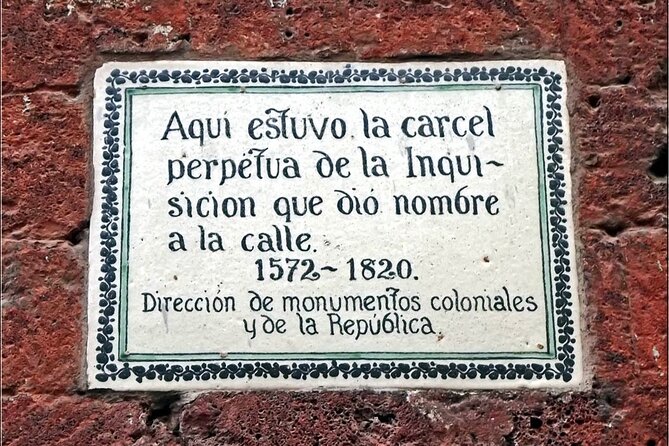
From the marketplace energy, you pass by the Antiguo Palacio de la Santa Inquisición. You’ll see the administration building and their living quarters, plus the Perpetual Prison area—where Jews were tortured and sentenced to death.
This is the tour’s hardest moment. You’re not going into an exhibition with a neat lesson plan. You’re walking past spaces connected to punishment, and the guide’s job is to keep it grounded rather than sensational. If you’re sensitive to heavy topics, you may want to take a slower breath here and let the weight land.
That said, this stop is also why the tour feels honest. The story of survival is not only about faith and community. It’s also about coercion and violence—and what it took to keep going anyway.

Antiguo Colegio de San Ildefonso: Rivera Meets Kahlo, and Politics Changes Lives
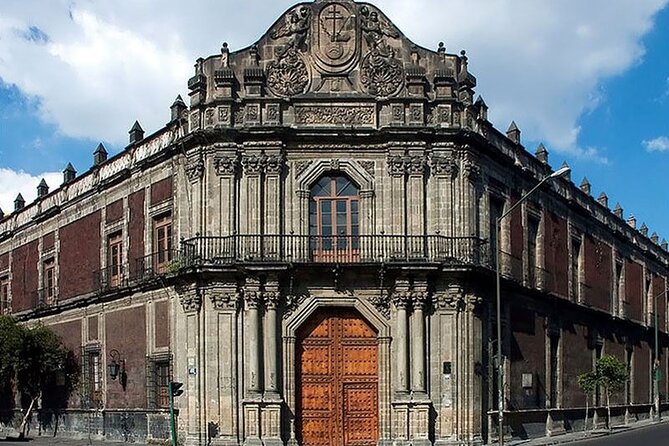
After the darker Inquisition context, the tour pivots to a different kind of pressure: politics and cultural change.
At Antiguo Colegio de San Ildefonso, you see from the outside the connection tied to where Diego Rivera (of Sephardic origin) met Frida Kahlo (of Ashkenazim origin). That’s a fascinating thread because it links Jewish identity to Mexico’s cultural mythmaking—rather than only to persecution.
Then the tour makes a bigger historical point. It explains how Mexico’s anti-Fascist movement supported the cancellation of the first and only anti-Semitic national convention and how it affected refugees, including Lev Davidovich Bronstein, known as Leon Trotsky. You’re essentially seeing how a country’s politics can shift from exclusion toward protection—at least in some key moments.
Even if you’re not a political history person, the connection works. It gives you a through-line: Jewish life in Mexico City isn’t only a story of danger. It’s also a story of human choices, alliances, and moments when power turned in a different direction.
Plaza Loreto: Mount Sinai, Nidjei Israel, and the Two-Branch Story of Jewish Mexico
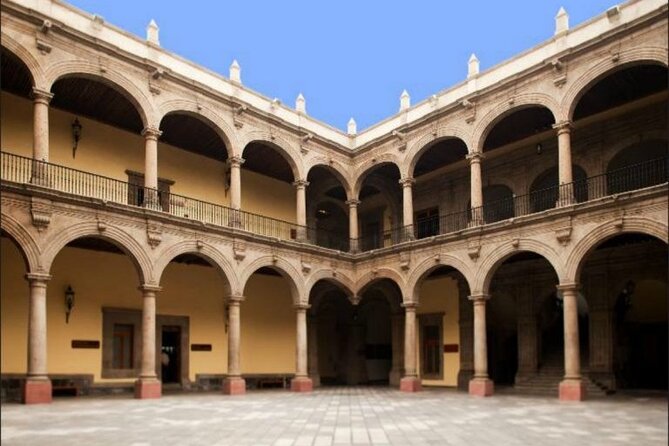
At Plaza Loreto, you pass by two purpose-built synagogue sites tied to Sephardic and Ashkenazi traditions. The tour highlights Sephardic Mount Sinai as the first purpose-built synagogue in Mexico, then the neighboring Ashkenazi Nidjei Israel as the first Ashkenazi synagogue.
This is where many people start to feel the structure of the Jewish story in Mexico City. Sephardic and Ashkenazi communities weren’t identical, and their places of worship and community needs reflected that. Seeing both synagogue references so close together helps you understand how Jewish life developed through distinct cultural lines, even while living under the same broader pressures.
You also get the sense of how urban space keeps history visible. Even when buildings change use or fall out of everyday attention, the city retains the clues if you know what to look for—and your guide does.
This segment ends right before the final synagogue visit, so the story starts to feel like it’s closing the loop.
Visiting Justo Sierra Synagogue: The Ending Stop That Lands the Whole Story
The tour’s finale is the Justo Sierra Synagogue, described as the decommissioned and first Ashkenazi shul in Mexico. Even though it’s an ending point, it doesn’t feel like a random last photo.
By the time you reach it, you’ve already seen the surrounding context that shaped Jewish survival: cathedral power, Inquisition prisons, coded anti-Semitic messaging themes, and the later political shifts that changed who could find safety. So when the guide discusses the synagogue itself, it’s not just about architecture. It’s about continuity—community endurance in a city that kept transforming around them.
This is also a good place to ask your last questions. If you leave with only one big takeaway, make it this: a synagogue in a city like this isn’t only a house of worship. It’s a statement about identity surviving real-world pressure.
Price, Group Size, and Pace: What You’re Paying For
The price is $99 per person for about 3 hours 30 minutes, which sounds straightforward until you compare what you actually get: a local guide, a tight set of major sites in Centro Histórico, and time to understand why they connect. Some entrances are agreed in advance, with admission tickets waived or included for certain places.
The small group size (maximum 10) matters. In a history walk, crowding kills the experience. Here, you’re more likely to keep up with the timeline and ask follow-ups when something clicks or doesn’t.
The pace is also built for comprehension. Several stops are short, but they’re staged to keep the story moving without turning it into a sprint. One review theme that matches the itinerary is that it’s not purely a Jewish-only tour. You’ll spend meaningful time on the broader religious and Inquisition framework. If that sounds like a plus for you, great. If you wanted strictly synagogue-focused time, you should go in with the right expectations.
Who Should Book This Tour (and Who Might Want Something Different)
This is a great pick if you:
- want Jewish history tied to real, specific buildings rather than generic background
- like your history explained with a timeline you can walk through
- enjoy cultural connections, especially when art and politics show up alongside identity
- prefer a small group with time for questions
It may feel less perfect if you:
- came hoping for a long, synagogue-heavy focus with minimal Inquisition context
- need lots of academic references or reading suggestions built into every explanation (some people want more sourcing than storytelling)
- dislike heavy topics; the Inquisition prison stop is part of the route
If you’re pairing this with other Centro Histórico sights, I’d do it early or mid-trip. The walk helps you read the neighborhood with better context right away.
Final Call: Should You Book It
I think this is worth booking if you want Jewish Mexico City history that connects faith, fear, and survival to the streets you’re standing on. The route ends in a meaningful synagogue stop after you’ve seen the pressures that shaped what life was allowed to look like. At $99 with a small group and a guide who can connect dots, the value is strong—especially if you care about context, not just monuments.
If you only want a light-touch Jewish overview, you might find the Inquisition and wider religious framing takes more time than you expected. But if you’re okay with that trade, you’ll leave with a clearer picture of how Jews lived through changing power—and how Mexico City remembers it.
FAQ
How long is the tour?
It runs for about 3 hours 30 minutes.
How much does it cost?
The price is $99.00 per person.
Is the tour offered in English?
Yes, it’s offered in English.
What size is the group?
The tour has a maximum of 10 travelers.
Where do I meet, and where does it end?
You start at República de Argentina 15, Centro Histórico de la Ciudad de México. You end in front of Loreto Park on the Justo Sierra Street side, at Justo Sierra 71.
What are the main sights included?
You’ll see key stops around Centro Histórico, including areas connected to the Metropolitan Cathedral, Santo Domingo Plaza, the Antiguo Palacio de la Santa Inquisición, Antiguo Colegio de San Ildefonso, Plaza Loreto, and a visit to the Justo Sierra Synagogue.
Is admission included?
Admission is waived or included for some agreed public and private places on the route.
Is it okay for people with moderate physical fitness?
Yes. The tour is listed for travelers with a moderate physical fitness level.
What is the cancellation policy?
You can cancel for a full refund up to 24 hours before the experience’s start time. Free cancellation is available as long as you meet that cutoff.