REVIEW · XOCHIMILCO
Xochimilco & Colonial Coyoacan Trip
Book on GetYourGuide →Operated by MEXITOURS · Bookable on GetYourGuide
One ride can teach you more Mexico City basics than a full day of wandering. This Xochimilco & Colonial Coyoacán tour blends big mural landmarks with a slow canal glide, then finishes in Coyoacán’s colonial streets. I especially like the contrast: museum-size art stops in the morning, then the calm of a trajinera in Xochimilco. I also like that you get the culture anchors you actually come to Mexico City for—Ciudad Universitaria and the Coyoacán area around San Juan Bautista. One drawback: the day runs on a pretty strict timetable, and because it’s a shared bilingual format, you may need to keep a close eye on the guide’s language switches.
You’ll start with panoramic drives past some of CDMX’s most famous public art and stadium-scale attractions. Think Poliforum’s mural, Diego Rivera on major building façades, and the university complex recognized by UNESCO. Then you roll south for lava-garden views in Pedregal de San Ángel and head out to Xochimilco for the UNESCO canal ride.
The guide is bilingual (English/Spanish), but it’s not a private English-only tour. In real-world operation, I’d plan for that. If you end up with fewer English speakers in the group, the explanation may lean more Spanish-focused—so if you’re sensitive to that, bring your patience and follow the visuals closely.
In This Review
- Key highlights to watch for
- From Poliforum murals to the Teatro de los Insurgentes
- Ciudad Universitaria and the lava gardens of Pedregal de San Ángel
- Xochimilco’s UNESCO canals: what the trajinera ride feels like
- Coyoacán colonial time: San Juan Bautista, Cortés, and Frida’s blue house
- How the timing works (and why strict schedules matter)
- Price and value: what $42 covers, and what costs extra
- Who should book this trip (and who should skip it)
- Should you book this Xochimilco & Colonial Coyoacán tour?
- FAQ
- How long is the Xochimilco & Colonial Coyoacán trip?
- When is it offered?
- Where are the pickup points, and how early do they pick you up?
- What is included in the price?
- Is food or drinks included?
- What languages will the guide speak?
- Is the tour suitable for wheelchair users or mobility impairments?
- Can I cancel for a full refund?
- What should I bring, and are there luggage restrictions?
Key highlights to watch for
- Trajinera canal time in Xochimilco (UNESCO): a scenic, slower pace after the city drive
- Ciudad Universitaria + Juan O’Gorman mosaics: a strong architecture-and-art stop
- Mural powerhouse drive-bys: Poliforum Cultural Siqueiros and major Diego Rivera works
- Coyoacán on foot: time to wander around the colonial center
- San Juan Bautista Church vault paintings (1944): Juan Fabregat inside a historic setting
From Poliforum murals to the Teatro de los Insurgentes
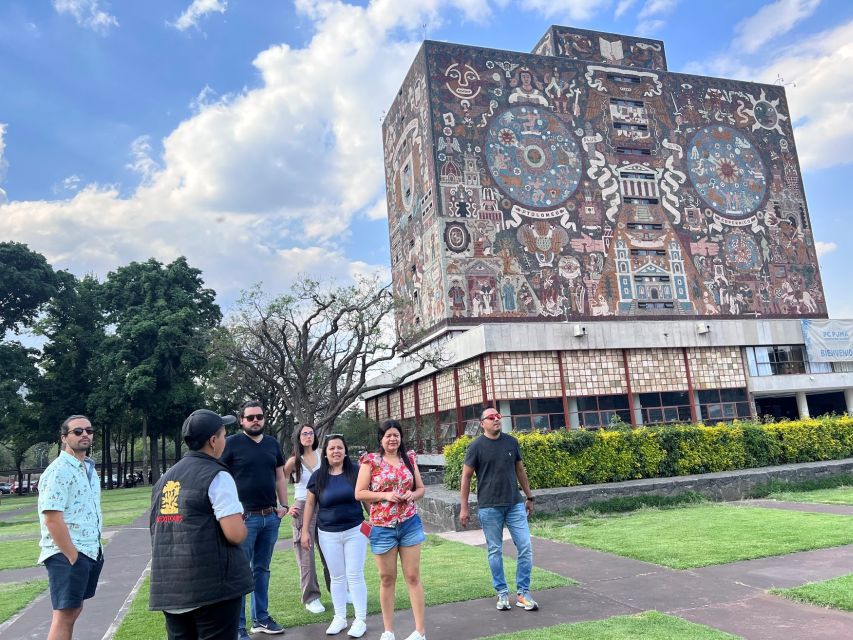
The first part of your day is mostly a van ride with panoramic stops, which is exactly what you want if it’s your first time in Mexico City. You start with the Poliforum Cultural Siqueiros, known for its huge-scale mural The March of Humanity by David Alfaro Siqueiros. It’s the kind of artwork that feels less like a painting and more like an entire wall of ideas—politics, people, movement. Even from a distance, it helps you understand why Mexican mural art is treated like public conversation, not museum decoration.
Next, you pass the Plaza de Toros México, often described as the largest bullring in the world with room for 50,000 people. Whether you’re a bullfighting fan or not, the scale is the point: this is the old-school Mexico City idea of grand public spaces.
Then comes the Teatro de los Insurgentes, famous for its façade mural by Diego Rivera, where Cantinflas appears. This is a smart stop for first-timers because it ties mural art to popular culture—Rivera didn’t just paint history; he painted Mexico’s imagination. Even if you’re not a die-hard art person, you’ll still recognize the feeling: art as identity.
This stretch also includes stops that help you orient yourself around the university area and major stadium landmarks (including Estadio Olímpico Universitario). It’s not a sit-down tour of every site; it’s a guided “get your bearings fast” loop, with the art and scale doing the heavy lifting.
Ciudad Universitaria and the lava gardens of Pedregal de San Ángel
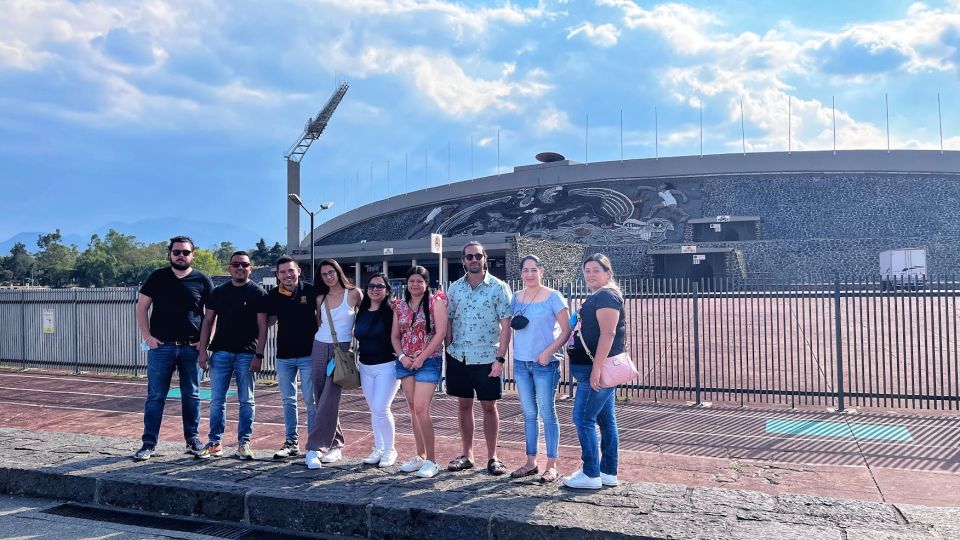
After the mural stops, you transition into a more architectural mood. You’ll visit Ciudad Universitaria, the UNESCO World Heritage site known for its design and murals by major Mexican muralists. This is one of the stops that makes the whole tour feel like more than just a canal day trip. You’re seeing Mexico City’s creative ambition in an academic setting.
One specific detail to care about: the tour includes the university library with mosaic murals by Juan O’Gorman. Mosaic work has a way of rewarding slow looking. Up close, it feels crafted and human—like the building has a visual personality, not just a decorative theme. If you’re the type who loves textures and patterns, this part is worth your attention.
Then you get a panoramic look at Pedregal de San Ángel, the lava gardens area. You’re not walking around on the lava rock trails here (it’s described as a panoramic view), but that’s still useful. Mexico City isn’t just concrete and museums—there’s volcanic history under the city plan. Seeing it from above or from the right angle helps the whole geography make sense.
Practical note: this middle stretch is where your shoes matter. You may not do long walks, but you’ll still move enough to want comfortable footwear—especially if you tend to cramp easily at altitude.
Xochimilco’s UNESCO canals: what the trajinera ride feels like
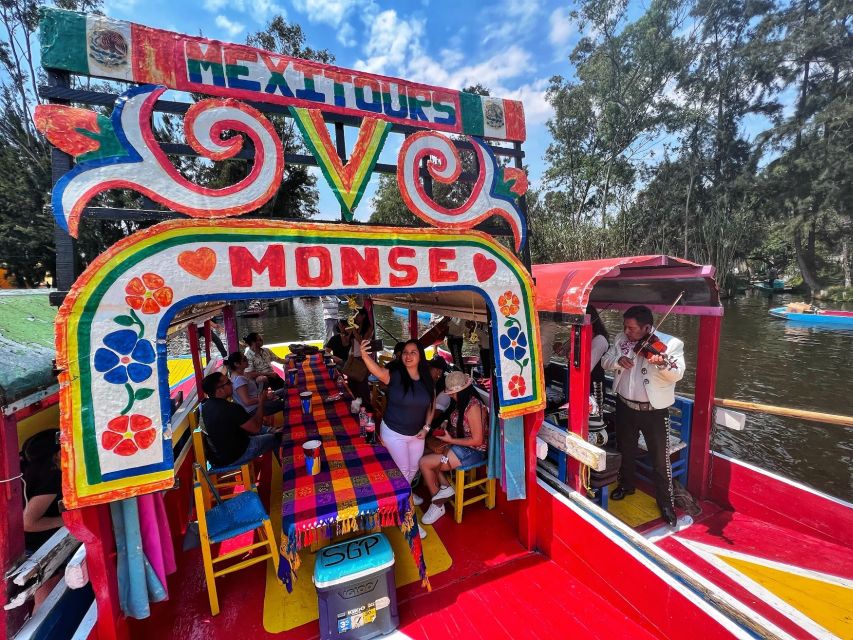
Now for the reason most people book this: Xochimilco. This is another UNESCO World Heritage area, but the experience is totally different from Ciudad Universitaria. Here, the city becomes waterways.
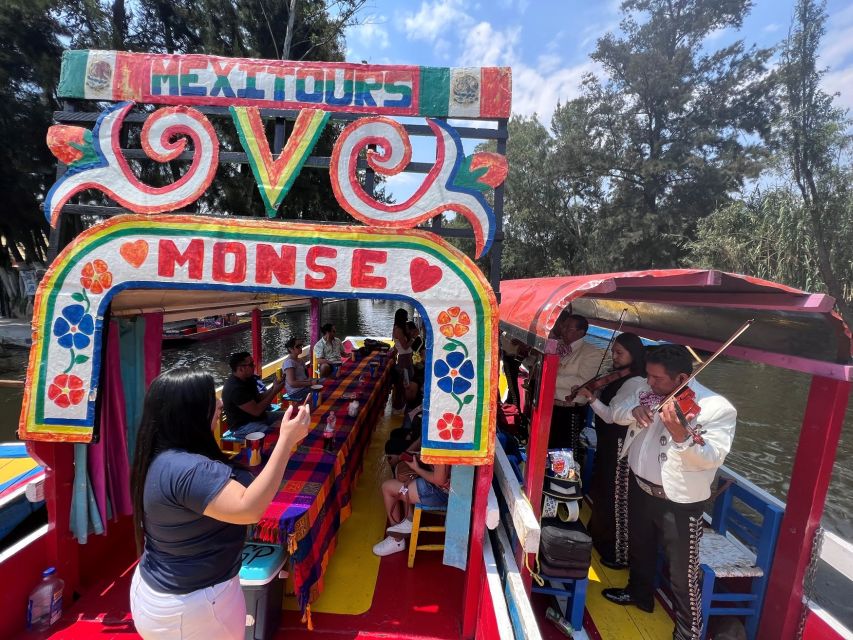
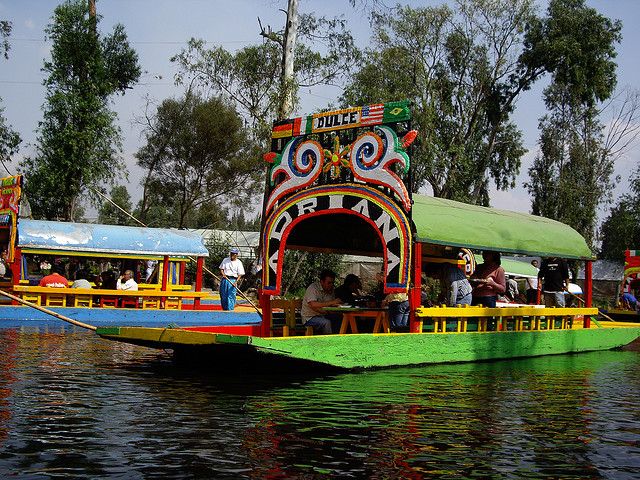
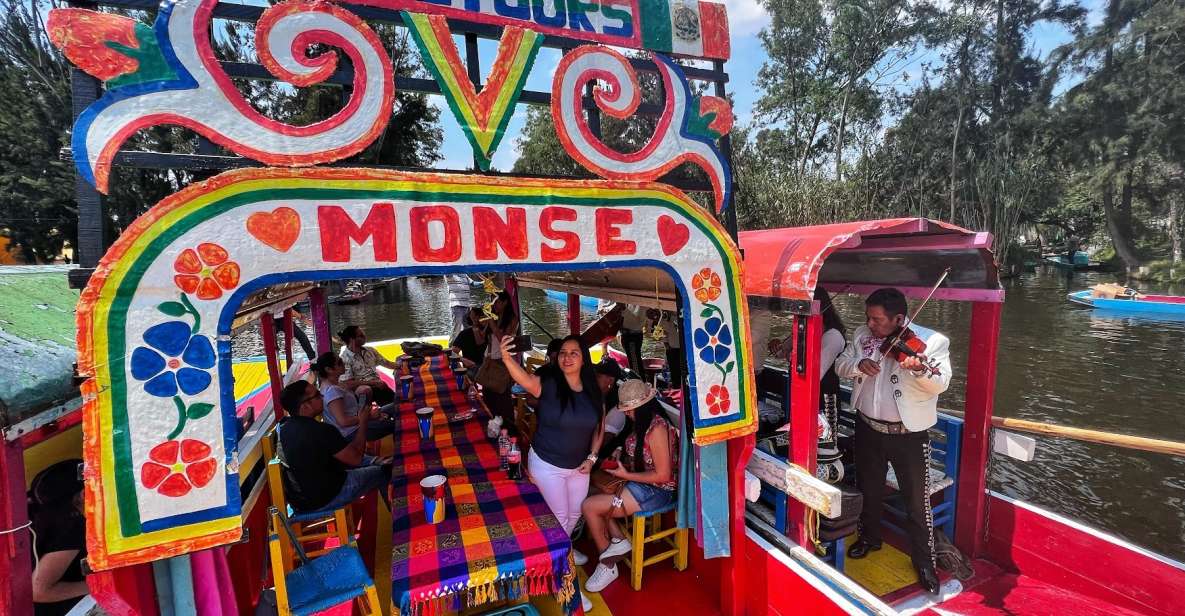
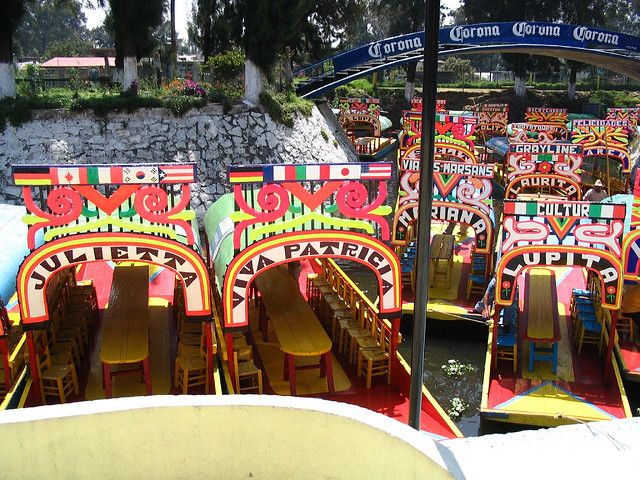
You’ll get a ride on a traditional canal boat called a trajinera. This is the part that feels relaxing, not rushed. The route is scenic and you see the canal life and surrounding neighborhoods glide by at a slower pace than you’ll get anywhere else in CDMX. On busy days—especially Sundays—there can be more movement and vendors around, but the boat time is still your main breathing room of the day.
A key practical tip from people who’ve done it: there aren’t ATM machines at Xochimilco, so don’t assume you can pull cash once you’re there. Food and drinks on the canals are not included in the tour price, and vendors do come by. If you want snacks, drinks, or souvenirs, bring enough cash with you before you head out to the canals.
If you like atmosphere, Xochimilco can deliver. The canal boats often feel like a party zone—but on a guided day, you’re mostly there to float, look, and take in the scene. You’ll also have enough time to enjoy it without feeling like you’re just doing a quick photo stop and leaving.
Coyoacán colonial time: San Juan Bautista, Cortés, and Frida’s blue house
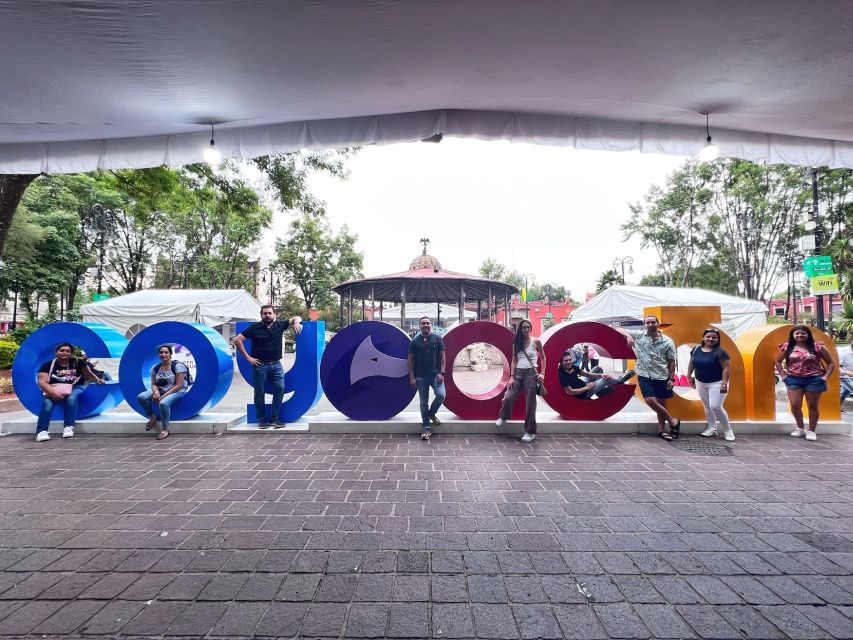
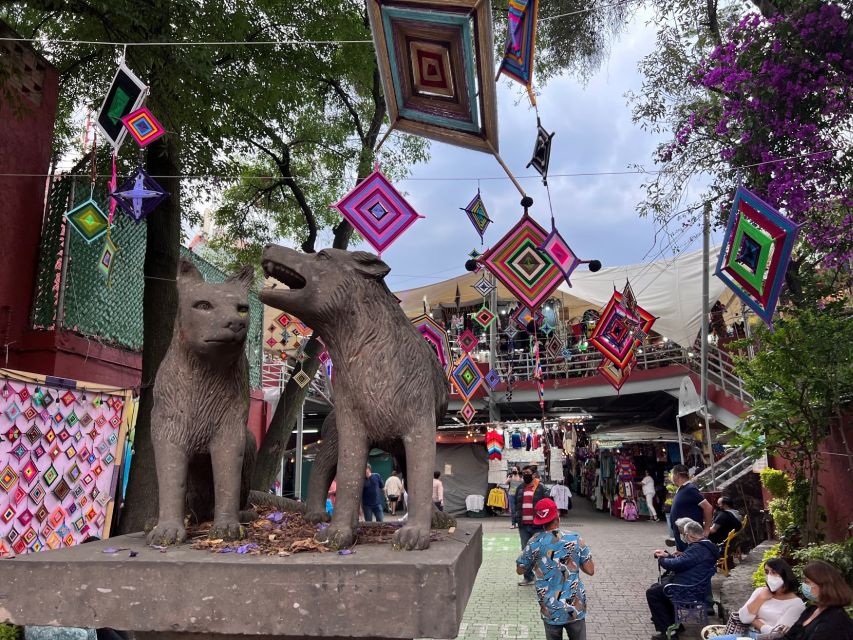
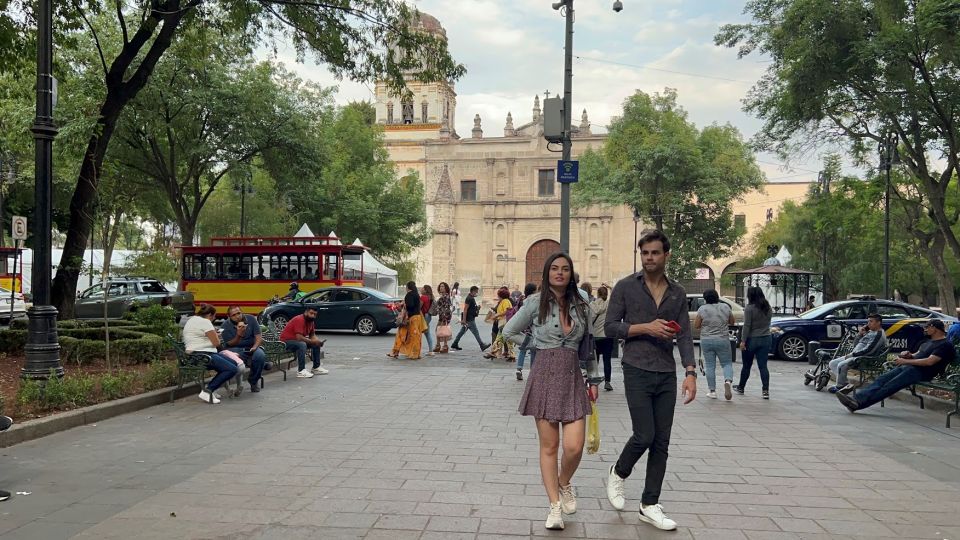
After Xochimilco, the tour pivots into Coyoacán, and this is where the day turns from “big sights” to “walkable vibe.” You’ll explore the colonial district with 16th-century houses, rambling streets, and classic Central American-Mexican architecture styles. It’s one of those neighborhoods where it helps to have context, and the guide’s explanations here make the shapes and names click.
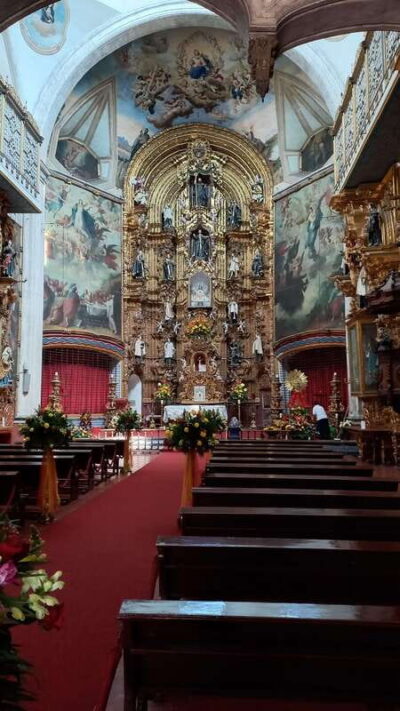
You’ll visit San Juan Bautista Church and see the church vault paintings by Juan Fabregat, made in 1944. Church interiors in Mexico often carry a special kind of storytelling—paintings, vault shapes, religious art mixed with local artistic talent. Even if you’re not usually a church-goer, this one is part of the “why Coyoacán matters” story.
You’ll also take in the impressive mansion of the Spanish conquistador Hernán Cortés as part of the panoramic look at conquistador mansions. You’re not just seeing buildings; you’re seeing the long shadow of the Spanish conquest written into the city’s architecture and status.
And yes, you’ll also head to Frida Kahlo’s blue house area. If it’s open, you’ll likely get the intended visit experience. If it’s not available when your schedule hits, you may still be able to view it from the outside. Either way, it’s a meaningful stop because it turns Frida from an idea into a place you can point to in the real city.
One more reason I like the Coyoacán segment: you typically get some time to wander. That’s where you can slow down, check out the main square area, and grab a snack if you want.
How the timing works (and why strict schedules matter)
This trip runs about 5 hours, with pickup starting about 1 hour before the tour depending on the meeting point. It’s a shared van service, so you’ll be coordinating with other guests and moving through traffic.
The pacing is important. The tour is built around major highlights, not a slow museum crawl. That means you’ll hit several landmark drive-bys, then you’ll do focused stops at Xochimilco and Coyoacán. If the day feels tight, it’s not a mistake—it’s how the route fits.
There are two extra timing realities to plan for:
- Traffic to and from Xochimilco: it’s farther out, so the ride time can be noticeable.
- Language balance in a shared tour: since it’s English/Spanish bilingual and shared, the guide may prioritize whichever language has more speakers in the moment.
In practical terms, if your Spanish isn’t strong, don’t rely on catching every word. Instead, use the visuals: murals, façades, church vaults, and the canal scenery do a lot of the teaching. If your group is mainly Spanish-speaking, you can still follow the story with the guide’s main points and the place details.
Price and value: what $42 covers, and what costs extra
At $42 per person for a 5-hour outing, this tour is strong value because it combines:
- admission fees (included),
- a bilingual guide (included),
- and pickup from set meeting points (included).
What’s not included is where you’ll spend extra if you’re not prepared: food and beverages. At Xochimilco in particular, you’ll likely be surrounded by vendors and you’ll want to decide quickly if you want snacks or drinks.
So here’s the money mindset that works best:
- Bring cash for canal snacks, drinks, and any small purchases.
- Don’t plan to buy food with card-only expectations. With the note about no ATM at Xochimilco, cash becomes your friend.
If you compare this to doing the major stops independently, the guided structure is what saves you time. You get a planned mix that would be a hassle to stitch together on your own—especially if it’s your first day in CDMX and you’re still getting comfortable with distances.
Who should book this trip (and who should skip it)
This is a great fit if you want:
- an efficient first-day style introduction to Mexico City’s art landmarks,
- UNESCO time at both Xochimilco and Ciudad Universitaria,
- and a walkable neighborhood finish in Coyoacán.
It’s also a good choice if you like contrast: the calm of canal life next to mural-scale city stops.
Skip it if you have mobility limits. The tour is not suitable for people with mobility impairments or wheelchair users, and it’s also not designed for anyone traveling with oversize luggage or large bags. The canals and neighborhood walking can be awkward with heavy gear.
Finally, if you’re picky about language balance, consider that it’s a shared bilingual service. You’ll still learn a lot from the visual stops, but if you need an English-heavy narration the whole time, you might prefer a more language-focused option.
Should you book this Xochimilco & Colonial Coyoacán tour?
If you’re visiting Mexico City for the first time and you want a single day that hits UNESCO sites, major mural landmarks, and the Coyoacán colonial center, I think this is an easy yes. The best part is the structure: you get the grand art and architecture in the morning, a relaxing trajinera float when the day needs to slow down, then Coyoacán to wrap it up with atmosphere.
Book it especially if you like guided context. Seeing the Juan O’Gorman mosaics, the church art by Juan Fabregat (1944), and the story points around Hernán Cortés and Frida makes the places feel connected rather than random.
Just come ready for a schedule that moves. Wear comfortable shoes, bring cash for Xochimilco, and don’t expect museum-level free time at every stop. If you set your expectations like that, this tour is excellent value for a short, highlight-heavy day.
FAQ
How long is the Xochimilco & Colonial Coyoacán trip?
The tour lasts about 5 hours.
When is it offered?
It runs on Wednesday at 14:00 and also on Sunday morning.
Where are the pickup points, and how early do they pick you up?
Pickup starts about 1 hour before the tour depending on the selected meeting point. Options include InterContinental Presidente Mexico City, Royal Reforma Hotel, Zócalo Central Hotel, and Av. de la República 154 (Tabacalera).
What is included in the price?
The price includes pickup from the meeting point, admission fees, and a bilingual guide (English/Spanish).
Is food or drinks included?
No. Food and beverages are not included.
What languages will the guide speak?
The guide is bilingual, with English and Spanish available.
Is the tour suitable for wheelchair users or mobility impairments?
No. It is not suitable for people with mobility impairments or wheelchair users.
Can I cancel for a full refund?
Yes. Free cancellation is available up to 24 hours in advance for a full refund.
What should I bring, and are there luggage restrictions?
Bring a passport or ID card, comfortable shoes, sunglasses, sun hat, and sunscreen. Pets aren’t allowed, and oversize luggage or large bags aren’t allowed.